Description
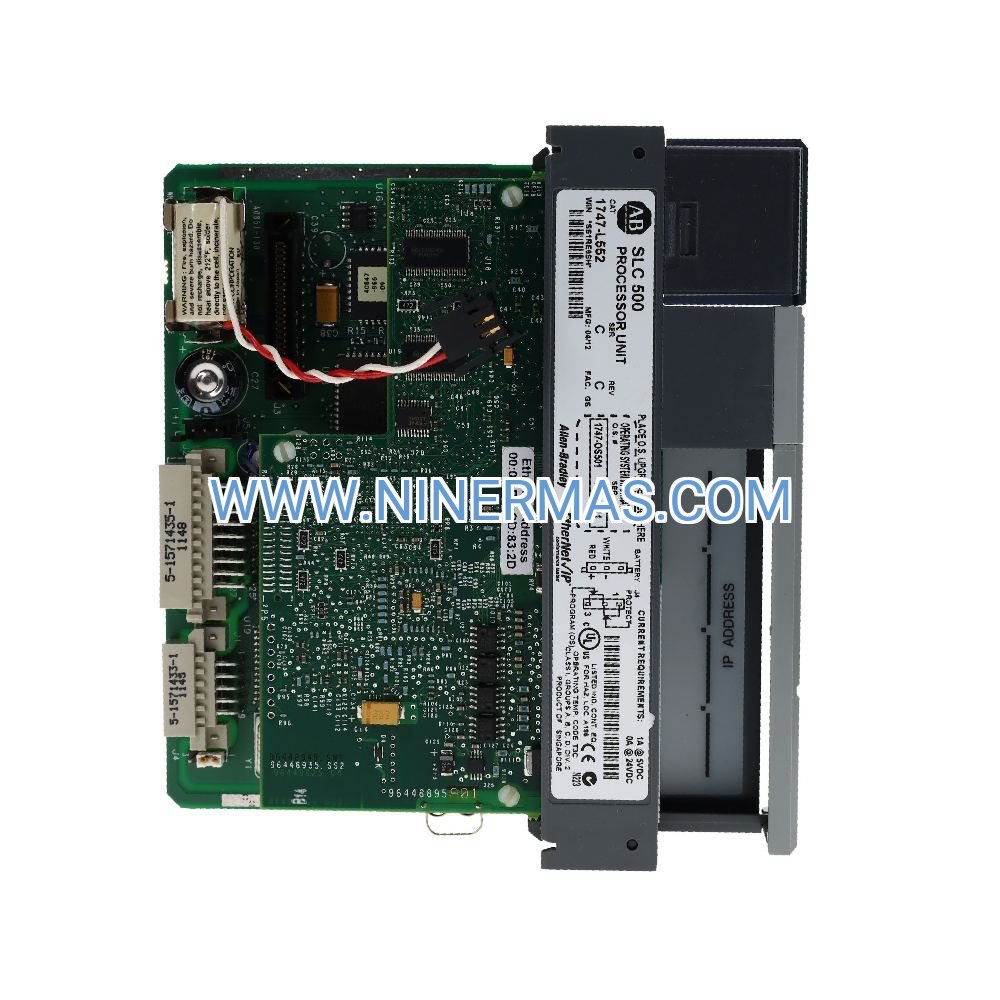
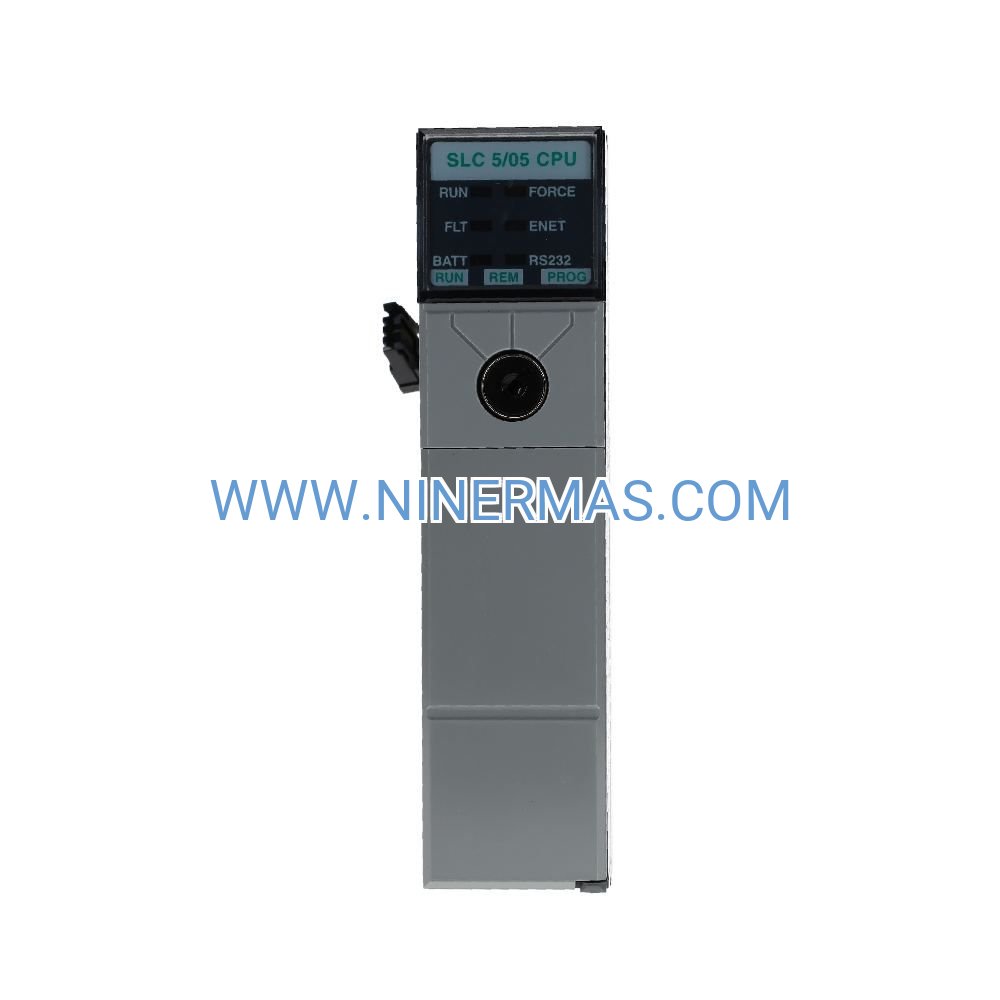
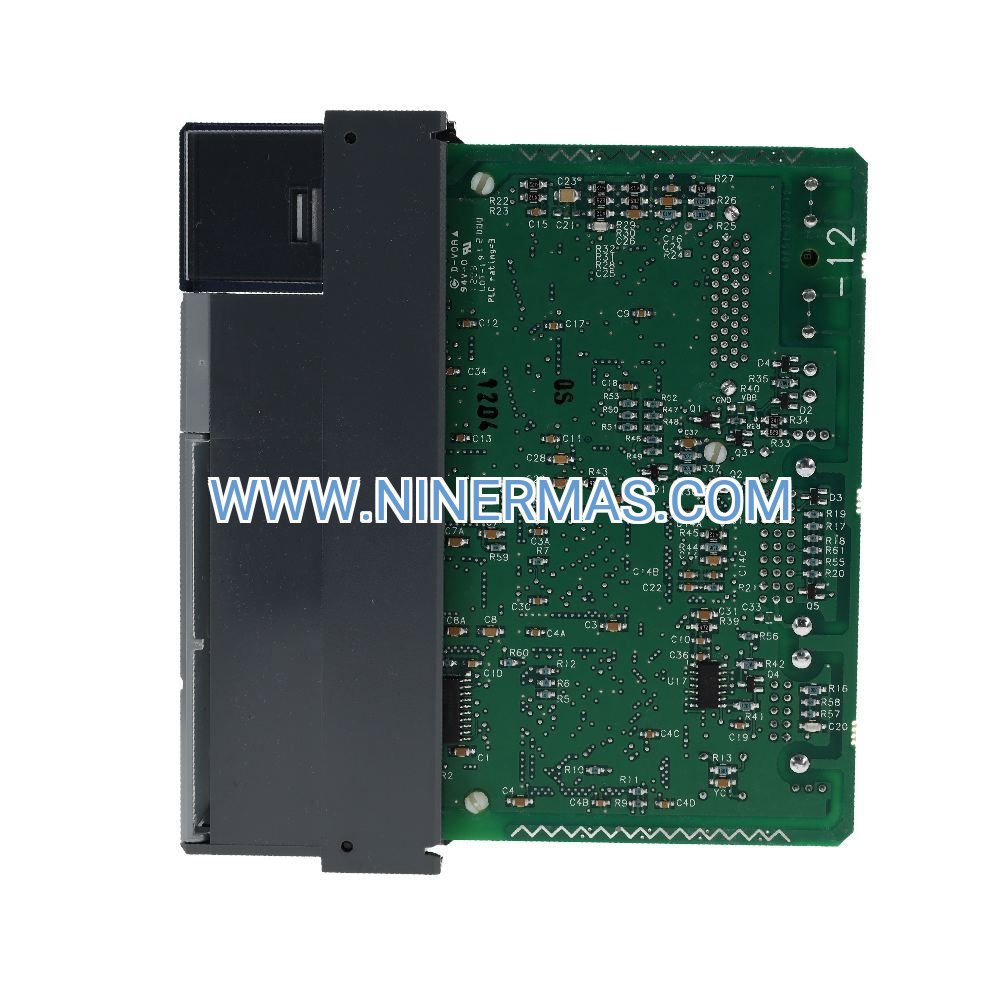
1747-L542 SLC 5/04 Modular Controller (Industrial-Grade PLC Processor)
The 1747-L542 is a high-performance programmable logic controller designed for mission-critical industrial automation environments. Built on the proven SLC 5/04 platform, this modular processor combines 32K words of user memory with robust dual-port communication architecture, delivering reliable control for manufacturing lines, process systems, and infrastructure networks. Engineered for 24/7 operation in harsh industrial conditions, it serves as the central intelligence for medium to large-scale automation projects requiring deterministic scan times and extensive I/O expansion capabilities.
This controller addresses the operational challenges faced by plant engineers and system integrators: maintaining legacy system compatibility while scaling I/O capacity, ensuring uninterrupted communication during programming sessions, and executing complex control algorithms with predictable timing. The 1747-L542 targets facilities managers, automation engineers, and OEM machine builders who demand proven reliability backed by decades of field-tested performance in automotive assembly, food processing, pharmaceutical manufacturing, and utility infrastructure applications.
Key differentiators include factory-verified memory integrity, dual-port simultaneous operation for programming and peer messaging, support for advanced ladder logic instructions including PID loops and data table manipulation, and seamless backward compatibility with existing SLC 500 chassis and I/O modules. The processor ships ready for immediate deployment with pre-configured communication parameters and comprehensive diagnostic capabilities.
Core Features & Benefits
→ 32K User Memory Architecture: Provides ample program storage for complex control strategies, data logging, and recipe management without performance degradation—ideal for applications requiring 5,000+ rungs of ladder logic.
→ 4096 I/O Point Capacity: Supports extensive field device integration across multiple chassis, enabling centralized control of large-scale systems while reducing wiring complexity and installation costs by up to 40%.
→ Dual Communication Ports (DH+ & RS-232): Enables simultaneous programming and production operation, eliminating downtime during code modifications and facilitating real-time data exchange with SCADA systems and HMI panels.
✓ High-Speed Scan Performance: Executes typical 1K instruction programs in under 5ms, ensuring responsive control for time-sensitive processes such as motion coordination and batch sequencing.
✓ Industrial Temperature Rating (0-60°C): Maintains operational stability in non-climate-controlled environments including factory floors, utility substations, and outdoor enclosures.
✓ Hot-Swappable I/O Compatibility: Supports online module replacement for critical applications requiring zero-downtime maintenance, reducing mean time to repair (MTTR) by 60%.
Application Scenarios
Automated Assembly & Material Handling: Coordinates multi-station assembly lines with conveyor tracking, robotic pick-and-place operations, and quality inspection gates. Solves synchronization challenges in automotive component assembly where cycle times must remain within ±50ms tolerance. Delivers 99.7% uptime through redundant communication paths and diagnostic fault detection.
Process Control & Batch Manufacturing: Manages recipe-driven production in food processing, chemical blending, and pharmaceutical formulation. Addresses regulatory compliance requirements (FDA 21 CFR Part 11) through audit trail capabilities and secure parameter storage. Achieves ±0.5% setpoint accuracy in temperature, pressure, and flow control loops.
Water/Wastewater Treatment Facilities: Controls pump sequencing, chemical dosing, and filtration systems across distributed sites. Resolves remote monitoring challenges through DH+ network integration with central SCADA platforms. Reduces energy consumption by 15-25% through optimized pump scheduling algorithms.
HVAC & Building Automation: Orchestrates chiller plants, air handling units, and boiler systems in commercial facilities. Eliminates temperature stratification issues through multi-zone control strategies. Provides 20-30% energy savings via demand-based ventilation and economizer optimization.
Packaging & Labeling Machinery: Synchronizes product feeding, wrapping, labeling, and case packing operations. Overcomes changeover time bottlenecks through recipe-based parameter switching (under 2 minutes). Increases OEE (Overall Equipment Effectiveness) by 12-18% through predictive maintenance alerts.
Technical Parameters & Selection Guide
| Specification | Value | Application Impact |
|---|---|---|
| User Memory | 32K words | Supports 5,000-8,000 rungs typical programs |
| I/O Capacity | 4096 points max | Controls 30-50 I/O modules per system |
| Communication Ports | DH+ (1), RS-232 (1) | Simultaneous programming + peer messaging |
| Scan Time | ~0.9ms per K instructions | Suitable for 10-50ms control loops |
| Operating Temp | 0°C to 60°C | Non-climate-controlled enclosures |
| Power Consumption | 5V DC @ 1.5A typical | Standard SLC 500 power supply compatible |
| Chassis Compatibility | 1746 series (4-13 slot) | Flexible system sizing |
| Programming Software | RSLogix 500 v9.0+ | Windows 7/10/11 compatible |
Selection Criteria: Choose the 1747-L542 when your application requires 2,000-4,096 I/O points and program complexity exceeds 3,000 rungs. For systems needing Ethernet connectivity, consider the 1747-L553 (SLC 5/05). If memory requirements are below 16K words, the 1747-L541 offers cost optimization. Verify chassis slot availability—the processor occupies slot 0 and requires minimum 4-slot 1746 chassis. Confirm DH+ network compatibility if integrating with existing Rockwell Automation infrastructure.
Extended Functions
Advanced Instruction Set: Supports PID control, file arithmetic, sequencer operations, and ASCII string manipulation for complex automation tasks beyond basic relay logic.
Data Highway Plus Networking: Enables peer-to-peer messaging with up to 64 nodes at 57.6/115.2/230.4 Kbps, facilitating distributed control architectures and centralized data acquisition.
Battery-Backed Memory Retention: Preserves program and data table contents during power outages (1747-BA battery required, sold separately), ensuring rapid recovery without reprogramming.
Online Editing Capability: Allows rung modifications during RUN mode for non-critical logic sections, reducing commissioning time and enabling iterative process optimization.
Customization Options: Available with pre-loaded application templates for common industries (packaging, material handling, water treatment) upon request. Custom I/O configuration and startup services available through our engineering team.
Delivery & Service Assurance
Lead Time: Standard stock items ship within 1-3 business days via express courier (DHL/FedEx). Custom-configured units with pre-loaded programs require 5-7 business days. Expedited same-day shipping available for critical downtime situations (additional fees apply).
Warranty Coverage: 12-month comprehensive warranty covering manufacturing defects, memory failures, and communication port malfunctions. Extended 24/36-month warranty plans available at checkout.
Technical Support: Unlimited email/phone support for installation guidance, programming assistance, and troubleshooting. Average response time: 4 hours during business hours (GMT+8). Remote diagnostic services available via TeamViewer/AnyDesk.
Documentation Package: Each unit includes installation quick-start guide, wiring diagrams, memory map reference, and RSLogix 500 sample programs. Full user manual (PDF) and firmware release notes provided via download link.
Frequently Asked Questions
What communication protocols does the 1747-L542 processor support for SCADA integration?
The processor natively supports Data Highway Plus (DH+) protocol through its dedicated port, enabling integration with RSLinx, FactoryTalk View, and third-party SCADA systems via OPC servers. The RS-232 port supports DF1 full-duplex/half-duplex protocols for direct connection to HMI panels and serial devices. For Ethernet/IP connectivity, an external 1761-NET-ENI gateway module is required.
How do I determine the correct memory capacity for my application requirements?
Estimate 1 word per rung of ladder logic as a baseline. A typical 3,000-rung program consumes approximately 8-12K words including data tables. Add 20-30% buffer for future expansion. If your application requires extensive data logging (>500 data points), recipe storage (>10 recipes), or complex math operations, the 32K capacity provides comfortable headroom. For programs exceeding 25K words, upgrade to the 1747-L543 (64K memory).
Can this processor reduce energy consumption in motor control applications?
Yes, when programmed with variable frequency drive (VFD) integration and demand-based control algorithms, the 1747-L542 can optimize motor operation to reduce energy usage by 15-35%. Implement PID control loops for precise speed regulation, schedule-based start/stop sequences to eliminate idle running, and load-sharing strategies for multi-pump/fan systems. Actual savings depend on application duty cycle and baseline efficiency.
What are the installation requirements for panel mounting and wiring?
The processor mounts in slot 0 of any 1746 series chassis (4, 5, 7, 10, or 13-slot configurations). Requires 5V DC power supply (1746-P1, P2, or P4 recommended). Maintain 50mm clearance above and below chassis for ventilation. Use shielded twisted-pair cable for DH+ connections (Belden 9463 or equivalent). RS-232 port accepts standard DB-9 serial cables. Grounding: connect chassis ground to earth ground via 12 AWG wire minimum.
Does the processor support remote monitoring and diagnostics capabilities?
Yes, through the DH+ network port, the processor can be monitored remotely using RSLogix 500 software over DH+ bridges or Ethernet gateways. Real-time status monitoring includes scan time, fault logs, I/O health, and data table values. Configure email/SMS alerts through connected SCADA systems for critical fault conditions. For cellular/internet-based remote access, integrate with Ewon Flexy or similar industrial VPN routers.
What is the typical lifespan and when should I plan for processor replacement?
The 1747-L542 has a design life of 15-20 years under normal industrial conditions. Plan for replacement when: (1) scan time degrades beyond acceptable limits, (2) communication ports exhibit intermittent failures, (3) battery-backed memory requires frequent battery changes (>1 per year), or (4) Rockwell Automation discontinues firmware support. Proactive replacement at 12-15 years minimizes unplanned downtime risk. Maintain spare processor with cloned program for rapid swap in critical applications.
Take the Next Step
Ready to upgrade your automation infrastructure or replace a failing processor? Contact our technical sales team for application-specific recommendations, volume pricing, and integration support. Request a detailed quotation including recommended accessories (power supply, communication cables, chassis) or schedule a consultation to discuss your control system requirements.
Order now: Add to cart for immediate checkout, or email your PO to sale@ninermas.com for NET 30 terms (qualified accounts). Need assistance? Call +0086 187 5021 5667 (English/Mandarin support available).
© 2026 NINERMAS COMPANY LIMITED. All rights reserved.
Original Source: https://ninermas.com
Contact: sale@ninermas.com | +0086 187 5021 5667
PDF Specification
Download PDF file here:
Click to Download PDF

Contact Info
-
Address:22 / F, South Wo Hang building, 148 Wing Lok Street, Sheung Wan, Western District, Hong Kong
-
Phone:+8618750215667
-
Email: