Description
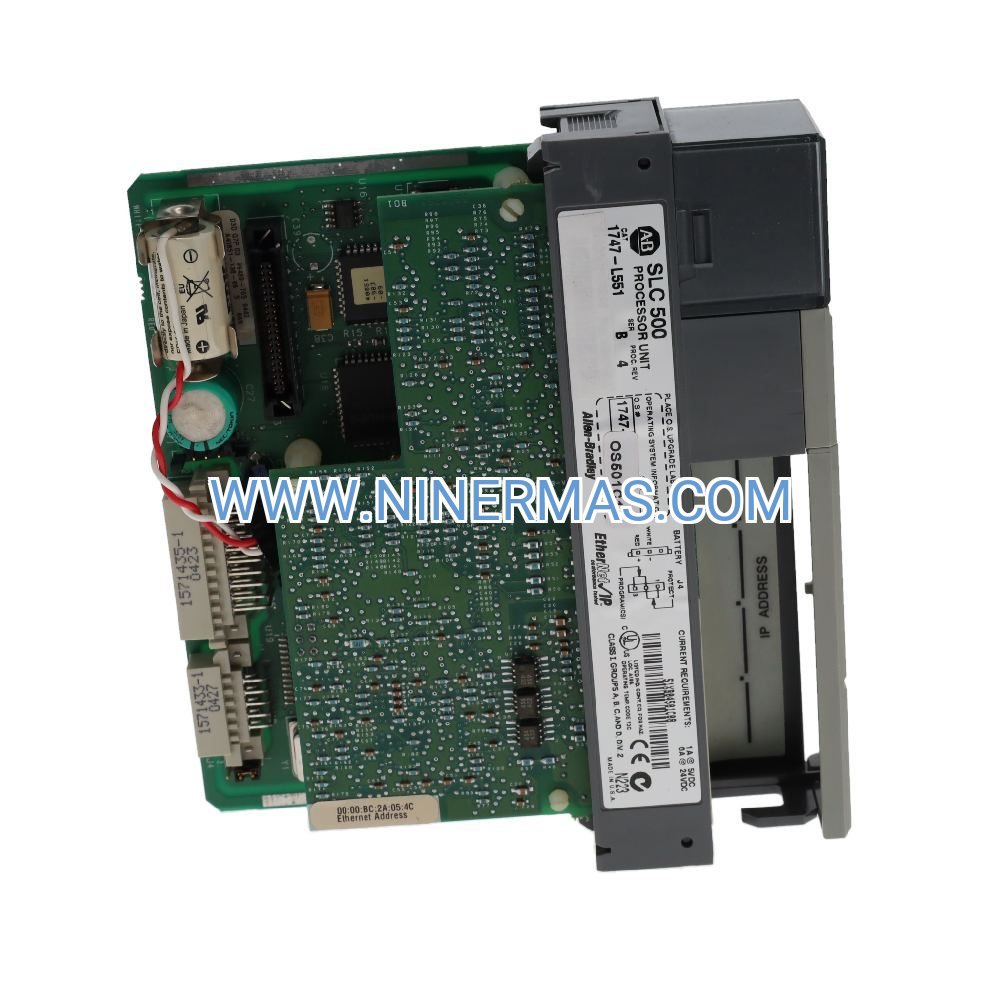
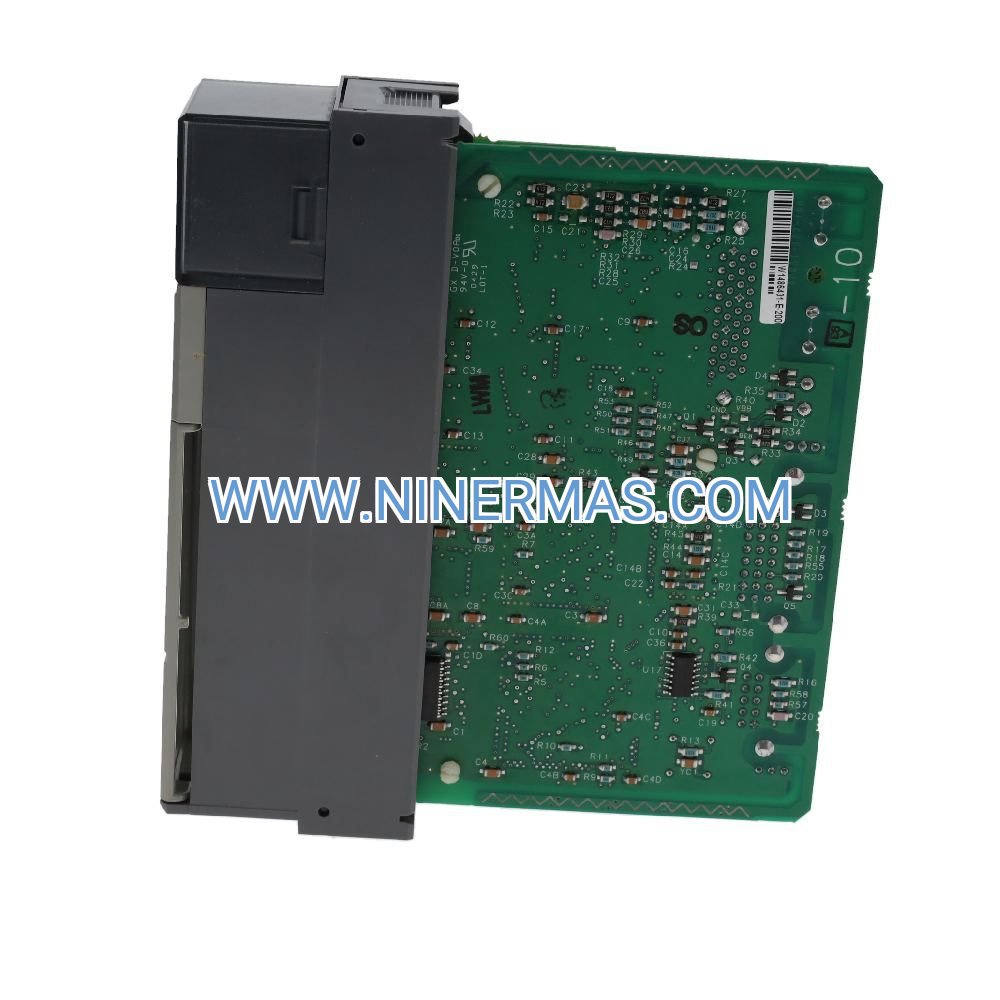
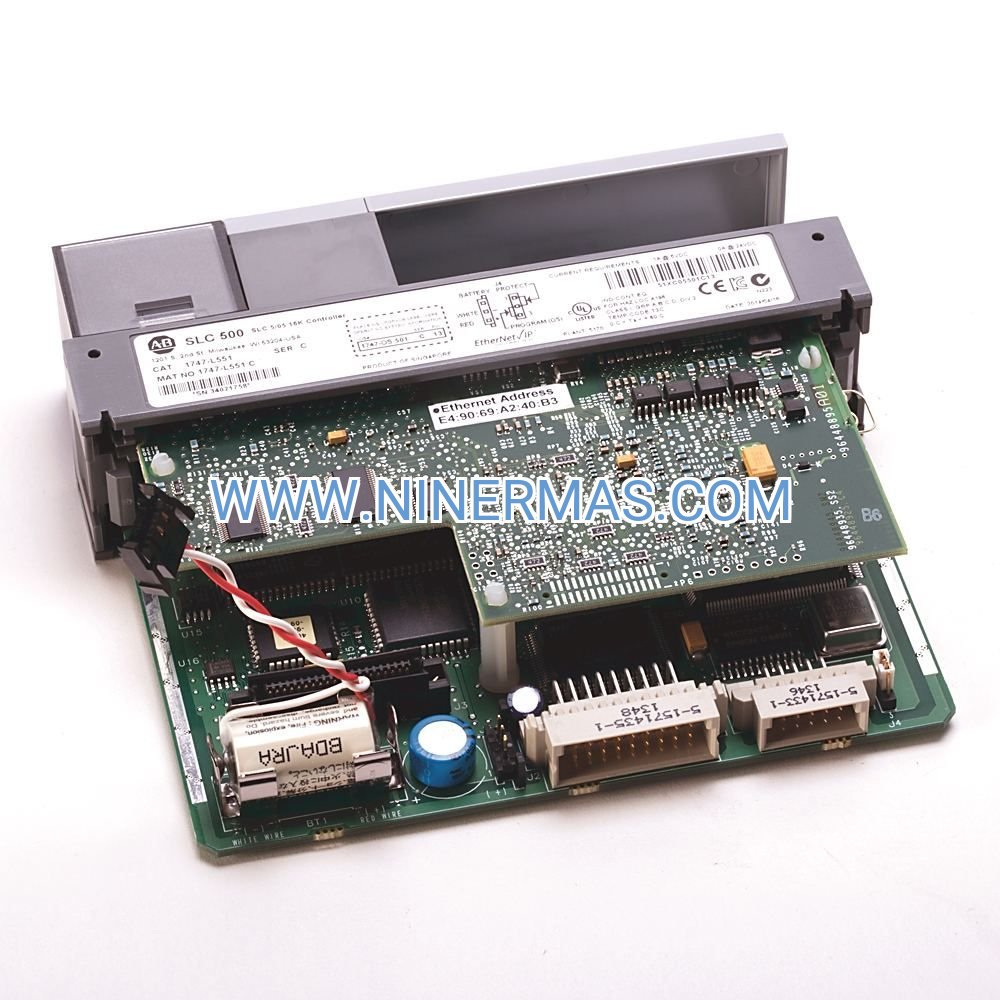
1747-L551 SLC 5/05 Modular Processor (Industrial-Grade Automation Controller)
The 1747-L551 represents a proven solution in the Allen-Bradley SLC 500 family, delivering robust programmable logic control for mid-scale industrial operations. Engineered with 16K words of user memory and extensive I/O handling capacity, this modular processor serves as the central intelligence for production lines, material handling systems, and process automation installations worldwide.
Designed for system integrators and plant engineers who demand reliability in harsh industrial environments, the 1747-L551 combines deterministic scan performance with flexible communication options. Whether you're retrofitting legacy equipment or building new control architectures, this processor integrates seamlessly into existing SLC 500 infrastructure while providing the computational power needed for complex ladder logic programs and data-intensive applications.
With factory-verified functionality and comprehensive diagnostic capabilities, the 1747-L551 minimizes commissioning time and accelerates troubleshooting when issues arise. Its modular design allows for scalable expansion as your automation requirements evolve, protecting your capital investment over the long term.
Core Features & Benefits
→ 16K User Memory Architecture
Provides ample program storage for sophisticated control strategies, including multi-recipe batch processes, complex motion sequences, and extensive data logging routines. Expandable via EEPROM modules for battery-free program retention.
→ High-Density I/O Capacity
Supports up to 4096 discrete inputs/outputs and 480 analog channels, enabling comprehensive monitoring and control of large-scale manufacturing cells, packaging lines, and distributed process equipment without requiring multiple controllers.
→ DH+ Network Integration
Built-in Data Highway Plus port facilitates peer-to-peer messaging and supervisory data exchange across up to 64 networked nodes at 57.6 Kbps or 230.4 Kbps, reducing wiring complexity and enabling centralized SCADA visualization.
✓ Dual Communication Ports
Dedicated RS-232 serial interface allows simultaneous programming access while DH+ handles production communications, eliminating the need to disconnect from the network during code modifications or online monitoring sessions.
✓ Real-Time Deterministic Performance
Optimized instruction execution delivers consistent scan times critical for time-sensitive applications such as high-speed counting, synchronized motion control, and closed-loop process regulation with minimal jitter.
✓ Comprehensive Diagnostics
Integrated fault detection monitors processor health, I/O module status, and communication integrity, with LED indicators and software-accessible status words that accelerate root-cause analysis during troubleshooting.
Application Scenarios
Automated Assembly & Manufacturing
Coordinate multi-station work cells in automotive component production, electronics assembly, or consumer goods manufacturing. The 1747-L551 manages part presence verification, robotic pick-and-place sequences, quality inspection stations, and reject handling with microsecond-level timing precision. Typical installations reduce cycle times by 15-20% compared to relay-based control systems.
Conveyor & Material Handling Systems
Orchestrate complex sortation networks in distribution centers, baggage handling airports, or parcel logistics facilities. Control variable-frequency drives, diverter gates, barcode scanners, and weight scales while maintaining zone tracking and accumulation logic. Handles throughput rates exceeding 3,000 items per hour in typical configurations.
Batch Process Control
Regulate temperature, pressure, flow, and level parameters in chemical reactors, food processing kettles, or pharmaceutical mixing vessels. Execute recipe-driven sequences with ingredient dosing accuracy within ±0.5%, automated CIP (clean-in-place) cycles, and comprehensive batch reporting for regulatory compliance.
Water & Wastewater Treatment
Monitor influent quality, control chemical feed pumps, manage clarifier operations, and regulate effluent discharge in municipal or industrial treatment plants. Integrates with SCADA systems for remote monitoring and alarm notification, ensuring continuous compliance with environmental discharge permits.
HVAC & Building Management
Optimize energy consumption in commercial facilities by controlling chiller plants, air handling units, boiler systems, and lighting schedules based on occupancy sensors and time-of-day programming. Typical installations achieve 20-30% energy savings compared to pneumatic control systems.
Technical Parameters & Selection Guide
| Specification | Value |
|---|---|
| Processor Family | SLC 5/05 |
| User Memory | 16K words (expandable with EEPROM) |
| Discrete I/O Capacity | 4096 points (input + output combined) |
| Analog I/O Capacity | 480 channels |
| Communication Ports | DH+ (RJ45), RS-232 (DB9) |
| Network Speed | 57.6 / 115.2 / 230.4 Kbps (DH+) |
| Scan Time (typical) | 0.9 ms per K instruction |
| Operating Temperature | 0°C to 60°C (32°F to 140°F) |
| Storage Temperature | -40°C to 85°C (-40°F to 185°F) |
| Humidity Range | 5% to 95% non-condensing |
| Power Consumption | 1.5A @ 5V DC (from backplane) |
| Mounting | SLC 500 modular chassis (1746-A series) |
| Certifications | UL Listed, CE, C-Tick, RoHS |
| Dimensions (H×W×D) | 127 × 35 × 87 mm (5.0 × 1.4 × 3.4 in) |
| Weight | Approx. 200g (0.44 lb) |
Selection Criteria: Choose the 1747-L551 when your application requires moderate memory capacity (8K-16K words), DH+ networking for multi-controller coordination, and compatibility with existing SLC 500 infrastructure. For applications exceeding 16K program size, consider the 1747-L553 (32K/64K variants). For standalone machines without networking requirements, the SLC 5/04 series offers a cost-optimized alternative.
Extended Functions
EEPROM Memory Expansion: Install 1747-M1 (16K) or 1747-M2 (32K) EEPROM modules to enable battery-free program storage and increase total memory capacity. Programs stored in EEPROM survive power outages indefinitely without battery backup, ideal for remote installations or applications with infrequent maintenance access.
Ethernet/IP Connectivity: Add a 1747-SCNR ControlNet scanner or third-party Ethernet gateway to integrate the SLC 500 system into modern industrial Ethernet networks, enabling communication with CompactLogix, ControlLogix, and SCADA platforms via standard TCP/IP protocols.
Advanced Instruction Set: Utilize PID loop control, file manipulation, ASCII string handling, and trigonometric functions for sophisticated control algorithms. Supports indirect addressing and indexed data tables for flexible program structures.
Custom Configuration Options: Our engineering team can pre-configure processors with your application program, I/O configuration, and network parameters, reducing on-site commissioning time by up to 50%. Contact our technical sales team for project-specific customization inquiries.
Delivery & Service Assurance
Lead Time: Standard stock items ship within 1-3 business days via express courier (DHL, FedEx, UPS). Custom-configured units require 5-7 business days for programming and testing. Expedited same-day shipping available for critical downtime situations (additional fees apply).
Warranty Coverage: 12-month comprehensive warranty covers manufacturing defects, component failures, and performance deviations from published specifications. Warranty includes advance replacement service to minimize production downtime.
Technical Support: Access to application engineers with SLC 500 expertise for installation guidance, program troubleshooting, and network configuration assistance. Support available via email, phone, and remote desktop sessions during business hours (GMT+8, 9:00-18:00 weekdays).
Documentation Package: Each processor ships with quick-start guide, wiring diagrams, and digital access to full technical manuals, instruction set reference, and RSLogix 500 programming examples. Certificates of conformity available upon request for regulated industries.
Frequently Asked Questions
What is the maximum I/O configuration supported by the 1747-L551 processor?
The processor supports up to 4096 discrete I/O points and 480 analog channels across a maximum of 30 I/O modules per chassis. When using multiple chassis via remote I/O adapters, you can distribute I/O across several locations while staying within the total capacity limits. Typical installations use 60-70% of available I/O capacity to allow for future expansion.
Can this processor communicate with modern Ethernet-based control systems?
Yes, through the addition of communication interface modules. The 1747-SCNR ControlNet scanner enables integration with ControlLogix systems, while third-party Ethernet/IP gateways (such as ProSoft or Spectrum Controls modules) provide direct connectivity to Ethernet networks. The native DH+ port can also connect to legacy PanelView HMIs and RSLinx communication servers.
How does the 1747-L551 compare to the 1747-L553 in terms of performance?
Both processors share identical scan speed and I/O capacity. The primary difference is memory: the L551 provides 16K words while the L553 offers 32K or 64K variants. Choose the L551 for applications with moderate program complexity (typically under 10,000 rungs of ladder logic). The L553 is recommended for data-intensive applications with extensive recipe storage, historical trending, or complex mathematical calculations.
What programming software is required for the 1747-L551?
RSLogix 500 software (version 8.40 or later) is the standard programming environment. The software supports ladder logic, structured text, and function block programming languages. Online editing allows program modifications without stopping the processor. RSLinx communication software is required for USB or Ethernet connectivity between your PC and the processor.
Is battery backup required to retain programs during power loss?
The processor includes a lithium battery (1747-BA) that maintains program memory and real-time clock data during power outages for approximately 12-18 months. For battery-free operation, install an EEPROM memory module (1747-M1 or 1747-M2) which provides permanent program storage without battery dependency. EEPROM modules are recommended for remote sites with limited maintenance access.
What is the typical energy consumption of this processor in continuous operation?
The 1747-L551 draws approximately 1.5A at 5V DC from the chassis backplane, equivalent to 7.5 watts. Total system power consumption depends on the number and type of I/O modules installed. A typical 10-slot chassis with mixed I/O modules consumes 50-80 watts total, making SLC 500 systems highly energy-efficient compared to relay-based control panels.
Take the Next Step
Ready to upgrade your automation infrastructure or replace a failed processor? Our technical sales team can verify compatibility with your existing system, provide application-specific configuration recommendations, and arrange expedited delivery to minimize downtime. Contact us today for a detailed quotation and technical consultation.
© 2026 NINERMAS COMPANY LIMITED. All rights reserved.
Original Source: https://ninermas.com
Contact: sale@ninermas.com | +0086 187 5021 5667
PDF Specification
Download PDF file here:
Click to Download PDF

Contact Info
-
Address:22 / F, South Wo Hang building, 148 Wing Lok Street, Sheung Wan, Western District, Hong Kong
-
Phone:+8618750215667
-
Email: