Description
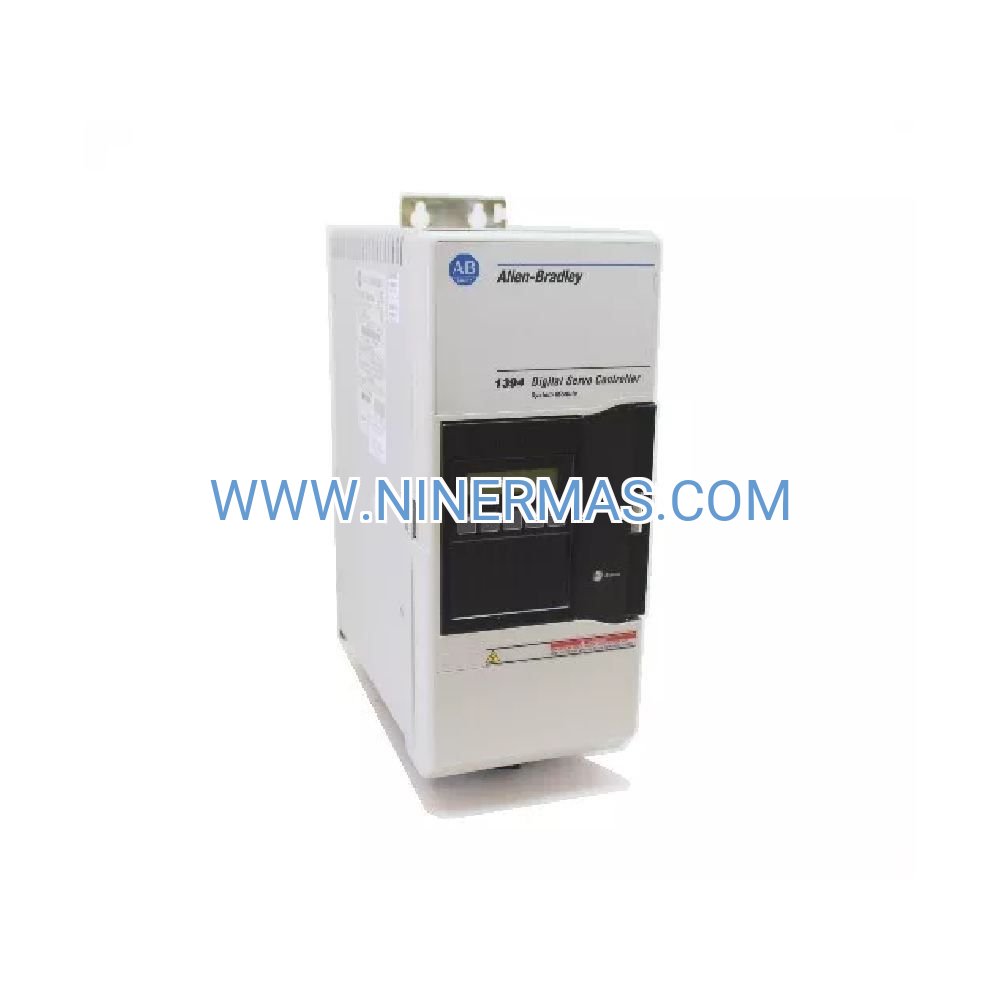
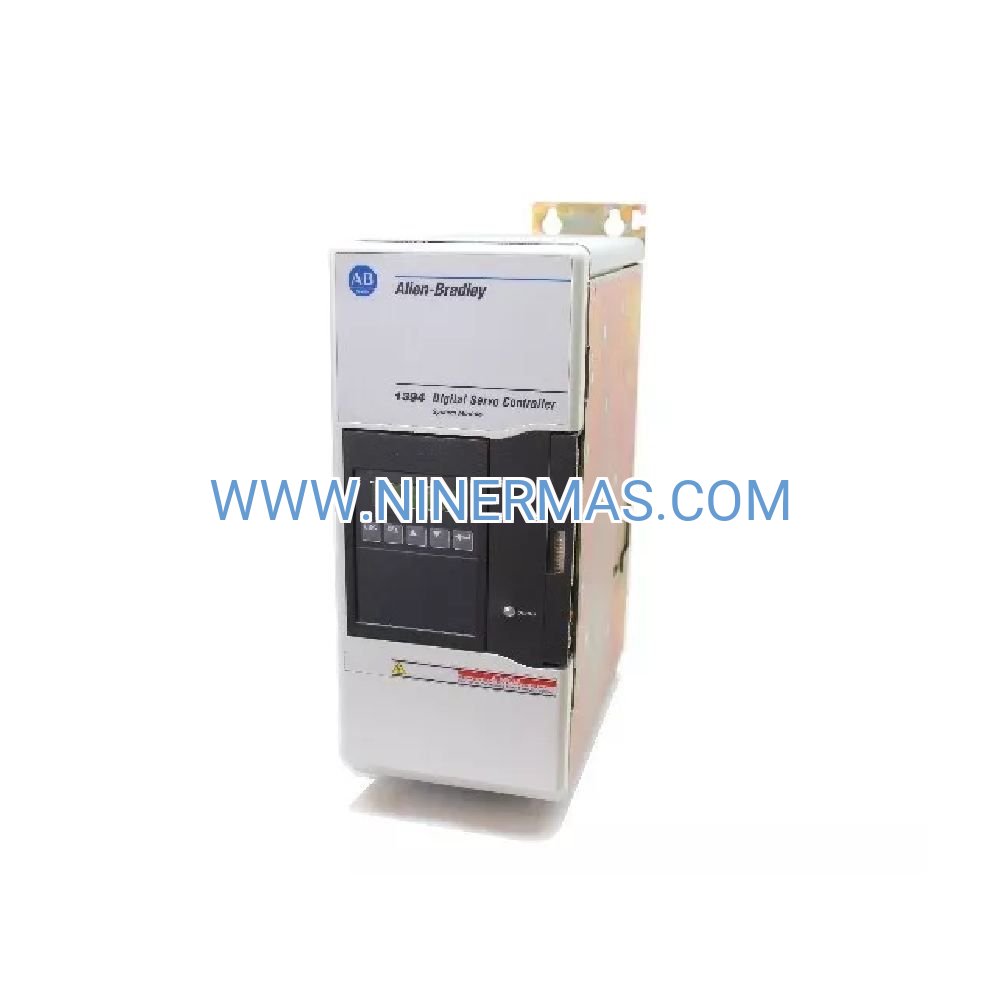
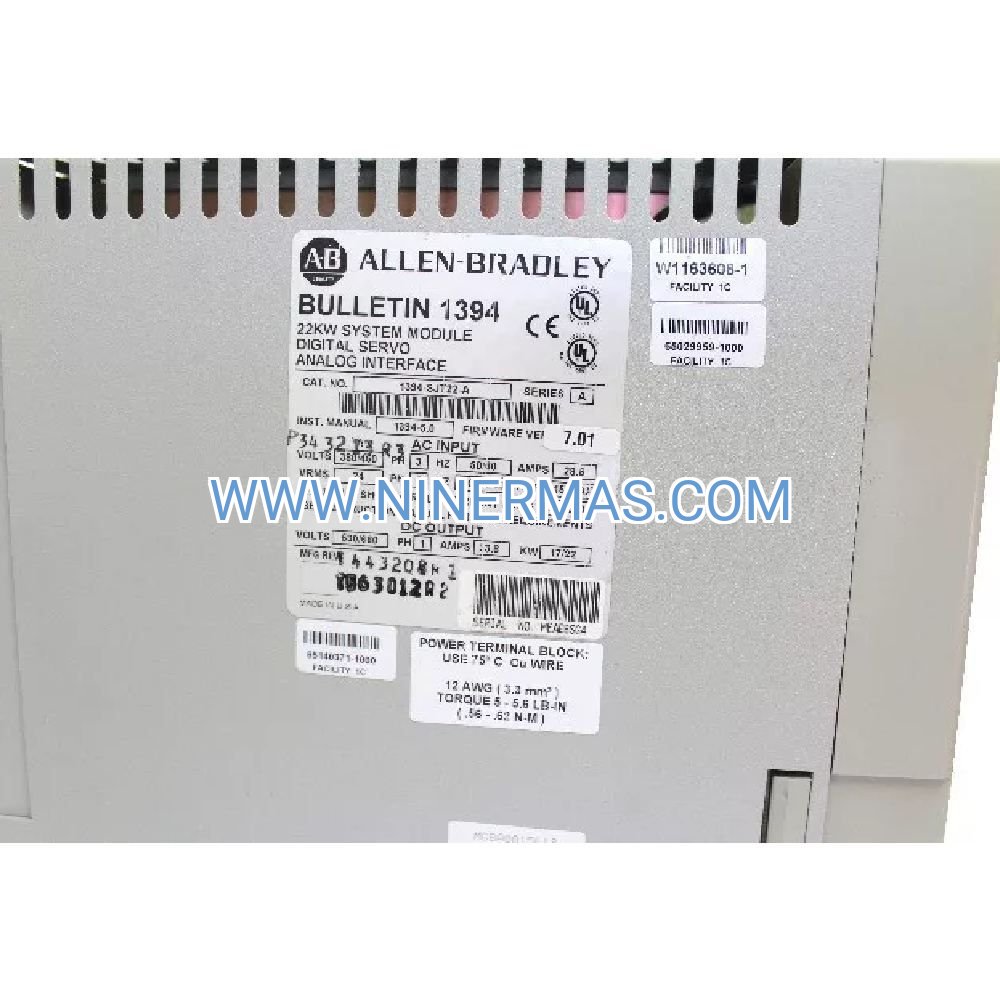
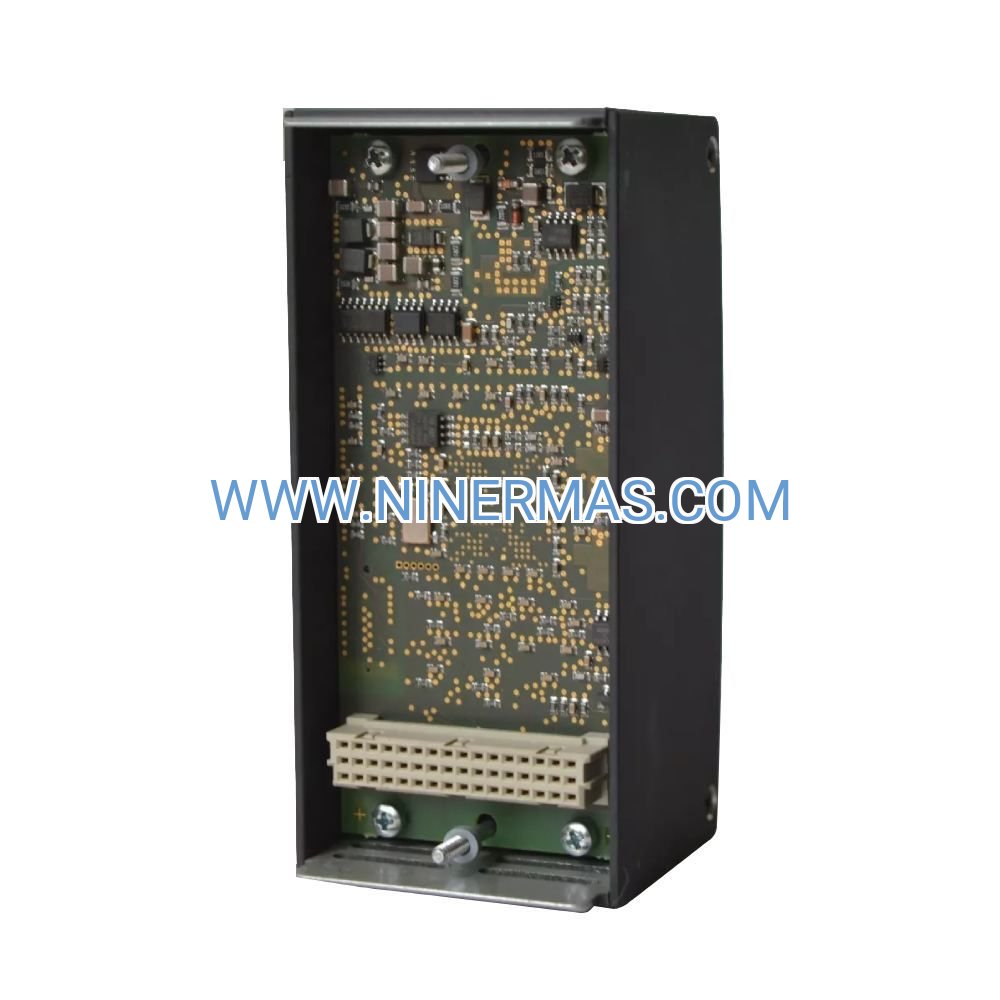
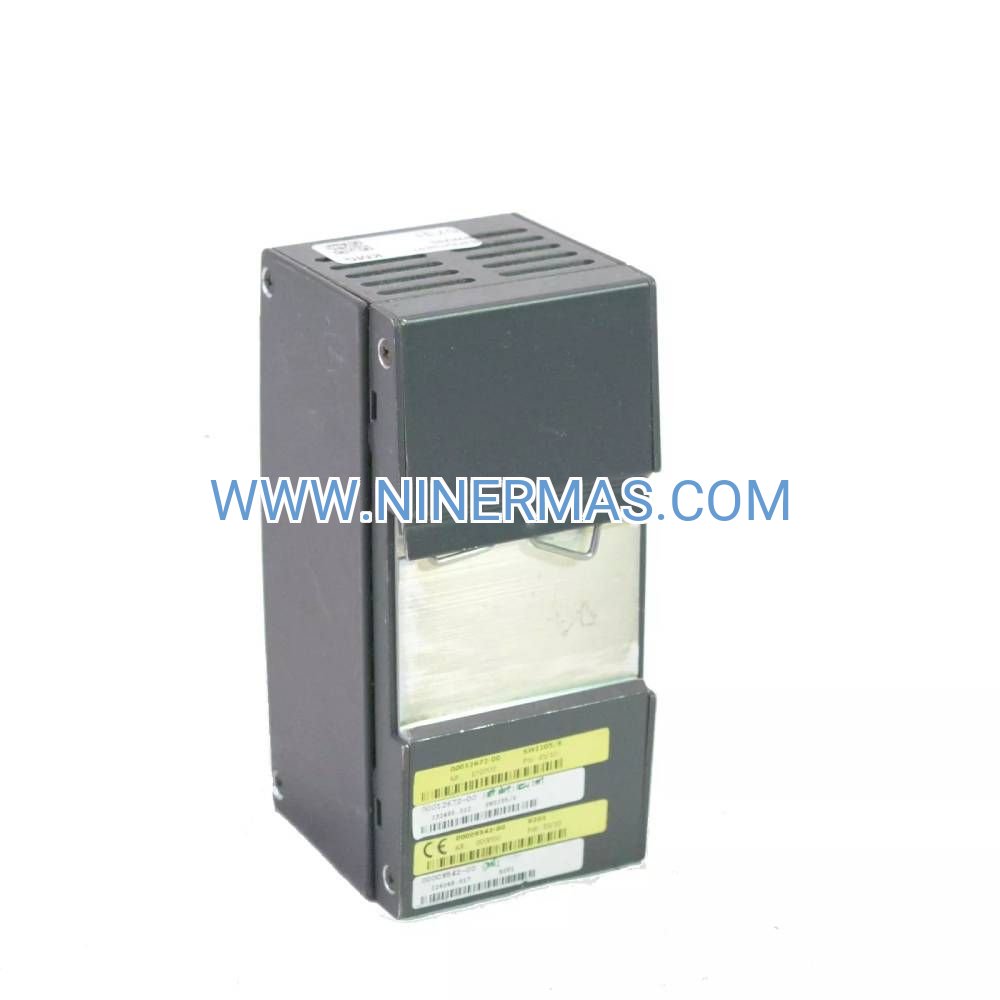
1394-SJT22-A System Power Module (Industrial-Grade Servo Drive Infrastructure)
The 1394-SJT22-A represents Allen-Bradley's advanced power conversion solution for demanding multi-axis servo applications. Engineered to deliver 17 kW sustained output with 22 kW peak capability, this system power module forms the backbone of high-performance motion control architectures in packaging, material handling, and precision manufacturing environments.
Built on active front-end technology with regenerative energy recovery, the module addresses two critical industrial challenges: reducing electrical infrastructure costs through near-unity power factor operation, and lowering operational expenses by recapturing braking energy that traditional drives dissipate as heat. In cyclic motion applications—common in packaging and assembly—energy savings reach 20-35%, delivering measurable ROI within 18-24 months.
Designed for the 1394 Turret Positioning Servo Drive platform, this power module supports up to four axis modules on a shared 650V DC bus, enabling energy transfer between accelerating and decelerating axes. The result: smaller electrical service requirements, reduced cooling loads, and lower total cost of ownership across the machine lifecycle.
Core Capabilities & Business Value
→ Regenerative Energy Recovery
IGBT-based active rectification captures deceleration energy and returns it to the facility power grid. Packaging lines with frequent start-stop cycles see energy consumption drop by 30%, translating to $3,000-$8,000 annual savings per machine depending on duty cycle and utility rates.
→ Shared DC Bus Architecture
Multiple servo axes draw from a common 650V DC bus, allowing one axis's braking energy to power another axis's acceleration. This energy sharing reduces peak power demand by 15-25% compared to individual drive systems, lowering electrical service upgrade costs.
→ Superior Power Quality
Active front end delivers >0.95 power factor and IEEE 519-compliant harmonic performance without external filters. Eliminates $2,000-$5,000 in line reactor and harmonic mitigation equipment while qualifying for utility power factor incentives in many regions.
✓ High Efficiency Thermal Design
>95% conversion efficiency minimizes waste heat generation. In climate-controlled production facilities, reduced cooling requirements can save $500-$1,500 annually per module in HVAC costs.
✓ Wide Input Voltage Tolerance
324-528V AC input range with automatic DC bus regulation accommodates voltage sag, utility fluctuations, and generator-powered applications without derating or nuisance trips.
✓ Comprehensive Diagnostics
Integrated fault detection monitors DC bus voltage, input phase integrity, thermal conditions, and capacitor health. Predictive maintenance alerts prevent unexpected downtime and extend component service life.
Technical Parameters & Selection Guide
| Parameter | Specification | Notes |
|---|---|---|
| Continuous Power | 17 kW (23 HP) | Sustained output at 40°C ambient |
| Peak Power | 22 kW (29.5 HP) | 2-second overload capacity |
| Input Voltage | 324-528V AC, 3-phase | Nominal 480V AC operation |
| Input Frequency | 47-63 Hz | 50/60 Hz compatible |
| Input Current | 38A @ 480V AC | Nominal full-load condition |
| DC Bus Voltage | 650V DC nominal | 540-750V operating range |
| DC Bus Capacitance | 2200 µF | Regenerative energy buffer |
| Power Factor | >0.95 | Active front end technology |
| Efficiency | >95% | At rated load conditions |
| Cooling Method | Forced air convection | Internal fan, 40,000-hour life |
| Operating Temp | 0-40°C full power | Derate 2.5%/°C above 40°C |
| Dimensions (H×W×D) | 305×152×254 mm | 12"×6"×10" panel mount |
| Weight | 12.7 kg (28 lbs) | Shipping weight 14 kg |
Selection Criteria:
- Sum continuous power of all connected axis modules must not exceed 17 kW
- Peak power demand (all axes accelerating simultaneously) must not exceed 22 kW
- For applications requiring >22 kW peak, consider 1394-SJT50-A (37/50 kW) model
- Verify facility supply voltage stability within ±10% of nominal rating
- Confirm ambient temperature remains below 40°C or apply derating factor
Industry Application Scenarios
Packaging & Cartoning Lines
Powers servo-driven registration systems, rotary fillers, and pick-and-place units in form-fill-seal machines. Regenerative braking during product changeovers and emergency stops recovers energy that would otherwise require dissipation through braking resistors. A typical 4-axis cartoner saves 4,500 kWh annually compared to non-regenerative drives.
Material Handling & Conveyor Positioning
Drives high-speed sortation systems, accumulation conveyors, and automated storage/retrieval cranes. Shared DC bus architecture allows energy from decelerating conveyors to power accelerating zones, reducing peak demand by 20% and eliminating oversized electrical service requirements.
Printing & Web Handling
Supports tension control, registration, and cut-to-length systems in flexographic, gravure, and digital presses. Precise DC bus regulation maintains ±0.5% voltage stability during rapid load changes, ensuring consistent torque response and print registration accuracy within ±0.1 mm.
Assembly Automation & Indexing
Powers rotary dial tables, linear transfer systems, and multi-station assembly machines requiring coordinated motion. Supports electronic camming and gearing functions through ControlLogix/CompactLogix integration, eliminating mechanical cam wear and changeover downtime.
Textile & Converting Equipment
Drives winding, unwinding, and dancer-controlled tension systems in weaving, coating, and slitting operations. High-capacitance DC bus absorbs regenerative energy spikes during web breaks or emergency stops without triggering overvoltage faults.
System Integration & Compatibility
The 1394-SJT22-A integrates within the Allen-Bradley 1394 Turret Servo Drive ecosystem:
Supported Axis Modules: 1394-AM03 (3A), 1394-AM04 (4A), 1394-AM07 (7A), 1394-AM50 (50A), 1394-AM75 (75A). Mix and match axis modules based on individual motor requirements; total system power must not exceed module rating.
Controller Compatibility: Connects to ControlLogix (1756-L6x, 1756-L7x, 1756-L8x) or CompactLogix (1769-L3x) controllers via 1394 system interface module. Supports RSLogix 5000 v16 and later, Studio 5000 Logix Designer v21 and later.
Feedback Devices: Compatible with incremental encoders (differential line driver), absolute encoders (SSI, BiSS, EnDat), and resolver feedback. Supports electronic gearing ratios from 1:1,000,000 to 1,000,000:1 for precise master-slave coordination.
Safety Integration: Provides Safe Torque-Off (STO) inputs when paired with GuardLogix controllers and 1394-AM series axis modules with integrated safety. Achieves SIL 2 / PLd / Category 3 safety performance per IEC 61508 and ISO 13849.
Network Communication: Motion control via dedicated 1394 backplane; diagnostic data accessible via EtherNet/IP for integration with FactoryTalk View HMI and FactoryTalk Historian data logging.
Extended Functions & Customization
Dynamic Braking Resistor Interface: Supports external braking resistor connection for applications where regenerative capability exceeds utility absorption capacity (e.g., generator-powered systems, high-inertia loads). Resistor sizing calculator available in DriveExplorer software.
Predictive Maintenance Monitoring: Tracks DC bus capacitor equivalent series resistance (ESR), fan runtime hours, and thermal stress accumulation. Generates maintenance alerts 30-60 days before component end-of-life, enabling planned replacement during scheduled downtime.
Remote Diagnostics: EtherNet/IP connectivity enables remote monitoring via FactoryTalk Remote Access or third-party SCADA systems. Access real-time DC bus voltage, input current, power consumption, and fault history from central control room or off-site support center.
Custom Firmware Profiles: Factory-configurable firmware options available for OEM applications requiring modified startup sequences, custom fault responses, or specialized power management algorithms. Contact Allen-Bradley Application Engineering for feasibility assessment.
Delivery Timeline & Service Assurance
Standard Lead Time: 3-5 business days for in-stock units; 4-6 weeks for factory orders during normal production cycles. Expedited processing available for critical downtime situations (additional fees apply).
Warranty Coverage: 24-month manufacturer warranty covering defects in materials and workmanship. Warranty includes replacement unit shipment, return freight, and technical support for root cause analysis.
Technical Support: Access to Allen-Bradley TechConnect support engineers for application assistance, troubleshooting, and configuration guidance. Phone, email, and remote desktop support available 24/7/365 for critical production issues.
Documentation Package: Includes installation manual, user guide, quick-start guide, dimensional drawings (DXF/PDF), and sample RSLogix 5000 code for common motion profiles. Downloadable from Rockwell Automation Literature Library (publication 1394-UM002).
Training Resources: Online training modules available through Rockwell Automation University covering 1394 system architecture, power module sizing, and troubleshooting. Instructor-led courses offered at regional training centers.
Frequently Asked Questions
Q: Can the 1394-SJT22-A operate on 400V European power systems?
A: Yes, the module accepts 324-528V AC input and operates efficiently on 400V 3-phase systems common in Europe and Asia. DC bus voltage automatically adjusts to maintain 650V nominal output.
Q: What size electrical service is required for a 4-axis system using this power module?
A: For a fully loaded 17 kW system, specify a 50A 3-phase circuit breaker. Input current at 480V AC is approximately 38A at full load; 50A breaker provides appropriate margin per NEC Article 430.
Q: How much energy can regenerative braking actually save in real-world applications?
A: Savings depend on duty cycle and load inertia. Packaging machines with frequent start-stop cycles typically see 25-35% reduction in energy consumption. Continuous-run applications with minimal deceleration see 5-10% savings from improved power factor alone.
Q: Is an external braking resistor required for this power module?
A: Not required if the facility electrical system can absorb regenerated energy (grid-connected applications). Braking resistors are needed for generator-powered systems, isolated power sources, or applications where regenerative energy exceeds utility absorption capacity.
Q: Can I retrofit this power module into an existing 1394 system to add regenerative capability?
A: Yes, the 1394-SJT22-A is backward-compatible with existing 1394 axis modules and system interface modules. Firmware updates may be required for optimal performance; consult compatibility matrix in publication 1394-AT001.
Q: What maintenance is required to ensure long-term reliability?
A: Quarterly visual inspection of connections and airflow; annual firmware update check; cooling fan replacement every 40,000 hours (~5 years); DC bus capacitor replacement at 8-10 years. Detailed maintenance schedule in user manual section 6.
Request Technical Consultation
Unsure if the 1394-SJT22-A meets your application requirements? Our motion control specialists provide complimentary system sizing, energy savings analysis, and ROI calculations. Contact us with your axis count, motor specifications, and duty cycle details for a customized recommendation within 24 hours.
Next Steps: Add to cart for immediate purchase, or request a formal quotation including installation support, startup services, and extended warranty options.
© 2026 NINERMAS COMPANY LIMITED. All rights reserved.
Original Source: https://ninermas.com
Contact: sale@ninermas.com | +0086 187 5021 5667
PDF Specification
Download PDF file here:
Click to Download PDF

Contact Info
-
Address:22 / F, South Wo Hang building, 148 Wing Lok Street, Sheung Wan, Western District, Hong Kong
-
Phone:+8618750215667
-
Email: