Description
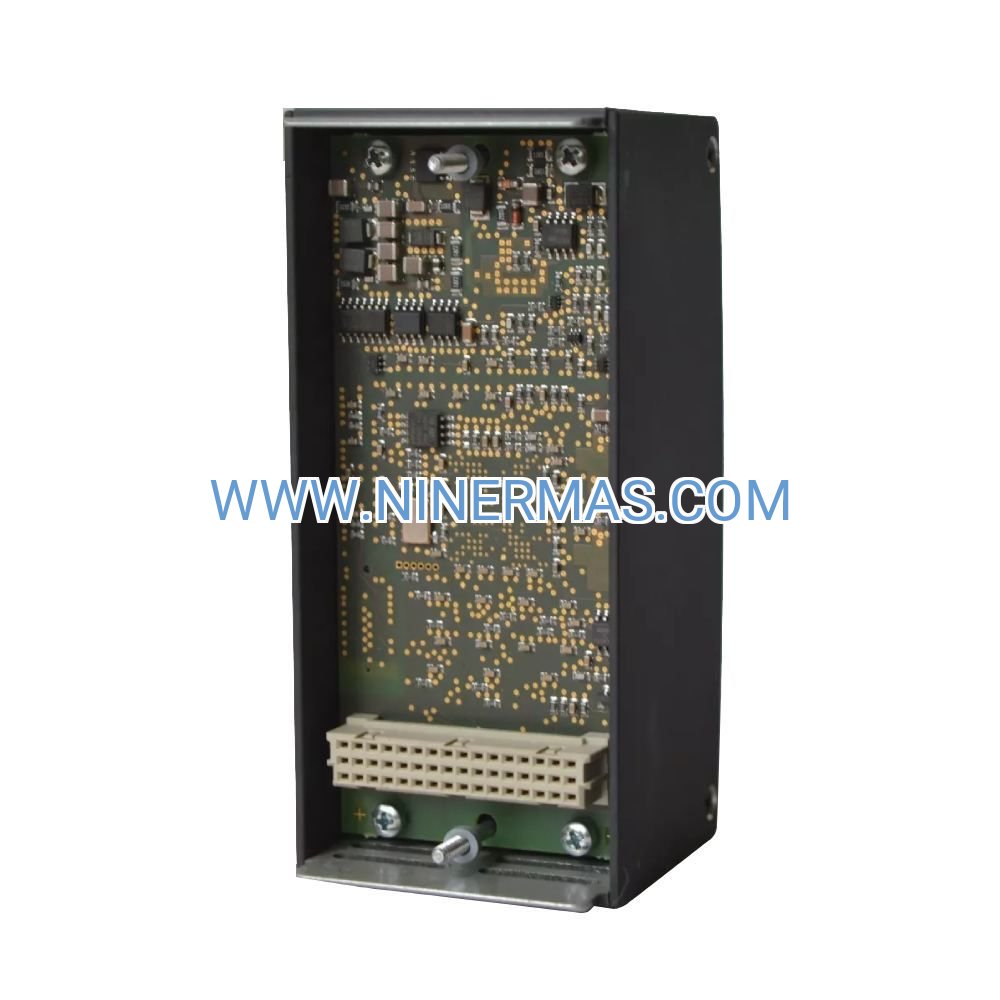
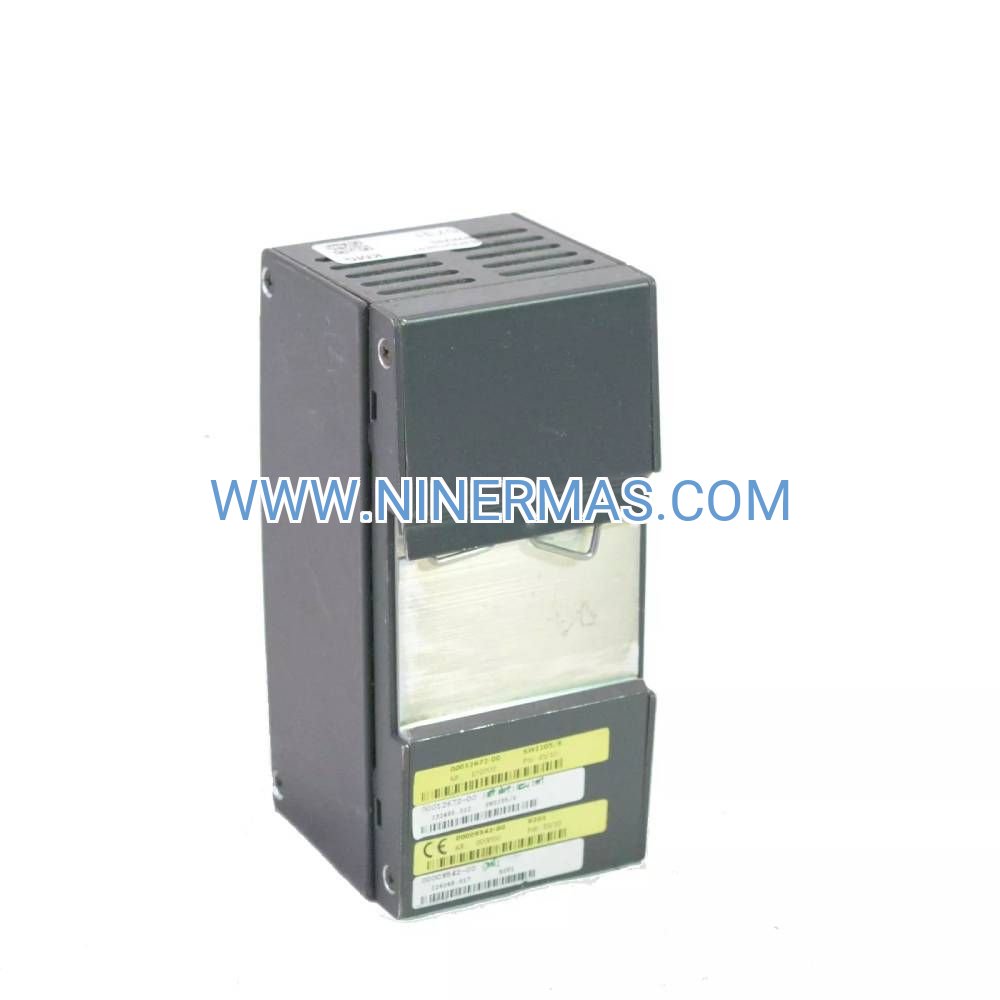
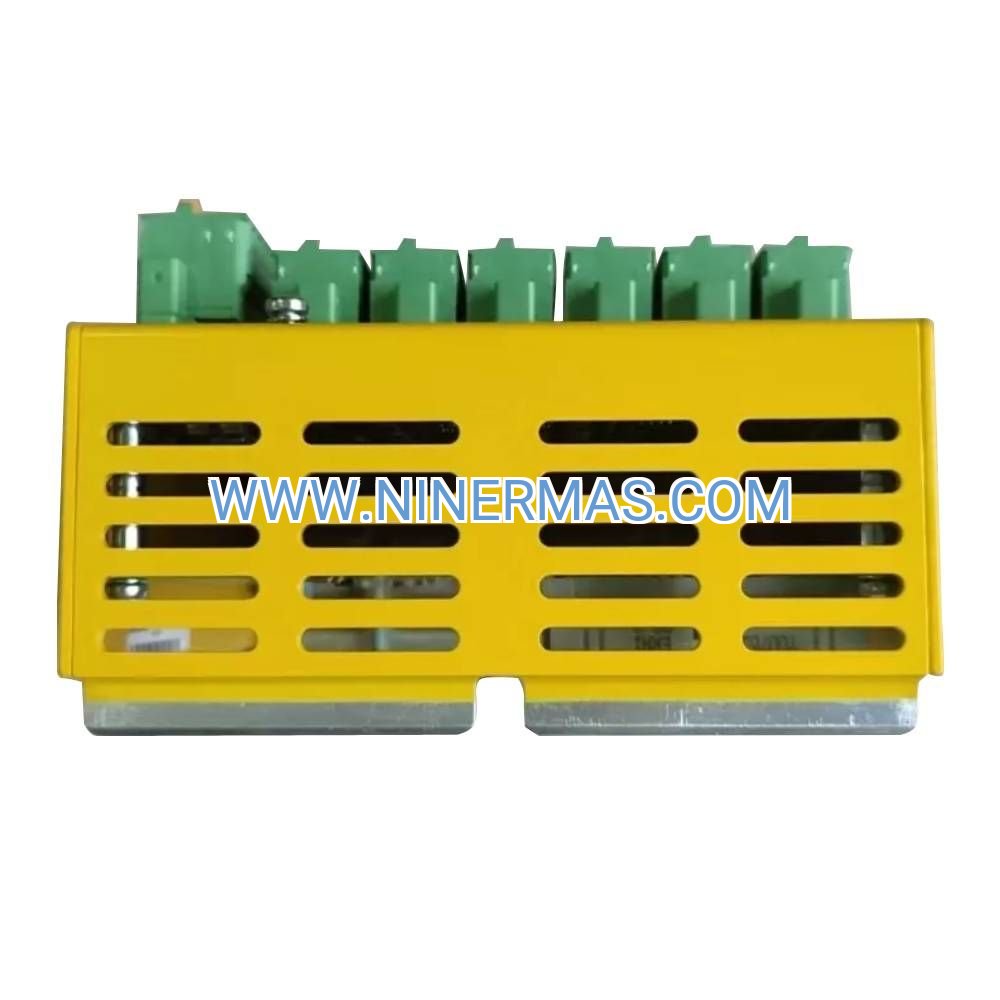
1394-SJT05-C-RL Servo Power Module (Industrial-Grade Motion Control Solution)
The 1394-SJT05-C-RL represents a cutting-edge servo power module designed for the Allen-Bradley 1394 Turbo AC servo architecture. Delivering 5 kW of continuous regulated power with integrated regenerative braking, this three-phase power supply transforms raw AC voltage into precision-controlled DC bus energy that drives demanding motion control applications across manufacturing, packaging, and material handling industries.
Built for engineers and automation specialists who demand reliability under continuous operation, this power module solves critical challenges in multi-axis coordination, energy recovery during deceleration cycles, and harmonic mitigation in industrial power systems. Whether you're retrofitting legacy CNC equipment or designing next-generation packaging lines, the 1394-SJT05-C-RL provides the foundation for responsive, energy-efficient servo systems.
With active front-end technology achieving >95% power factor and built-in EMI filtering meeting EN 61800-3 Category C2 standards, this module eliminates the need for external power conditioning equipment while reducing installation complexity and panel space requirements by up to 50% compared to distributed drive architectures.
Core Features & Performance Advantages
✓ Regenerative Energy Recovery System
Captures kinetic energy during motor deceleration and returns it to the AC supply network. In cyclic applications with frequent start-stop sequences, this feature recovers 20-40% of braking energy, translating to measurable reductions in electrical operating costs and improved thermal management across the entire servo system.
✓ Active Front-End Power Conversion
IGBT-based rectifier actively shapes input current waveform to achieve >0.95 power factor while limiting total harmonic distortion to <5% THD. This technology eliminates the need for passive power factor correction equipment and reduces upstream transformer sizing requirements by up to 30%.
✓ Precision DC Bus Regulation
Maintains 650V DC nominal output with ±2% stability across full load range (0-5 kW continuous). Tight voltage regulation ensures consistent torque output from connected axis modules, enabling sub-micron positioning accuracy in precision machining and semiconductor handling applications.
✓ Scalable Multi-Axis Architecture
Single power module supports 1-4 axis modules via common DC bus, eliminating individual AC connections to each drive. This shared power topology reduces wiring complexity, installation labor, and panel footprint while enabling dynamic power sharing between axes during coordinated motion sequences.
→ Integrated Diagnostic Intelligence
Real-time monitoring of DC bus voltage, input current, semiconductor temperature, and fan status via DeviceNet or ControlNet interface. Predictive maintenance algorithms track capacitor aging and fan runtime, enabling proactive component replacement before unplanned downtime occurs.
→ Comprehensive Protection Suite
Electronic overcurrent limiting with I²t thermal modeling, DC bus overvoltage clamping at 810V, ground fault detection at 30 mA threshold, and thermal derating based on heat sink temperature sensors. Multi-layer protection safeguards both the power module and downstream axis modules from fault conditions.
Industrial Application Scenarios
CNC Machining Centers & Precision Manufacturing
Powers 3-5 axis milling machines, turning centers, and grinding equipment requiring coordinated interpolation with positioning resolution down to 0.1 microns. Regenerative braking recovers energy during rapid tool retraction cycles, while DC bus stability ensures consistent surface finish quality across production runs. Typical deployment: vertical machining center with X-Y-Z linear axes plus rotary A-B table indexing.
High-Speed Packaging & Form-Fill-Seal Equipment
Drives pick-and-place robots, horizontal flow wrappers, and vertical baggers operating at speeds exceeding 200 cycles per minute. The module's 7.5 kW peak power rating (2-second duration) handles acceleration spikes during product changeovers, while soft-start circuitry prevents nuisance breaker trips when multiple machines power up simultaneously on shared factory circuits.
Semiconductor Wafer Handling & Die Bonding
Supports ultra-clean motion control in Class 10-100 cleanroom environments where particle generation must be minimized. Forced-air cooling design with sealed enclosure prevents contamination, while precision voltage regulation enables repeatable placement accuracy required for 300mm wafer processing and advanced packaging operations.
Web Printing & Converting Machinery
Controls tension zones, registration systems, and cut-to-length operations in flexographic, gravure, and digital printing presses processing substrates at speeds up to 600 meters per minute. Coordinated multi-axis control maintains web tension within ±2% across color stations, preventing registration errors and material waste.
Automated Storage & Retrieval Systems (AS/RS)
Powers high-bay warehouse cranes and shuttle systems handling dynamic loads from 50 kg to 2000 kg. Regenerative braking dissipates energy during load lowering and deceleration, reducing brake resistor sizing requirements while extending mechanical brake life through reduced thermal cycling.
Technical Parameters & Selection Criteria
| Parameter | Specification | Selection Notes |
|---|---|---|
| Continuous Power Output | 5 kW (4 kW @ 40°C ambient) | Derate 20% above 40°C; verify total axis module current draw |
| Peak Power Capability | 7.5 kW for 2 seconds | Handles acceleration transients; calculate duty cycle for repetitive peaks |
| Input Voltage Range | 324-528V AC, 3-phase | Nominal 380-480V systems; verify compatibility with local supply voltage |
| Input Frequency | 47-63 Hz | Suitable for 50 Hz and 60 Hz power systems worldwide |
| DC Bus Output | 650V DC nominal (540-750V operating) | Match to axis module voltage rating; monitor for overvoltage during regen |
| Regenerative Capacity | 5 kW continuous dissipation | Size external brake resistor if regen exceeds AC supply capability |
| Power Factor | >0.95 with active front end | Reduces transformer VA rating; may eliminate power factor correction equipment |
| Efficiency | >95% at rated load | Calculate heat dissipation for enclosure thermal design (250W typical) |
| Operating Temperature | 0°C to 55°C (32°F to 131°F) | Provide adequate ventilation; consider air conditioning for enclosed panels |
| Dimensions (H×W×D) | 305 × 102 × 254 mm (12" × 4" × 10") | Verify panel cutout and mounting rail compatibility |
| Weight | 10.68 kg (23.5 lbs) | Ensure mounting surface supports static and dynamic loads |
Selection Guidelines: Calculate total continuous current required by all connected axis modules (sum of RMS currents). Verify that peak current during simultaneous acceleration does not exceed 150% of continuous rating for more than 2 seconds. For applications with frequent regenerative braking (duty cycle >20%), confirm that AC supply can sink regenerated power or size external brake resistor accordingly. In ambient temperatures exceeding 40°C, apply 20% derating factor or provide forced ventilation to maintain enclosure temperature below 40°C.
Advanced Integration Capabilities
Network Connectivity & Diagnostics
DeviceNet and ControlNet interfaces provide real-time access to operational parameters including DC bus voltage (0.1V resolution), input current per phase, power module temperature, and fault history logs. Electronic data sheet (EDS) files enable automatic configuration in RSLogix 5000 programming environment, reducing commissioning time and eliminating manual parameter entry errors.
Coordinated Motion Control
When paired with 1394 axis modules and ControlLogix or CompactLogix PLCs, the power module enables advanced motion functions including electronic gearing, camming, and coordinated path control. Common DC bus architecture allows dynamic power sharing between axes—energy from decelerating axes can directly power accelerating axes without round-trip conversion losses.
Safety Integration Options
Optional Safe Torque Off (STO) input provides SIL 2 / PLd safety function per IEC 61508 and ISO 13849-1 standards. When STO circuit is opened, the power module immediately removes DC bus voltage to all connected axis modules, achieving safe state within 20 milliseconds. This feature integrates with GuardLogix safety controllers for comprehensive machine safety architectures.
Delivery Timeline & Technical Support
Standard Delivery: In-stock units ship within 2-3 business days via express courier (DHL, FedEx, UPS). Typical transit time to major industrial centers: North America 3-5 days, Europe 4-6 days, Asia-Pacific 2-4 days. All shipments include full tracking and signature confirmation.
Custom Configuration: Factory-configured units with specific firmware versions or network settings available with 7-10 business day lead time. Contact technical sales team for custom requirements including extended temperature ratings or conformal coating for harsh environments.
Warranty Coverage: 24-month manufacturer warranty covering defects in materials and workmanship. Warranty includes advance replacement service—replacement unit ships within 24 hours of fault diagnosis, minimizing production downtime. Extended warranty programs available for critical applications.
Technical Support: Access to application engineers with servo system expertise via email (sale@ninermas.com) and phone (+0086 187 5021 5667). Support includes sizing calculations, wiring diagrams, troubleshooting assistance, and firmware update guidance. Comprehensive documentation package includes installation manual, user guide, and AutoCAD dimensional drawings.
Included Documentation: Quick start guide, detailed installation manual with wiring diagrams, DeviceNet/ControlNet EDS files, RSLogix 5000 Add-On Instruction (AOI) library, and dimensional CAD files in DWG and STEP formats.
Frequently Asked Questions
Q: How do I connect multiple axis modules to this power supply unit?
A: Connect the DC bus output terminals (+ and -) from the 1394-SJT05-C-RL to the corresponding DC bus input terminals on each axis module using shielded cable rated for 750V DC. Maximum total cable length is 10 meters. Use star topology (home-run from power module to each axis) rather than daisy-chain to minimize voltage drop. Torque all DC bus terminals to 10 N⋅m and verify polarity before applying power.
Q: What total servo motor capacity can this 5 kW module support?
A: The module supports up to 5 kW continuous combined motor power across all connected axes. For example, you could power four 1.25 kW motors, two 2.5 kW motors, or one 3 kW motor plus two 1 kW motors. Peak power capability of 7.5 kW for 2 seconds accommodates simultaneous acceleration transients. Calculate RMS power based on actual duty cycle—applications with high peak-to-average ratios may support higher installed motor capacity.
Q: Does regenerative braking reduce my facility energy consumption?
A: Yes, significantly in cyclic applications. The active front-end returns braking energy to the AC supply rather than dissipating it as heat in brake resistors. Typical energy savings range from 15-25% in packaging machinery with frequent start-stop cycles, up to 40% in vertical material handling applications (cranes, elevators) where gravitational potential energy is recovered during load lowering. Actual savings depend on duty cycle, inertia ratios, and deceleration rates.
Q: What installation clearances are required for proper cooling?
A: Provide minimum 100 mm (4 inches) clearance above and below the module for unrestricted airflow through the internal fan. Side clearances of 50 mm (2 inches) allow heat dissipation from the enclosure. Mount vertically with fan intake at bottom and exhaust at top. In enclosed panels, ensure adequate ventilation—the module dissipates approximately 250W at full load. Panel temperature should not exceed 40°C; install ventilation fans or air conditioning if necessary.
Q: Can I use this power module with non-Allen-Bradley axis drives?
A: The 1394-SJT05-C-RL is specifically designed for Allen-Bradley 1394 series axis modules and is not compatible with third-party drives. The module provides a regulated 650V DC bus with specific control signaling and diagnostic protocols proprietary to the 1394 architecture. For multi-vendor systems, use individual AC-input servo drives rather than shared DC bus topology.
Q: How do I monitor power module status during operation?
A: The front panel provides three LED indicators: Power OK (green) confirms AC input and control power, DC Bus Charged (amber) indicates DC bus voltage within operating range, and Fault (red) signals any fault condition. For detailed diagnostics, connect via DeviceNet or ControlNet to access real-time data including DC bus voltage, input current per phase, temperature, and fault code history. RSLogix 5000 provides graphical status displays and trending capabilities.
Ready to Optimize Your Motion Control System?
The 1394-SJT05-C-RL servo power module delivers the precision, efficiency, and reliability your industrial automation applications demand. Whether you're upgrading existing equipment or designing new machinery, our technical team is ready to assist with sizing calculations, application guidance, and integration support.
Contact our automation specialists today:
? Email: sale@ninermas.com
? Phone: +0086 187 5021 5667
? Technical Resources: https://ninermas.com
Request a detailed quotation, technical datasheet, or application consultation. Fast worldwide shipping ensures your project stays on schedule.
© 2026 NINERMAS COMPANY LIMITED. All rights reserved.
Original Source: https://ninermas.com
Contact: sale@ninermas.com | +0086 187 5021 5667
PDF Specification
Download PDF file here:
Click to Download PDF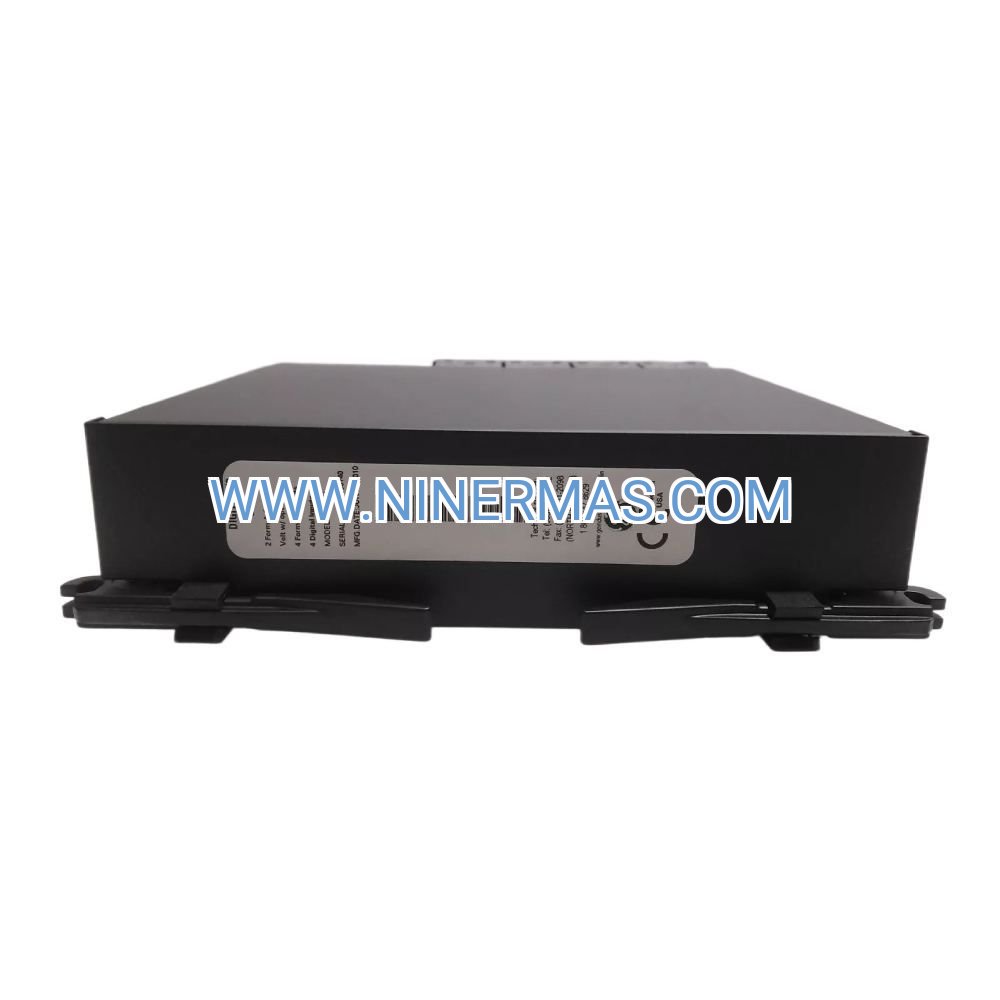

Contact Info
-
Address:22 / F, South Wo Hang building, 148 Wing Lok Street, Sheung Wan, Western District, Hong Kong
-
Phone:+8618750215667
-
Email: