Original Industrial Spare Part
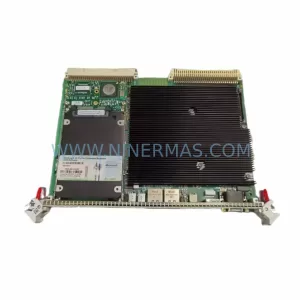
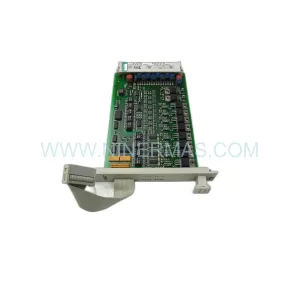
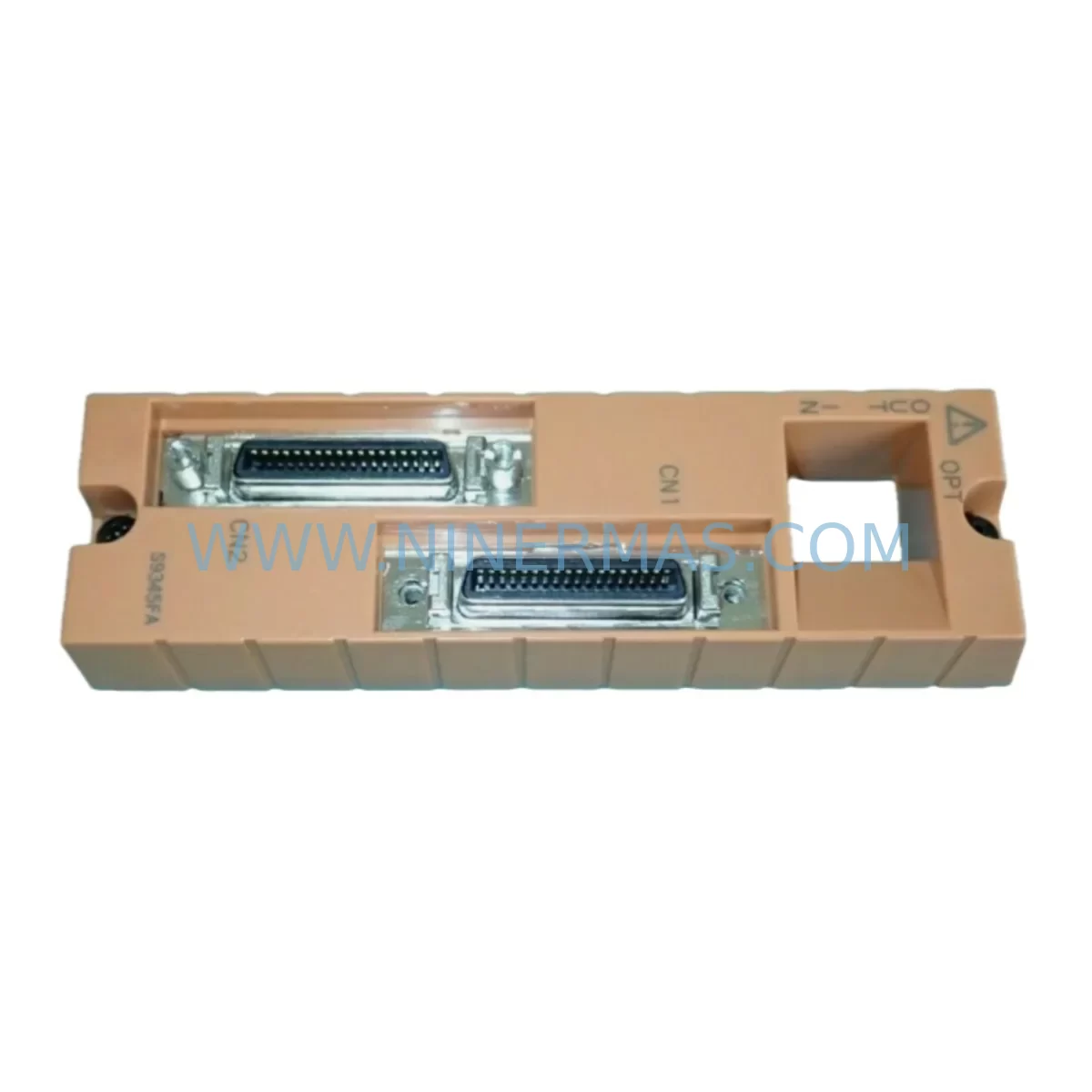
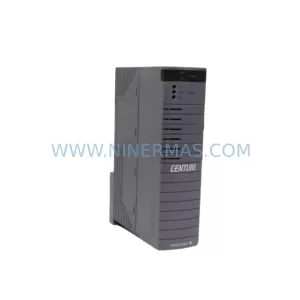
Yokogawa S9345FA Retrofit-Compatible Safety Module for Legacy Systems
Verify the part, confirm the platform family, and move straight into quotation with the right commercial details.
RFQ Ready
- SKUS9345FA
- CategorySIS Safety & Redundancy Systems
- BrandYokogawa
- SupportAvailability, lead time, condition, and shipping coordination
How Buyers Usually Use This Page
- Confirm the exact part number and platform family before sending the quote request.
- Use direct email when quantity, condition, and destination are already defined internally.
- Switch to the broader brand or category archive when you need alternates nearby.
Series Navigation
Move through the most common platform families behind this part.
Product RFQ
Send this part directly for quotation.
Include quantity, required condition, destination country, and target delivery timing. Current reference: Yokogawa S9345FA Retrofit-Compatible Safety Module for Legacy Systems with SKU S9345FA.
Yokogawa S9345FA Retrofit-Compatible Safety Module for Legacy Systems
The Yokogawa S9345FA is a safety I/O module engineered for the ProSafe-RS safety instrumented system platform, widely deployed across oil & gas, petrochemical, power generation, and process manufacturing facilities. As legacy ProSafe-RS installations age and original spare parts become increasingly difficult to source, the S9345FA has emerged as a critical retrofit and replacement component for engineers managing long-lifecycle safety systems. NINERMAS maintains verified stock of the S9345FA to support planned maintenance windows, emergency replacements, and phased system modernization programs — all backed by a 12-month warranty.
Whether you are replacing a failed module in an existing ProSafe-RS rack, upgrading a CENTUM VP-integrated safety loop, or executing a broader control system modernization, the S9345FA fits directly into the established hardware architecture without requiring firmware re-engineering or rack redesign. Its compatibility with the ProSafe-RS backplane and standard terminal wiring conventions makes it a preferred choice for maintenance teams seeking to minimize downtime and preserve validated safety logic.
Upgrade Compatibility Table
| Parameter | S9345FA Specification / Recommendation |
|---|---|
| Platform Compatibility | Yokogawa ProSafe-RS (R3.xx and above), CENTUM VP integrated safety |
| Backplane Interface | ProSafe-RS standard backplane slot; verify slot address assignment before installation |
| Terminal Wiring | Compatible with existing field wiring; confirm terminal block pitch and signal polarity before reconnection |
| Communication Protocol | Vnet/IP (ProSafe-RS native); confirm node address and network segment settings |
| SIL Rating | SIL 2 capable (verify SIL level against your Safety Requirements Specification) |
| Power Supply Requirement | 24 VDC from ProSafe-RS rack power supply; confirm available current budget before hot-swap |
| Installation Space | Standard ProSafe-RS module slot; no additional panel space required |
| Replacement Recommendation | Direct drop-in for same-series S93xx safety I/O modules; confirm I/O channel count and signal type |
| Commissioning Focus | Module address, SIL loop validation, cause-and-effect matrix verification, HMI alarm tag mapping |
| Warranty | 12-Month Warranty — all units pre-tested and serialized before shipment |
Retrofit Planning for Existing Automation Systems
A successful S9345FA retrofit begins well before the module arrives on site. Maintenance engineers should start by auditing the existing ProSafe-RS rack configuration, documenting the current slot assignments for all installed modules including the S9345SA safety output module, S9345DA digital input module, and any S9345XA expansion I/O units sharing the same backplane. Understanding the full rack population is essential because the ProSafe-RS system allocates I/O addresses based on physical slot position — an incorrect slot assignment after module replacement will cause the safety controller to generate a hardware fault and may trigger a spurious trip.
Power budget verification is a non-negotiable step. The ProSafe-RS rack power supply — typically a S9110PS or equivalent redundant power unit — must have sufficient headroom to support the S9345FA alongside all other installed modules. Engineers should measure actual rail current draw before and after module installation, particularly in high-density racks where multiple safety I/O modules, communication interface cards, and the S9110SC safety controller itself are drawing from the same 24 VDC bus.
Terminal wiring compatibility must be confirmed at the field junction box level. The S9345FA uses the standard ProSafe-RS terminal block convention, but field cables connected to the previous module should be inspected for insulation condition, correct labeling, and signal type consistency — especially in installations where the original wiring was completed more than ten years ago. In facilities running mixed analog and discrete safety loops, it is common to find that adjacent slots house an S9345AA analog input module alongside the digital I/O modules, and cross-contamination of signal types during reconnection is a known commissioning risk.
For sites integrating ProSafe-RS with the CENTUM VP distributed control system via the Vnet/IP communication backbone, the replacement module must be assigned the correct node address and verified against the CENTUM VP system builder configuration. Any mismatch between the hardware node address and the software configuration will prevent the safety system from communicating alarm and trip status to the operator HMI. Engineers should prepare a pre-tested configuration backup of the ProSafe-RS engineering tool before beginning the swap, and confirm that the SENG (Safety Engineering Tool) project file reflects the correct module type for the target slot.
In modernization projects where the broader goal is migrating from an older Yokogawa CENTUM CS 3000 safety architecture to ProSafe-RS, the S9345FA often serves as the anchor I/O module for the new safety layer while legacy ACM11 or AMM12 analog modules continue to serve non-safety process loops during the transition period. This phased approach allows facilities to validate the new safety architecture one loop at a time without requiring a full plant shutdown.
Programming compatibility should be assessed using the ProSafe-RS engineering tool’s module comparison function, which highlights any differences in channel configuration, diagnostic coverage settings, and proof test interval parameters between the outgoing and incoming module. Where the original module was configured with custom diagnostic masks or non-default proof test intervals, these settings must be manually re-entered and validated against the site’s Safety Instrumented Function (SIF) documentation before the replacement module is placed in service.
Downtime Control During System Migration
Minimizing unplanned downtime is the primary operational concern when replacing safety I/O modules in live process environments. The S9345FA supports a structured hot-swap procedure within the ProSafe-RS architecture, provided the safety controller is placed in the appropriate maintenance bypass mode before the physical module exchange. Engineers should coordinate with the control room operator to confirm that all safety functions associated with the target module are either in a safe process state or covered by an approved inhibit before initiating the bypass.
To protect original program logic, a full backup of the ProSafe-RS project — including cause-and-effect matrices, SIF configurations, and module parameter sets — should be exported from the SENG tool and stored on an isolated engineering workstation before any hardware change. This backup serves as the recovery baseline if the replacement module requires re-commissioning from scratch due to a configuration mismatch or firmware incompatibility.
Field control continuity during the swap window can be maintained by temporarily routing critical safety signals through redundant I/O paths where the rack architecture supports it. In single-path configurations, the maintenance window should be scheduled during a planned production pause, and the site’s Management of Change (MOC) procedure should be followed to document the scope, risk assessment, and post-installation validation steps. NINERMAS recommends requesting a pre-shipment function test report for each S9345FA unit to confirm channel-level I/O performance before the module reaches the site, reducing the risk of discovering a hardware defect during a live maintenance window.
Post-installation validation should include a loop check of all I/O channels, a communication link test between the S9345FA and the ProSafe-RS safety controller, confirmation of correct alarm and trip signal propagation to the CENTUM VP HMI, and a partial stroke test or proof test of any final elements connected to the module’s output channels. Documenting the as-found and as-left condition of each channel in the site’s maintenance management system closes the MOC loop and provides the audit trail required for functional safety compliance.
Retrofit Support FAQ
Q1: Is the S9345FA a direct replacement for other S93xx series safety I/O modules?
The S9345FA is designed for the ProSafe-RS platform and shares the same backplane form factor as other modules in the S93xx series. However, direct interchangeability depends on the specific I/O channel type, signal range, and diagnostic configuration of the module being replaced. Always compare the module part number suffix and channel specification sheet before confirming a like-for-like substitution. NINERMAS technical support can assist with cross-reference verification prior to order placement.
Q2: What commissioning steps are required after installing the S9345FA?
After physical installation, the module must be recognized by the ProSafe-RS safety controller through the SENG engineering tool. Required steps include slot address confirmation, module parameter download, I/O channel loop check, SIF validation against the cause-and-effect matrix, and HMI alarm tag verification in CENTUM VP. A full proof test of connected safety functions is recommended before returning the system to normal operation.
Q3: Can the S9345FA be used in systems still running older ProSafe-RS firmware versions?
Compatibility with specific ProSafe-RS firmware revisions should be confirmed against Yokogawa’s hardware compatibility matrix for your installed system version. In general, S93xx series modules are designed for forward and backward compatibility within the ProSafe-RS platform, but firmware-level feature differences may affect diagnostic reporting or channel configuration options. Contact NINERMAS with your system firmware version for a pre-sale compatibility assessment.
Q4: What does the 12-month warranty cover, and how does NINERMAS handle stock availability?
All S9345FA units supplied by NINERMAS are covered by a 12-month warranty against manufacturing defects and functional failures under normal operating conditions. Each unit undergoes pre-shipment functional testing with a serialized test report available on request. NINERMAS maintains dedicated stock of ProSafe-RS spare parts to support both emergency replacement orders and long-term procurement planning agreements. For high-priority or multi-unit requirements, contact our team to discuss reserved stock arrangements and lead-time commitments.
| Product Series | CENTUM VP |
|---|---|
| Country of Origin | JP |
Catalog Continuation
More Yokogawa modules in the catalog.
Use the brand lane to compare nearby part numbers, platform-adjacent modules, and other inquiry-ready listings before sending your final RFQ.
Catalog Continuation
Alternative parts within SIS Safety & Redundancy Systems.
Stay inside the same system family when you need substitutes, adjacent modules, or a broader shortlist for procurement review.