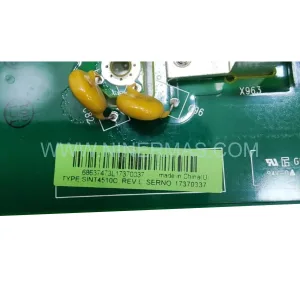
Original Industrial Spare Part
ABB OPIC1 Retrofit-Compatible Optical Interface for Legacy Systems
Verify the part, confirm the platform family, and move straight into quotation with the right commercial details.
RFQ Ready
- SKUOPIC1
- CategoryDCS Distributed Control Systems
- BrandABB
- SupportAvailability, lead time, condition, and shipping coordination
How Buyers Usually Use This Page
- Confirm the exact part number and platform family before sending the quote request.
- Use direct email when quantity, condition, and destination are already defined internally.
- Switch to the broader brand or category archive when you need alternates nearby.
Series Navigation
Move through the most common platform families behind this part.
Product RFQ
Send this part directly for quotation.
Include quantity, required condition, destination country, and target delivery timing. Current reference: ABB OPIC1 Retrofit-Compatible Optical Interface for Legacy Systems with SKU OPIC1.
ABB OPIC1 Retrofit-Compatible Optical Interface for Legacy Systems: Seamless INFI 90 DCS Upgrade
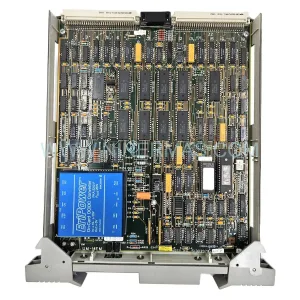
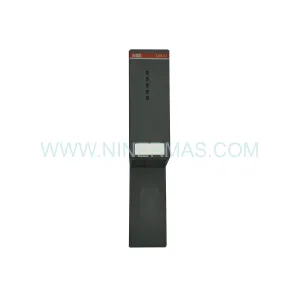
The ABB OPIC1 is an optical interface module originally designed for the ABB Bailey INFI 90 Distributed Control System (DCS) platform — one of the most widely deployed process control architectures in power generation, chemical processing, pulp and paper, and refining industries. As the INFI 90 platform has reached end-of-life status, maintenance engineers and system integrators face increasing pressure to source verified, pre-tested replacement modules that can be installed without reprogramming the entire control loop. NINERMAS maintains ready inventory of the OPIC1 to support exactly this need: fast, reliable, drop-in replacement with full compatibility verification and a 12-month warranty on every unit shipped.
The OPIC1 module serves as the optical communication bridge between the INFI 90 process control units and the plant-wide control network. It converts electrical signals to fiber-optic signals, enabling noise-immune, long-distance data transmission across the control cabinet and into the field. In aging facilities where copper-based signal degradation has become a recurring fault source, the OPIC1 is often the first module targeted for replacement during a control system audit. Its role in maintaining the integrity of the communication loop makes it a critical spare part for any site still operating on the INFI 90 platform.
Upgrade Compatibility Table
| Parameter | OPIC1 Specification | Retrofit Notes |
|---|---|---|
| Platform Compatibility | ABB Bailey INFI 90 DCS | Direct replacement for existing OPIC1 slots; no rack modification required |
| Communication Interface | Fiber-optic (INFI-NET) | Verify fiber connector type (ST) and cable routing before installation |
| Backplane Interface | INFI 90 standard module bus | Confirm backplane slot assignment matches original module address |
| Power Requirement | +5 VDC via backplane | Verify power supply module (e.g., NTPS01) output capacity before hot-swap |
| Module Address | DIP switch configurable | Record original DIP switch settings before removal; replicate exactly on new unit |
| HMI Compatibility | Compatible with INFI 90 Operator Interface | No HMI screen reconfiguration required for direct replacement |
| Program Logic | No onboard logic storage | Control logic resides in PCU/IMCIS modules; OPIC1 swap does not affect program |
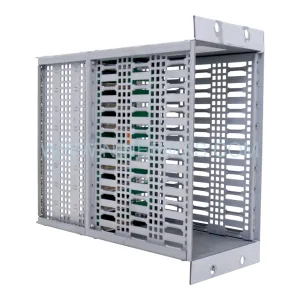
| Installation Space | Standard INFI 90 single-slot module | Fits all standard INFI 90 racks including NKTU01 and NKTU02 enclosures |
| Pre-Shipment Testing | Full functional test performed | Each unit tested for optical signal integrity and backplane communication |
| Warranty | 12 Months | Covers manufacturing defects and functional failure under normal operating conditions |
Retrofit Planning for Existing Automation Systems
When planning an OPIC1 replacement within an active INFI 90 control system, the scope of work extends well beyond the module itself. A successful retrofit requires a coordinated review of the surrounding hardware and software environment to ensure continuity of control and minimal disruption to the production process.
Begin with a power audit of the rack’s power supply module. The NTPS01 or equivalent power supply must be verified to have sufficient headroom to support the replacement OPIC1 alongside other active modules in the same rack. Insufficient power capacity is a common root cause of intermittent communication faults that are often misdiagnosed as module failure.
Next, document the existing fiber-optic cable routing. The OPIC1 connects to the INFI-NET communication loop via ST-type fiber connectors. Before removal, label each fiber connection and verify the cable condition — degraded fiber or dirty connectors will cause the replacement module to exhibit the same fault symptoms as the failed original. Clean and inspect all fiber terminations as part of the replacement procedure.
The backplane slot address must be confirmed against the system configuration database. In INFI 90 systems, the IMCIS02 communication interface module and the INNIS01 network interface module maintain the node address table for the control loop. Any mismatch between the physical DIP switch setting on the OPIC1 and the address stored in the IMCIS02 configuration will result in a communication fault immediately after restart. Cross-reference the original module’s DIP switch configuration with the engineering drawings before installing the replacement unit.
For sites that have already begun a phased migration toward a modern DCS platform, the OPIC1 replacement can be coordinated with a broader I/O modernization effort. The IMDSI02 digital input module and the IMASI01 analog input module are frequently replaced in the same maintenance window, as they share the same backplane and are subject to the same aging failure modes. Similarly, the IMMPI01 multi-point input module is often found in adjacent slots and should be inspected for capacitor aging and connector corrosion during the same outage.
Communication protocol migration is another consideration for sites planning a longer-term upgrade path. The OPIC1 operates exclusively within the INFI-NET fiber loop, which is proprietary to the ABB Bailey INFI 90 platform. Sites migrating toward Ethernet-based control architectures will need to introduce a protocol gateway — such as the INICT01 or a compatible third-party converter — to bridge INFI-NET traffic to Modbus TCP or PROFIBUS during the transition period. This gateway approach allows the legacy INFI 90 system to remain operational while new control hardware is commissioned in parallel, significantly reducing the risk of unplanned downtime.
For control cabinet upgrades that involve replacing the entire PCU assembly, the IMFEC12 field expansion controller and the IEPAS01 expansion adapter are commonly required to maintain I/O channel counts during the transition. These modules, along with the OPIC1, form the communication backbone of the INFI 90 field interface layer and should be treated as a coordinated replacement set rather than individual line items.
Downtime Control During System Migration
Minimizing downtime during an OPIC1 replacement requires advance preparation and a disciplined change management process. The INFI 90 platform supports hot-standby configurations in some installations, but the OPIC1 itself is typically a single-point-of-failure component in the communication loop. This means that replacement must be planned as a controlled outage event, coordinated with the production schedule to occur during a planned maintenance window.
Before initiating the replacement, capture a full backup of the INFI 90 system configuration using the INFI 90 Engineering Workstation software. This backup should include all PCU configurations, loop tuning parameters, alarm setpoints, and HMI display assignments. Even though the OPIC1 does not store program logic, a system backup ensures that any inadvertent configuration change during the maintenance window can be reversed quickly.
During the replacement, maintain a dedicated communication channel between the control room operator and the field technician. The operator should monitor the DCS overview display for any unexpected alarm activations during the module swap. If the system is configured with redundant communication paths, verify that the redundant path is active and healthy before taking the primary OPIC1 offline.
After installing the replacement OPIC1, allow the module to complete its self-diagnostic cycle before restoring normal control mode. Verify that all downstream I/O modules — including the INIIT02 input isolation module and any signal conditioners in the field junction boxes — are reporting correctly on the DCS overview. A structured post-installation checklist, reviewed against the original system documentation, is the most reliable method for confirming that the replacement has been completed successfully and that the control loop is operating within normal parameters.
NINERMAS provides pre-shipment test reports for all OPIC1 units, documenting optical signal levels, backplane communication verification, and power consumption measurements. These reports can be used as baseline references during post-installation commissioning to confirm that the installed unit is performing within specification.
Retrofit Support FAQ
Q: Is the OPIC1 a direct drop-in replacement for a failed unit in an INFI 90 rack?
A: Yes, provided the DIP switch settings are replicated from the original module and the fiber connectors are in good condition. No software changes are required for a direct replacement. NINERMAS verifies each unit against the INFI 90 module specification before shipment.
Q: What pre-shipment testing does NINERMAS perform on the OPIC1?
A: Every OPIC1 unit undergoes a full functional test including optical signal integrity verification, backplane communication simulation, and power consumption measurement. A test report is included with each shipment. All units are covered by a 12-month warranty from the date of delivery.
Q: Can the OPIC1 be used in a system that is being migrated from INFI-NET to a modern Ethernet-based network?
A: The OPIC1 is designed specifically for the INFI-NET fiber loop and does not natively support Ethernet protocols. For migration projects, a protocol gateway is required to bridge INFI-NET and Ethernet traffic. NINERMAS can advise on compatible gateway options based on your specific migration architecture.
Q: What is the typical lead time and stock availability for the OPIC1?
A: NINERMAS maintains ready inventory of the OPIC1 to support urgent maintenance requirements. Standard lead time for in-stock units is 3–5 business days for international shipments. For large-quantity orders or long-term supply agreements, contact our sales team to discuss reserved inventory arrangements.
| Product Series | INFI 90 |
|---|---|
| Country of Origin | SE |
Catalog Continuation
More ABB modules in the catalog.
Use the brand lane to compare nearby part numbers, platform-adjacent modules, and other inquiry-ready listings before sending your final RFQ.
SKU: AI880A 3BSE039293R1
ABB 3BSE039293R1 Service-Ready Spare Part for Industrial Maintenance
SKU: GJR5252200R0101 07DC92
ABB GJR5252200R0101 07DC92 Safety-Reliable Digital I/O Module
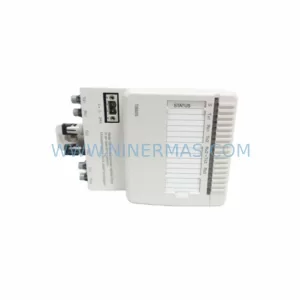
SKU: TB825 3BSE036634R1
ABB TB825 3BSE036634R1 Retrofit-Compatible Terminal for Legacy Systems
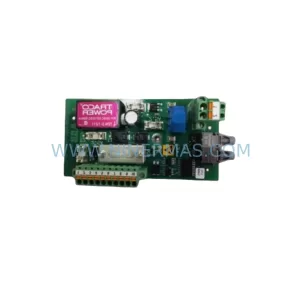
SKU: 3BHE028122R0001 XFD213A SSI
ABB 3BHE028122R0001 XFD213A Service-Ready Industrial Spare
Catalog Continuation
Alternative parts within DCS Distributed Control Systems.
Stay inside the same system family when you need substitutes, adjacent modules, or a broader shortlist for procurement review.
SKU: CC-PDIL51 CC-PDOD51 CC-PAIH51 CC-PAOH51
Honeywell CC-PDIL51 Service-Ready Spare Part for Industrial Maintenance