Original Industrial Spare Part
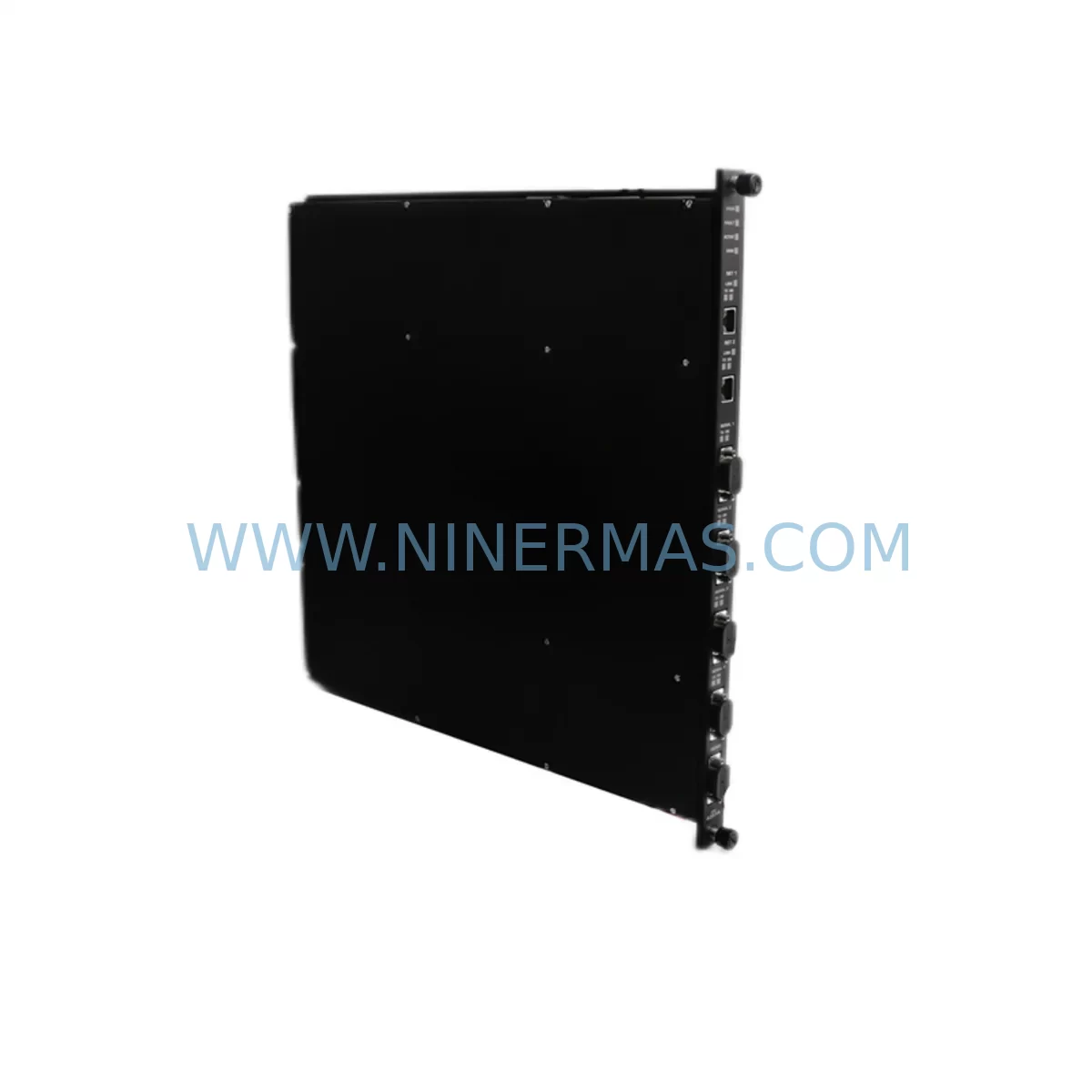
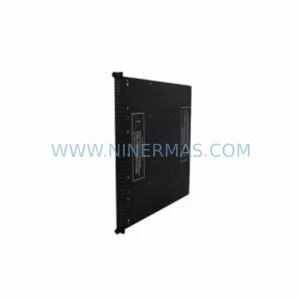
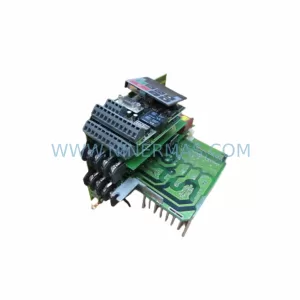
TRICONEX 4400 Retrofit-Compatible Main Processor for Tricon
Verify the part, confirm the platform family, and move straight into quotation with the right commercial details.
RFQ Ready
- SKU4400
- CategorySIS Safety & Redundancy Systems
- BrandTRICONEX
- SupportAvailability, lead time, condition, and shipping coordination
How Buyers Usually Use This Page
- Confirm the exact part number and platform family before sending the quote request.
- Use direct email when quantity, condition, and destination are already defined internally.
- Switch to the broader brand or category archive when you need alternates nearby.
Series Navigation
Move through the most common platform families behind this part.
Product RFQ
Send this part directly for quotation.
Include quantity, required condition, destination country, and target delivery timing. Current reference: TRICONEX 4400 Retrofit-Compatible Main Processor for Tricon with SKU 4400.
TRICONEX 4400 Retrofit-Compatible Main Processor for Tricon Legacy Safety Systems
The TRICONEX 4400 is a main processor module designed for the Tricon Triple Modular Redundant (TMR) safety system platform — one of the most widely deployed Safety Instrumented System (SIS) architectures in oil & gas, petrochemical, power generation, and continuous process industries. As original equipment manufacturers phase out support for legacy Tricon hardware, facilities running aging control infrastructure face increasing pressure to source verified replacement modules that maintain full backward compatibility with existing chassis, backplanes, and application logic.
NINERMAS supplies the TRICONEX 4400 as a retrofit-compatible replacement module, pre-tested and validated against Tricon TMR system specifications. Each unit undergoes functional verification prior to shipment, covering processor initialization, communication handshake with the Tricon chassis backplane, and redundancy arbitration logic. This ensures that when the module arrives on site, integration into an existing Tricon safety loop can proceed with minimal disruption to production continuity.
For facilities managing long-term spare parts programs, the 4400 processor is a critical line item. Its role as the central execution unit within the Tricon TMR architecture means that any unplanned failure — without a verified replacement on hand — can result in extended unplanned downtime, forced manual operation, or emergency shutdown of safety-critical processes. Maintaining at least one qualified spare in inventory is standard practice for SIS lifecycle management under IEC 61511 guidelines.
Upgrade Compatibility Table
| Parameter | Details |
|---|---|
| SKU / Part Number | TRICONEX 4400 |
| Platform | Tricon TMR Safety System |
| Module Type | Main Processor Module |
| Chassis Compatibility | Tricon 7-slot and 14-slot main chassis |
| Backplane Interface | Tricon TMR backplane bus (proprietary) |
| Communication Support | Triconex TriStation protocol; supports Modbus RTU/TCP via communication modules |
| Redundancy Architecture | Triple Modular Redundant (TMR) — 2-out-of-3 voting logic |
| Power Supply Compatibility | Compatible with Tricon 8310 and 8311 power supply modules |
| Programming Interface | TriStation 1131 software (v3.x / v4.x) |
| Replacement Candidates | Tricon 4351B, 4352, 4353 legacy processor variants |
| Installation Space | Standard Tricon main chassis slot — no mechanical modification required |
| Pre-Shipment Testing | Functional power-on, backplane communication, and redundancy arbitration verified |
| Warranty | 12 months from date of shipment |
Retrofit Planning for Existing Automation Systems
Replacing the TRICONEX 4400 in an operational safety system requires careful pre-engineering to avoid logic disruption or unintended process trips. The retrofit process typically begins with a full audit of the existing Tricon chassis configuration — identifying the slot assignments of all installed I/O modules, communication modules, and the current processor firmware revision. Before the replacement processor is installed, the site engineering team should export and archive the current application program from TriStation 1131, including all function block logic, cause-and-effect matrices, and configured I/O channel mappings.
Power supply capacity is a primary verification point. The Tricon 8310 or 8311 power supply modules must be confirmed to provide adequate current headroom for the replacement 4400 processor alongside all co-installed modules. In chassis configurations that include Tricon EICM (Enhanced Intelligent Communication Module) or HIIM (Hiway Interface Module) units for DCS integration, the total chassis power draw must be recalculated before the swap is executed.
Terminal wiring on field I/O modules — including Tricon digital input modules such as the 3501E or 3503E, digital output modules such as the 3601E or 3603E, and analog input modules such as the 3700A or 3703A — does not require modification during a processor replacement. Field wiring remains connected throughout the swap, which significantly reduces the risk of wiring errors during recommissioning. However, all field terminal blocks should be inspected for corrosion, loose terminations, or insulation degradation as part of the planned maintenance window.
Communication link continuity is another critical factor. If the Tricon system interfaces with a DCS or SCADA platform via a Tricon Communication Module (TCM) or an ACM (Advanced Communication Module), the communication configuration — including node addresses, baud rates, and protocol parameters — must be documented and verified post-swap. In installations where the Tricon system connects to a Foxboro DCS, Honeywell Experion, or Emerson DeltaV via Modbus or OPC, the communication link should be tested under simulated load before returning the SIS to operational status.
For sites that also operate Tricon expansion chassis connected via the Tricon Bus Expander Module (TBEM), the processor replacement sequence must account for the expanded I/O addressing scheme. Module slot addresses assigned in the TriStation 1131 program must match the physical slot configuration in both the main and expansion chassis after the new 4400 processor is installed and initialized.
HMI screen updates are often overlooked during processor replacements. If the facility uses a Wonderware InTouch, iFIX, or Ignition-based HMI connected to the Tricon system, the tag database should be verified against the restored application program to confirm that all safety-critical display points — including trip status, bypass status, and diagnostic alarms — are correctly mapped and updating in real time after the swap.
Downtime Control During System Migration
Minimizing unplanned downtime during a Tricon processor replacement requires a structured migration plan that separates preparation activities from the actual hardware swap window. The majority of the work — program backup, chassis audit, power supply verification, communication parameter documentation, and spare parts staging — should be completed during normal operation, well in advance of the planned maintenance window.
The physical processor swap in a Tricon TMR system can typically be completed within a two- to four-hour maintenance window when all preparatory steps have been executed correctly. The TMR architecture provides an inherent advantage during planned maintenance: in some operational configurations, a single processor leg can be replaced while the remaining two legs maintain the 2-out-of-3 voting logic, allowing the safety function to remain active. This capability should be confirmed with the site’s functional safety engineer and validated against the site-specific Safety Requirements Specification (SRS) before any hot-swap procedure is attempted.
After the TRICONEX 4400 replacement module is installed and the application program is downloaded via TriStation 1131, a structured recommissioning sequence should be followed: confirm processor initialization, verify backplane communication with all installed I/O modules, check communication link status with connected DCS or SCADA systems, and perform a point-by-point I/O verification against the site’s loop diagrams. Any discrepancies in I/O channel response or communication link status should be resolved before the SIS is returned to automatic mode.
Maintaining the original program logic without modification is strongly recommended for initial commissioning. Logic changes — including setpoint adjustments, bypass configuration updates, or cause-and-effect matrix revisions — should be treated as separate management-of-change (MOC) activities and executed only after the replacement processor has been confirmed stable in the operational environment.
Retrofit Support FAQ
Q1: Is the TRICONEX 4400 a direct drop-in replacement for legacy Tricon processor modules such as the 4351B or 4352?
The 4400 is designed for installation in the Tricon main chassis and is compatible with the Tricon TMR backplane bus. Compatibility with specific legacy processor variants depends on the chassis generation and firmware revision in use at the site. NINERMAS recommends providing your existing chassis model and firmware version for a pre-sale compatibility confirmation before ordering.
Q2: What pre-shipment testing is performed on the TRICONEX 4400 before delivery?
Each TRICONEX 4400 unit supplied by NINERMAS undergoes functional power-on testing, backplane communication verification, and redundancy arbitration logic checks prior to shipment. A test report is available upon request. All units are covered by a 12-month warranty from the date of shipment.
Q3: Can the existing TriStation 1131 application program be reloaded directly to the replacement 4400 processor without modification?
In most cases, yes — provided the replacement processor firmware revision is compatible with the program version archived from the original unit. NINERMAS recommends archiving the full TriStation 1131 project, including all configuration files and revision history, before initiating the swap. If a firmware mismatch is identified, the program may require a minor revision compile before download.
Q4: What is the typical lead time and stock availability for the TRICONEX 4400?
NINERMAS maintains stock of the TRICONEX 4400 to support urgent spare parts requirements. Standard lead time for in-stock units is 3–7 business days for international shipment. For long-term spare parts programs or multi-unit procurement, contact our sales team to discuss reserved stock arrangements and volume pricing.
| Product Series | Tricon |
|---|---|
| Country of Origin | US |
Catalog Continuation
Likely Triconex platform matches.
These parts are closer to the same platform family signaled by the current SKU and title, so buyers can validate continuity before sending a final RFQ.
Catalog Continuation
More TRICONEX modules in the catalog.
Use the brand lane to compare nearby part numbers, platform-adjacent modules, and other inquiry-ready listings before sending your final RFQ.
Catalog Continuation
Alternative parts within SIS Safety & Redundancy Systems.
Stay inside the same system family when you need substitutes, adjacent modules, or a broader shortlist for procurement review.
SKU: IS200BPVCG1BR1
GE IS200BPVCG1BR1 Safety-Reliable Board for Critical Control
SKU: FC-SCNT02 FC-TCNT11 FC-SCNT01 FC-SSWM01 .CC-SDRX01
Honeywell FC-SCNT02 Retrofit-Compatible Safety Controller Node
SKU: G85139-H1750-C810-D
Siemens G85139-H1750-C810-D Safety-Reliable Drive Module