Original Industrial Spare Part
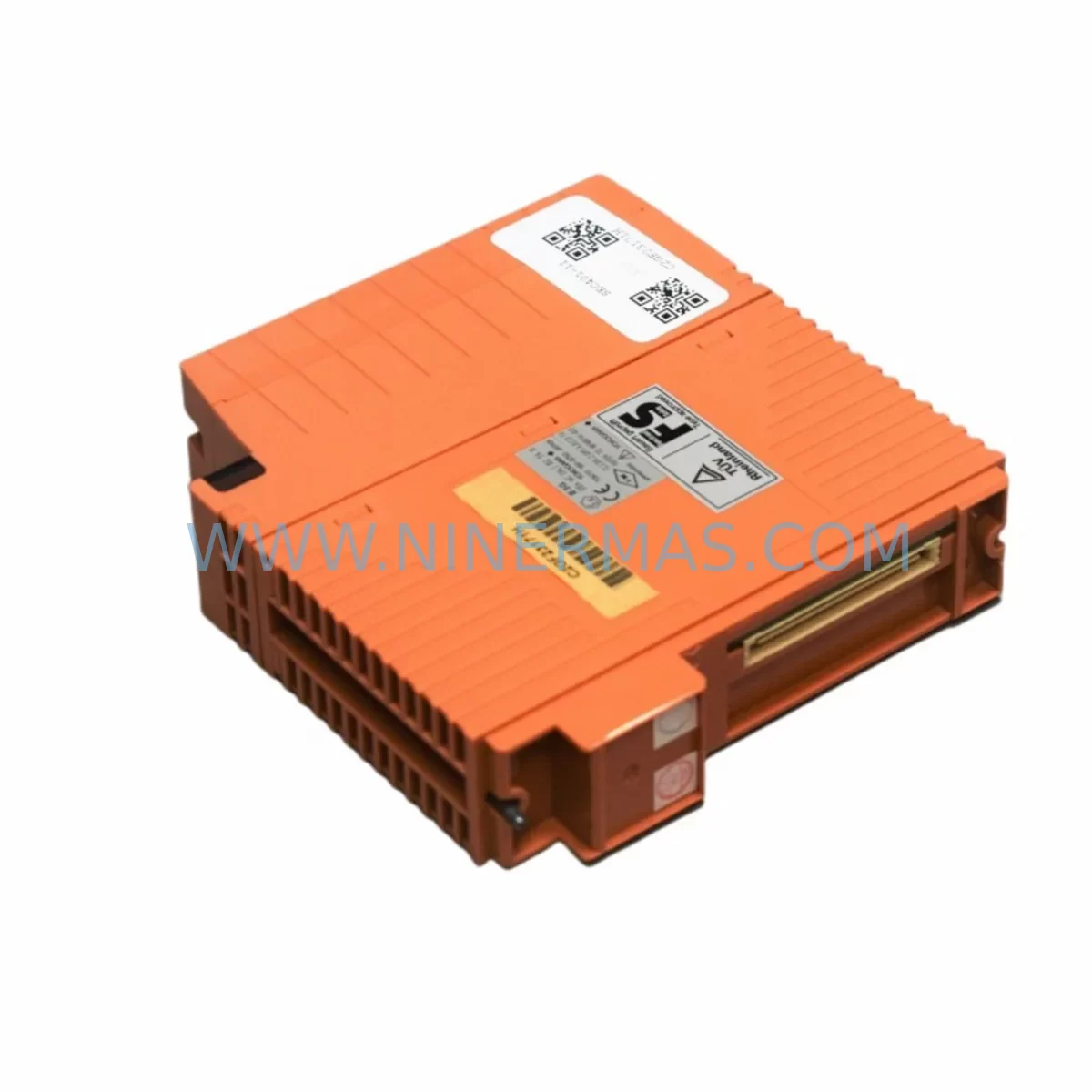
YOKOGAWA SEC401-51 S3 Service-Ready Spare Part
Verify the part, confirm the platform family, and move straight into quotation with the right commercial details.
RFQ Ready
- SKUSEC401-51 S3
- CategoryDCS Distributed Control Systems
- BrandYokogawa
- SupportAvailability, lead time, condition, and shipping coordination
How Buyers Usually Use This Page
- Confirm the exact part number and platform family before sending the quote request.
- Use direct email when quantity, condition, and destination are already defined internally.
- Switch to the broader brand or category archive when you need alternates nearby.
Series Navigation
Move through the most common platform families behind this part.
Product RFQ
Send this part directly for quotation.
Include quantity, required condition, destination country, and target delivery timing. Current reference: YOKOGAWA SEC401-51 S3 Service-Ready Spare Part with SKU SEC401-51 S3.
YOKOGAWA SEC401-51 S3 Service-Ready Spare Part for Industrial Maintenance
The YOKOGAWA SEC401-51 S3 is a ruggedized ESB (Enhanced Serial Backplane) Bus Coupler engineered for demanding industrial environments where signal integrity, thermal resilience, and continuous uptime are non-negotiable. As a critical communication backbone component within YOKOGAWA’s CENTUM VP and CENTUM CS 3000 Distributed Control Systems (DCS), the SEC401-51 S3 manages high-speed data exchange between field control stations (FCS), I/O modules, and the engineering/operator workstations across the ESB highway. When this coupler fails or degrades, the consequences extend far beyond a single loop — entire process segments can go offline, triggering costly unplanned shutdowns in refinery, chemical, power generation, and pharmaceutical operations.
Sourced as an original YOKOGAWA spare part, the SEC401-51 S3 is pre-tested, serialized, and shipped with full traceability documentation. NINERMAS maintains ready stock to support emergency callouts, planned turnarounds, and long-term spare parts programs. Every unit carries a 12-month warranty from the date of shipment, giving maintenance engineers and procurement teams the confidence to commit to multi-unit stocking agreements without lifecycle risk.
Spare Maintenance Table
| Parameter | Specification / Detail |
|---|---|
| Part Number | SEC401-51 S3 |
| Manufacturer | YOKOGAWA Electric Corporation |
| Series | CENTUM VP / CENTUM CS 3000 |
| Module Type | ESB Bus Coupler (Enhanced Serial Backplane) |
| Function | High-speed data communication between FCS, I/O modules, and operator stations via ESB highway |
| Environmental Rating | Ruggedized — S3 suffix denotes enhanced tolerance for vibration, humidity, and temperature extremes |
| Operating Temperature | 0°C to 60°C (typical DCS cabinet range; verify site conditions) |
| Mounting | ESB backplane slot — direct plug-in replacement, no re-wiring required |
| Compatibility | CENTUM VP R4.x / R5.x / R6.x; CENTUM CS 3000 R3.x field control stations |
| Communication Protocol | YOKOGAWA proprietary ESB highway protocol |
| Origin | Japan |
| Condition | Original New / Tested Surplus (confirmed before shipment) |
| Warranty | 12 Months from shipment date |
| Pre-shipment Testing | Functional verification and visual inspection completed |
| Lead Time | In-stock: 3–5 business days; Ex-stock programs available for long-term contracts |
| Application Sectors | Oil & Gas, Petrochemical, Power Generation, Pharmaceutical, Pulp & Paper |
| Maintenance Interval | Inspect every 12–24 months; replace proactively at first sign of communication fault or CRC error escalation |
Maintenance Planning for Continuous Operation
When a maintenance or reliability engineer identifies a degraded or failed SEC401-51 S3 during a control cabinet inspection or DCS diagnostic sweep, the replacement scope should never be limited to the coupler alone. The ESB bus coupler sits at the intersection of power distribution, backplane communication, and field I/O — meaning adjacent components are subject to the same thermal and electrical stress cycles.
Begin by verifying the ESB backplane power supply module (typically a YOKOGAWA PW481 or PW482 series) that feeds the coupler slot. A marginal power supply delivering voltage outside the ±5% tolerance band is a leading cause of premature coupler failure and intermittent communication faults. Simultaneously, inspect the ESB terminator resistors at both ends of the highway segment — degraded terminators generate reflections that corrupt data frames and trigger spurious alarms at the operator station.
On the I/O side, review the AAI141 and AAI143 analog input modules installed in the same field control station. These modules share the ESB highway bandwidth with the SEC401-51 S3, and a failing coupler often manifests first as intermittent channel dropouts on high-density analog cards before a hard communication fault is logged. Similarly, ADV151 and ADV161 digital input/output modules should be checked for contact bounce counts and diagnostic error registers — elevated error rates correlate with bus-level instability.
For sites running YOKOGAWA STARDOM FCN/FCJ remote I/O nodes connected back to the CENTUM VP system via Vnet/IP, confirm that the Vnet/IP coupler cards and associated RJ-45 patch cables and managed switches in the control room are operating within specification. A degraded ESB segment can cascade latency into the Vnet/IP layer, causing false timeout alarms at the HIS (Human Interface Station).
During the same maintenance window, it is best practice to inspect the YOKOGAWA HIS workstation UPS battery health and the FCS processor module (CP345 or CP451 series) firmware revision. Outdated firmware on the field control station processor can exacerbate communication recovery time after a coupler swap, extending the window of process uncertainty. Ensure the ESB cable assemblies — particularly the shielded twisted-pair segments between cabinet bays — are free of mechanical damage, proper shield grounding, and within the maximum segment length specification.
For sites with HART-enabled field instruments wired through YOKOGAWA HART multiplexers or signal isolators (such as the MTL or P+F series installed in the same marshalling cabinet), verify that the HART pass-through configuration is intact after the coupler replacement. A bus reset during the swap can temporarily suppress HART polling, which may not self-recover without a manual re-initialization of the HART gateway.
Finally, update the spare parts register to reflect the consumed SEC401-51 S3 unit and trigger a replenishment order. Sites operating CENTUM VP systems beyond the 10-year mark should consider holding a minimum of two SEC401-51 S3 units per FCS cabinet as part of a proactive lifecycle extension strategy — particularly as YOKOGAWA transitions newer installations to CENTUM VP R6 with updated hardware baselines.
Site Replacement Workflow
Step 1 — Pre-replacement verification: Log into the YOKOGAWA Plant Resource Manager (PRM) or CENTUM VP engineering station and capture a full diagnostic snapshot of the affected FCS. Record all active alarms, communication error counters, and module status flags. This baseline is essential for post-replacement comparison and maintenance record compliance.
Step 2 — Safe isolation: Coordinate with the control room operator to place the affected FCS loops in manual or cascade-hold mode. For critical process loops (pressure, temperature, flow), confirm that the field instruments are in a safe state before proceeding. The SEC401-51 S3 is a hot-swap capable module in most CENTUM VP configurations, but site-specific safety procedures must always take precedence — consult the site’s Management of Change (MOC) protocol.
Step 3 — Physical replacement: With ESD precautions in place, extract the failed SEC401-51 S3 from the ESB backplane slot. Inspect the backplane connector pins for corrosion, bent contacts, or debris. Insert the replacement unit firmly until the locking tabs engage. The module’s LED status indicators should cycle through initialization within 15–30 seconds.
Step 4 — Communication restoration: Monitor the CENTUM VP system display for ESB highway status recovery. All previously faulted I/O modules should return to normal scan within one to three minutes. If any modules remain in fault state, perform a targeted module reset from the engineering station rather than a full FCS restart — this minimizes process disruption and reduces the risk of setpoint loss on non-redundant loops.
Step 5 — Post-replacement validation: Run a full I/O channel check across all modules in the affected FCS. Compare current diagnostic counters against the pre-replacement baseline. Document the replacement in the site’s CMMS (Computerized Maintenance Management System) with the new module serial number, installation date, and technician sign-off. Update the spare parts inventory and initiate replenishment if stock falls below the site’s minimum holding level.
This structured workflow ensures that replacing the SEC401-51 S3 delivers a clean, verifiable restoration of DCS communication integrity — minimizing downtime, protecting process safety, and maintaining audit-ready maintenance records.
Spare Parts Support FAQ
Q1: Is the SEC401-51 S3 compatible with both CENTUM VP and CENTUM CS 3000 systems?
Yes. The SEC401-51 S3 ESB Bus Coupler is compatible with CENTUM CS 3000 R3.x and CENTUM VP R4.x through R6.x field control stations that use the ESB backplane architecture. Always verify the FCS hardware generation and backplane slot type against the YOKOGAWA hardware compatibility matrix before installation. NINERMAS technical support can assist with compatibility confirmation prior to order placement.
Q2: What pre-shipment testing is performed on each SEC401-51 S3 unit?
Every SEC401-51 S3 dispatched by NINERMAS undergoes a functional power-on test, visual inspection for physical damage, and connector integrity verification. Units sourced as original new stock are shipped in original YOKOGAWA packaging with serialization intact. Tested surplus units are individually inspected and re-certified before dispatch. A test report is available upon request for quality-critical procurement programs.
Q3: What warranty and long-term supply commitment does NINERMAS offer?
All SEC401-51 S3 units are covered by a 12-month warranty from the date of shipment, covering manufacturing defects and functional failures under normal operating conditions. For sites requiring long-term supply assurance — particularly those managing CENTUM VP systems beyond the standard product lifecycle — NINERMAS offers stock reservation agreements and multi-year supply contracts. Contact our team to discuss minimum holding quantities, lead-time guarantees, and pricing structures for annual maintenance programs.
Q4: How should we manage SEC401-51 S3 inventory for a multi-FCS plant?
For plants operating three or more CENTUM VP or CS 3000 field control stations with ESB backplane architecture, the recommended minimum holding is one SEC401-51 S3 per two FCS cabinets, with a site-wide floor of two units. Plants in remote locations or with extended supplier lead times should increase this to one unit per FCS. Integrate the SEC401-51 S3 into your annual spare parts review cycle alongside power supply modules, processor cards, and I/O modules to ensure balanced lifecycle coverage across the entire DCS hardware stack.
| Product Series | CENTUM VP |
|---|---|
| Country of Origin | JP |
Catalog Continuation
More Yokogawa modules in the catalog.
Use the brand lane to compare nearby part numbers, platform-adjacent modules, and other inquiry-ready listings before sending your final RFQ.
Catalog Continuation
Alternative parts within DCS Distributed Control Systems.
Stay inside the same system family when you need substitutes, adjacent modules, or a broader shortlist for procurement review.
SKU: CC-PDIL51 CC-PDOD51 CC-PAIH51 CC-PAOH51
Honeywell CC-PDIL51 Service-Ready Spare Part for Industrial Maintenance