Original Industrial Spare Part
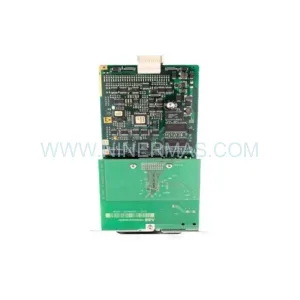
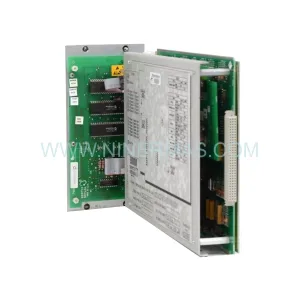
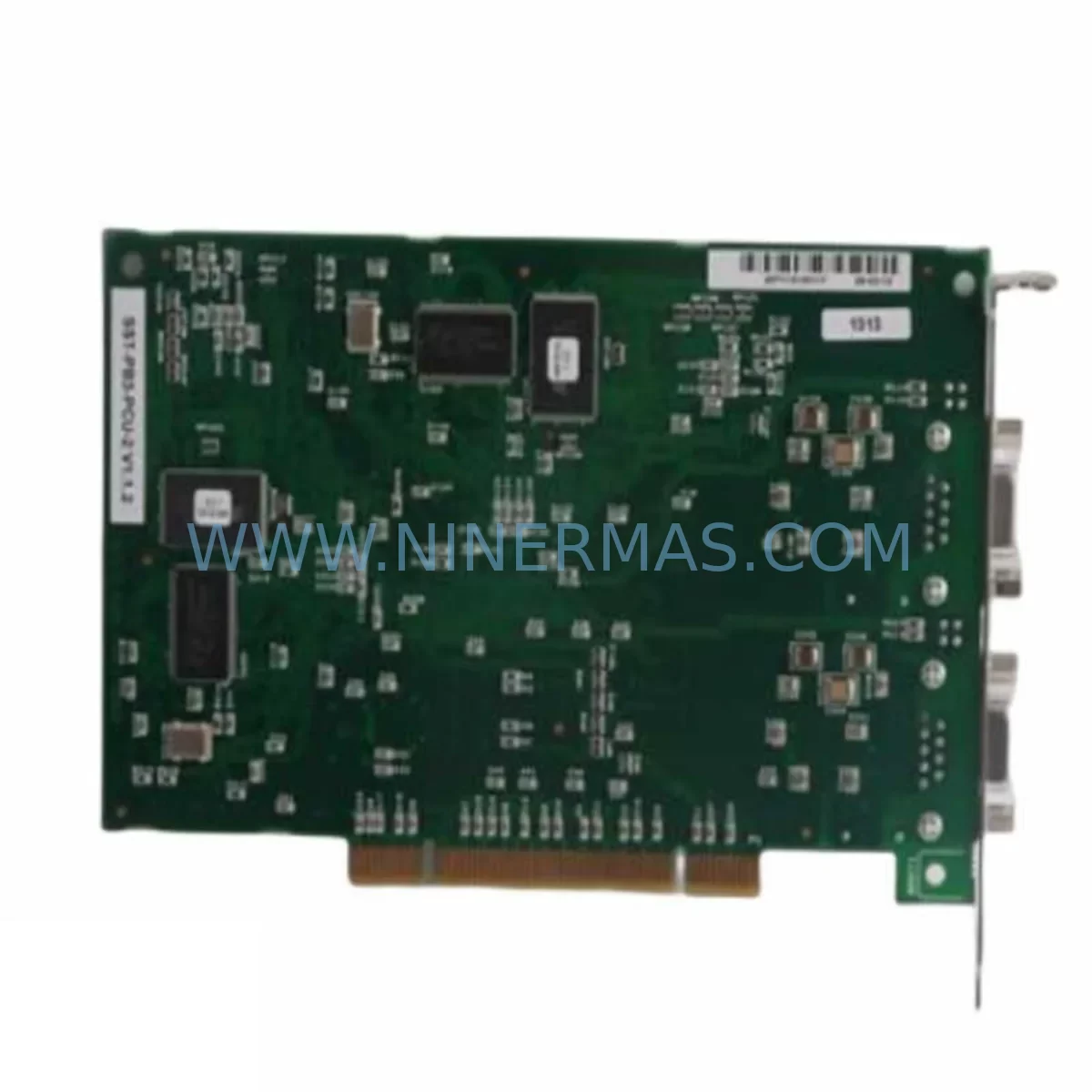
SST SST-PFB3-VME-2 Retrofit-Compatible Profibus VME Module
Verify the part, confirm the platform family, and move straight into quotation with the right commercial details.
RFQ Ready
- SKUSST-PFB3-VME-2/SST-PB3-VME-1
- CategoryPLC & Industrial Automation Modules
- BrandSST
- SupportAvailability, lead time, condition, and shipping coordination
How Buyers Usually Use This Page
- Confirm the exact part number and platform family before sending the quote request.
- Use direct email when quantity, condition, and destination are already defined internally.
- Switch to the broader brand or category archive when you need alternates nearby.
Series Navigation
Move through the most common platform families behind this part.
Product RFQ
Send this part directly for quotation.
Include quantity, required condition, destination country, and target delivery timing. Current reference: SST SST-PFB3-VME-2 Retrofit-Compatible Profibus VME Module with SKU SST-PFB3-VME-2/SST-PB3-VME-1.
SST SST-PFB3-VME-2 Retrofit-Compatible Profibus VME Module: Seamless Legacy System Integration and Upgrade
The SST SST-PFB3-VME-2 (also referenced as SST-PB3-VME-1) is a high-performance Profibus DP master/slave communication module designed for VME bus architectures. As legacy Profibus VME platforms reach end-of-life and OEM support windows close, the SST-PFB3-VME-2 has become a critical retrofit component for engineers tasked with sustaining production continuity, extending control system lifecycles, and executing controlled migration programs without full platform replacement.
NINERMAS maintains verified in-stock inventory of the SST-PFB3-VME-2, supported by a 12-month warranty and pre-shipment functional testing. Each unit is inspected against original SST specifications before dispatch, ensuring compatibility with existing VME backplane configurations and Profibus DP network topologies.
Upgrade Compatibility Table
| Parameter | SST-PFB3-VME-2 Specification | Retrofit / Replacement Notes |
|---|---|---|
| Bus Interface | VME (IEEE 1014) 6U/9U | Verify backplane slot pitch and J1/J2 connector alignment before installation |
| Communication Protocol | Profibus DP (EN 50170), up to 12 Mbps | Compatible with existing Profibus DP V0/V1 networks; confirm GSD file version with SCADA/DCS host |
| Replaces / Upgrades | SST-PB3-VME-1, SST-PFB3-VME-1 | Direct form-factor replacement; re-use existing DB9 Profibus connector and cable |
| Power Requirement | +5 VDC via VME backplane (typ. 1.5 A) | Confirm backplane PSU capacity; legacy VME power supplies (e.g., Elma, Schroff) must supply adequate current margin |
| Module Address / Slot | Configurable via SST Configuration Utility | Re-enter original module address settings; document existing address map before removal of old module |
| Driver / Software | SST Profibus Driver Suite (Windows/VxWorks/QNX) | Confirm OS compatibility; driver re-installation may be required after hardware swap |
| Installation Space | Single VME slot (6U form factor) | Verify available slot in VME chassis; adjacent module clearance required for DB9 cable routing |
| Commissioning | SST Configuration Utility + Profibus network scan | Run full DP slave enumeration after installation; validate I/O data exchange before returning to production |
| Warranty | 12-Month Warranty | Pre-shipment Functional Test Included | |
Retrofit Planning for Existing Automation Systems
Replacing a Profibus VME communication module in a live automation environment demands careful pre-planning across multiple system layers. Engineers undertaking an SST-PFB3-VME-2 retrofit should begin with a full audit of the existing VME chassis configuration — documenting every occupied slot, the installed VME CPU board (such as a Motorola MVME or Radstone PPMC series processor), and the current backplane power budget. The VME power supply must be verified to deliver sufficient +5 VDC current headroom for the SST-PFB3-VME-2 alongside co-resident modules such as analog I/O boards, digital I/O modules, and any VME-to-PCI bridge cards.
On the Profibus network side, the existing DP segment topology must be mapped before the swap. This includes identifying all slave devices — variable frequency drives, remote I/O stations, valve manifolds, and distributed safety modules — along with their configured station addresses and GSD file versions registered in the Profibus master configuration tool (e.g., Siemens STEP 7 HW Config, Softing PB-Config, or the SST Configuration Utility itself). The replacement SST-PFB3-VME-2 must be configured to mirror the original master parameters: baud rate (typically 1.5 Mbps or 12 Mbps), bus cycle time, watchdog timeout, and DP slave parameterization records.
Wiring adaptation is generally straightforward since the SST-PFB3-VME-2 uses a standard DB9 female Profibus connector, compatible with existing shielded twisted-pair Profibus cables terminated with 120 Ω bus termination resistors at both segment ends. However, engineers should inspect the cable shield grounding at the control cabinet entry point and confirm that the Profibus repeater or optical link module — if present in the segment — remains correctly configured after the module swap.
For systems where the SST-PFB3-VME-2 interfaces with an HMI platform (such as a Wonderware InTouch, Ignition SCADA, or a legacy Intellution FIX station), the communication driver binding must be verified post-installation. The HMI tag database references the Profibus master’s I/O data map; any change in module slot address or driver instance numbering will require corresponding updates in the HMI project. It is strongly recommended to export and archive the current HMI project and PLC program before beginning the hardware replacement.
In systems that also incorporate SST-5136-PFB-ISA or SST-5136-PFB-PCI Profibus interface cards in adjacent workstations or engineering terminals, the network-wide address allocation must be reviewed to avoid conflicts with the reconfigured VME master. Similarly, if the control architecture includes a Profibus PA segment connected via a DP/PA coupler, the coupler’s segment parameters should be re-validated after the master module replacement to ensure uninterrupted field instrument communication.
Signal isolation requirements should also be assessed during retrofit planning. In environments with high electrical noise — common in motor control centers, large drive cabinets, or arc furnace control rooms — the addition of a Profibus signal isolator or surge arrester between the SST-PFB3-VME-2 DB9 port and the field cable may be warranted to protect the new module and extend its service life.
Downtime Control During System Migration
Minimizing production downtime during an SST-PFB3-VME-2 swap requires a structured migration sequence. The recommended approach is to perform all pre-configuration work offline: load the SST Configuration Utility on a laptop, configure the replacement module’s Profibus master parameters to match the original unit exactly, and verify the configuration file before the scheduled maintenance window begins.
During the maintenance window, the sequence should follow: (1) archive the current PLC program and HMI project to a secure backup location; (2) power down the VME chassis following the correct sequence — field I/O first, then the VME CPU, then the backplane power supply; (3) remove the failed or end-of-life SST-PFB3-VME-2 and install the replacement unit in the same slot; (4) restore power and allow the VME CPU to complete its boot sequence before enabling the Profibus master; (5) run a full Profibus network scan to confirm all DP slaves are detected and responding; (6) verify I/O data exchange in the PLC program’s diagnostic blocks before releasing the system to automatic mode.
For critical processes where even a brief interruption is unacceptable, a hot-standby VME chassis with a pre-configured SST-PFB3-VME-2 can be prepared in advance, allowing a chassis-level switchover rather than a module-level swap. This approach is particularly effective in continuous process industries such as chemical, oil and gas, and power generation, where the cost of unplanned downtime far exceeds the investment in a spare chassis assembly.
Throughout the migration, maintaining a detailed commissioning log — recording each step, the personnel involved, the time elapsed, and any deviations from the planned procedure — provides both a quality record and a reference document for future maintenance cycles. NINERMAS recommends retaining the replaced module as a secondary spare for a minimum of 12 months post-migration, given the increasing scarcity of VME-format Profibus communication hardware on the open market.
Retrofit Support FAQ
Q1: Is the SST-PFB3-VME-2 a direct replacement for the SST-PB3-VME-1?
Yes. The SST-PFB3-VME-2 is the designated successor to the SST-PB3-VME-1 and shares the same VME slot form factor, DB9 Profibus connector pinout, and software driver interface. In most installations, the replacement is a direct swap with no wiring modifications required. The SST Configuration Utility configuration file from the original unit can be loaded directly onto the replacement module after verifying the firmware version compatibility.
Q2: What pre-shipment testing does NINERMAS perform on the SST-PFB3-VME-2?
Each SST-PFB3-VME-2 unit supplied by NINERMAS undergoes functional verification prior to dispatch, including power-on self-test confirmation, Profibus DP communication link validation, and VME bus interface check. Units are shipped with a test report and are covered by a 12-month warranty from the date of delivery. In-stock units are available for same-week dispatch to support urgent retrofit and breakdown recovery requirements.
Q3: Can the SST-PFB3-VME-2 operate on a Profibus network that also includes Siemens ET 200 remote I/O stations and third-party DP slaves?
Yes. The SST-PFB3-VME-2 operates as a standard Profibus DP master and is fully interoperable with any DP-compliant slave device, including Siemens ET 200M, ET 200S, and ET 200B remote I/O stations, as well as third-party drives, valve controllers, and safety modules from vendors such as Phoenix Contact, Pepperl+Fuchs, and Turck. Slave parameterization is managed through GSD files loaded into the SST Configuration Utility.
Q4: What is the lead time and warranty coverage for the SST-PFB3-VME-2?
NINERMAS maintains in-stock inventory of the SST-PFB3-VME-2 to support urgent breakdown and planned retrofit requirements. Standard lead time for in-stock units is 3–7 business days to major industrial regions. All units are supplied with a 12-month warranty covering manufacturing defects and functional failures under normal operating conditions. Extended procurement planning and long-term supply agreements are available for customers with ongoing spare parts programs.
| Product Series | Other series |
|---|
Catalog Continuation
More SST modules in the catalog.
Use the brand lane to compare nearby part numbers, platform-adjacent modules, and other inquiry-ready listings before sending your final RFQ.
SKU: SST-PB3-VME-1-E
SST SST-PB3-VME-1-E Safety-Reliable PROFIBUS VME Interface
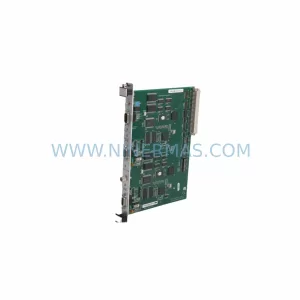
SKU: SST-PB3-VME-2-E
SST SST-PB3-VME-2-E Retrofit-Compatible PROFIBUS VME Module
Catalog Continuation
Alternative parts within PLC & Industrial Automation Modules.
Stay inside the same system family when you need substitutes, adjacent modules, or a broader shortlist for procurement review.
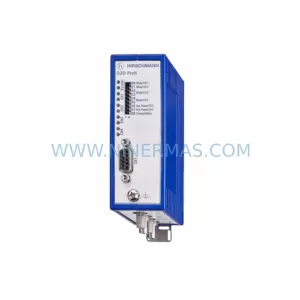
SKU: OZDPROFI12MG12
Hirschmann OZDPROFI12MG12 Spare Part for Industrial Maintenance
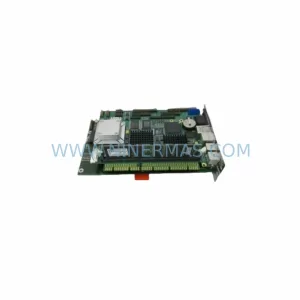
SKU: 07025-0000-70-1-04
KONTRON 07025-0000-70-1-04 Service-Ready Spare Part
SKU: C4KR5R-1400 00-183-853
KUKA 00-183-853 Retrofit-Compatible Power Module for Legacy Systems