Original Industrial Spare Part
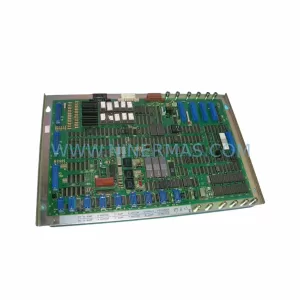
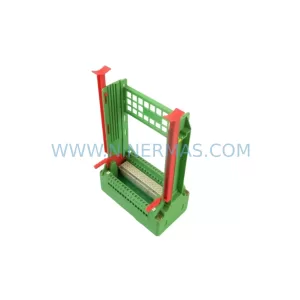
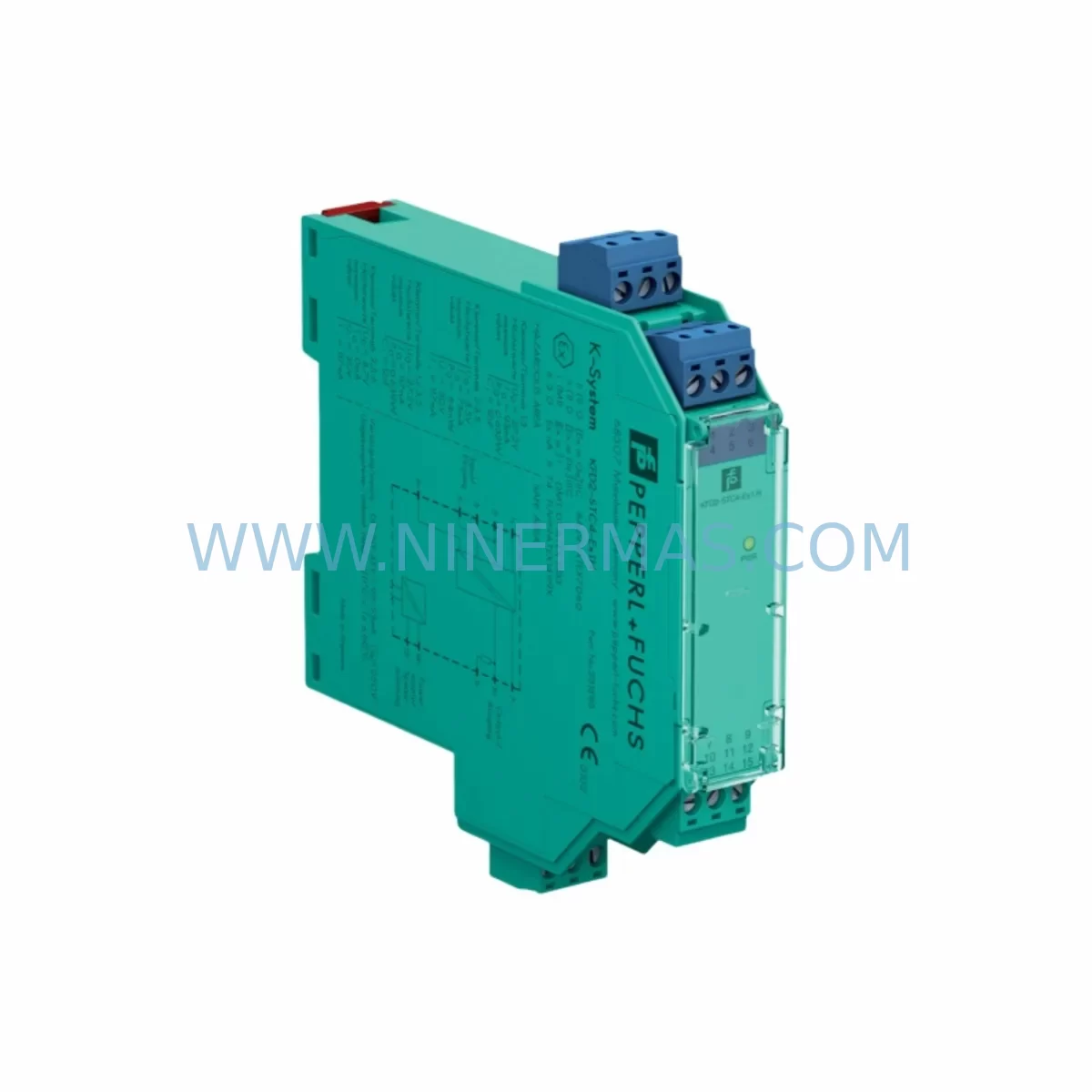
Pepperl+Fuchs KFD2-STC4-EX1.H Retrofit Signal Conditioner
Verify the part, confirm the platform family, and move straight into quotation with the right commercial details.
RFQ Ready
- SKUKFD2-STC4-EX1.H
- CategoryPLC & Industrial Automation Modules
- BrandPepperl+Fuchs
- SupportAvailability, lead time, condition, and shipping coordination
How Buyers Usually Use This Page
- Confirm the exact part number and platform family before sending the quote request.
- Use direct email when quantity, condition, and destination are already defined internally.
- Switch to the broader brand or category archive when you need alternates nearby.
Series Navigation
Move through the most common platform families behind this part.
Product RFQ
Send this part directly for quotation.
Include quantity, required condition, destination country, and target delivery timing. Current reference: Pepperl+Fuchs KFD2-STC4-EX1.H Retrofit Signal Conditioner with SKU KFD2-STC4-EX1.H.
Pepperl+Fuchs KFD2-STC4-EX1.H Retrofit Signal Conditioner: Legacy-Compatible Upgrade for Hazardous Area Control Systems
The Pepperl+Fuchs KFD2-STC4-EX1.H is a 4-wire isolated barrier and signal conditioner engineered for HART-compatible transmitters operating in IEC Ex Zone 1 and Zone 2 hazardous environments. Designed for direct DIN-rail mounting on the KFD2 series backplane, this module provides galvanic isolation between field instruments and the control room, making it a critical component in both new installations and legacy system retrofit projects. For maintenance engineers managing aging distributed control systems (DCS) or programmable logic controllers (PLC) where original KFD2-series barriers have reached end-of-life, the KFD2-STC4-EX1.H offers a verified drop-in replacement path with minimal rewiring and no firmware modification required.
Plants running legacy Siemens SIMATIC S7-300 or S7-400 I/O racks, Honeywell TDC 3000 field control processors, or Yokogawa CENTUM CS 3000 field control stations frequently rely on Pepperl+Fuchs KFD2-series barriers as the interface layer between intrinsically safe field loops and the safe-area marshalling cabinet. When these barriers fail or become unavailable through standard supply channels, the KFD2-STC4-EX1.H provides a stocked, tested, and warranty-backed replacement that preserves the existing loop architecture without requiring a full I/O card replacement or DCS reconfiguration.
Upgrade Compatibility Table
| Parameter | KFD2-STC4-EX1.H | Retrofit Notes |
|---|---|---|
| Mounting | DIN Rail, KFD2 Series Backplane | Direct plug-in replacement; no new rail required |
| Supply Voltage | 20–35 V DC via KFD2-PWR power rail | Verify KFD2-PWR-1 or KFD2-PWR-2 power feed capacity before swap |
| Signal Type | 4–20 mA HART, 4-wire transmitter | Confirm field loop is 4-wire active; passive 2-wire loops require different barrier model |
| Isolation | Galvanic, 3-port | Maintains existing loop isolation; no grounding topology change needed |
| Communication | HART pass-through | Compatible with existing HART multiplexers and asset management systems |
| Backplane Interface | KFD2 series slot connector | Confirm slot position and address assignment in DCS I/O mapping |
| Installation Space | Single-width KFD2 slot (22.5 mm) | No additional cabinet space required for like-for-like swap |
| Commissioning | No firmware upload required | Verify loop current calibration and HART device descriptor after installation |
| Approvals | ATEX, IECEx, FM, CSA | Confirm local hazardous area certification requirements before installation |
| Warranty | 12 Months | Covered from date of shipment; includes functional and safety parameter verification |
Retrofit Planning for Existing Automation Systems
Successful integration of the KFD2-STC4-EX1.H into an existing control system requires a structured pre-installation review. Engineers should begin by auditing the marshalling cabinet to confirm the KFD2 backplane rail is intact and that the KFD2-PWR-1 or KFD2-PWR-2 power supply module is delivering stable 24 V DC within the 20–35 V tolerance band. Overloaded power rails — common in cabinets where additional I/O modules have been added over time — can cause intermittent signal errors that are difficult to distinguish from a faulty barrier.
Terminal wiring on the field side should be verified against the original loop drawing. The KFD2-STC4-EX1.H uses the standard KFD2 series terminal block layout, so existing field cables can typically be reconnected without modification. However, if the original installation used a KFD2-STC4-EX1 (without the .H suffix), engineers should confirm whether the HART communication path was previously active, as the .H variant includes enhanced HART transparency that may require a HART filter or termination resistor adjustment at the DCS input card — particularly on older Honeywell or Foxboro I/A Series analog input modules.
For plants using a Pepperl+Fuchs FieldConnex segment coupler or a K-System power conditioner in the same cabinet, the KFD2-STC4-EX1.H can coexist on the same backplane without signal interference, provided the slot addressing is correctly maintained in the DCS I/O configuration. If the plant uses a Siemens ET 200M remote I/O station or a Rockwell Automation 1756 ControlLogix chassis as the host controller, the HART signal from the KFD2-STC4-EX1.H can be routed through an existing HART multiplexer — such as a Pepperl+Fuchs HiDMux2700 or a Emerson 475 Field Communicator — without any additional hardware changes.
Where the retrofit involves replacing multiple KFD2-series barriers across a large marshalling cabinet, it is advisable to work channel by channel rather than replacing all barriers simultaneously. This approach allows the control room operator to maintain loop monitoring on unaffected channels while the field technician performs the swap, significantly reducing the risk of a process upset. Each replaced channel should be loop-tested using a calibrated 4–20 mA source before the field instrument is reconnected, and the HART device descriptor should be re-read from the DCS asset management system to confirm the new barrier is transparent to the HART communication layer.
In systems where the KFD2-STC4-EX1.H feeds into a Yokogawa STARDOM FCN remote node or an ABB AC500 PLC analog input card, engineers should also verify that the input card’s input impedance is within the barrier’s specified load range. Mismatched impedance is a common source of span errors during commissioning that can be mistaken for a faulty replacement module.
Downtime Control During System Migration
Minimizing unplanned downtime during a KFD2-series barrier replacement is achievable with the right preparation. The most effective strategy is to pre-stage the KFD2-STC4-EX1.H modules in the control room before the maintenance window begins, with each module pre-labelled with its target slot position, loop tag number, and terminal wiring reference. This eliminates the risk of incorrect module placement in multi-slot backplane configurations where adjacent channels carry different signal types.
Before removing the failed or end-of-life barrier, the DCS operator should place the affected loop in manual mode and record the last known process value. This preserves the control output state and prevents the controller from responding to a loss-of-signal condition during the swap. For critical loops — such as those feeding a safety instrumented system (SIS) or a burner management system (BMS) — the relevant safety function should be bypassed in accordance with the plant’s management of change (MOC) procedure before any field work begins.
The physical swap of a KFD2-STC4-EX1.H on a live backplane can typically be completed in under five minutes per channel, provided the terminal block is of the plug-in type. After reinsertion, the loop should be energized and the 4–20 mA output verified at the DCS input before the loop is returned to automatic mode. HART communication should be confirmed using a handheld communicator or the plant’s asset management system — such as Emerson AMS Device Manager or Yokogawa PRM — to ensure the field instrument’s device descriptor is correctly recognized through the new barrier. The entire channel restoration process, including documentation, should be achievable within a 30-minute maintenance window per channel under normal plant conditions.
For plants with no redundant control path on the affected loop, coordinating the barrier swap with a scheduled process hold or a low-demand period significantly reduces operational risk. NINERMAS maintains ready stock of the KFD2-STC4-EX1.H to support emergency procurement scenarios, with same-day dispatch available for confirmed orders placed before the daily cut-off time.
Retrofit Support FAQ
Q1: Is the KFD2-STC4-EX1.H a direct replacement for the KFD2-STC4-EX1 without the .H suffix?
The KFD2-STC4-EX1.H is functionally compatible with the KFD2-STC4-EX1 in most installations. The primary difference is the enhanced HART transparency of the .H variant. In systems where HART communication was not previously used, the swap is transparent. In HART-active loops, engineers should verify that the DCS HART input card or multiplexer correctly recognizes the updated HART pass-through characteristics. No wiring changes are required for a like-for-like slot replacement.
Q2: What commissioning steps are required after installing the KFD2-STC4-EX1.H?
After physical installation, perform a loop current check using a calibrated source to verify the 4–20 mA signal is correctly transmitted from the field terminal to the DCS input. Confirm the HART device descriptor is readable from the control room. Check the barrier’s LED status indicators for normal operation. Record the as-installed configuration in the plant’s maintenance management system (CMMS) and update the loop drawing if the module suffix has changed.
Q3: Does NINERMAS provide pre-shipment testing for the KFD2-STC4-EX1.H?
Yes. All KFD2-STC4-EX1.H units supplied by NINERMAS are functionally tested prior to dispatch. Each unit is verified for correct 4–20 mA signal transmission, HART pass-through integrity, and isolation resistance. A test record is available upon request. Units are shipped with original manufacturer packaging and are covered by a 12-month warranty from the date of shipment.
Q4: What is the lead time and stock availability for the KFD2-STC4-EX1.H?
NINERMAS maintains buffer stock of the KFD2-STC4-EX1.H to support both planned maintenance and emergency breakdown scenarios. Standard orders are dispatched within 1–3 business days. For urgent requirements, contact the NINERMAS sales team directly to confirm same-day or next-day dispatch availability. Long-term supply agreements are available for plants with recurring KFD2-series barrier replacement programs.
| Product Series | Other series |
|---|---|
| Country of Origin | DE |
Catalog Continuation
More Pepperl+Fuchs modules in the catalog.
Use the brand lane to compare nearby part numbers, platform-adjacent modules, and other inquiry-ready listings before sending your final RFQ.
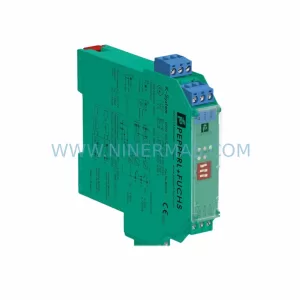
SKU: KFD2-SR2-EX2.W
PEPPERL+FUCHS KFD2-SR2-EX2.W Safety-Reliable Signal Relay
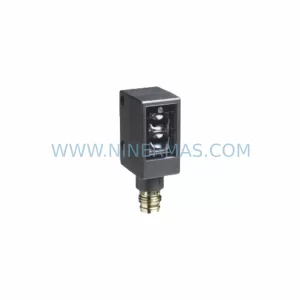
SKU: ML4.2-8-H-20-IR/40B/95/110
Pepperl+Fuchs ML4.2-8-H-20-IR/40B/95/110 Retrofit IR Sensor
Catalog Continuation
Alternative parts within PLC & Industrial Automation Modules.
Stay inside the same system family when you need substitutes, adjacent modules, or a broader shortlist for procurement review.