Original Industrial Spare Part
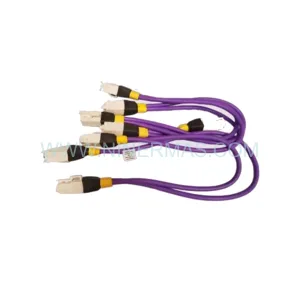
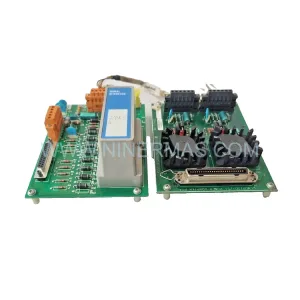
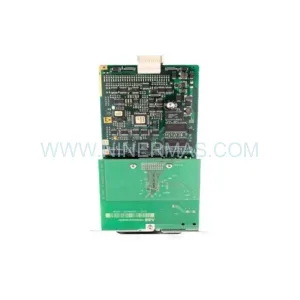
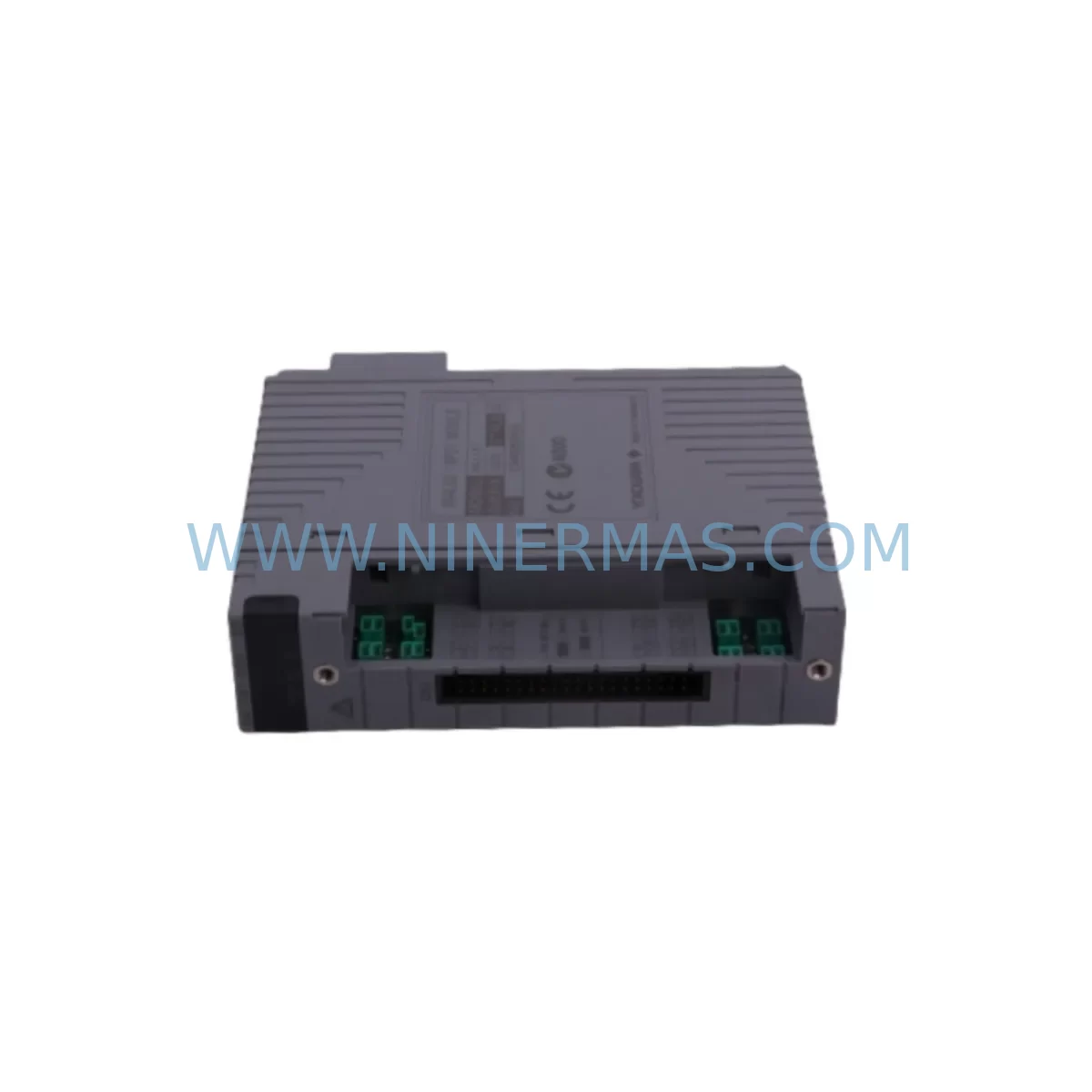
Yokogawa ADV157-S00 Service-Ready Spare Industrial Maintenance
Verify the part, confirm the platform family, and move straight into quotation with the right commercial details.
RFQ Ready
- SKUADV157-S00
- CategorySIS Safety & Redundancy Systems
- BrandYokogawa
- SupportAvailability, lead time, condition, and shipping coordination
How Buyers Usually Use This Page
- Confirm the exact part number and platform family before sending the quote request.
- Use direct email when quantity, condition, and destination are already defined internally.
- Switch to the broader brand or category archive when you need alternates nearby.
Series Navigation
Move through the most common platform families behind this part.
Product RFQ
Send this part directly for quotation.
Include quantity, required condition, destination country, and target delivery timing. Current reference: Yokogawa ADV157-S00 Service-Ready Spare Industrial Maintenance with SKU ADV157-S00.
Yokogawa ADV157-S00 Service-Ready Spare Industrial Maintenance
The Yokogawa ADV157-S00 is a ruggedized Digital Input (DI) module designed for use within the ProSafe-RS Safety Instrumented System (SIS) — Yokogawa’s IEC 61508-certified safety controller platform widely deployed in oil & gas, petrochemical, power generation, and continuous process industries. As a critical component in safety logic solvers, the ADV157-S00 handles discrete field input signals from emergency shutdown (ESD) devices, pressure switches, level switches, and other safety-critical sensors, converting them into reliable digital signals for the ProSafe-RS controller to evaluate against safety functions.
For maintenance engineers managing aging SIS infrastructure, sourcing a service-ready ADV157-S00 is often the fastest path to restoring a degraded or faulted safety loop without triggering a full system overhaul. NINERMAS maintains verified stock of the ADV157-S00 with pre-shipment functional testing, ensuring each unit is confirmed operational before dispatch. Every unit ships with a 12-month warranty, supporting your site’s spare parts lifecycle management and audit requirements.
Whether you are responding to a module fault alarm, executing a planned annual turnaround, or building a strategic spare parts buffer for your ProSafe-RS cabinet, the ADV157-S00 is a high-priority line item. Its role in the safety instrumented function (SIF) means that a failed or degraded DI module can directly impact the availability of your safety layer — making rapid, verified replacement essential.
Spare Maintenance Table
| Parameter | Specification / Detail |
|---|---|
| Part Number / SKU | ADV157-S00 |
| Manufacturer | Yokogawa Electric Corporation |
| Series / Platform | ProSafe-RS Safety Instrumented System (SIS) |
| Module Type | Ruggedized Digital Input (DI) Module |
| Safety Standard | IEC 61508 SIL 2 / SIL 3 capable (system-level) |
| Input Signal Type | Discrete / Digital (dry contact, wet contact) |
| Typical Input Channels | 16-channel DI (confirm with system documentation) |
| Operating Voltage | 24 VDC nominal (field-side); confirm with cabinet wiring diagram |
| Environmental Rating | Ruggedized for harsh industrial environments; extended temperature range |
| Mounting | ProSafe-RS backplane / base unit (hot-swap capable in redundant configurations) |
| Compatibility | ProSafe-RS controller nodes; verify firmware revision compatibility before installation |
| Country of Origin | Japan |
| Condition | Original spare; pre-shipment tested |
| Warranty | 12 months from date of shipment |
| Lead Time | Subject to stock availability; contact for confirmed lead time |
| Maintenance Recommendation | Inspect annually; replace on first fault indication; maintain minimum 1 unit on-site as hot spare |
Maintenance Planning for Continuous Operation
When a ProSafe-RS DI module such as the ADV157-S00 is flagged for replacement — whether due to a diagnostic fault, channel failure, or scheduled preventive maintenance — experienced maintenance engineers know that the module itself is rarely the only component requiring attention. A thorough site inspection and replacement workflow should encompass the broader safety loop and cabinet environment.
Power supply integrity is the first checkpoint. The ProSafe-RS system relies on redundant 24 VDC power supply modules (such as the Yokogawa PW481 or equivalent cabinet power units) to maintain continuous operation. A degraded power rail can cause intermittent DI module faults that mimic hardware failure — always verify supply voltage and ripple before condemning the ADV157-S00.
Backplane and base unit condition should be inspected during any DI module swap. The ProSafe-RS base units and I/O backplanes carry the communication bus between the controller and field modules. Corrosion, loose connectors, or damaged bus contacts on the ADV141 or ADV151 base units can cause recurring module faults even after a new ADV157-S00 is installed.
Field wiring and terminal blocks are a common source of intermittent DI faults. Inspect the field-side terminal strips connected to the ADV157-S00 input channels. Loose terminations, corroded contacts, or damaged cable shields on the multi-core field cables feeding ESD switches and pressure transmitters can introduce signal noise or open-circuit conditions. Replacing worn terminal blocks and re-torquing all field connections is standard practice during a DI module replacement.
Signal isolators and barriers protecting the DI input channels — particularly in Zone 1 or Zone 2 hazardous area installations — should be verified for correct operation. Zener barriers or galvanic isolators (such as those in the Yokogawa MTL or equivalent series) that are degraded can clamp or distort the input signal, causing the ADV157-S00 to misread field device states.
Relay output modules and interposing relays in the same safety loop should be checked for contact wear. If the ADV157-S00 is part of a voting logic arrangement (e.g., 2oo3 configuration), the associated output relay modules — such as the ADV551 or ADV561 digital output modules — should be inspected for coil resistance and contact integrity to ensure the full SIF remains functional after the DI replacement.
Communication modules and controller firmware should be reviewed when installing a replacement ADV157-S00. The ProSafe-RS controller node (e.g., SSC50S or SSC57S safety controller modules) manages module recognition and diagnostic polling. Confirm that the replacement module’s hardware revision is compatible with the installed controller firmware version to avoid configuration mismatch alarms.
Fuse protection on the field-side input circuits should be inspected and replaced as part of the maintenance cycle. Blown or degraded fuses on the DI input terminal assembly can cause channel-level faults that are misdiagnosed as module failures. Maintain a stock of the correct fuse ratings as specified in the ProSafe-RS cabinet wiring documentation.
HMI and engineering workstation connectivity should be verified post-replacement. After installing the ADV157-S00, confirm that the ProSafe-RS engineering tool (e.g., ProSafe-RS R4.02 or later) correctly recognizes the new module, that all channel assignments are intact, and that the safety application download is not required (in hot-swap scenarios). Update the site maintenance log and as-built documentation accordingly.
Site Replacement Workflow
Replacing the ADV157-S00 in a live ProSafe-RS system requires adherence to your site’s Management of Change (MOC) and Safety Instrumented System bypass procedures. The following workflow reflects best practice for minimizing downtime and maintaining system integrity:
1. Initiate bypass and inhibit: Before removing the faulted module, apply the appropriate safety function bypass or inhibit in the ProSafe-RS controller to prevent spurious trips during the replacement. Document the bypass activation time in the site safety log.
2. Verify module identification: Confirm the replacement ADV157-S00 part number, hardware revision, and firmware compatibility against the installed system’s bill of materials. NINERMAS provides part number verification and hardware revision documentation upon request.
3. Remove and inspect: Extract the faulted module from the ProSafe-RS base unit. Inspect the backplane connector for damage, contamination, or bent pins. Clean the slot if required before installing the replacement.
4. Install and configure: Insert the replacement ADV157-S00 into the correct base unit slot. In hot-swap capable configurations, the ProSafe-RS controller will automatically recognize the new module and restore channel assignments without a full system restart. Verify module status LEDs indicate normal operation.
5. Functional verification: Perform a channel-by-channel input verification using the field device test function or by actuating each connected field device (ESD pushbutton, pressure switch, etc.) and confirming correct state change in the ProSafe-RS diagnostic display or HMI.
6. Remove bypass and restore: Once all channels are verified, remove the safety function bypass and restore the SIF to its normal operating state. Document the restoration time and test results in the site safety management system.
7. Update spare parts inventory: Record the consumed ADV157-S00 unit and initiate a replenishment order to maintain your on-site spare buffer. NINERMAS supports long-term supply agreements for ProSafe-RS modules to ensure continued availability for end-of-life and legacy system support.
Spare Parts Support FAQ
Q1: Is the ADV157-S00 still in production, and how long can I expect continued supply?
The ADV157-S00 is a ProSafe-RS series module that may be subject to Yokogawa’s product lifecycle management. NINERMAS specializes in sourcing and stocking end-of-life and legacy industrial automation components, maintaining verified inventory of the ADV157-S00 to support sites with long-term operational commitments. Contact our team for current stock status and long-term supply agreement options.
Q2: How is each ADV157-S00 unit tested before shipment?
Every ADV157-S00 unit supplied by NINERMAS undergoes pre-shipment functional testing to verify module power-up, channel integrity, and communication bus response. Units that do not pass testing are not dispatched. A test report is available upon request. All units are shipped with a 12-month warranty covering manufacturing defects and functional failure under normal operating conditions.
Q3: Can the ADV157-S00 be used as a direct replacement for other ADV1xx series DI modules in the ProSafe-RS system?
Cross-compatibility within the ADV1xx DI module family depends on channel count, input voltage range, and hardware revision. Direct substitution should only be performed after consulting the ProSafe-RS system documentation and confirming compatibility with your site’s safety application configuration. NINERMAS can provide hardware revision details to support your compatibility assessment before purchase.
Q4: What is the recommended on-site spare holding strategy for the ADV157-S00?
For ProSafe-RS systems in continuous process operations, industry best practice recommends holding a minimum of one ADV157-S00 per installed node as an on-site hot spare, with additional units held at the site warehouse for multi-node installations. Given the potential for extended lead times on legacy SIS modules, NINERMAS recommends establishing a standing replenishment order or consignment stock arrangement to eliminate procurement delays during unplanned outages.
| Product Series | ProSafe-RS |
|---|---|
| Country of Origin | JP |
Catalog Continuation
More Yokogawa modules in the catalog.
Use the brand lane to compare nearby part numbers, platform-adjacent modules, and other inquiry-ready listings before sending your final RFQ.
Catalog Continuation
Alternative parts within SIS Safety & Redundancy Systems.
Stay inside the same system family when you need substitutes, adjacent modules, or a broader shortlist for procurement review.
SKU: GCP-32AN 1A 2A 3A 4A 5A 7A 10A 15A 20A 25A 30A
Honeywell GCP-32AN Safety-Reliable Power Supply for Critical Sites
SKU: ACS880-01-04A8-5
ABB ACS880-01-04A8-5 Safety-Reliable VFD for Critical Control