Original Industrial Spare Part
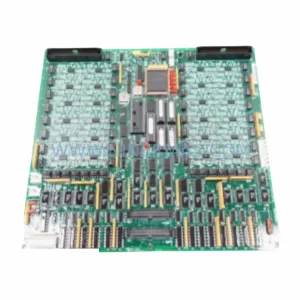
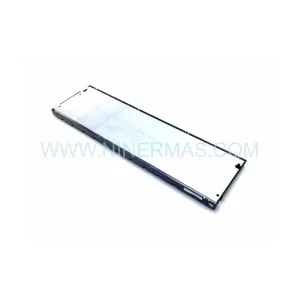
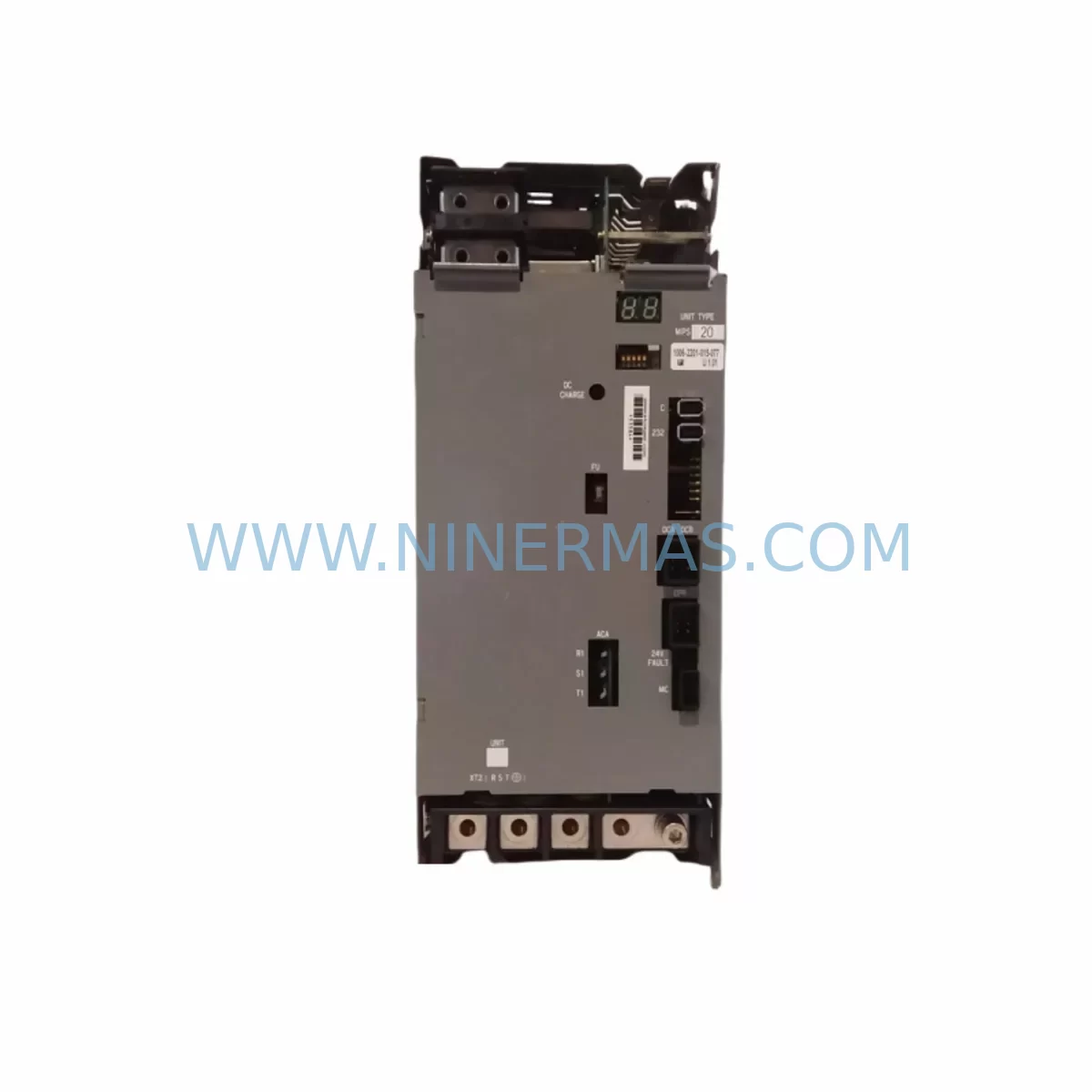
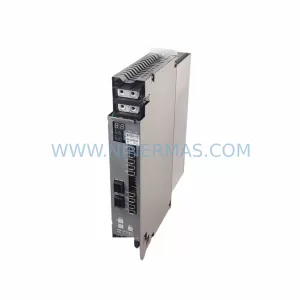
OKUMA MIV01A-E-B5 Retrofit-Compatible Dual Axis Servo Drive
Verify the part, confirm the platform family, and move straight into quotation with the right commercial details.
RFQ Ready
- SKUMIV01A-E-B5
- CategoryPLC & Industrial Automation Modules
- BrandOKUMA
- SupportAvailability, lead time, condition, and shipping coordination
How Buyers Usually Use This Page
- Confirm the exact part number and platform family before sending the quote request.
- Use direct email when quantity, condition, and destination are already defined internally.
- Switch to the broader brand or category archive when you need alternates nearby.
Series Navigation
Move through the most common platform families behind this part.
Product RFQ
Send this part directly for quotation.
Include quantity, required condition, destination country, and target delivery timing. Current reference: OKUMA MIV01A-E-B5 Retrofit-Compatible Dual Axis Servo Drive with SKU MIV01A-E-B5.
OKUMA MIV01A-E-B5 Retrofit-Compatible Dual Axis Servo Drive: Legacy System Compatibility and Smooth Upgrade
The OKUMA MIV01A-E-B5 is a dual-axis servo drive module engineered for the OKUMA OSP control platform, widely deployed across CNC machining centers, turning centers, and multi-axis manufacturing cells. As production facilities face the reality of end-of-life support for legacy OSP-U10, OSP-U100, and OSP-P200 series controllers, the MIV01A-E-B5 remains one of the most sought-after retrofit and replacement components in the OKUMA ecosystem. Its dual-axis architecture, ruggedized design, and compatibility with OKUMA’s proprietary MECHATROLINK and OPUS communication protocols make it an essential building block for both like-for-like spare part replacement and phased system modernization projects.
For maintenance engineers and procurement specialists managing aging OKUMA installations, sourcing a verified MIV01A-E-B5 with documented compatibility is critical. Unplanned downtime caused by a failed servo drive module can halt an entire production line. NINERMAS maintains inventory of the MIV01A-E-B5 and related OKUMA MIV-series modules, providing pre-shipment functional testing, full documentation, and a 12-month warranty on every unit shipped.
Upgrade Compatibility Table
| Parameter | MIV01A-E-B5 Specification / Retrofit Note |
|---|---|
| Drive Axes | Dual-axis servo drive (2-axis simultaneous control) |
| Compatible OSP Platforms | OSP-U10, OSP-U100, OSP-U10L, OSP-P200, OSP-P300 series |
| Communication Protocol | OKUMA MECHATROLINK / OPUS proprietary bus; verify backplane slot assignment before installation |
| Backplane Interface | OKUMA MIV-series rack; confirm rack generation (MIV01 vs MIV02 rack) for physical compatibility |
| Power Supply Requirement | Confirm DC bus voltage from PSM (Power Supply Module) — typically 300 VDC bus; verify PSM capacity supports dual-axis load |
| Terminal Wiring | Motor power connectors (U/V/W) and encoder feedback connectors must be re-verified against motor nameplate; do not assume pin-for-pin compatibility with older MIV variants |
| Module Address / Axis Assignment | Set via rotary DIP switch or OSP parameter table; re-confirm axis address after module swap to avoid axis conflict |
| Installation Space | Standard MIV-series module footprint; confirm control cabinet depth and cooling clearance before installation |
| Replacement Recommendation | Direct replacement for failed or degraded MIV01A-E-B5 units; also applicable as upgrade path from earlier MIV01A variants |
| Commissioning Focus | Servo gain parameters, encoder resolution settings, and axis tuning must be restored from backup or re-tuned after module replacement |
| Warranty | 12-Month Warranty — all units pre-tested before shipment |
Retrofit Planning for Existing Automation Systems
A successful MIV01A-E-B5 retrofit begins well before the module arrives on-site. Engineers should start by auditing the existing control cabinet layout to confirm that the MIV-series rack — typically shared with other drive modules such as the MIV04A or MIV06A for higher-power axes — has the correct slot available and that the backplane bus is intact. In many aging OSP installations, the MIV01A-E-B5 shares a rack with a dedicated PSM power supply module, and it is essential to verify that the PSM’s DC bus output capacity is sufficient to support the dual-axis load of the replacement unit, particularly if the original PSM has also degraded over years of operation.
Wiring verification is a non-negotiable step. The motor power terminals (U, V, W phases) and the encoder feedback cables connecting to the servo motors must be inspected for insulation integrity and connector condition. In retrofit scenarios involving older OKUMA BL-series or BLM-series servo motors, the encoder signal type — whether incremental or absolute — must be confirmed against the MIV01A-E-B5’s feedback interface specification. If the existing motors use an older encoder protocol, an encoder signal converter or a motor upgrade to a compatible OKUMA servo motor may be required as part of the retrofit scope.
The OSP controller’s parameter database is another critical area. Before removing the failed module, maintenance teams should export the full parameter set from the OSP-U100 or OSP-P200 HMI panel, including servo parameters, axis gain tables, and spindle configuration data. This backup ensures that after the MIV01A-E-B5 is installed and the axis address is confirmed via the module’s DIP switch settings, the servo tuning parameters can be restored rather than re-tuned from scratch — significantly reducing commissioning time and the risk of axis instability during the first power-on sequence.
For facilities running multi-axis machining centers, the MIV01A-E-B5 retrofit often occurs alongside related maintenance activities. It is common to simultaneously inspect or replace the MIV02A or MIV03A modules handling the Z-axis and B-axis drives, as these units share the same rack environment and are subject to similar thermal and electrical stress cycles. The OPUS communication link between the OSP controller board and the MIV-series rack should also be tested using OKUMA’s diagnostic utilities to confirm that the communication bus is clean before the new module is powered up. A degraded OPUS link can cause intermittent axis faults that are difficult to distinguish from a module hardware failure.
In control cabinets where space is constrained, the physical installation of the MIV01A-E-B5 requires careful attention to cooling airflow. The module’s heat dissipation depends on adequate clearance above and below the rack slot, and in older cabinets where filter mats have not been regularly replaced, restricted airflow is a common cause of premature drive failure. As part of the retrofit, replacing the cabinet’s cooling filters and verifying the internal fan units — often sourced as standard industrial fan modules — is strongly recommended to protect the new drive investment.
For facilities that are also planning a broader OSP platform migration, the MIV01A-E-B5 replacement can serve as a bridge solution, maintaining production continuity while a longer-term upgrade to a newer OSP-P500 or OSP-P300S platform is planned. In such cases, the I/O architecture of the existing system — including any OKUMA ABSEX I/O expansion modules or third-party signal isolators used for sensor interfacing — should be documented as part of the migration planning process to ensure compatibility with the target control platform.
Downtime Control During System Migration
Minimizing unplanned downtime during a servo drive module replacement is the primary concern for any production facility. The MIV01A-E-B5 replacement procedure, when properly planned, can typically be completed within a single maintenance window of four to eight hours, depending on the complexity of the axis configuration and the availability of a pre-verified parameter backup.
The most effective downtime reduction strategy is pre-staging. Before the maintenance window begins, the replacement MIV01A-E-B5 should be on-site, verified against the original module’s part number and revision level, and confirmed to be functional through NINERMAS’s pre-shipment test report. Having the module in hand before the machine is taken offline eliminates the risk of extended downtime caused by shipping delays or incoming inspection failures.
During the replacement procedure, the original PLC ladder logic and CNC part programs stored in the OSP controller’s memory are not affected by the servo drive module swap, provided the OSP controller itself remains powered and the memory backup battery is functional. Engineers should verify the battery status of the OSP controller’s SRAM backup — a common oversight that can result in loss of part programs and tool offset data if the controller is fully powered down during the module exchange. In installations where the OSP controller must be fully de-energized for safety reasons, a full parameter and program backup to a USB memory device or a connected PC via the OSP’s RS-232 or Ethernet port should be completed before work begins.
After the MIV01A-E-B5 is installed and the axis address is confirmed, the initial power-on sequence should be performed with the machine in a safe, unloaded state. The OSP controller’s servo alarm history should be cleared, and the axis should be jogged at low speed in both directions to confirm encoder feedback, motor rotation direction, and the absence of overcurrent or overvoltage alarms before returning the machine to automatic cycle operation. This structured commissioning sequence, combined with a pre-verified replacement module and a complete parameter backup, is the most reliable method for controlling downtime and protecting the integrity of the existing control program logic.
Retrofit Support FAQ
Q1: Is the MIV01A-E-B5 a direct drop-in replacement for all MIV01A variants?
The MIV01A-E-B5 is the B5 revision of the MIV01A dual-axis servo drive. In most OSP-U100 and OSP-P200 installations, it is compatible with earlier MIV01A revisions, but engineers should confirm the rack generation and backplane connector type before installation. NINERMAS can assist with cross-reference verification based on your machine model and OSP controller version.
Q2: What pre-shipment testing does NINERMAS perform on the MIV01A-E-B5?
Every MIV01A-E-B5 unit shipped by NINERMAS undergoes functional power-on testing and visual inspection for component condition, connector integrity, and board-level anomalies. A test report is available upon request. All units are covered by a 12-month warranty from the date of shipment.
Q3: Can the MIV01A-E-B5 be used with non-OKUMA servo motors?
The MIV01A-E-B5 is designed for use with OKUMA-compatible servo motors using OKUMA’s encoder feedback protocol. Use with third-party motors is not standard and would require compatibility verification. For retrofit projects involving motor replacement, NINERMAS recommends confirming the encoder interface specification before proceeding.
Q4: What is the typical lead time and stock availability for the MIV01A-E-B5?
NINERMAS maintains stock of the MIV01A-E-B5 and related OKUMA MIV-series modules. Lead time for in-stock units is typically 3–7 business days for international shipment. For urgent requirements, please contact our team directly to confirm current availability and expedited shipping options.
| Product Series | Other series |
|---|
Catalog Continuation
More OKUMA modules in the catalog.
Use the brand lane to compare nearby part numbers, platform-adjacent modules, and other inquiry-ready listings before sending your final RFQ.
Catalog Continuation
Alternative parts within PLC & Industrial Automation Modules.
Stay inside the same system family when you need substitutes, adjacent modules, or a broader shortlist for procurement review.
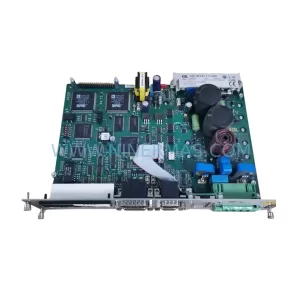
SKU: DSC2P142-111-000
Etel DSC2P142-111-000 Retrofit-Compatible Digital Servo Amplifier
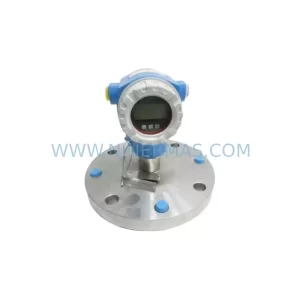
SKU: FMB51-AA21RA1FGC80GGJB3A+AA
E+H FMB51-AA21RA1FGC80GGJB3A+AA Retrofit Magnetic Flowmeter
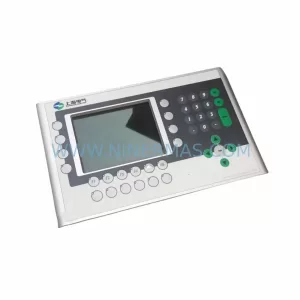
SKU: 4PP350.0571-K01
B&R 4PP350.0571-K01 Retrofit-Compatible HMI Panel for Legacy Systems