Original Industrial Spare Part
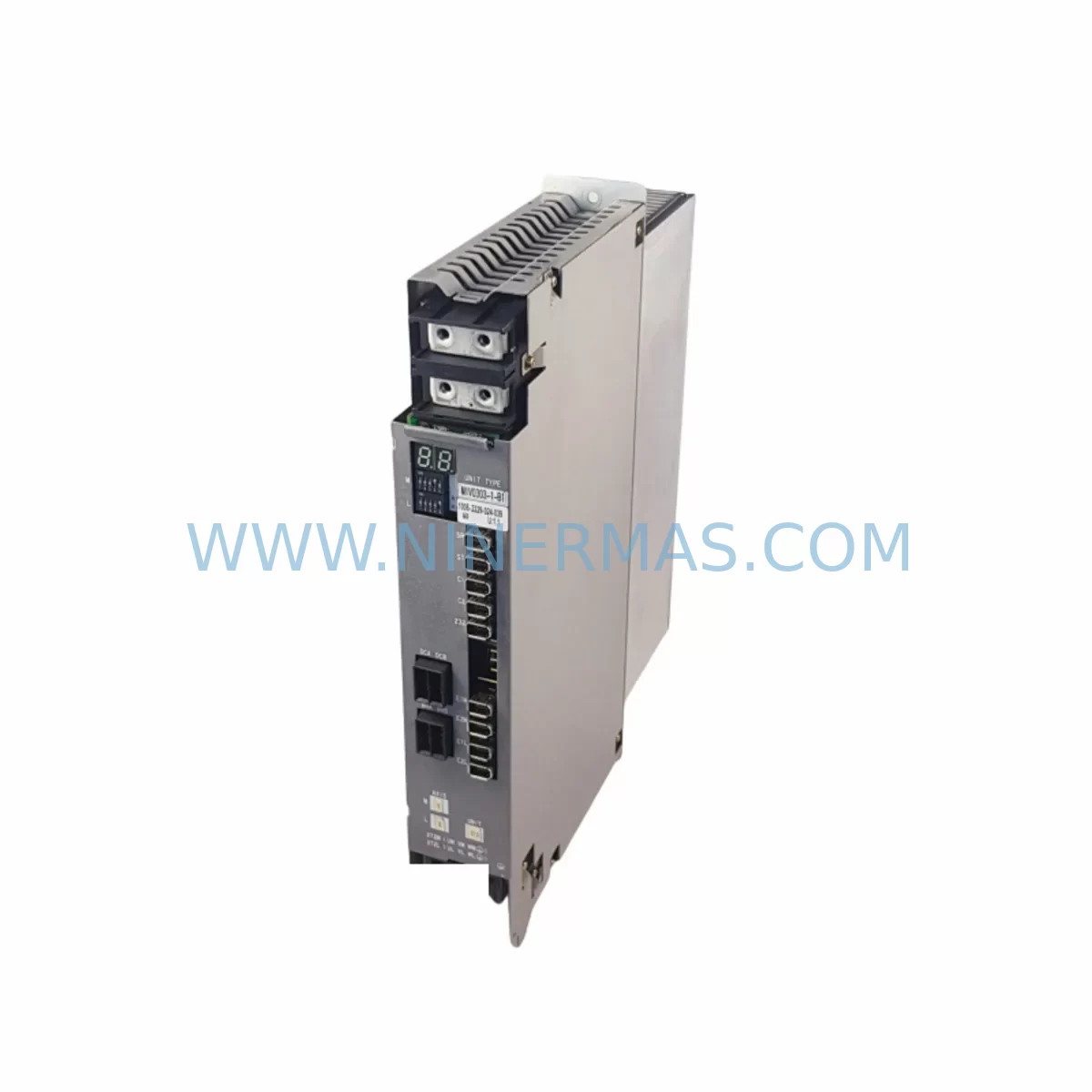
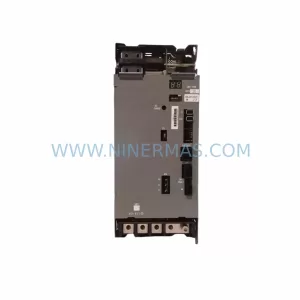
Okuma MIV0303-1-B1 Retrofit-Compatible Servo Drive for Legacy Systems
Verify the part, confirm the platform family, and move straight into quotation with the right commercial details.
RFQ Ready
- SKUMIV0303-1-B1
- CategoryPLC & Industrial Automation Modules
- BrandOKUMA
- SupportAvailability, lead time, condition, and shipping coordination
How Buyers Usually Use This Page
- Confirm the exact part number and platform family before sending the quote request.
- Use direct email when quantity, condition, and destination are already defined internally.
- Switch to the broader brand or category archive when you need alternates nearby.
Series Navigation
Move through the most common platform families behind this part.
Product RFQ
Send this part directly for quotation.
Include quantity, required condition, destination country, and target delivery timing. Current reference: Okuma MIV0303-1-B1 Retrofit-Compatible Servo Drive for Legacy Systems with SKU MIV0303-1-B1.
Okuma MIV0303-1-B1 Retrofit-Compatible Servo Drive for Legacy Systems
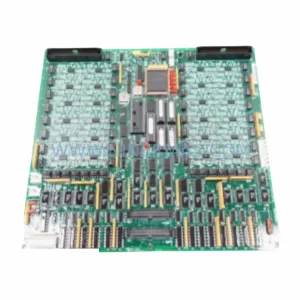
The Okuma MIV0303-1-B1 is a servo drive module engineered for the Okuma MIV Series servo control platform, widely deployed across CNC machining centres, turning centres, and multi-axis grinding systems manufactured from the late 1990s through the 2010s. As original equipment reaches end-of-life and OEM support windows close, plant engineers and maintenance teams face mounting pressure to source verified replacement units that can be installed without rewriting ladder logic, reconfiguring axis parameters, or retooling the control cabinet. The MIV0303-1-B1 addresses this challenge directly: it is a form-fit-function compatible unit that slots into existing MIV-series rack positions, preserves original wiring harness connections, and restores full servo loop performance without requiring a full drive system overhaul.
Procurement teams sourcing the MIV0303-1-B1 should confirm the following before installation: rated output current and power capacity relative to the connected spindle or axis motor, terminal block pinout compatibility with the existing cable harness, backplane connector type and rack slot addressing, drive node address settings (typically configured via DIP switch or rotary selector on the front panel), and the firmware revision level required to maintain compatibility with the host OSP control platform. Mismatches in any of these parameters can prevent the drive from initialising correctly or cause axis fault codes at power-up.
In retrofit projects where the MIV0303-1-B1 is replacing a failed or obsolete unit within a larger Okuma OSP-based control system, engineers should also verify compatibility with associated components in the same control cabinet. The Okuma MIV0303-1-A1 and MIV0303-1-C1 are common siblings in the same rack, and their firmware versions must be consistent with the replacement unit. The Okuma PST-B or equivalent DC bus power supply module feeding the MIV rack must be confirmed capable of sustaining the combined current draw after the new drive is commissioned. Where the system uses an Okuma OSP-P300S or OSP-P200S CNC controller, the servo parameter file stored in the controller’s non-volatile memory should be backed up before any drive swap to protect axis tuning data, backlash compensation values, and tool offset tables.
For systems that include an Okuma OPUS 7000 or legacy OSP-5000L control platform, the MIV0303-1-B1 retrofit may also require a review of the communication link between the servo amplifier and the CNC bus. The serial encoder interface cable connecting the drive to the Okuma BL-series or BLM-series servo motor should be inspected for continuity and shielding integrity, as degraded encoder signals are a common root cause of position error faults that are incorrectly attributed to drive failure. If the machine also uses an Okuma OSP-U100M or OSP-U10L operator panel, HMI screen data and alarm history should be exported before the retrofit to support post-commissioning verification.
In multi-axis systems where the MIV0303-1-B1 controls a feed axis alongside an Okuma MIV0404-1-B1 or MIV0606-1-B1 for higher-current axes, the axis address configuration must be set correctly to avoid bus conflicts. Physical installation space should be confirmed against the rack slot dimensions, as some retrofit scenarios involve replacing a single failed drive within a populated rack where adjacent modules cannot be easily removed. Thermal management should also be reviewed: the MIV0303-1-B1 requires adequate airflow across its heatsink, and any retrofit that changes the rack population density may require inspection of the cabinet cooling fan and filter condition.
Where the retrofit involves a protocol migration — for example, transitioning from an older Okuma proprietary servo bus to a system that incorporates MECHATROLINK-II or EtherCAT-compatible drives in a hybrid architecture — the MIV0303-1-B1 serves as a stable interim solution that maintains the original control architecture while longer-term modernisation planning proceeds. This approach minimises unplanned downtime and allows production to resume while a phased upgrade roadmap is developed.
All MIV0303-1-B1 units supplied by Ninermas are tested prior to shipment, covered by a 12-month warranty, and supported by pre-sales technical consultation to confirm compatibility with your specific machine model and OSP control version. Stock availability is maintained to support urgent breakdown requirements with short lead times.
Upgrade Compatibility Table
| Parameter | Details |
|---|---|
| SKU / Part Number | MIV0303-1-B1 |
| Brand / Manufacturer | Okuma |
| Series | MIV Series Servo Drive |
| Compatible Control Platforms | Okuma OSP-P300S, OSP-P200S, OSP-U100M, OSP-U10L, OPUS 7000, OSP-5000L |
| Rack / Backplane Interface | MIV Series rack slot (confirm slot address via DIP/rotary switch) |
| Motor Interface | Okuma BL / BLM Series servo motors (serial encoder interface) |
| Communication Protocol | Okuma proprietary servo bus (OSP platform native) |
| Installation Requirement | Confirm slot dimensions, airflow clearance, and DC bus power capacity |
| Replacement Compatibility | Direct replacement for MIV0303-1-B1; verify firmware revision with OSP version |
| Commissioning Notes | Back up servo parameter file before swap; verify axis address and encoder cable integrity |
| Warranty | 12 Months — covers manufacturing defects and functional failure under normal operating conditions |
| Pre-Shipment Testing | Yes — functional test performed before dispatch |
Retrofit Planning for Existing Automation Systems
A successful MIV0303-1-B1 retrofit begins with a structured pre-installation audit of the existing control cabinet. Engineers should document the current rack population, noting the position of each MIV-series drive module, the DC bus power supply rating, and the condition of the backplane connectors. Where the cabinet also houses an Okuma OSP-P300S CNC controller board, the servo parameter file and tool compensation data should be exported to a USB or CF card before any hardware is disturbed.
The encoder cable connecting the MIV0303-1-B1 to the axis motor is a frequent point of failure in aging systems. Before condemning the drive itself, technicians should verify signal integrity on the serial encoder lines using an oscilloscope or dedicated encoder tester. A degraded cable can cause the same position fault codes as a failed drive, and replacing the cable alone may restore operation without requiring a drive swap.
Where the retrofit is part of a broader control system upgrade — for example, migrating from an OSP-5000L to an OSP-P200S platform — the MIV0303-1-B1 can often be retained in the new rack configuration, reducing the scope and cost of the upgrade. In these scenarios, the axis parameter file from the old controller must be carefully mapped to the new platform’s parameter structure, as field names and scaling factors may differ between OSP generations. An Okuma signal isolator or interface adapter may be required if the encoder signal voltage levels differ between the old and new control hardware.
For machines that also use an Okuma MPS-series power supply module or a third-party regenerative braking resistor, the energy dissipation capacity of the DC bus should be recalculated after the drive replacement to ensure the braking resistor rating remains adequate for the axis deceleration profile. This is particularly important in high-inertia applications such as large-diameter turning or heavy grinding operations.
Programming cable compatibility should also be confirmed: if the maintenance team uses an Okuma OSP programming cable or a PC-based parameter editor to access drive settings, the cable pinout and communication protocol must be verified against the replacement unit’s service port specification. Some MIV-series drives use an RS-232 service interface; others use a proprietary connector. Having the correct cable on hand before the scheduled maintenance window avoids delays during commissioning.
Downtime Control During System Migration
Minimising production downtime during an MIV0303-1-B1 replacement requires preparation that begins well before the maintenance window opens. The replacement unit should be on-site and verified against the machine’s bill of materials before the machine is taken offline. A pre-staged spare eliminates the risk of discovering a compatibility issue after the machine has already been shut down.
Before powering down, the maintenance team should capture a full backup of the OSP controller’s non-volatile memory, including the servo parameter file, tool offset table, workpiece coordinate data, and any custom macro programs. This backup protects against data loss in the event that the controller loses power unexpectedly during the drive swap, and provides a reference for post-commissioning verification.
During the physical swap, the axis address configuration of the replacement MIV0303-1-B1 must be set to match the original unit before the drive is inserted into the rack. Powering up with an incorrect axis address will generate a bus conflict fault and prevent the controller from initialising the servo system. The encoder cable should be reconnected carefully, ensuring the locking connector is fully seated and the cable is routed away from high-voltage conductors to prevent interference.
After power-up, the first commissioning step is to verify that the controller recognises the replacement drive on the servo bus and that no axis fault codes are present. A slow-speed jog test on the affected axis confirms that the position feedback loop is functioning correctly before the machine is returned to automatic cycle. If the machine uses a probing cycle or tool length measurement routine, these should be re-run after the retrofit to confirm that axis positioning accuracy is within specification. Total planned downtime for a straightforward MIV0303-1-B1 swap in a prepared environment is typically two to four hours, including backup, swap, commissioning, and verification.
Retrofit Support FAQ
Q1: Is the MIV0303-1-B1 a direct drop-in replacement for the original Okuma unit?
Yes. The MIV0303-1-B1 supplied by Ninermas is a form-fit-function compatible replacement for the original Okuma MIV0303-1-B1. It uses the same rack slot footprint, backplane connector, and terminal block layout as the original. Axis address configuration and firmware revision should be confirmed against your specific OSP control version before installation.
Q2: What pre-shipment testing is performed on the MIV0303-1-B1?
Each unit undergoes functional testing before dispatch to verify power stage operation, encoder interface integrity, and communication bus response. A test report is available on request. All units are covered by a 12-month warranty from the date of shipment.
Q3: Can the MIV0303-1-B1 be used with OSP control platforms other than the original machine model?
The MIV0303-1-B1 is designed for use within the Okuma MIV-series servo architecture and is compatible with OSP-P300S, OSP-P200S, OSP-U100M, and related OSP platforms that support MIV-series servo drives. Compatibility with specific machine models and OSP versions should be confirmed with our technical team before ordering.
Q4: What is the typical lead time and stock availability?
Ninermas maintains stock of the MIV0303-1-B1 to support urgent breakdown requirements. Standard lead time for in-stock units is 3–7 business days for international shipment. Contact our sales team for current availability and expedited shipping options.
| Product Series | Legacy |
|---|
Catalog Continuation
More OKUMA modules in the catalog.
Use the brand lane to compare nearby part numbers, platform-adjacent modules, and other inquiry-ready listings before sending your final RFQ.
Catalog Continuation
Alternative parts within PLC & Industrial Automation Modules.
Stay inside the same system family when you need substitutes, adjacent modules, or a broader shortlist for procurement review.
SKU: DSC2P142-111-000
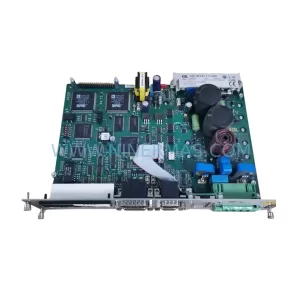
Etel DSC2P142-111-000 Retrofit-Compatible Digital Servo Amplifier
SKU: FMB51-AA21RA1FGC80GGJB3A+AA
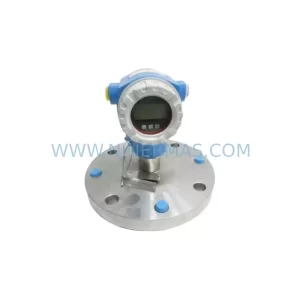
E+H FMB51-AA21RA1FGC80GGJB3A+AA Retrofit Magnetic Flowmeter
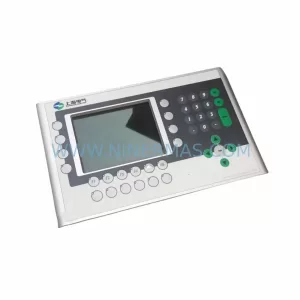
SKU: 4PP350.0571-K01
B&R 4PP350.0571-K01 Retrofit-Compatible HMI Panel for Legacy Systems