Original Industrial Spare Part
KUKA KSD1 Series Retrofit-Compatible Servo Drive for Legacy Systems
Verify the part, confirm the platform family, and move straight into quotation with the right commercial details.
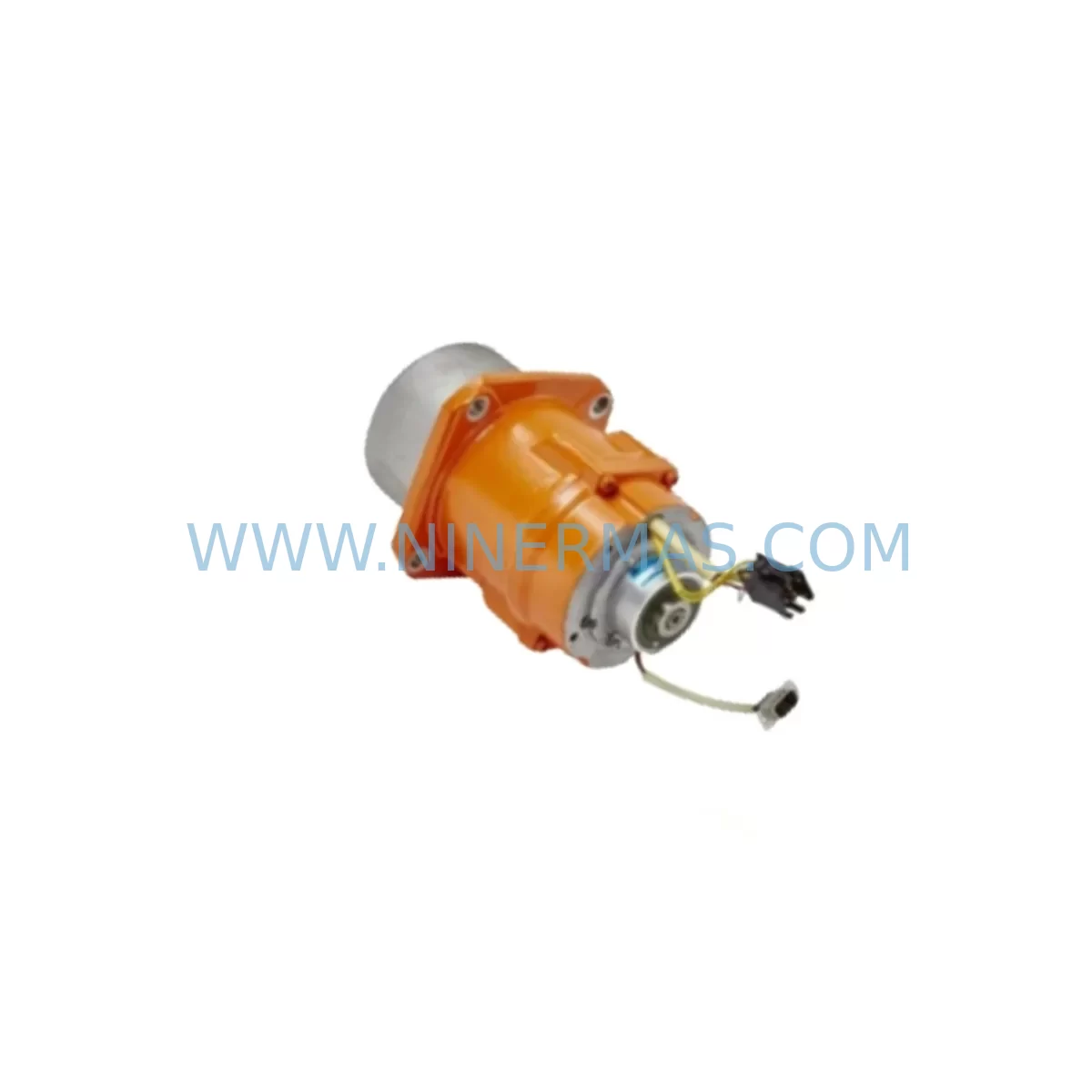
RFQ Ready
- SKUKSD1-48 KSD1-08 KSD1-16 KSD1-32 KSD1-64
- CategoryPLC & Industrial Automation Modules
- BrandKUKA
- SupportAvailability, lead time, condition, and shipping coordination
How Buyers Usually Use This Page
- Confirm the exact part number and platform family before sending the quote request.
- Use direct email when quantity, condition, and destination are already defined internally.
- Switch to the broader brand or category archive when you need alternates nearby.
Series Navigation
Move through the most common platform families behind this part.
Product RFQ
Send this part directly for quotation.
Include quantity, required condition, destination country, and target delivery timing. Current reference: KUKA KSD1 Series Retrofit-Compatible Servo Drive for Legacy Systems with SKU KSD1-48 KSD1-08 KSD1-16 KSD1-32 KSD1-64.
KUKA KSD1 Series Retrofit-Compatible Servo Drive for Legacy Systems
The KUKA KSD1 series servo drives — encompassing the KSD1-08, KSD1-16, KSD1-32, KSD1-48, and KSD1-64 — represent a foundational motion control platform deployed across thousands of KUKA robotic cells, automated assembly lines, and precision manufacturing systems worldwide. As these drives approach or have passed their official end-of-life status, procurement teams and automation engineers face increasing pressure to source verified replacement units that maintain full backward compatibility with existing KUKA KRC2 and KRC3 controller architectures. NINERMAS COMPANY LIMITED maintains dedicated inventory of the complete KSD1 series, each unit pre-shipment tested and backed by a 12-month warranty, ensuring your retrofit or emergency replacement program proceeds without unplanned production interruptions.
The KSD1 series operates as the servo amplifier backbone within KUKA’s modular drive cabinet architecture. Each variant is rated for a specific continuous current output — 8A, 16A, 32A, 48A, or 64A — and shares a common DC bus voltage architecture that allows mixed-axis configurations within a single control cabinet. This design means that during a partial retrofit, engineers can replace individual axis drives without disturbing the remaining operational axes, significantly reducing the scope and risk of each maintenance window.
Upgrade Compatibility Table
| Parameter | KSD1-08 | KSD1-16 | KSD1-32 | KSD1-48 | KSD1-64 |
|---|---|---|---|---|---|
| Continuous Output Current | 8 A | 16 A | 32 A | 48 A | 64 A |
| DC Bus Voltage | 540–750 VDC | 540–750 VDC | 540–750 VDC | 540–750 VDC | 540–750 VDC |
| Feedback Interface | Resolver / RDC | Resolver / RDC | Resolver / RDC | Resolver / RDC | Resolver / RDC |
| Backplane Connector | KRC2 / KRC3 compatible | KRC2 / KRC3 compatible | KRC2 / KRC3 compatible | KRC2 / KRC3 compatible | KRC2 / KRC3 compatible |
| Communication Protocol | KUKA Interbus / DSE-IBS | KUKA Interbus / DSE-IBS | KUKA Interbus / DSE-IBS | KUKA Interbus / DSE-IBS | KUKA Interbus / DSE-IBS |
| Mounting Slot Width | Single slot | Single slot | Double slot | Double slot | Triple slot |
| Replacement Notes | Direct slot-for-slot swap in KRC2 rack | Direct slot-for-slot swap | Verify slot width before installation | Verify slot width and bus bar rating | Confirm cabinet power budget |
| Commissioning Focus | Motor data set, resolver offset | Motor data set, resolver offset | Motor data set, current limits | Motor data set, thermal derating | Full axis parameterization required |
| 12-Month Warranty | Yes | Yes | Yes | Yes | Yes |
Retrofit Planning for Existing Automation Systems
A successful KSD1 series retrofit begins well before the replacement unit arrives on site. Engineers must first audit the existing KUKA KRC2 controller cabinet to confirm the power supply capacity of the installed KUKA KPS-600/20 or KUKA KPP 600-20 power supply module. These units feed the shared DC bus that all KSD1 drives draw from; adding a higher-current KSD1-48 or KSD1-64 to a cabinet originally configured for lower-rated drives may require a power supply upgrade or load-balancing review before commissioning can proceed safely.
The resolver feedback chain is another critical verification point. Each KSD1 drive interfaces with the motor’s resolver through the KUKA RDC (Resolver-to-Digital Converter) module mounted in the controller rack. Before removing the failed drive, technicians should record the resolver offset values stored in the RDC module, as these calibration parameters are motor-specific and must be re-entered or verified after the replacement drive is installed. Failure to restore correct resolver offsets will result in axis following errors or uncontrolled motion during the first power-up sequence.
Backplane slot assignment and module addressing must also be confirmed against the robot’s existing KRL (KUKA Robot Language) program and the system configuration stored on the KUKA CCU (Cabinet Control Unit) board. The CCU manages communication between the KRC2 controller, the KUKA MFC (Multi-Function Card), and each servo axis. If the replacement KSD1 drive is installed in a different physical slot than the original — even temporarily — the axis address mapping in the system configuration file must be updated to match, otherwise the controller will report a drive communication fault on startup.
For systems that include safety-rated axes, the KUKA SFC (Safety Field Controller) or ESC (Electronic Safety Circuit) module must be re-validated after any drive replacement. The safety module monitors axis-specific parameters including maximum speed, torque limits, and safe stop response times. These parameters are stored independently from the standard drive configuration and require a dedicated safety commissioning procedure, typically involving the KUKA KCP2 teach pendant and a qualified safety engineer, before the robot can be returned to automatic production mode.
I/O expansion modules connected to the KUKA PMB (Power Management Board) or external I/O racks should also be inspected during the retrofit window. Wiring terminations at the drive’s motor power connector, brake control output, and feedback cable shield grounding points are common sources of intermittent faults in aging systems. Replacing corroded or loose terminals during the same maintenance window eliminates a frequent callback cause and extends the effective service life of the newly installed drive.
Downtime Control During System Migration
Minimizing unplanned downtime during a KSD1 drive replacement requires a structured pre-migration preparation protocol. Before the maintenance window opens, the engineering team should use the KUKA KCP2 teach pendant to export a full backup of the robot’s system configuration, including all axis-specific motor data sets, load data, mastering offsets, and safety parameters. This backup should be stored on an external USB device and verified for completeness before the old drive is removed from the rack.
Where production schedules permit, a staged replacement strategy is strongly recommended. Rather than replacing all failed or at-risk drives simultaneously, teams should prioritize the highest-current axes — typically the A1 and A2 base axes driven by KSD1-48 or KSD1-64 units — and complete their commissioning and verification before moving to the smaller-current wrist axes. This approach keeps the robot partially operational and allows production to continue on adjacent cells while the primary axes are being serviced.
After physical installation of the replacement KSD1 drive, the commissioning sequence should follow KUKA’s standard axis initialization procedure: power-up in T1 mode, verify drive communication status on the KRC2 controller display, load the motor data set from the backup, perform resolver offset calibration, and execute a slow-speed axis movement test across the full range of motion before returning to T2 or automatic mode. HMI screens connected to the cell controller should be checked to confirm that axis status indicators, torque readouts, and fault history displays are updating correctly from the new drive before production restart is authorized.
Maintaining a reserved inventory of KSD1 series drives — particularly the KSD1-48 and KSD1-32 variants most commonly used on primary robot axes — is the single most effective strategy for controlling mean time to repair (MTTR) in facilities with multiple KUKA robots. NINERMAS maintains long-term stock commitments for the complete KSD1 series, with pre-shipment functional testing on every unit, supporting both emergency replacement and planned lifecycle management programs.
Retrofit Support FAQ
Q1: Can a KSD1-48 directly replace a KSD1-32 in the same rack slot?
A: The KSD1-48 occupies a double-width slot, the same physical footprint as the KSD1-32, so a direct slot-for-slot swap is mechanically feasible. However, you must verify that the KUKA KPS-600/20 power supply in the cabinet is rated to support the higher continuous current draw of the KSD1-48 before installation. The motor data set must also be updated to reflect the new drive’s current rating to avoid nuisance overcurrent faults during commissioning.
Q2: What commissioning steps are required after installing a replacement KSD1 drive?
A: After physical installation, restore the motor data set from your system backup via the KUKA KCP2 teach pendant, verify resolver offset calibration using the RDC module readout, confirm axis address assignment in the CCU configuration, and perform a T1-mode slow-speed movement test across the full axis range. For safety-rated axes, re-validate the SFC or ESC safety parameters before returning to automatic mode.
Q3: Do you provide pre-shipment testing, and what does the 12-month warranty cover?
A: Yes. Every KSD1 series unit shipped by NINERMAS undergoes functional pre-shipment testing to verify drive communication, current output, and feedback interface integrity. The 12-month warranty covers manufacturing defects and functional failures under normal operating conditions. Units that fail within the warranty period are replaced or repaired at no additional cost, with priority dispatch to minimize your production downtime.
Q4: What is the current stock availability for KSD1 series drives?
A: NINERMAS maintains reserved inventory across the complete KSD1 series — KSD1-08, KSD1-16, KSD1-32, KSD1-48, and KSD1-64 — to support both emergency replacement and planned lifecycle programs. Lead times for in-stock units are typically 3–7 business days for international shipment. Contact our team directly for volume pricing, long-term supply agreements, and reserved stock arrangements tailored to your fleet size.
| Product Series | Legacy |
|---|---|
| Country of Origin | DE |
Catalog Continuation
More KUKA modules in the catalog.
Use the brand lane to compare nearby part numbers, platform-adjacent modules, and other inquiry-ready listings before sending your final RFQ.
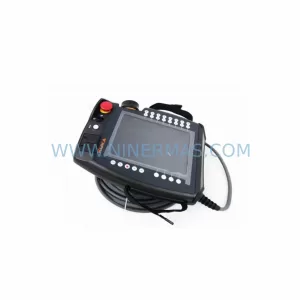
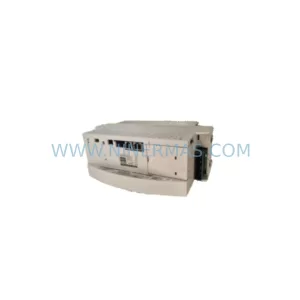
SKU: C4KR5R-1400 00-183-853
KUKA 00-183-853 Retrofit-Compatible Power Module for Legacy Systems
SKU: 033.56.84.10C 033.56.84.10D
KUKA 033.56.84.10C/10D Retrofit-Compatible Gearbox for Legacy Systems
Catalog Continuation
Alternative parts within PLC & Industrial Automation Modules.
Stay inside the same system family when you need substitutes, adjacent modules, or a broader shortlist for procurement review.
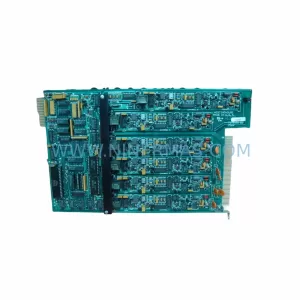
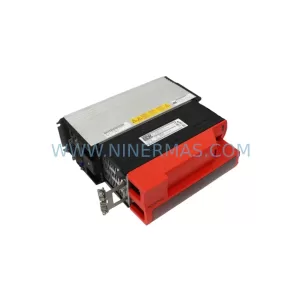
SKU: MDS60A0015-5A3-4-00 KV-U7 KV-C32XA KV-B16RA KV-DA40 KV-AD40 KV-1000 VER.4.13, 1080-00125 SM3410-APPMAT1
SEW MDS60A0015-5A3-4-00 Service-Ready Industrial Spare Part
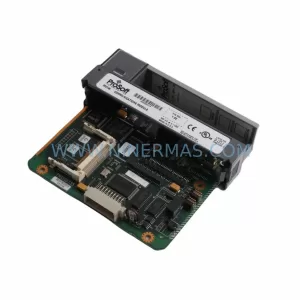
SKU: 6SL3120-1TE24-5AA1
Siemens 6SL3120-1TE24-5AA1 Service-Ready Spare Part for Industrial Maintenance