Original Industrial Spare Part
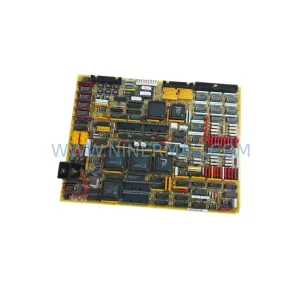
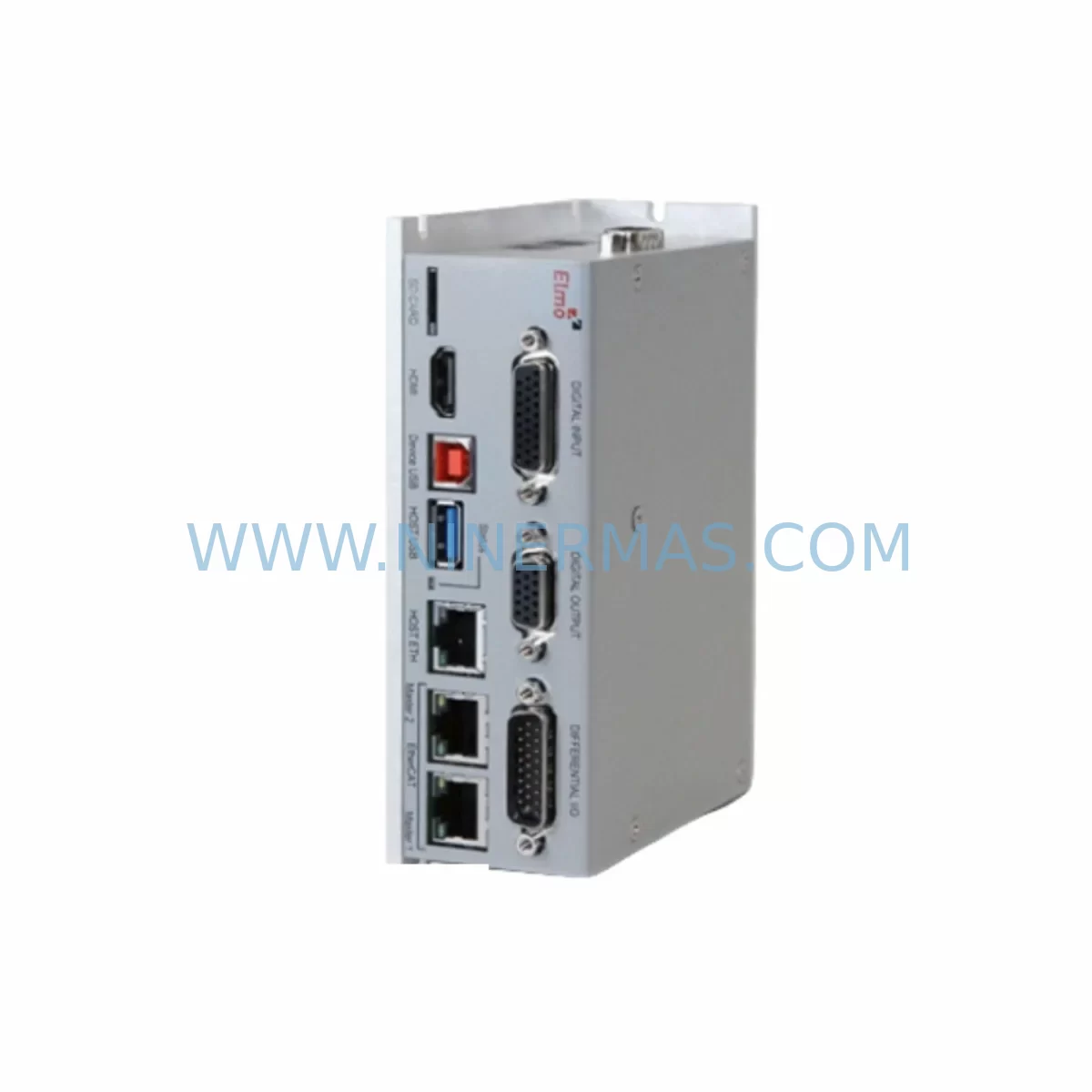
ELMO P-MAS0N Retrofit-Compatible Motion Controller for Legacy Systems
Verify the part, confirm the platform family, and move straight into quotation with the right commercial details.
RFQ Ready
- SKUP-MAS0N
- CategoryPLC & Industrial Automation Modules
- BrandELMO
- SupportAvailability, lead time, condition, and shipping coordination
How Buyers Usually Use This Page
- Confirm the exact part number and platform family before sending the quote request.
- Use direct email when quantity, condition, and destination are already defined internally.
- Switch to the broader brand or category archive when you need alternates nearby.
Series Navigation
Move through the most common platform families behind this part.
Product RFQ
Send this part directly for quotation.
Include quantity, required condition, destination country, and target delivery timing. Current reference: ELMO P-MAS0N Retrofit-Compatible Motion Controller for Legacy Systems with SKU P-MAS0N.
ELMO P-MAS0N Retrofit-Compatible Motion Controller for Legacy Systems
The ELMO P-MAS0N is a high-performance motion controller designed for seamless integration into legacy Gold Series automation platforms. As industrial facilities face increasing pressure to extend the operational life of aging control architectures, the P-MAS0N delivers a proven retrofit path that minimises engineering risk, reduces unplanned downtime, and preserves existing program logic. Whether you are replacing an end-of-life axis controller in a multi-axis servo system, upgrading a legacy motion node within a distributed control cabinet, or restoring a discontinued drive coordination module, the P-MAS0N provides the compatibility, communication flexibility, and mechanical form factor required for a controlled, low-disruption migration.
ELMO’s Gold Series platform has been widely deployed across precision manufacturing, semiconductor handling, medical robotics, and industrial automation lines. Over time, original Gold Series motion nodes reach end-of-life status, and sourcing original spare parts becomes increasingly difficult. The P-MAS0N addresses this challenge directly by offering a retrofit-compatible replacement that maintains backward compatibility with existing Gold Series communication protocols, I/O signal assignments, and motion program structures. Engineers can deploy the P-MAS0N without redesigning the control cabinet layout, re-routing terminal wiring, or rewriting motion sequences from scratch.
Before committing to a P-MAS0N retrofit, maintenance engineers should systematically verify several critical parameters. Power supply capacity must be confirmed against the P-MAS0N’s input voltage range and peak current draw, particularly in multi-axis cabinets where shared 24 VDC or 48 VDC bus rails may be operating near capacity. Terminal wiring assignments should be cross-referenced against the original Gold Series node pinout to confirm signal polarity, encoder feedback wiring, and digital I/O mapping. Backplane interface compatibility must be validated if the P-MAS0N is installed within a Gold Series rack alongside other Gold modules such as the Gold Drum, Gold Twitter, or Gold Solo Whistle, ensuring that the backplane communication bus and module addressing scheme remain consistent.
Module address configuration is a particularly important step during commissioning. In multi-axis Gold Series systems, each motion node is assigned a unique node address via hardware DIP switches or software configuration tools. When replacing a legacy node with the P-MAS0N, the replacement module must be assigned the same node address as the original to avoid disrupting the motion program’s axis mapping. ELMO’s Motion Studio programming environment supports direct address assignment and axis parameter import, allowing engineers to restore the original motion profile, velocity limits, torque limits, and homing sequences without manual re-entry.
Program compatibility verification is essential before returning the system to production. Motion programs developed for earlier Gold Series nodes are generally compatible with the P-MAS0N, but engineers should review any firmware-dependent function calls, particularly those related to advanced motion modes, synchronisation triggers, or fieldbus communication. If the existing system uses CANopen or EtherCAT for coordinated multi-axis motion, the P-MAS0N’s communication stack should be confirmed against the network master’s device profile expectations. In systems where a Beckhoff EK1100 EtherCAT coupler or similar fieldbus master manages axis coordination, the P-MAS0N’s EDS or XML device description file should be imported into the master configuration to ensure correct process data object mapping.
HMI screen compatibility should also be reviewed during the retrofit planning phase. In facilities where a Siemens TP700 Comfort or similar operator panel displays axis status, position feedback, or fault codes sourced from the Gold Series motion controller, the HMI tag database must be verified to confirm that variable addresses and data types remain consistent after the P-MAS0N replacement. Communication link integrity between the motion controller and the supervisory PLC — whether via Modbus RTU, CANopen, or a dedicated motion network — should be tested under simulated load conditions before full production restart.
Installation space confirmation is a practical but often overlooked step. The P-MAS0N’s physical dimensions, DIN rail mounting requirements, and connector orientation should be verified against the available cabinet space, particularly in densely populated control enclosures where adjacent components such as a Phoenix Contact QUINT power supply, signal isolators, or terminal blocks may limit access. Adequate clearance for cable management and ventilation should be maintained to ensure reliable long-term operation.
Field commissioning of the P-MAS0N follows a structured sequence: power-on self-test verification, communication link establishment, axis parameter upload, homing sequence execution, and incremental motion testing under reduced speed before full-speed production validation. NINERMAS provides pre-shipment functional testing on all P-MAS0N units, confirming communication response, I/O signal integrity, and motion command execution prior to dispatch. Each unit is supplied with a 12-month warranty covering manufacturing defects and component failures under normal operating conditions.
Upgrade Compatibility Table
| Parameter | Details |
|---|---|
| SKU | P-MAS0N |
| Brand / Series | ELMO / Gold Series |
| Product Type | Motion Controller |
| Communication Interfaces | CANopen, EtherCAT (model-dependent); verify against existing network master |
| Backplane / Rack Compatibility | Compatible with Gold Series rack; verify slot addressing with Gold Drum / Gold Twitter modules |
| Terminal Wiring | Cross-reference original Gold Series node pinout before rewiring; confirm encoder feedback polarity |
| Power Supply Requirement | Confirm 24 VDC / 48 VDC bus capacity; check peak current draw in multi-axis cabinets |
| Module Address Configuration | Assign same node address as replaced unit via DIP switch or Motion Studio software |
| Programming Environment | ELMO Motion Studio; supports axis parameter import and motion profile restoration |
| HMI Compatibility | Verify tag database and variable addresses on existing operator panels (e.g. Siemens TP700 Comfort) |
| Installation Dimensions | Confirm DIN rail mounting clearance and connector orientation in existing cabinet |
| Pre-Shipment Testing | Functional test performed on all units prior to dispatch |
| Warranty | 12 months from date of shipment |
| Replacement Recommendation | Direct retrofit replacement for end-of-life Gold Series motion nodes |
Retrofit Planning for Existing Automation Systems
A successful P-MAS0N retrofit begins with a thorough audit of the existing control architecture. In a typical Gold Series multi-axis system, the P-MAS0N operates alongside other Gold Series modules — such as the Gold Drum multi-axis controller, Gold Twitter compact servo drive, and Gold Solo Whistle single-axis node — all sharing a common backplane bus and coordinated by a central motion program. Before removing the legacy node, engineers should document the current axis parameter set using ELMO Motion Studio, exporting velocity profiles, position limits, PID tuning values, and I/O assignments to a configuration file that can be directly imported into the P-MAS0N after installation.
Power distribution within the control cabinet requires careful attention. In cabinets where a Phoenix Contact QUINT 24 VDC power supply feeds multiple Gold Series nodes, the addition or replacement of a motion controller may alter the total load on the DC bus. Engineers should verify that the power supply’s output current rating provides adequate headroom, particularly during simultaneous axis homing or high-acceleration motion sequences. If the cabinet also houses a Wago 750-series I/O terminal block system for digital and analogue signal distribution, the signal wiring between the I/O terminals and the P-MAS0N’s connector should be verified against the original wiring diagram to prevent signal inversion or address conflicts.
Communication protocol migration is a common challenge in Gold Series retrofits. Systems originally configured for CANopen communication may need to be evaluated for EtherCAT migration if the broader control platform is being modernised. In such cases, the P-MAS0N’s communication stack should be configured to match the network master’s expected device profile, and the EDS or XML device description file should be imported into the master — whether that master is a Beckhoff CX2040 embedded PC, a Siemens S7-1500 PLC with CM 4xIO-Link communication module, or a dedicated motion coordinator. Signal isolators such as the Phoenix Contact MCR-SL series may be required to protect the P-MAS0N’s I/O inputs from noise on long cable runs in industrial environments.
For systems where a programming cable such as the ELMO CANopen USB adapter is used for direct axis configuration, engineers should confirm cable compatibility with the P-MAS0N’s communication port before beginning on-site commissioning. Having the correct programming interface available on-site eliminates a common source of commissioning delay and reduces the risk of extended downtime during the retrofit window.
Downtime Control During System Migration
Minimising production downtime during a P-MAS0N retrofit requires a structured pre-migration preparation process. All axis parameters, motion programs, and I/O configurations should be exported and backed up before the legacy node is removed. Where possible, the P-MAS0N should be pre-configured and bench-tested in a staging environment using the exported parameter file, allowing engineers to verify communication response and basic motion command execution before the unit is installed in the production cabinet.
During the physical swap, the original terminal wiring should be labelled and photographed before disconnection to provide a reliable reference for reconnection. Module address switches should be set to match the original node address before power-up to prevent the motion program from generating axis mapping errors on restart. After installation, the system should be powered up in a controlled sequence — communication link first, then axis enable — with the motion program running in a reduced-speed test mode before full production speed is restored.
Protecting the original program logic is a priority throughout the migration. ELMO Motion Studio’s parameter import function allows the P-MAS0N to be loaded with the original axis configuration without manual re-entry, reducing the risk of transcription errors that could cause unexpected motion behaviour. HMI screens should be tested for correct data display and alarm response before the system is returned to operator control. Communication links to supervisory PLCs or SCADA systems should be verified under live conditions to confirm that position feedback, fault status, and motion command signals are correctly transmitted and received.
By following a structured retrofit sequence — parameter backup, bench pre-configuration, controlled installation, incremental motion testing, and full-speed validation — maintenance teams can typically complete a P-MAS0N replacement within a planned maintenance window, avoiding unplanned production stoppages and protecting the continuity of existing control logic.
Retrofit Support FAQ
Q: Is the ELMO P-MAS0N a direct drop-in replacement for existing Gold Series motion nodes?
A: The P-MAS0N is designed as a retrofit-compatible replacement for Gold Series motion controllers. Physical mounting, communication interface, and parameter structure are consistent with the Gold Series platform. Engineers should verify backplane slot compatibility, node address assignment, and terminal wiring against the original installation before completing the swap.
Q: What commissioning steps are required after installing the P-MAS0N?
A: After physical installation, the recommended commissioning sequence is: (1) set module address to match the original node, (2) import the backed-up axis parameter file via ELMO Motion Studio, (3) establish communication link and verify network response, (4) execute homing sequence, (5) run incremental motion test at reduced speed, and (6) validate full-speed operation before returning to production.
Q: Does NINERMAS perform pre-shipment testing on the P-MAS0N?
A: Yes. All P-MAS0N units supplied by NINERMAS undergo functional pre-shipment testing covering communication response, I/O signal integrity, and motion command execution. Units are dispatched only after passing this test protocol. A 12-month warranty is provided from the date of shipment, covering manufacturing defects and component failures under normal operating conditions.
Q: What is the typical lead time and stock availability for the ELMO P-MAS0N?
A: NINERMAS maintains inventory of Gold Series components including the P-MAS0N to support urgent retrofit and breakdown replacement requirements. Contact our team for current stock status and lead time confirmation. Global shipping is available with expedited options for critical downtime situations.
| Product Series | Legacy |
|---|
Catalog Continuation
More ELMO modules in the catalog.
Use the brand lane to compare nearby part numbers, platform-adjacent modules, and other inquiry-ready listings before sending your final RFQ.
Catalog Continuation
Alternative parts within PLC & Industrial Automation Modules.
Stay inside the same system family when you need substitutes, adjacent modules, or a broader shortlist for procurement review.