Original Industrial Spare Part
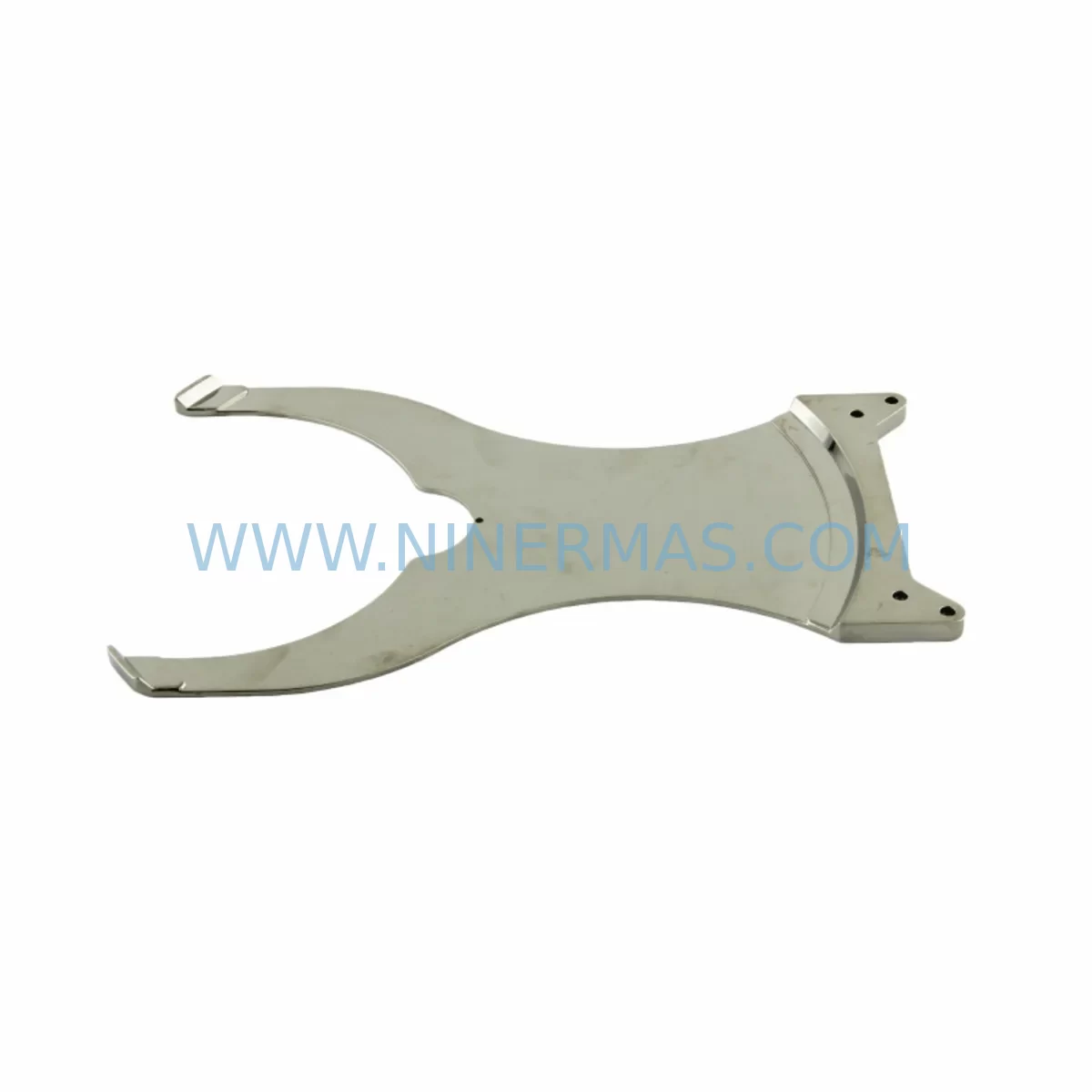
Brooks 116581 Retrofit-Compatible End Effector Module
Verify the part, confirm the platform family, and move straight into quotation with the right commercial details.
RFQ Ready
- SKU978-262-2900 116581 100X/0.90 BD 566014 HP 41420A, 20FA-1A HP 41420A-61001
- CategoryPLC & Industrial Automation Modules
- BrandBrooks Automation
- SupportAvailability, lead time, condition, and shipping coordination
How Buyers Usually Use This Page
- Confirm the exact part number and platform family before sending the quote request.
- Use direct email when quantity, condition, and destination are already defined internally.
- Switch to the broader brand or category archive when you need alternates nearby.
Series Navigation
Move through the most common platform families behind this part.
Product RFQ
Send this part directly for quotation.
Include quantity, required condition, destination country, and target delivery timing. Current reference: Brooks 116581 Retrofit-Compatible End Effector Module with SKU 978-262-2900 116581 100X/0.90 BD 566014 HP 41420A, 20FA-1A HP 41420A-61001.
Brooks 116581 Retrofit-Compatible End Effector Module: Legacy System Compatibility and Smooth Upgrade
The Brooks Automation 116581 end effector is a precision robotic blade module designed for wafer handling in semiconductor fabrication and industrial automation environments. As original equipment manufacturers phase out legacy robot platforms, maintenance engineers and system integrators face increasing pressure to source compatible spare parts that can be installed without redesigning the entire control architecture. The 116581 is a direct retrofit candidate for aging Brooks Automation robot arms, offering dimensional and functional compatibility with legacy systems that remain in active production service.
When planning a retrofit or spare parts replacement using the 116581, engineers must verify several critical parameters before committing to installation. Power supply capacity at the robot controller level must be confirmed, particularly if the existing system is running a Brooks Automation PRI (Precision Robot Interface) controller or an older MagnaTran series controller. The end effector’s blade geometry and wrist interface must match the robot’s end-of-arm tooling specification, and any mechanical wear on the wrist coupling should be inspected and corrected before the new module is installed.
Terminal wiring and signal routing are equally important. The 116581 interfaces with the robot’s I/O backplane through a defined connector pinout, and any deviation from the original wiring harness — particularly in vacuum sensor signal lines and blade presence detection circuits — can cause faults during initialization. Engineers should retain the original wiring diagram and compare it against the replacement module’s connector layout before powering up the system.
Backplane interface compatibility is a common concern when the 116581 is being installed in a system that has undergone partial upgrades. If the robot controller has been updated to a newer firmware revision while the mechanical arm remains on the original platform, there may be address mapping differences that require a parameter adjustment in the controller’s configuration file. This is especially relevant in systems where the Brooks Automation BM3 or Spartan series controllers have been partially upgraded with newer communication cards.
Upgrade Compatibility Table
| Parameter | Specification / Recommendation |
|---|---|
| Compatible Robot Platforms | Brooks Automation MagnaTran 7, MagnaTran 8, Spartan series, legacy PRI-based arms |
| End Effector Interface | Wrist coupling: standard Brooks blade mount; verify torque spec before installation |
| Power Requirements | Confirm controller output capacity; vacuum pump circuit must be independently verified |
| Communication Protocol | RS-232 / RS-485 serial; confirm baud rate and address settings match controller config |
| Installation Space | Confirm clearance in process chamber and transfer module; blade length must match wafer size spec |
| Firmware Compatibility | Verify robot controller firmware version supports 116581 blade type parameter |
| Replacement Recommendation | Direct drop-in for OEM 116581; inspect wrist coupling and vacuum port before installation |
| Commissioning Focus | Blade teach position, vacuum sensor calibration, wafer presence detection verification |
| Warranty | 12-Month Warranty — all units pre-shipment tested under operational conditions |
Retrofit Planning for Existing Automation Systems
A successful retrofit using the Brooks Automation 116581 requires a structured approach that accounts for the full scope of the robot system, not just the end effector itself. In most legacy semiconductor fab environments, the robot arm operates as part of a larger equipment front-end module (EFEM) or cluster tool, and the end effector replacement must be coordinated with the surrounding system components to avoid introducing new failure points.
The robot controller — whether a Brooks Automation BM3 controller, a Spartan controller, or a third-party motion controller integrated via serial command protocol — must be placed in a safe maintenance mode before the end effector is removed. Engineers should back up the current teach position data and blade offset parameters stored in the controller’s non-volatile memory. This data is critical for restoring the robot’s positional accuracy after the new 116581 is installed.
In systems where the robot communicates with a host computer via a Brooks Automation SECS/GEM interface or a proprietary serial protocol, the communication link should be verified after installation to confirm that the host system correctly recognizes the updated end effector configuration. If the system uses a Brooks Automation teach pendant for manual positioning, the pendant’s blade selection menu should be updated to reflect the installed module type.
Power distribution within the control cabinet is another area that requires attention. The 116581’s vacuum solenoid and sensor circuits draw current from the robot controller’s auxiliary power rail. If the control cabinet also houses a Brooks Automation power supply module, a servo drive for the robot’s theta and radial axes, or an I/O expansion module for process interlocks, the total current draw must be recalculated to ensure the power supply is not operating near its rated limit.
For systems that include a Brooks Automation signal isolation module between the robot controller and the process equipment, the isolation barrier’s input/output mapping should be reviewed after the end effector replacement. Changes in the vacuum sensor signal level or blade presence detection logic can affect the isolation module’s output state, which in turn may trigger unexpected interlocks in the process equipment’s PLC or safety relay circuit.
In multi-arm cluster tool configurations, where two or more robot arms share a common transfer chamber, the 116581 replacement on one arm must not disrupt the scheduling logic of the cluster tool controller. Engineers should confirm that the cluster tool’s recipe parameters and wafer routing logic remain valid after the end effector change, particularly if the blade geometry differs slightly from the original specification.
Cable management inside the robot arm’s hollow wrist assembly should also be inspected during the retrofit. Vacuum tubing, sensor wiring, and any fiber optic wafer detection cables that pass through the wrist must be re-routed and secured after the new end effector is installed. Failure to properly secure these cables can result in intermittent sensor faults or vacuum leaks during high-throughput operation.
Downtime Control During System Migration
Minimizing downtime during an end effector replacement is a primary concern in production environments where the robot system supports continuous wafer processing. The most effective strategy is to pre-stage the replacement 116581 module alongside all required tools, spare connectors, and calibration equipment before the maintenance window begins. NINERMAS ships all 116581 units with pre-shipment functional testing completed, which eliminates the need for incoming inspection and allows the replacement to proceed directly to installation.
Before removing the original end effector, engineers should document the current blade teach positions using the robot controller’s diagnostic interface or the Brooks Automation teach pendant. These positions — including the wafer pick and place offsets for each process station — serve as the baseline for post-installation calibration. In many cases, the teach positions can be transferred directly to the new module without a full re-teach, provided the replacement blade’s dimensional tolerances are within the acceptable range.
To protect the original program logic stored in the robot controller, a full controller backup should be performed before any hardware changes are made. This backup should include the motion program, I/O mapping, communication parameters, and any custom interlock logic that has been added to the controller’s configuration over the system’s operational lifetime. If the controller uses a Brooks Automation BM3 or equivalent platform, the backup can typically be performed via the serial interface using the controller’s built-in backup utility.
After the new 116581 is installed and the vacuum and sensor connections are verified, the system should be brought up in a reduced-speed manual mode for initial commissioning. The blade teach positions should be verified at each process station before returning the robot to automatic mode. Vacuum sensor thresholds should be confirmed against the process specification, and a minimum of five dry-run cycles should be completed before live wafers are introduced.
Retrofit Support FAQ
Q: Is the Brooks Automation 116581 a direct replacement for the original OEM end effector?
A: Yes. The 116581 is sourced as an original Brooks Automation component and is dimensionally and functionally equivalent to the OEM specification. NINERMAS verifies compatibility with the customer’s robot model and controller firmware version before shipment.
Q: What commissioning steps are required after installing the 116581?
A: After installation, verify vacuum port connections and sensor wiring, confirm blade teach positions at each process station, validate vacuum sensor thresholds, and complete a minimum of five dry-run cycles before returning to production. The robot controller’s blade type parameter should also be confirmed.
Q: How does NINERMAS ensure the 116581 is functional before shipment?
A: All units undergo pre-shipment functional testing under operational conditions, including vacuum integrity verification and sensor circuit continuity checks. Each unit ships with a 12-month warranty covering manufacturing defects and functional failures under normal operating conditions.
Q: What is the typical lead time and inventory availability for the 116581?
A: NINERMAS maintains ready stock of the Brooks Automation 116581 to support urgent maintenance and unplanned downtime scenarios. Lead time for in-stock units is typically 3–7 business days for international shipments. Contact our team at sale@ninermas.com or +0086 187 5021 5667 to confirm current availability and arrange expedited shipping if required.
| Product Series | Other series |
|---|
Catalog Continuation
More Brooks Automation modules in the catalog.
Use the brand lane to compare nearby part numbers, platform-adjacent modules, and other inquiry-ready listings before sending your final RFQ.
SKU: 113142 TT1ENR2-1-TVS-NES-BROOKS10 QJ92-1642-A 0010-07586
Brooks 113142-TT1ENR2-1 Safety-Reliable Module for Critical Sites
Catalog Continuation
Alternative parts within PLC & Industrial Automation Modules.
Stay inside the same system family when you need substitutes, adjacent modules, or a broader shortlist for procurement review.
SKU: A05B-2518-C200
FANUC A05B-2518-C200 Retrofit Teach Pendant for Legacy Systems
SKU: 2711PC-T10C4D8
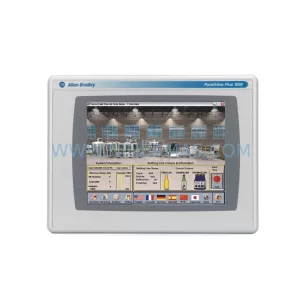
Allen-Bradley 2711PC-T10C4D8 Retrofit-Compatible HMI Terminal