Original Industrial Spare Part
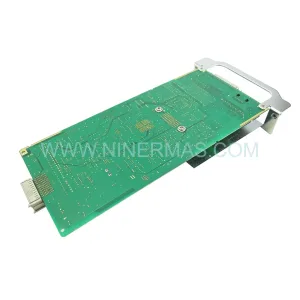
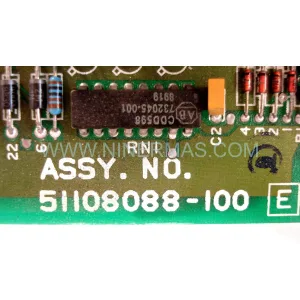
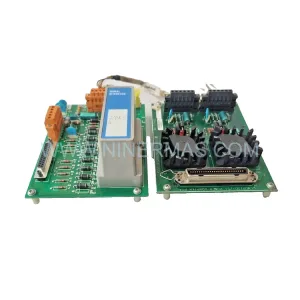
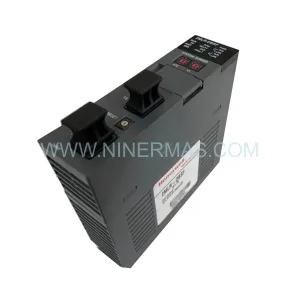
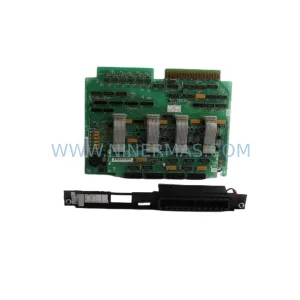
KUKA ESC-PLATINE Retrofit-Compatible Safety Board for Legacy Systems
Verify the part, confirm the platform family, and move straight into quotation with the right commercial details.
RFQ Ready
- SKUESC-PLATINE
- CategorySIS Safety & Redundancy Systems
- BrandKUKA
- SupportAvailability, lead time, condition, and shipping coordination
How Buyers Usually Use This Page
- Confirm the exact part number and platform family before sending the quote request.
- Use direct email when quantity, condition, and destination are already defined internally.
- Switch to the broader brand or category archive when you need alternates nearby.
Series Navigation
Move through the most common platform families behind this part.
Product RFQ
Send this part directly for quotation.
Include quantity, required condition, destination country, and target delivery timing. Current reference: KUKA ESC-PLATINE Retrofit-Compatible Safety Board for Legacy Systems with SKU ESC-PLATINE.
KUKA ESC-PLATINE Retrofit-Compatible Safety Board for Legacy Systems
The KUKA ESC-PLATINE is a critical safety control board designed for KUKA industrial robot controllers, widely deployed across automotive, heavy manufacturing, and general automation environments. As production lines age and original KUKA spare parts become increasingly difficult to source, the ESC-PLATINE has emerged as one of the most sought-after retrofit components for engineers tasked with keeping legacy KUKA KRC1 and KRC2 controller platforms operational. NINERMAS maintains verified stock of the ESC-PLATINE with full functional testing and a 12-month warranty, supporting customers through planned upgrades and emergency replacement scenarios alike.
The ESC-PLATINE (Emergency Stop Control Board) sits at the heart of the KUKA robot’s safety chain. It monitors and processes emergency stop signals, safety gate interlocks, operator panel inputs, and external safety device feedback. When this board fails or degrades, the entire robot cell is rendered inoperable — making rapid, compatible replacement essential to minimizing unplanned downtime. Engineers replacing the ESC-PLATINE must carefully verify the controller cabinet revision, backplane slot assignment, and the firmware version loaded on the KPS (KUKA Power Supply) and KSP (KUKA Servo Pack) modules to ensure seamless reintegration.
Upgrade Compatibility Table
| Parameter | Details |
|---|---|
| Compatible Controllers | KUKA KRC1, KRC2, KRC2 ed05 |
| Board Function | Emergency Stop Safety Chain Control |
| Backplane Interface | KRC2 internal bus connector, slot-specific installation |
| Communication Compatibility | KUKA internal safety bus; compatible with DSE-IBS and CI3 boards |
| Installation Requirement | Correct slot position in KRC2 cabinet; torque-sensitive connector seating |
| Replacement Recommendation | Direct drop-in for failed or degraded ESC-PLATINE; verify KSS version |
| Commissioning Focus | Safety chain continuity test, E-stop loop verification, teach pendant handshake |
| Warranty | 12 Months — NINERMAS Company Limited |
Retrofit Planning for Existing Automation Systems
Replacing the ESC-PLATINE in an active production environment requires a structured retrofit plan that accounts for the full safety architecture of the KUKA KRC2 controller. Before removing the failed board, engineers should document the existing wiring harness routing, connector locking tab positions, and any site-specific safety relay configurations tied to the external E-stop circuit. The ESC-PLATINE interfaces directly with the KPS600 power supply module, and any mismatch in connector seating or grounding can trigger persistent safety faults that prevent the controller from reaching the ready state.
During the retrofit, it is common to simultaneously inspect adjacent components that share the safety chain. The DSE-IBS communication board, which handles the interbus connection between the KRC2 controller and field devices, should be checked for firmware compatibility with the replacement ESC-PLATINE. Similarly, the CI3 board — responsible for customer interface I/O — must be verified to ensure that external safety gate signals, light curtain inputs, and area scanner feedback are correctly mapped after the board swap. If the robot cell uses a KUKA KCP2 teach pendant, the pendant’s E-stop channel must be re-validated as part of the post-installation safety acceptance test.
For cells where the KRC2 controller is integrated into a larger safety network — such as a Pilz PNOZ safety relay chain or a Sick safety controller — the ESC-PLATINE replacement must be followed by a full safety function test per the original risk assessment. Engineers should also confirm that the KSP (servo pack) modules, including the KSP600-3×40 or KSP600-3×64 variants, are not generating residual fault codes that could be misattributed to the new board. In multi-robot cells sharing a common E-stop bus, the replacement sequence should be coordinated to avoid inadvertently disabling adjacent robot controllers during the swap.
Where the retrofit is part of a broader control cabinet upgrade — for example, migrating from a KRC2 to a KRC4 platform — the ESC-PLATINE serves as a bridging component that keeps the legacy cell operational during the phased transition. In these scenarios, customers often source the ESC-PLATINE alongside the KRC2 MFC (Master Fan Controller) board and the KRC2 RDC (Resolver Digital Converter) card to ensure a complete spare inventory that covers the full duration of the migration project. NINERMAS supports these long-term procurement programs with committed stock allocation and lead-time planning.
Downtime Control During System Migration
Unplanned downtime caused by ESC-PLATINE failure typically results in a complete robot cell shutdown, with no ability to jog, program, or operate the manipulator until the safety chain is restored. To minimize production impact, NINERMAS recommends maintaining at least one verified spare ESC-PLATINE on-site for every two to three KRC2 controllers in active service. This buffer stock strategy, combined with a documented swap procedure, can reduce mean time to repair (MTTR) from several days — when waiting for emergency freight — to under two hours for a trained maintenance technician.
Before initiating the board swap, the original PLC program logic and HMI screen configurations should be backed up if any safety parameters are stored in controller memory rather than on the teach pendant or an external KCP data card. In most KRC2 installations, the robot program and system configuration are stored on the controller’s hard drive, but safety-relevant parameters tied to the ESC-PLATINE’s DIP switch settings or jumper configurations must be recorded manually. After installation, the controller should be powered up in a controlled sequence: KPS first, followed by the main cabinet power, with the teach pendant connected and the E-stop released only after confirming that no residual fault codes are present on the KUKA smartPAD or KCP2 display.
For sites where a cold swap is not feasible due to continuous production requirements, a warm-standby approach using a pre-configured KRC2 controller with a tested ESC-PLATINE already installed can be staged adjacent to the production cell. This approach, while requiring a higher upfront investment in spare hardware, effectively reduces changeover time to the duration of the mechanical disconnection and reconnection of the robot cable harness — typically 30 to 60 minutes for an experienced field engineer.
Retrofit Support FAQ
Q: Is the ESC-PLATINE a direct replacement for all KRC2 controller variants?
A: The ESC-PLATINE is compatible with the standard KRC2 and KRC2 ed05 controller platforms. Customers should confirm the controller’s production date and hardware revision before ordering, as early KRC1 cabinets use a different safety board form factor. NINERMAS technical support can assist with cross-referencing the part number against the controller’s serial plate data.
Q: What commissioning steps are required after installing the ESC-PLATINE?
A: After physical installation, the safety chain must be validated by performing a full E-stop function test from all input points — including the teach pendant, operator panel, and any external safety devices wired to the customer interface. The robot should then be jogged at reduced speed in T1 mode to confirm that all axes respond correctly before returning to automatic operation.
Q: Does NINERMAS test the ESC-PLATINE before shipment?
A: Yes. All ESC-PLATINE units shipped by NINERMAS undergo functional verification prior to dispatch. Each unit is covered by a 12-month warranty from the date of shipment. In the event of a warranty claim, NINERMAS provides advance replacement support to minimize customer downtime.
Q: Can NINERMAS support long-term spare parts programs for the ESC-PLATINE?
A: Yes. NINERMAS offers committed stock allocation for customers with multiple KRC2 controllers in service. Long-term procurement agreements can be structured to cover 12 to 36 months of anticipated demand, with agreed lead times and pricing. Contact our sales team at sale@ninermas.com to discuss your specific requirements.
| Product Series | Legacy |
|---|---|
| Country of Origin | DE |
Catalog Continuation
More KUKA modules in the catalog.
Use the brand lane to compare nearby part numbers, platform-adjacent modules, and other inquiry-ready listings before sending your final RFQ.
SKU: 033.56.84.10C 033.56.84.10D
KUKA 033.56.84.10C/10D Retrofit-Compatible Gearbox for Legacy Systems
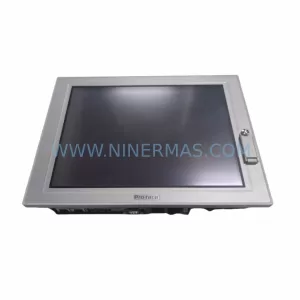
SKU: PFXPP160EA55T00N00
KUKA PFXPP160EA55T00N00 Retrofit-Compatible Teach Pendant for Legacy Systems
Catalog Continuation
Alternative parts within SIS Safety & Redundancy Systems.
Stay inside the same system family when you need substitutes, adjacent modules, or a broader shortlist for procurement review.
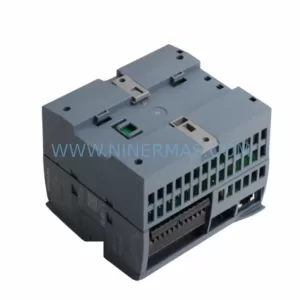
SKU: 610H IPC-610L E5300
ADVANTECH IPC-610H E5300 Safety-Reliable Industrial PC
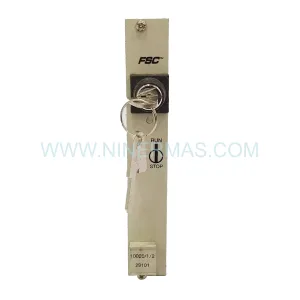
SKU: IC600BF929 IC660FP900K IC600BF929K
GE IC600BF929 Safety-Reliable PLC Module for Critical Control