Original Industrial Spare Part
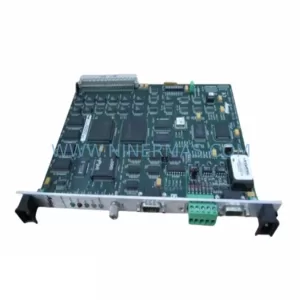
Det-Tronics EQ2100LC Retrofit-Compatible Safety Logic Controller
Verify the part, confirm the platform family, and move straight into quotation with the right commercial details.
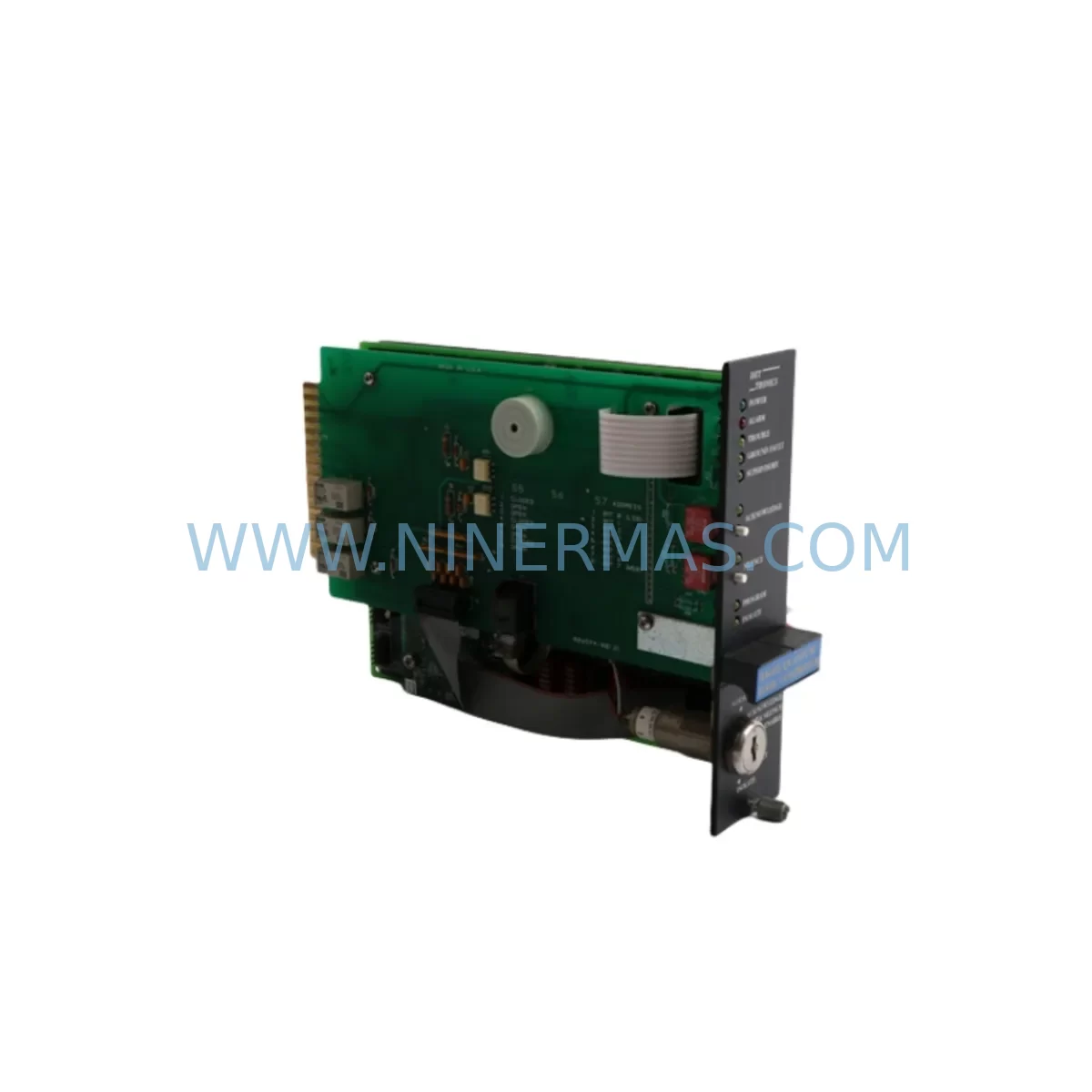
RFQ Ready
- SKUEQ2100LC
- CategorySIS Safety & Redundancy Systems
- BrandDet-Tronics
- SupportAvailability, lead time, condition, and shipping coordination
How Buyers Usually Use This Page
- Confirm the exact part number and platform family before sending the quote request.
- Use direct email when quantity, condition, and destination are already defined internally.
- Switch to the broader brand or category archive when you need alternates nearby.
Series Navigation
Move through the most common platform families behind this part.
Product RFQ
Send this part directly for quotation.
Include quantity, required condition, destination country, and target delivery timing. Current reference: Det-Tronics EQ2100LC Retrofit-Compatible Safety Logic Controller with SKU EQ2100LC.
Det-Tronics EQ2100LC Retrofit-Compatible Safety Logic Controller: Legacy System Upgrade & Smooth Migration
The Det-Tronics EQ2100LC is a ruggedized safety logic controller engineered for continuous operation in harsh industrial environments — including offshore platforms, petrochemical plants, LNG terminals, and heavy manufacturing facilities. As legacy fire and gas detection systems reach end-of-life, the EQ2100LC serves as a proven retrofit solution that preserves existing field wiring, sensor layouts, and alarm logic while delivering modern SIL-rated processing capability. Whether you are replacing a discontinued controller, upgrading a legacy Eagle Quantum Premier (EQP) node, or consolidating a distributed safety network, the EQ2100LC provides a structured migration path with minimal disruption to live production systems.
Upgrade Compatibility Table
| Parameter | Details |
|---|---|
| Model | Det-Tronics EQ2100LC |
| Function | Safety Logic Controller (SLC) — Fire & Gas Detection |
| Series Compatibility | Eagle Quantum Premier (EQP) Platform |
| Common Legacy Replacements | EQ2100, EQ2200, older EQP controller nodes |
| Communication Protocol | Proprietary EQP network bus; Modbus RTU / Modbus TCP (via gateway) |
| Installation Form Factor | DIN-rail / panel-mount; compatible with existing EQP enclosure footprint |
| Power Supply Requirement | 24 VDC nominal; verify existing PSU capacity before swap |
| I/O Interface | Modular I/O expansion via EQP I/O modules; terminal block wiring retained |
| Programming / Configuration | PointWatch Eclipse software; logic re-import from legacy EQP project files |
| Safety Rating | SIL 2 capable (application-dependent) |
| Operating Environment | -40°C to +70°C; IP66 rated enclosure options available |
| Retrofit Wiring Adaptation | Existing field cable terminations retained in most EQP-to-EQP upgrades |
| Commissioning Tool | EQP Configurator software; USB or RS-232 programming cable required |
| 12-Month Warranty | Yes — all units pre-shipment tested and covered for 12 months from delivery |
Retrofit Planning for Existing Automation Systems
Replacing a safety logic controller in a live fire and gas detection system requires careful pre-engineering to avoid unplanned shutdowns and to maintain SIL integrity throughout the migration. The EQ2100LC is designed to slot into existing Eagle Quantum Premier architectures, but a structured retrofit plan must address several interdependent system layers before the physical swap begins.
Power Supply Verification: Before removing the legacy controller, confirm that the existing 24 VDC power supply — typically a Det-Tronics EQP Power Supply Module or equivalent industrial DIN-rail PSU — can sustain the full load of the EQ2100LC plus all connected I/O modules, detectors, and communication interfaces. Undersized power supplies are a leading cause of post-retrofit instability. If the existing PSU is marginal, a parallel redundant power supply should be installed during the same maintenance window.
Terminal Block and Field Wiring: The EQ2100LC uses the same terminal block layout as earlier EQP controller generations, which means field cables for flame detectors, gas detectors, manual call points, and sounder circuits can typically be re-terminated without re-pulling cable. However, each terminal assignment must be verified against the as-built wiring schedule. Pay particular attention to analog input channels connected to catalytic bead gas detectors or infrared point detectors, as signal conditioning parameters may differ between controller firmware versions.
Backplane and Module Addressing: In multi-node EQP systems, each controller node is assigned a unique network address on the EQP communication bus. When replacing the EQ2100LC into an existing node slot, the module address must be re-configured to match the original node assignment. Failure to do so will cause address conflicts with adjacent EQP I/O Modules, EQP Remote Annunciator Panels, or EQP Gateway Modules used for Modbus or HART integration. Address configuration is performed via the EQP Configurator software prior to installation.
I/O Module Compatibility: The EQ2100LC supports the full range of EQP I/O expansion modules, including digital input modules, relay output modules, and analog input modules for 4–20 mA sensor loops. If the legacy system includes older I/O modules that are no longer in production, verify firmware compatibility before assuming they will enumerate correctly under the EQ2100LC. In some cases, upgrading one or two EQP I/O Modules alongside the controller replacement is the most reliable path to a stable post-retrofit configuration.
HMI and Annunciator Integration: Many EQP installations include a dedicated EQP Graphic Annunciator or a third-party HMI panel connected via Modbus TCP through an EQP Ethernet Gateway Module. After replacing the EQ2100LC, verify that all Modbus register maps used by the HMI remain consistent with the new controller firmware. If the HMI application was built against an older register map, screen updates or alarm acknowledgement sequences may behave unexpectedly until the register mapping is re-validated and the HMI project is updated accordingly.
Communication Link Validation: In networked safety systems, the EQ2100LC communicates upstream to a central fire alarm control panel or a distributed control system (DCS) via an EQP Gateway Module supporting Modbus RTU or Modbus TCP. After the controller swap, perform a full communication link test — including alarm simulation, fault injection, and acknowledgement round-trip — before returning the system to operational status. Also verify that any signal isolators or RS-485 repeaters in the communication chain are functioning correctly, as these components are often overlooked during controller-focused retrofits.
Installation Space and Enclosure Fit: The EQ2100LC shares the same physical footprint as earlier EQP controller modules, making it compatible with existing EQP enclosures and DIN-rail mounting arrangements. However, if the legacy installation used a non-standard enclosure or a third-party control cabinet, measure the available depth and verify that cable management provisions accommodate the EQ2100LC’s connector orientation. In congested control cabinets, a brief mechanical survey before the maintenance window prevents last-minute installation delays.
Program Logic and Configuration Backup: Before decommissioning the legacy controller, export a full backup of the existing EQP project file using the EQP Configurator software. This backup preserves all zone assignments, detector sensitivity settings, alarm delay timers, output relay logic, and cause-and-effect matrices. The exported project file can be imported directly into the EQ2100LC after installation, significantly reducing re-commissioning time and eliminating the risk of manual re-entry errors in complex logic configurations.
Downtime Control During System Migration
Minimizing unplanned downtime during a safety controller replacement is a primary concern for plant operations teams. The EQ2100LC retrofit process is designed to support a structured hot-swap methodology that keeps field detection circuits active for as long as possible during the transition.
The recommended approach is to complete all pre-commissioning steps — address configuration, project file import, power supply verification, and communication link pre-testing — on the bench before the maintenance window opens. This means the replacement EQ2100LC arrives on-site fully configured and tested, ready for a direct physical swap. On-site installation time is then limited to terminal block re-termination, module seating, and a final functional test of all connected detectors and output circuits.
For systems where continuous gas or flame monitoring is a regulatory requirement, coordinate with the site safety officer to arrange a formal system impairment permit covering the duration of the controller replacement. Portable gas monitors and temporary fire watch personnel should be deployed to maintain area coverage during the window when the EQP network is offline. Once the EQ2100LC is installed and the EQP network has re-established communication with all node modules — including any EQP Remote I/O Modules or EQP Sounder Driver Modules in the system — perform a zone-by-zone alarm test before releasing the impairment permit.
All units supplied by NINERMAS are pre-shipment tested against the EQ2100LC factory acceptance criteria, with test records available upon request. This pre-testing step eliminates the risk of receiving a DOA unit and ensures that the replacement controller is ready for immediate installation upon arrival at site.
Retrofit Support FAQ
Q1: Is the EQ2100LC a direct drop-in replacement for earlier EQP controller nodes?
In most EQP-to-EQP upgrade scenarios, yes. The EQ2100LC uses the same physical form factor, terminal block layout, and EQP network bus protocol as earlier controller generations. The primary steps required are re-configuring the node address, importing the existing project file, and verifying power supply capacity. Field wiring and I/O module connections are typically retained without modification.
Q2: What commissioning steps are required after installing the EQ2100LC?
After physical installation, connect the EQP Configurator software via USB or RS-232 programming cable and verify that the node address, zone assignments, and cause-and-effect logic match the approved design. Perform a full detector walk-test covering all input channels, verify relay output operation for all alarm and fault conditions, and confirm Modbus communication with any connected HMI, DCS, or fire alarm control panel. Document all test results before closing the maintenance window.
Q3: Can the EQ2100LC interface with third-party gas detectors or flame detectors not originally specified for the EQP platform?
The EQ2100LC accepts standard 4–20 mA analog inputs and dry contact digital inputs through its EQP I/O Modules, which means many third-party detectors can be integrated provided their output signal type is compatible. However, advanced diagnostic features — such as HART communication or detector-specific fault codes — are only available with Det-Tronics approved detector models. Confirm signal compatibility during the engineering phase of the retrofit to avoid field wiring rework.
Q4: What warranty and supply terms apply to EQ2100LC units from NINERMAS?
All EQ2100LC units supplied by NINERMAS COMPANY LIMITED carry a 12-month warranty from the date of delivery. Each unit undergoes pre-shipment functional testing before dispatch. Inventory is maintained to support urgent retrofit and emergency replacement requirements. For lead time confirmation, stock availability, or technical pre-sales support, contact the NINERMAS team directly.
—
| Product Series | Other series |
|---|---|
| Country of Origin | GB |
Catalog Continuation
More Det-Tronics modules in the catalog.
Use the brand lane to compare nearby part numbers, platform-adjacent modules, and other inquiry-ready listings before sending your final RFQ.
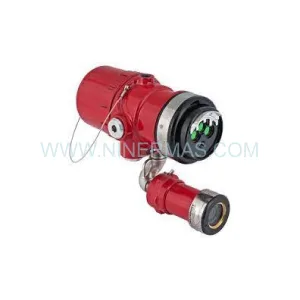
Catalog Continuation
Alternative parts within SIS Safety & Redundancy Systems.
Stay inside the same system family when you need substitutes, adjacent modules, or a broader shortlist for procurement review.
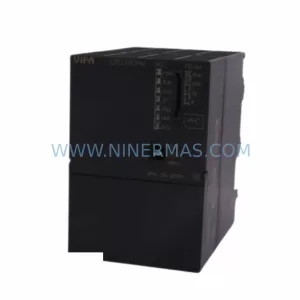
SKU: VIPA315-2DP01 CPU315DPM
VIPA 315-2DP01 Safety-Reliable CPU for Critical Control
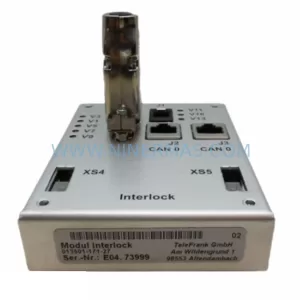
SKU: CDN500R-10 0190-37771
MKS CDN500R-10 0190-37771 Service-Ready Spare Part
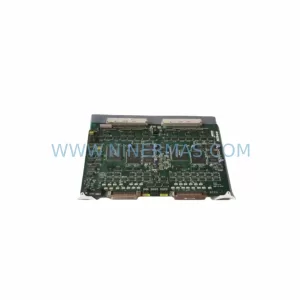
SKU: 4S018-713-1 NSR-S306C
NIKON 4S018-713-1 NSR-S306C Safety-Reliable Control Board
SKU: 5136-DNP-CPCI
SST 5136-DNP-CPCI Safety-Reliable DeviceNet Interface Module