Original Industrial Spare Part
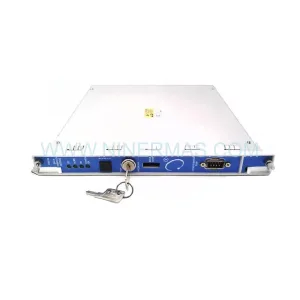
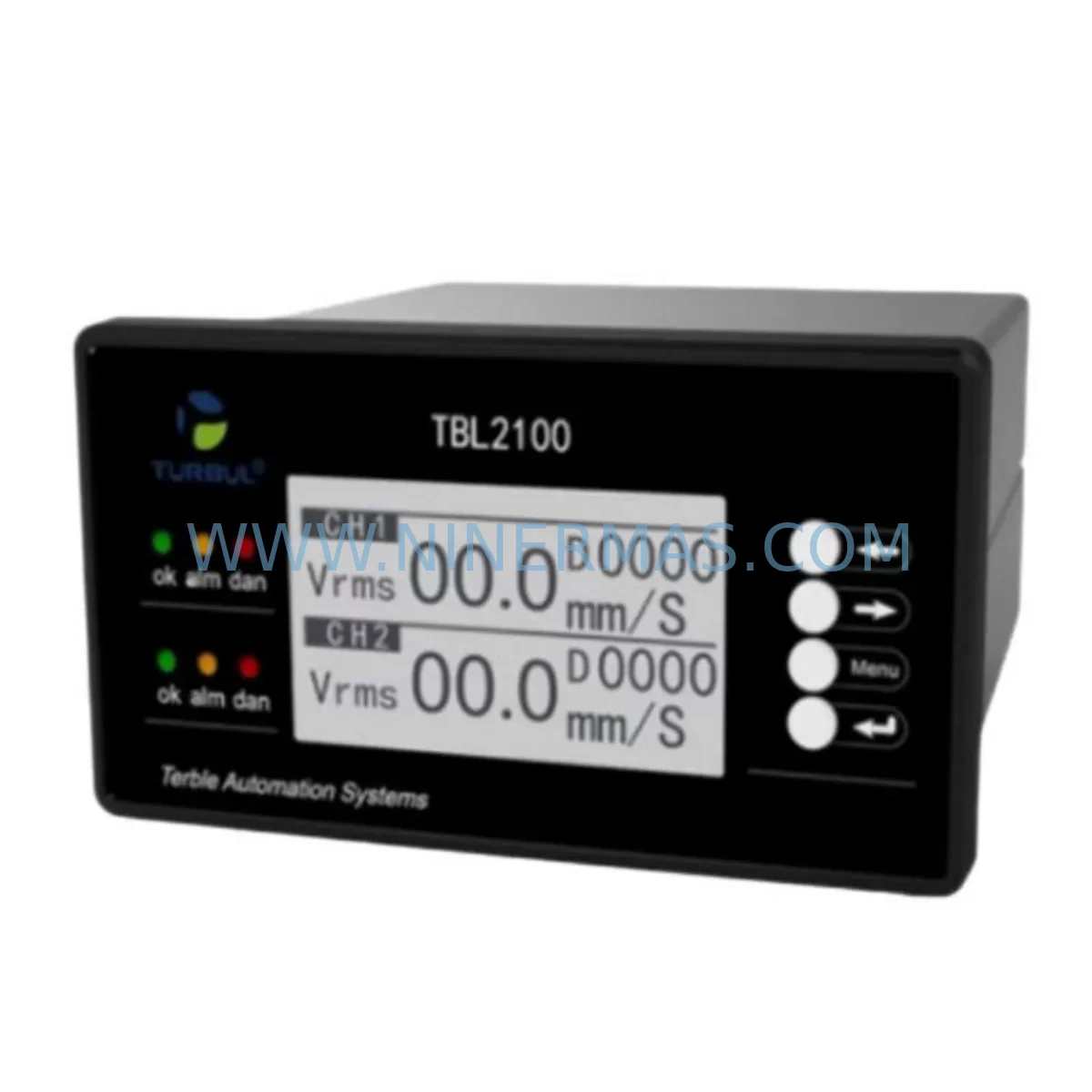
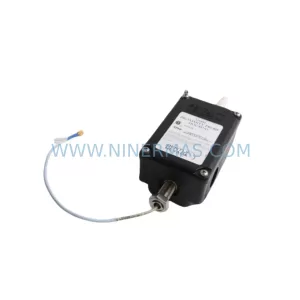
TURBUL TBL2100 Service-Ready Spare Part for Industrial Maintenance
Verify the part, confirm the platform family, and move straight into quotation with the right commercial details.
RFQ Ready
- SKUTBL2100
- CategoryTSI & Rotating Machinery Monitoring
- BrandTURBUL
- SupportAvailability, lead time, condition, and shipping coordination
How Buyers Usually Use This Page
- Confirm the exact part number and platform family before sending the quote request.
- Use direct email when quantity, condition, and destination are already defined internally.
- Switch to the broader brand or category archive when you need alternates nearby.
Series Navigation
Move through the most common platform families behind this part.
Product RFQ
Send this part directly for quotation.
Include quantity, required condition, destination country, and target delivery timing. Current reference: TURBUL TBL2100 Service-Ready Spare Part for Industrial Maintenance with SKU TBL2100.
TURBUL TBL2100 Service-Ready Spare Part for Industrial Maintenance
The TURBUL TBL2100 is a ruggedized vibration monitoring module engineered for continuous operation in demanding industrial environments. As a critical spare part in predictive maintenance programs, the TBL2100 enables maintenance engineers to detect early-stage mechanical faults — including bearing wear, shaft imbalance, and resonance anomalies — before they escalate into unplanned downtime events. Whether you are managing a rotating machinery line, a compressor station, or a multi-axis CNC installation, maintaining a service-ready TBL2100 in your spare parts inventory is a fundamental risk-control measure.
NINERMAS supplies the TBL2100 as an original-specification replacement unit, fully tested prior to shipment and backed by a 12-month warranty. Each unit is verified against TURBUL factory parameters to ensure drop-in compatibility with existing TBL-series installations, eliminating the configuration risk that comes with non-OEM substitutes. For procurement engineers managing long-term maintenance contracts, we offer committed stock programs with guaranteed lead times to support annual shutdown planning and lifecycle extension strategies.
Spare Maintenance Table
| Parameter | Specification |
|---|---|
| Part Number / SKU | TBL2100 |
| Brand / Series | TURBUL / TBL Series |
| Product Type | Ruggedized Vibration Monitoring Module |
| Measurement Channels | Multi-channel vibration & temperature (series-dependent) |
| Signal Output | 4–20 mA / digital (TURBUL TBL-series standard) |
| Operating Temperature | -20°C to +70°C (harsh environment rated) |
| Protection Rating | IP65 or higher (ruggedized enclosure) |
| Power Supply | 24 VDC nominal (loop-powered or external) |
| Communication Interface | MODBUS RTU / optional PROFIBUS (TBL-series) |
| Mounting | DIN rail / panel mount compatible |
| Compatibility | Drop-in replacement for TBL-series installations |
| Application Environment | Rotating machinery, compressors, pumps, fans, CNC |
| Maintenance Interval | Inspect every 12 months or per site PM schedule |
| Warranty | 12 months from date of shipment (NINERMAS) |
| Pre-shipment Testing | Full functional test against TURBUL factory parameters |
| Origin | Germany (inferred from TURBUL brand heritage) |
Maintenance Planning for Continuous Operation
When a TBL2100 vibration monitoring module is flagged for replacement during a scheduled inspection or fault-isolation routine, experienced maintenance engineers treat the event as a trigger for a broader cabinet and loop audit. The TBL2100 does not operate in isolation — it is embedded within a measurement chain that includes sensor cabling, signal conditioners, and the control system receiving its output. A replacement cycle is the ideal moment to verify the integrity of every connected component.
Start with the 24 VDC power supply rail feeding the TBL2100. Aging power supply modules — particularly those from the same installation vintage — are a common root cause of intermittent sensor faults that are misdiagnosed as module failure. Verify output voltage stability under load and check for ripple that could corrupt the 4–20 mA signal. If the power supply is more than five years old, consider scheduling a proactive replacement alongside the TBL2100 swap.
Next, inspect the field wiring and terminal blocks connecting the TBL2100 to its vibration sensors. Loose terminations, corroded ferrules, and degraded cable shielding are frequent contributors to signal noise in harsh-environment installations. Spring-clamp or screw-type terminal blocks should be torque-checked and visually inspected for discoloration or oxidation. Where shielded cable is used, confirm that the shield is grounded at one end only to prevent ground loops that distort vibration readings.
The MODBUS RTU communication link between the TBL2100 and the host PLC or DCS should be validated with a bus analyzer or loop-back test after module replacement. Termination resistors at both ends of the RS-485 segment must be confirmed in place, and the baud rate and node address settings on the replacement module must match the original configuration exactly. If the site uses a PROFIBUS DP segment, verify the GSD file version is compatible with the new module firmware.
For sites running TURBUL TBL-series expansion modules — such as additional I/O cards or relay output modules mounted in the same backplane — confirm that the backplane bus connectors are clean and fully seated after the TBL2100 is installed. Backplane connector wear is a silent failure mode that can cause intermittent communication faults post-replacement.
Maintenance planners should also review the condition of signal isolators or barriers in the measurement loop, particularly in installations where the TBL2100 interfaces with intrinsically safe sensor circuits in Zone 1 or Zone 2 hazardous areas. Zener barriers and galvanic isolators have finite service lives and should be replaced on a defined cycle rather than reactively.
Finally, if the TBL2100 feeds alarm or trip outputs to a safety relay module or a SIL-rated safety system, the functional safety loop must be proof-tested after replacement to confirm that the new module’s output thresholds are correctly calibrated and that the safety function remains intact. Document the proof test result in the site’s safety management system before returning the line to service.
Site Replacement Workflow
Step 1 — Isolation and Lockout: Follow site LOTO procedures. De-energize the TBL2100 power supply circuit and confirm zero energy state before opening the control cabinet. Tag the circuit at the isolator and at the main distribution board.
Step 2 — Configuration Capture: Before removing the existing module, photograph or record all DIP switch settings, rotary address selectors, and any parameter values accessible via the front-panel display or configuration software. For MODBUS-connected units, export the register map from the host PLC if accessible. This step eliminates the most common cause of extended downtime during module replacement — lost configuration data.
Step 3 — Physical Replacement: Disconnect field wiring in a labeled sequence. Remove the TBL2100 from its DIN rail or panel mount. Install the replacement unit, reconnect wiring in reverse order, and verify terminal torque values. Confirm that the module’s protective earth connection is secure.
Step 4 — Configuration Restore: Apply the captured configuration to the replacement TBL2100. For sites using TURBUL configuration software, upload the saved parameter file directly. Verify node address, baud rate, measurement range, alarm thresholds, and output scaling before energizing.
Step 5 — Commissioning Verification: Energize the circuit and confirm that the TBL2100 powers up without fault indication. Verify live vibration readings against a known-good reference (portable vibration analyzer or adjacent channel). Confirm MODBUS communication is established and that the host PLC is receiving valid process values. Clear any latched alarms and document the replacement in the site maintenance log.
Step 6 — Return to Service: Remove LOTO tags, restore normal operating mode, and notify the control room. Schedule a 24-hour monitoring period to confirm stable readings before closing the work order.
Spare Parts Support FAQ
Q1: Is the TURBUL TBL2100 supplied by NINERMAS an original-specification unit?
Yes. NINERMAS supplies the TBL2100 as an original-specification spare part. Each unit is sourced through verified supply channels and undergoes full functional testing against TURBUL factory parameters before shipment. A test report is available upon request. We do not supply remanufactured or non-OEM substitute units under the TBL2100 part number.
Q2: What warranty coverage applies to the TBL2100, and what does it include?
All TBL2100 units supplied by NINERMAS carry a 12-month warranty from the date of shipment. The warranty covers manufacturing defects and functional failures under normal operating conditions. It does not cover damage resulting from incorrect installation, overvoltage events, or operation outside the specified environmental ratings. Warranty claims are processed directly through NINERMAS — contact sale@ninermas.com with your order reference and a fault description.
Q3: Can NINERMAS support long-term or blanket purchase orders for the TBL2100?
Yes. For maintenance teams managing multi-site installations or annual shutdown programs, NINERMAS offers committed stock agreements for the TBL2100 and related TBL-series components. These agreements guarantee unit availability and fixed pricing over a defined contract period, eliminating the procurement risk associated with spot-market sourcing for obsolete or long-lead industrial modules. Contact our sales team to discuss volume and lead-time requirements.
Q4: How do I verify compatibility before ordering a TBL2100 replacement?
Provide NINERMAS with your existing module’s full nameplate data — including part number, firmware version (if visible), and any suffix codes — along with your control system make and model. Our technical team will confirm compatibility and flag any known revision differences between the replacement unit and your installed base. For MODBUS or PROFIBUS installations, we recommend requesting a configuration checklist to ensure the replacement is commissioned correctly on the first attempt.
| Product Series | Other series |
|---|
Catalog Continuation
Alternative parts within TSI & Rotating Machinery Monitoring.
Stay inside the same system family when you need substitutes, adjacent modules, or a broader shortlist for procurement review.
SKU: 330103-00-14-10-02-CN
Bently Nevada 330103-00-14-10-02-CN Retrofit Proximity Probe
SKU: 330704-000-060-10-02-CN
Bently Nevada 330704-000-060-10-02-CN 3300 XL Probe
SKU: 31000-00-00-00-070-03-02
Bently Nevada 31000-00-00-00-070-03-02 Service-Ready Spare Part for Industrial Maintenance