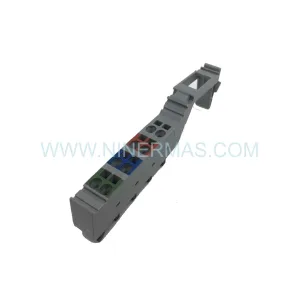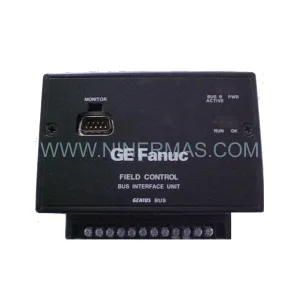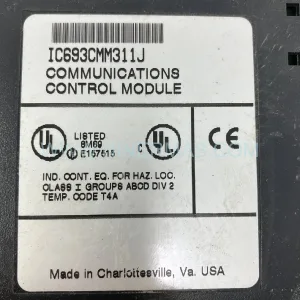
Original Industrial Spare Part
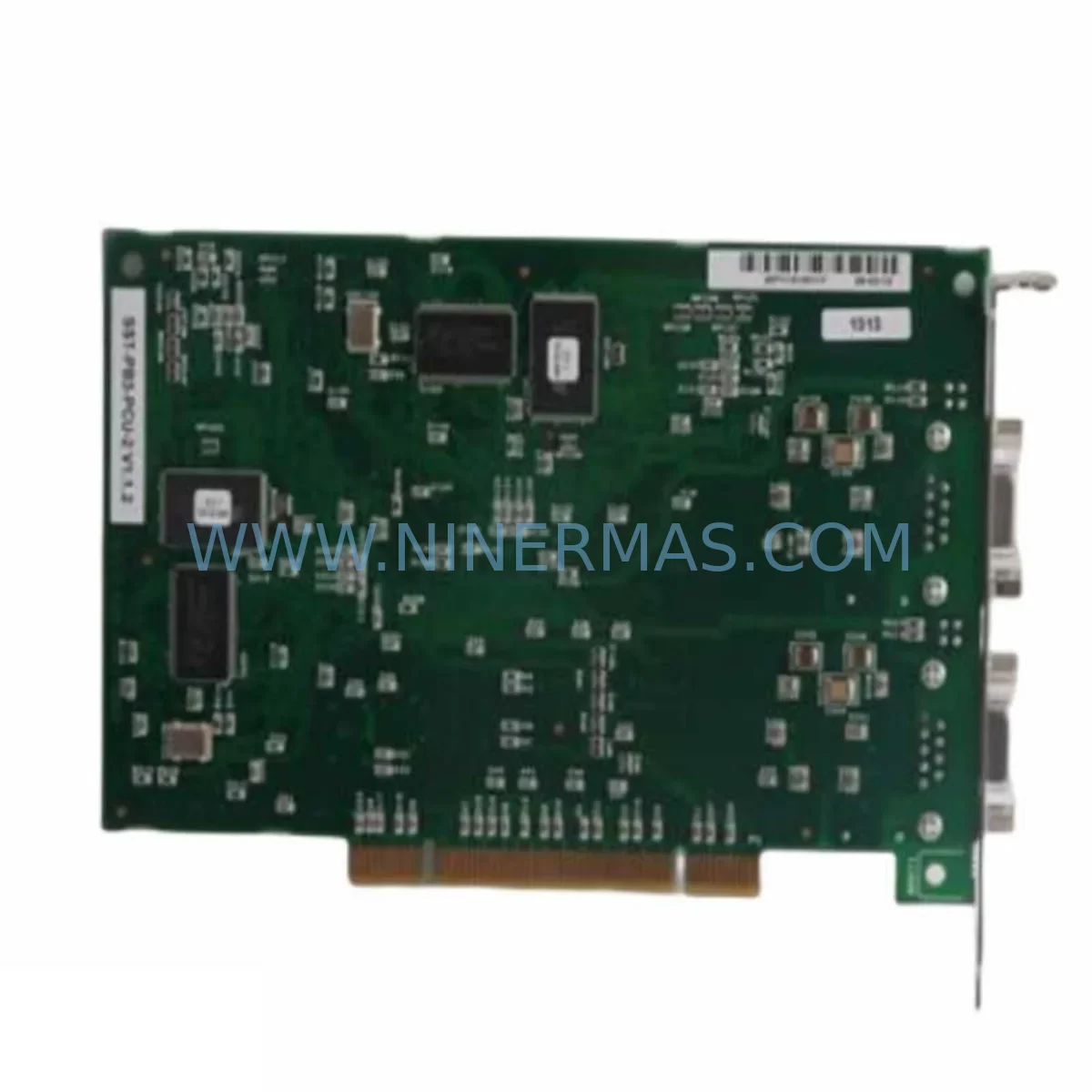
SST SST-PB3-PCU Retrofit-Compatible PROFIBUS PCU for Legacy Systems
Verify the part, confirm the platform family, and move straight into quotation with the right commercial details.
RFQ Ready
- SKUSST-PB3-PCU
- CategoryPLC & Industrial Automation Modules
- BrandSST
- SupportAvailability, lead time, condition, and shipping coordination
How Buyers Usually Use This Page
- Confirm the exact part number and platform family before sending the quote request.
- Use direct email when quantity, condition, and destination are already defined internally.
- Switch to the broader brand or category archive when you need alternates nearby.
Series Navigation
Move through the most common platform families behind this part.
Product RFQ
Send this part directly for quotation.
Include quantity, required condition, destination country, and target delivery timing. Current reference: SST SST-PB3-PCU Retrofit-Compatible PROFIBUS PCU for Legacy Systems with SKU SST-PB3-PCU.
SST SST-PB3-PCU Retrofit-Compatible PROFIBUS PCU for Legacy Systems
The SST SST-PB3-PCU is a PROFIBUS Communication Unit engineered for seamless integration into aging industrial control architectures. As legacy PROFIBUS DP networks face increasing pressure from discontinued hardware, obsolete firmware, and shrinking spare parts availability, the SST-PB3-PCU provides a proven retrofit path that preserves existing wiring infrastructure, maintains protocol compatibility, and eliminates the need for full system replacement. Designed for engineers managing long-lifecycle automation assets in process manufacturing, utilities, and discrete production environments, this unit delivers reliable PROFIBUS DP master/slave communication with minimal disruption to existing control logic.
For facilities operating legacy SST-PB3 series communication platforms, the SST-PB3-PCU serves as a direct functional replacement. Its form factor and terminal layout are compatible with standard DIN-rail and backplane mounting configurations common across SST-PB3 series installations, reducing mechanical rework during changeover. Before installation, engineers should verify available backplane slot assignments, confirm bus termination resistor settings, and review the existing GSD file configuration to ensure the replacement unit is recognized correctly by the PROFIBUS master controller — whether that master is a Siemens S7-300, an Allen-Bradley ControlLogix, or a GE Fanuc Series 90 PLC.
Power supply compatibility is a critical pre-installation checkpoint. The SST-PB3-PCU operates within standard 24 VDC industrial supply ranges. Facilities using aging power supply modules should validate output voltage stability and ripple tolerance before commissioning the replacement unit. Where power rail integrity is uncertain, upgrading to a modern redundant 24 VDC power supply module in parallel with the PCU installation is strongly recommended to prevent nuisance faults during initial startup.
Upgrade Compatibility Table
| Parameter | Legacy SST-PB3 Series | SST SST-PB3-PCU (Retrofit) |
|---|---|---|
| Communication Protocol | PROFIBUS DP | PROFIBUS DP (DP-V0 / DP-V1) |
| Mounting | DIN-rail / Backplane | DIN-rail / Backplane Compatible |
| Supply Voltage | 24 VDC | 24 VDC (±10%) |
| Terminal Wiring | Screw terminal block | Compatible screw terminal layout |
| Bus Address Configuration | DIP switch / Software | Software configurable |
| GSD File Support | Legacy GSD | Updated GSD file available |
| HMI Screen Compatibility | Requires tag remapping review | Verify tag addresses post-swap |
| Installation Space | Standard SST-PB3 footprint | Equivalent footprint — no panel rework |
| Pre-Shipment Testing | N/A (legacy) | Full functional test before dispatch |
| Warranty | Expired / No support | 12-Month Warranty |
Retrofit Planning for Existing Automation Systems
A successful SST-PB3-PCU retrofit begins well before the unit arrives on-site. The migration plan should account for the full communication chain: from the PROFIBUS DP master — typically a dedicated communication processor card installed in a Siemens S7-400 rack or an Allen-Bradley 1756-DHRIO gateway module — through the PROFIBUS cable segment, to each slave device on the network. Engineers should document all existing slave addresses, baud rate settings, and watchdog timeout configurations before removing the legacy unit.
In installations where the SST-PB3-PCU interfaces with distributed I/O racks, particular attention must be paid to the I/O module address mapping. Remote I/O expansion modules — including analog input modules, digital output modules, and thermocouple input modules — must retain their configured slot addresses to avoid forcing a full PLC program re-download. Where address conflicts are identified, the PLC program should be backed up and the I/O configuration table reviewed in the programming software before the physical swap is executed.
Communication cable integrity is frequently overlooked during PROFIBUS retrofits. Aging shielded twisted-pair PROFIBUS cables, particularly in high-vibration or high-temperature environments, may exhibit increased impedance or intermittent shield continuity faults that only manifest under live network conditions. A cable continuity and shield integrity check using a PROFIBUS cable tester or a standard multimeter should be completed before the new PCU is powered up. Bus termination at both ends of the PROFIBUS segment — using active termination resistor modules or the built-in termination switch on the last slave device — must be confirmed to prevent reflection-induced communication errors.
For control cabinets housing multiple communication modules — such as a PROFIBUS DP master card, a PROFINET gateway, a serial communication module for legacy RS-232 or RS-485 devices, and a signal isolator for 4–20 mA analog loops — the physical installation space for the SST-PB3-PCU should be measured and confirmed against the unit’s datasheet dimensions before ordering. In compact control cabinets, the addition of a DIN-rail adapter bracket or the relocation of an adjacent terminal block may be required to achieve proper clearance for cable routing and connector access.
Where the existing control system includes an HMI panel — whether a legacy operator terminal running a proprietary runtime or a modern SCADA workstation — the HMI tag database should be reviewed after the PCU swap. If the replacement unit uses a different internal register map or a revised GSD file structure, HMI screen variables linked to PROFIBUS data blocks may require remapping. This step is particularly important in installations where the HMI displays real-time process values sourced directly from PROFIBUS slave devices such as variable frequency drives, smart valve positioners, or remote pressure transmitters.
Downtime Control During System Migration
Minimizing unplanned downtime is the primary operational constraint in any legacy PROFIBUS retrofit. For the SST-PB3-PCU replacement, a structured changeover sequence significantly reduces exposure time. The recommended approach is to complete all pre-installation verification steps — power supply check, cable integrity test, bus address documentation, GSD file preparation, and PLC program backup — during scheduled maintenance windows or planned production breaks, so that the physical swap can be executed within a single shift.
Before removing the legacy PCU, the existing PLC program should be saved to an offline backup on a programming laptop using the appropriate programming cable — such as an MPI/PROFIBUS programming cable for Siemens S7 systems or a USB-to-serial adapter for older Allen-Bradley platforms. The backup should include the full hardware configuration, I/O address table, and any PROFIBUS DP master configuration data. This ensures that if the replacement unit requires a fresh hardware configuration download, the original logic is preserved and can be restored without re-engineering.
During the physical swap, the PROFIBUS bus connector should be removed from the legacy PCU before the unit is powered down to prevent bus disruption from propagating to other active slave devices on the segment. After the SST-PB3-PCU is installed and powered, the PROFIBUS connector should be reattached and the master controller should be allowed to re-scan the bus and re-establish communication with all configured slave addresses. Monitoring the diagnostic buffer in the PLC programming software during this re-initialization phase allows engineers to identify any slave devices that fail to respond and address configuration mismatches before returning the system to automatic operation.
All units supplied by NINERMAS undergo full functional pre-shipment testing to confirm communication integrity, power-up behavior, and firmware version compatibility before dispatch. This reduces the risk of receiving a non-functional unit and supports tighter changeover scheduling. Combined with our standard 12-month warranty coverage, the SST-PB3-PCU retrofit can be planned with confidence in both hardware reliability and post-installation support.
Retrofit Support FAQ
Q1: Is the SST SST-PB3-PCU a direct drop-in replacement for the original SST-PB3 series PCU?
The SST-PB3-PCU is functionally compatible with SST-PB3 series installations and shares the same PROFIBUS DP communication protocol and physical mounting format. However, engineers should verify the GSD file version, bus address settings, and terminal wiring layout against the existing installation documentation before completing the swap. Minor configuration adjustments in the PROFIBUS master may be required.
Q2: What pre-shipment testing is performed on the SST-PB3-PCU before delivery?
Each unit supplied by NINERMAS undergoes a full functional test prior to dispatch, including power-up verification, communication port integrity check, and firmware version confirmation. Test records are available upon request. Units are packaged in anti-static protective packaging to prevent damage during transit.
Q3: Can the SST-PB3-PCU be used in a system where the PROFIBUS master is a third-party controller such as a Siemens S7-300 or Allen-Bradley ControlLogix?
Yes. The SST-PB3-PCU operates as a standard PROFIBUS DP slave or master device and is compatible with any PROFIBUS DP master controller that supports the GSD file configuration method. The appropriate GSD file should be imported into the master’s configuration software — such as Siemens STEP 7, TIA Portal, or Rockwell Studio 5000 — before the unit is added to the PROFIBUS network configuration.
Q4: What warranty and stock availability does NINERMAS offer for the SST-PB3-PCU?
NINERMAS provides a 12-month warranty on all SST-PB3-PCU units covering manufacturing defects and functional failures under normal operating conditions. Stock is maintained to support urgent retrofit and breakdown replacement requirements. For volume procurement, long-term spare parts programs, and scheduled maintenance stock arrangements, please contact our sales team directly to discuss lead times and pricing.
| Product Series | Legacy |
|---|
Catalog Continuation
More SST modules in the catalog.
Use the brand lane to compare nearby part numbers, platform-adjacent modules, and other inquiry-ready listings before sending your final RFQ.
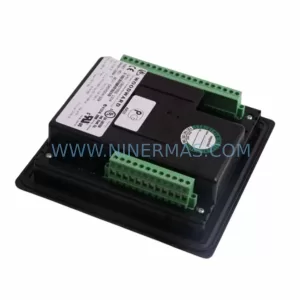
Catalog Continuation
Alternative parts within PLC & Industrial Automation Modules.
Stay inside the same system family when you need substitutes, adjacent modules, or a broader shortlist for procurement review.
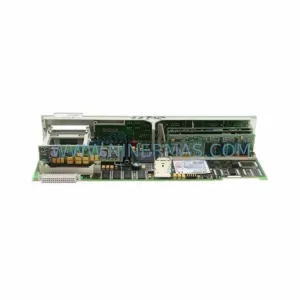
SKU: 6FC5357-0BB12-0AE0
Siemens 6FC5357-0BB12-0AE0 Service-Ready Industrial Spare Part
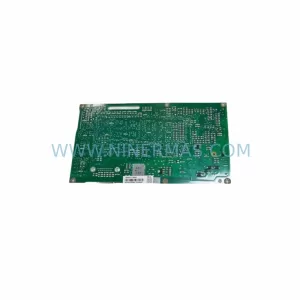
SKU: 3BSE011790R1(PXHK401)
ABB 3BSE011790R1 PXHK401 Retrofit-Ready Communication Module