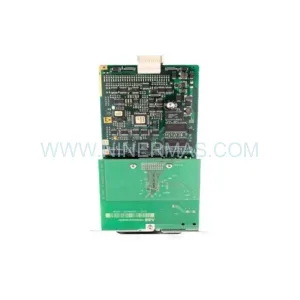
Original Industrial Spare Part
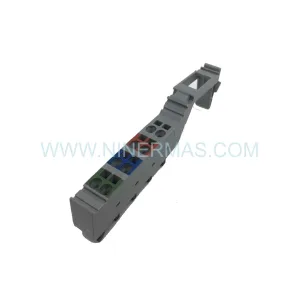
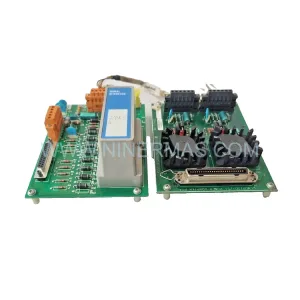
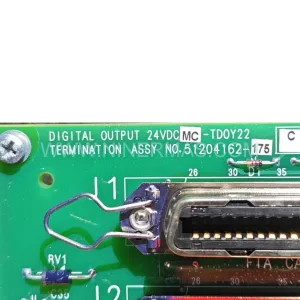
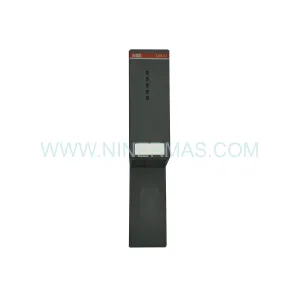
SLIMPAK G128 Retrofit-Compatible Signal Conditioner
Verify the part, confirm the platform family, and move straight into quotation with the right commercial details.
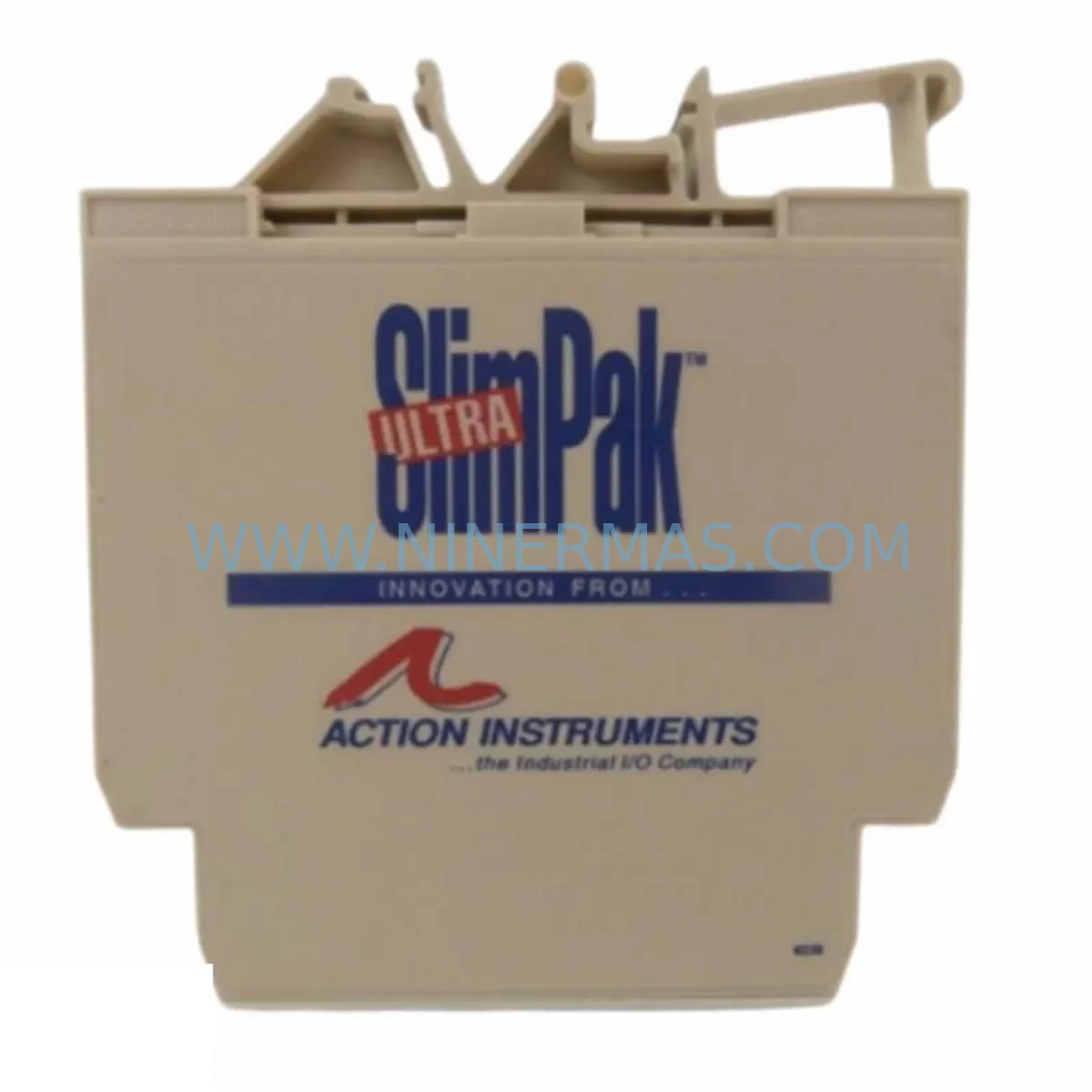
RFQ Ready
- SKUG128
- CategoryPLC & Industrial Automation Modules
- BrandSLIMPAK
- SupportAvailability, lead time, condition, and shipping coordination
How Buyers Usually Use This Page
- Confirm the exact part number and platform family before sending the quote request.
- Use direct email when quantity, condition, and destination are already defined internally.
- Switch to the broader brand or category archive when you need alternates nearby.
Series Navigation
Move through the most common platform families behind this part.
Product RFQ
Send this part directly for quotation.
Include quantity, required condition, destination country, and target delivery timing. Current reference: SLIMPAK G128 Retrofit-Compatible Signal Conditioner with SKU G128.
SLIMPAK G128 Retrofit-Compatible Signal Conditioner: Legacy System Upgrade & Smooth Migration
The SLIMPAK G128 is a retrofit-compatible signal conditioner engineered for engineers and maintenance teams managing the transition away from ageing G-Series signal conditioning infrastructure. As legacy SLIMPAK G-Series modules reach end-of-life and original spare parts become increasingly scarce, the G128 provides a validated, drop-in compatible upgrade path that preserves existing wiring, terminal layouts, and DIN rail footprints — minimising both engineering rework and unplanned downtime.
Designed for industrial control cabinets operating in process automation, manufacturing, and utilities environments, the G128 supports a wide range of input signal types and delivers isolated, conditioned analogue outputs compatible with downstream PLCs, DCS controllers, and SCADA systems. Whether you are replacing a failed unit on a running line or executing a planned control cabinet modernisation, the G128 is stocked and ready to ship with a 12-month warranty from NINERMAS COMPANY LIMITED.
Upgrade Compatibility Table
| Parameter | Legacy G-Series Reference | SLIMPAK G128 Specification | Retrofit Notes |
|---|---|---|---|
| Mounting | 35 mm DIN Rail (EN 50022) | 35 mm DIN Rail (EN 50022) | Direct drop-in; no rail modification required |
| Terminal Interface | Screw-clamp, top/bottom entry | Screw-clamp, top/bottom entry | Verify wire gauge; re-use existing field wiring where possible |
| Supply Voltage | 24 V DC (nominal) | 24 V DC (10–30 V DC range) | Confirm PSU capacity; SLIMPAK G8PS or equivalent 24 V DC rail supply recommended |
| Signal Input | mV, thermocouple, RTD, mA, V | Configurable per G128 variant | Confirm input type matches field sensor; re-range if migrating sensor type |
| Output | 4–20 mA / 0–10 V isolated | 4–20 mA / 0–10 V isolated | Compatible with existing PLC analogue input cards (e.g. Siemens SM 331, Allen-Bradley 1756-IF16) |
| Isolation | 3-way galvanic isolation | 3-way galvanic isolation | No additional isolator required in most retrofit scenarios |
| Housing Width | 12.5 mm / 17.5 mm (model dependent) | 12.5 mm (slim profile) | Verify cabinet slot width; slim profile aids dense retrofit installations |
| Communication | Analogue only | Analogue only | For HART or Profibus migration, pair with a HART multiplexer or gateway module |
| Commissioning | DIP switch / potentiometer | DIP switch / potentiometer | Re-configure span and zero on bench before installation; document settings |
| Warranty | N/A (discontinued) | 12 Months | Supplied by NINERMAS; includes pre-shipment functional test |
Retrofit Planning for Existing Automation Systems
A successful G128 retrofit begins well before the module arrives on site. The first step is a thorough audit of the existing control cabinet to identify every G-Series signal conditioner in service — including adjacent modules such as the SLIMPAK G109 (mV/thermocouple input), SLIMPAK G113 (RTD input), and SLIMPAK G122 (frequency-to-analogue converter) — so that a consolidated replacement order can be placed and cabinet downtime is consolidated into a single planned window.
Power budget verification is critical. The existing 24 V DC rail supply — often a SLIMPAK G8PS or a third-party DIN rail PSU — must be assessed for available headroom. Each G128 draws a modest supply current, but in dense multi-channel cabinets the cumulative load can approach PSU limits, particularly if the retrofit also introduces new I/O expansion modules or a replacement Siemens SITOP power supply unit.
Terminal wiring should be photographed and documented before any module is removed. In many legacy installations, field cables are labelled inconsistently or not at all. Re-using existing screw-clamp terminals is generally possible with the G128, but wire ferrules should be inspected and replaced if corroded. Where the original installation used a Phoenix Contact MINI MCR or similar signal conditioner alongside SLIMPAK modules, terminal mapping must be cross-referenced carefully to avoid input/output polarity errors.
For sites running a Siemens S7-300 or S7-400 PLC with analogue input cards such as the SM 331 or SM 332, the G128’s 4–20 mA output is directly compatible. No changes to the PLC hardware configuration or I/O address mapping are required in most cases, which significantly reduces the risk of inadvertent program logic errors during the retrofit. Engineers should nonetheless perform a cold-start simulation in STEP 7 or TIA Portal to confirm that all analogue channels read correctly before returning the line to production.
Where the control system includes an Allen-Bradley ControlLogix or CompactLogix platform with 1756-series or 1769-series analogue I/O modules, the same principle applies: the G128’s output range should be verified against the configured channel scaling in Studio 5000 Logix Designer. If the legacy conditioner was configured for a 0–20 mA range rather than 4–20 mA, the PLC channel scaling and any associated HMI faceplates on a Rockwell PanelView or Siemens SIMATIC HMI will need to be updated to reflect the new live-zero convention.
Backplane and rack space considerations are straightforward for the G128 given its slim 12.5 mm DIN rail profile, but engineers should confirm that adjacent modules — particularly SLIMPAK G-Series relay output modules or third-party signal isolators — have adequate clearance for heat dissipation. In high-density installations, a brief thermal survey of the cabinet after commissioning is recommended to ensure ambient temperature limits are not exceeded.
Finally, where the retrofit scope extends to communication protocol migration — for example, moving from a legacy 4–20 mA loop to a HART 7 or Profibus PA architecture — the G128 serves as a stable interim analogue backbone while the broader protocol migration is planned and budgeted. A HART-to-Ethernet gateway or Profibus DP/PA coupler can be introduced in a subsequent phase without disrupting the conditioned analogue signals already in service.
Downtime Control During System Migration
Minimising production downtime is the primary concern for any maintenance team executing a signal conditioner retrofit. The G128’s compatibility with existing terminal wiring and DIN rail mounting means that a single-channel swap — removing the failed or end-of-life legacy module and inserting the G128 — can typically be completed in under 30 minutes by a competent technician, provided the replacement unit has been pre-configured on the bench.
Bench pre-configuration is strongly recommended. Before the planned maintenance window, set the G128’s DIP switches and span/zero potentiometers to match the documented settings of the module being replaced. Record the configuration on a commissioning sheet that travels with the unit to site. This eliminates the need for in-cabinet adjustment under time pressure and reduces the risk of configuration errors that could corrupt analogue readings and trigger spurious PLC alarms.
Where the retrofit involves multiple channels simultaneously — for example, replacing an entire row of G-Series conditioners in a marshalling cabinet — a phased approach is advisable. Replace and verify one channel at a time, confirming that the PLC analogue input reads correctly and that the corresponding HMI display reflects the expected process value before moving to the next channel. This approach preserves control continuity and allows the process to remain in a safe, monitored state throughout the migration.
Original PLC program logic should not be modified during the hardware retrofit unless a scaling change is explicitly required. Keeping the software unchanged reduces the risk of introducing new faults and simplifies post-retrofit troubleshooting. If scaling adjustments are necessary — for example, due to a change in the conditioner’s output range — these should be implemented and tested in a staging environment before being downloaded to the live controller.
All replaced modules should be retained and labelled with the date of removal and the reason for replacement. This supports root-cause analysis if related failures occur elsewhere in the system and provides a reference for future procurement planning. NINERMAS maintains stock of the G128 and related G-Series compatible modules to support emergency replacement requirements with short lead times.
Retrofit Support FAQ
Q1: Is the SLIMPAK G128 a direct replacement for my existing G-Series signal conditioner?
The G128 is designed to be retrofit-compatible with the G-Series form factor, sharing the same DIN rail mounting, terminal pitch, and supply voltage range. However, the specific input type (thermocouple, RTD, mA, mV) must be confirmed against your application requirements. NINERMAS can assist with cross-referencing your existing module’s part number to confirm compatibility before you order.
Q2: What commissioning steps are required after installing the G128?
After mechanical installation and wiring, verify the supply voltage at the module terminals, confirm DIP switch settings match the required input type and range, and apply a known reference signal to the input to verify the output reads correctly at the PLC or DCS. A two-point calibration check (0% and 100% of span) is recommended before returning the channel to automatic control. All G128 units supplied by NINERMAS undergo a pre-shipment functional test.
Q3: Can the G128 be used in a cabinet that also contains third-party signal conditioners or isolators?
Yes. The G128’s 3-way galvanic isolation means it can coexist with third-party modules — including Phoenix Contact, Pepperl+Fuchs, or Weidmüller signal conditioners — without ground loop interference. Ensure that the shared 24 V DC rail supply has sufficient capacity for all installed modules and that terminal wiring is segregated according to your site’s electrical safety standards.
Q4: What warranty and stock availability does NINERMAS offer for the G128?
All SLIMPAK G128 units supplied by NINERMAS COMPANY LIMITED carry a 12-month warranty covering manufacturing defects and functional failures under normal operating conditions. NINERMAS maintains dedicated stock of the G128 and related G-Series compatible modules to support both planned retrofit projects and emergency replacement requirements. Contact our team at sale@ninermas.com or +0086 187 5021 5667 to confirm current stock levels and lead times.
| Product Series | Other series |
|---|
Catalog Continuation
More SLIMPAK modules in the catalog.
Use the brand lane to compare nearby part numbers, platform-adjacent modules, and other inquiry-ready listings before sending your final RFQ.
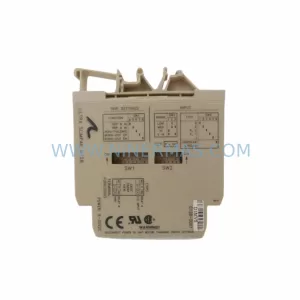
SKU: ULTRA SLIMPAK G128
SLIMPAK ULTRA SLIMPAK G128 Safety-Reliable Signal Conditioner
Catalog Continuation
Alternative parts within PLC & Industrial Automation Modules.
Stay inside the same system family when you need substitutes, adjacent modules, or a broader shortlist for procurement review.
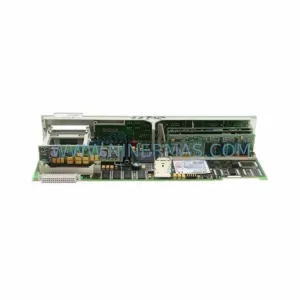
SKU: 6FC5357-0BB12-0AE0
Siemens 6FC5357-0BB12-0AE0 Service-Ready Industrial Spare Part
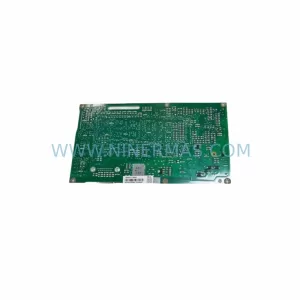
SKU: 3BSE011790R1(PXHK401)
ABB 3BSE011790R1 PXHK401 Retrofit-Ready Communication Module