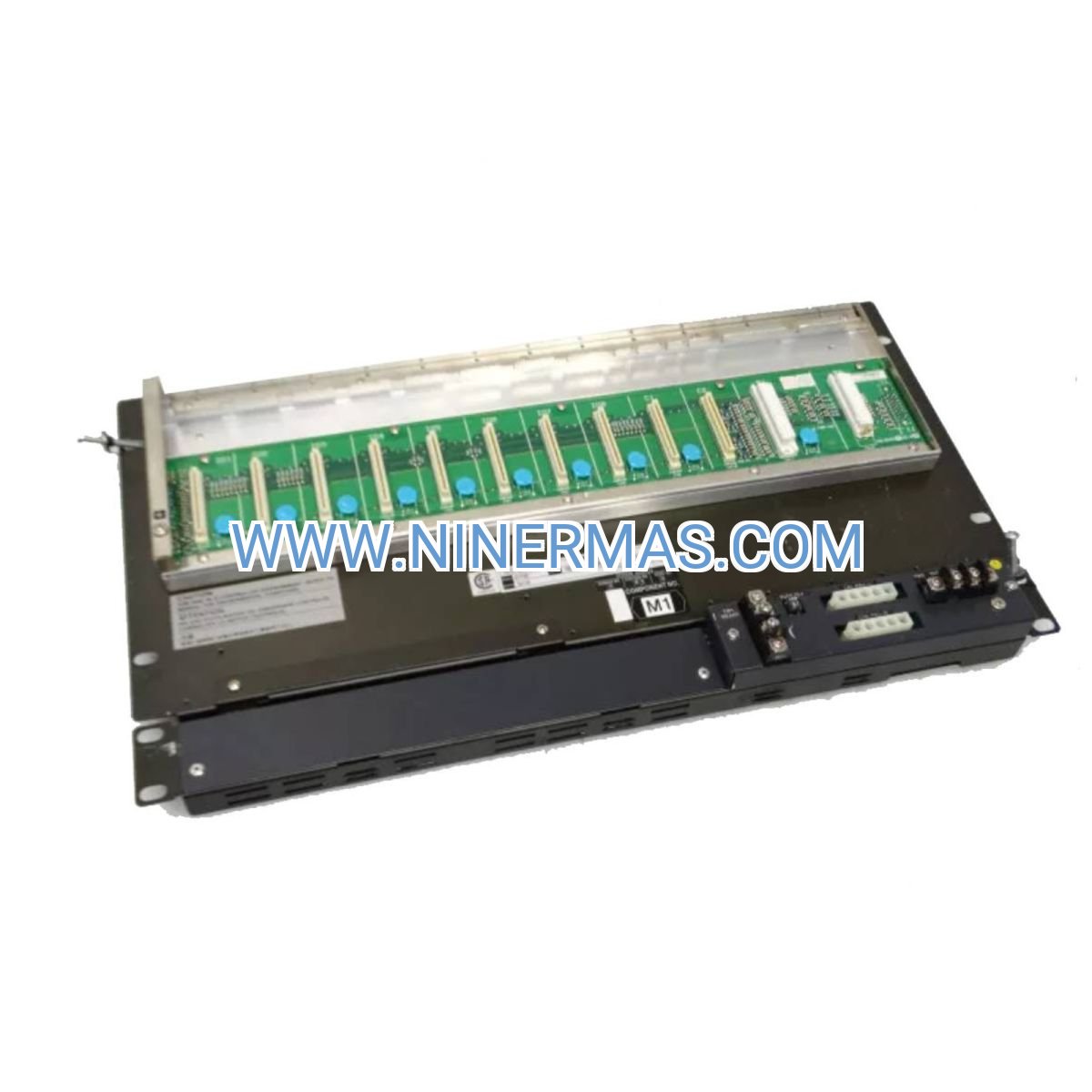
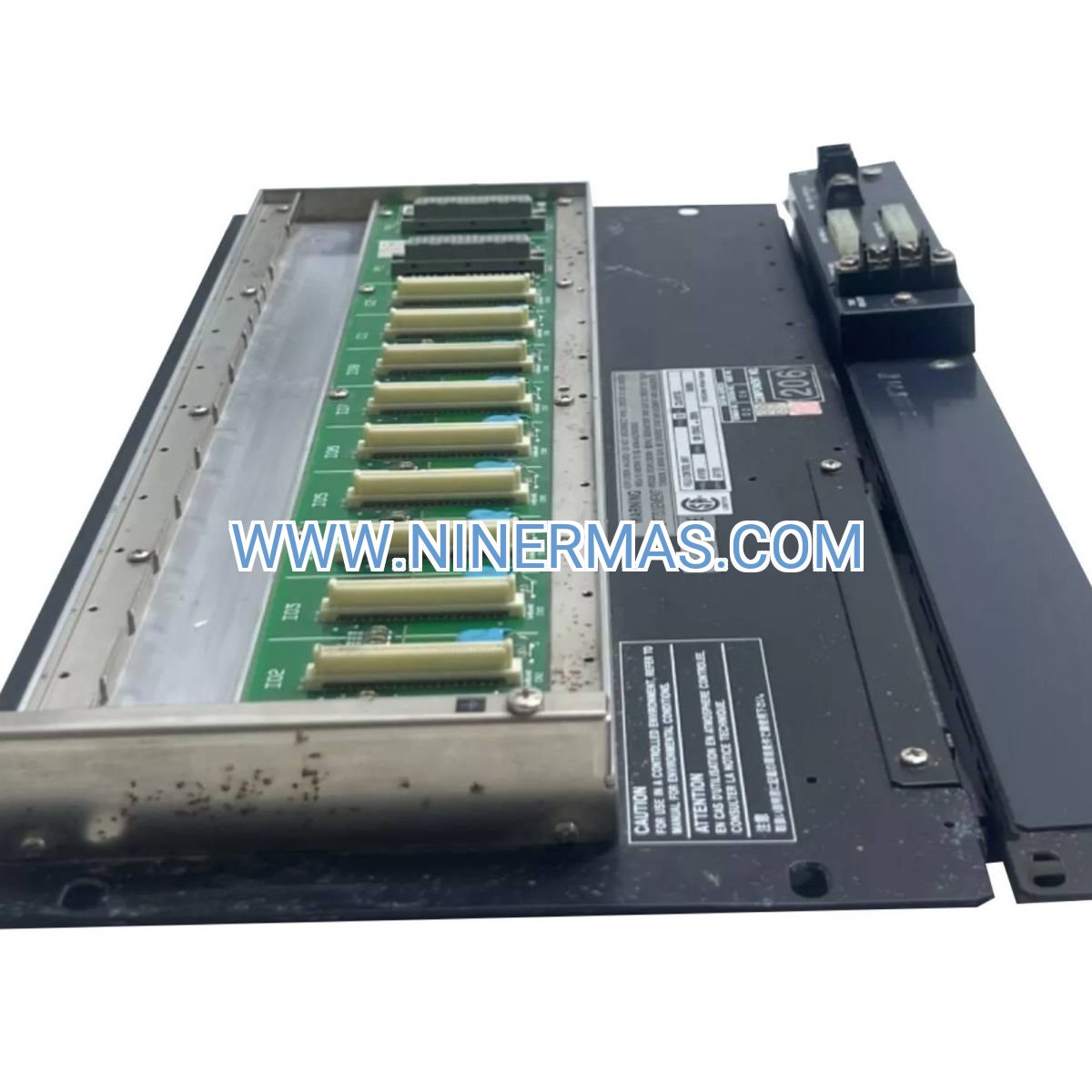
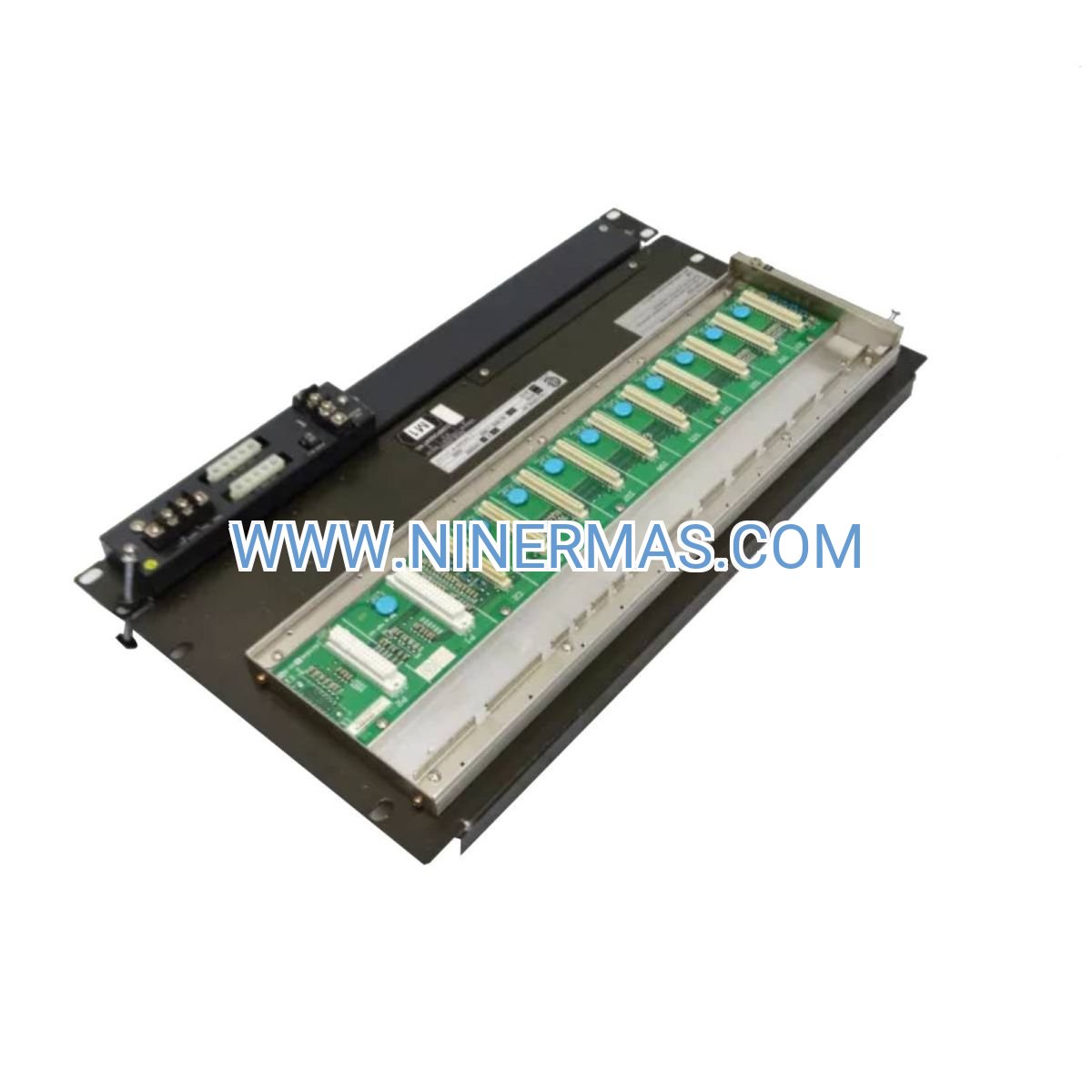
Description
SNB10D-225 Safety Node Unit (Industrial-Grade SIL3 I/O Interface)
The SNB10D-225 represents YOKOGAWA's next-generation safety node technology, purpose-built for mission-critical process control environments. This industrial-grade I/O interface module serves as the intelligent gateway between ProSafe-RS safety controllers and field instrumentation, delivering deterministic signal processing with SIL3-certified reliability. Designed for continuous operation in harsh industrial settings, the SNB10D-225 combines dual-redundant communication paths with advanced diagnostic capabilities to ensure uninterrupted safety system performance.
Process industries facing stringent safety integrity requirements—from offshore oil platforms to chemical refineries—rely on the SNB10D-225 to maintain protective barriers between hazardous processes and personnel. The module addresses critical challenges in safety instrumented systems: eliminating single points of failure, providing real-time fault detection, and enabling maintenance without compromising system availability. Target users include safety engineers, instrumentation specialists, and plant automation teams responsible for SIS design, implementation, and lifecycle management.
What sets the SNB10D-225 apart is its field-proven architecture combining hot-swappable modularity, comprehensive self-diagnostics, and seamless integration with YOKOGAWA's ProSafe-RS ecosystem. With over 40 years of safety system expertise embedded in every unit, this safety node delivers the reliability demanded by IEC 61508 and IEC 61511 compliance while reducing total cost of ownership through simplified maintenance and extended MTBF ratings.
Core Features & Benefits
→ Dual-Redundant Communication Architecture
Eliminate single points of failure with fully redundant safety bus connectivity. Automatic failover occurs within 100ms, maintaining continuous signal integrity even during module replacement or communication path disruption—critical for applications requiring 99.99% availability.
✓ Hot-Swappable Module Design
Perform maintenance, upgrades, or module replacement without system shutdown or safety function interruption. This capability reduces planned downtime by 80% compared to non-redundant architectures, directly impacting production continuity and maintenance scheduling flexibility.
→ Comprehensive Built-In Diagnostics
Continuous self-monitoring detects incipient failures before they impact safety performance. Diagnostic coverage exceeds 95%, enabling predictive maintenance strategies and reducing spurious trip rates by up to 60% compared to legacy safety systems.
✓ Flexible Multi-Signal I/O Configuration
Support for analog (4-20mA, HART), digital (discrete, pulse), and temperature inputs within a single node platform. Configure up to 32 I/O points per node, optimizing cabinet space utilization and reducing wiring complexity by 40%.
→ SIL3-Certified Safety Integrity
Achieve Safety Integrity Level 3 per IEC 61508 with systematic capability SC3 and hardware fault tolerance. Proven safe failure fraction (SFF) >95% and probability of failure on demand (PFD) <10⁻³ ensure compliance with the most demanding safety applications.
✓ Industrial EMC Hardening
Operate reliably in electrically noisy environments with immunity to 4kV ESD, 10V/m radiated fields, and 2kV surge transients. Conformal coating and extended temperature range (-20°C to +60°C) ensure performance in offshore, desert, and arctic installations.
Typical Application Scenarios
Emergency Shutdown Systems (ESD) – Oil & Gas Production
In offshore platforms and onshore processing facilities, the SNB10D-225 interfaces critical shutdown valves, pressure transmitters, and flame detectors to ProSafe-RS logic solvers. The dual-redundant architecture ensures that emergency shutdown commands execute within specified response times even during partial system failures, protecting assets worth millions while maintaining regulatory compliance with API RP 14C and IEC 61511.
Fire & Gas Detection Networks – Petrochemical Complexes
Connect distributed fire and toxic gas detectors across sprawling petrochemical facilities using the SNB10D-225's multi-drop communication capability. Real-time diagnostic monitoring identifies sensor degradation before calibration drift compromises detection reliability, reducing false alarm rates by 45% while ensuring genuine hazard detection within 2-second response windows mandated by NFPA 72.
Burner Management Systems (BMS) – Power Generation
Manage complex burner sequencing and flame monitoring in utility boilers and gas turbine generators. The SNB10D-225 processes high-speed flame scanner signals and coordinates fuel valve positioning with sub-100ms precision, preventing dangerous fuel accumulation scenarios while enabling rapid load-following capability essential for grid stability support.
High Integrity Pressure Protection (HIPPS) – Pipeline Operations
Implement overpressure protection for high-pressure pipelines and vessels where conventional relief valves prove impractical. The SNB10D-225's deterministic response time (<50ms from sensor input to valve command) enables HIPPS configurations that prevent pressure excursions before reaching equipment design limits, eliminating costly relief valve sizing and disposal challenges.
Multi-Layer Process Safety Interlocks – Chemical Manufacturing
Orchestrate complex interlock matrices protecting batch reactors, distillation columns, and storage tank farms. The SNB10D-225 manages up to 32 safety-critical I/O points per node, enabling distributed safety architectures that reduce wiring costs by 35% while maintaining the segregation between basic process control and safety instrumented functions required by IEC 61511.
Technical Parameters & Selection Guide
| Parameter | Specification |
|---|---|
| Model Designation | SNB10D-225 |
| Safety Integrity Level | SIL 3 (IEC 61508) |
| System Compatibility | ProSafe-RS Safety Instrumented System |
| I/O Capacity | Up to 32 points (analog/digital mixed) |
| Communication | Dual-redundant safety bus (100 Mbps) |
| Failover Time | <100 milliseconds |
| Diagnostic Coverage | >95% (SFF) |
| Operating Temperature | -20°C to +60°C |
| Power Consumption | 15W typical, 22W maximum |
| MTBF | >200,000 hours |
| Dimensions (H×W×D) | 280mm × 120mm × 185mm |
| Weight | 5.9 kg |
| Certifications | SIL3, ATEX, IECEx, FM, CSA |
Selection Criteria: Choose the SNB10D-225 when your application requires SIL3-rated safety I/O with redundant communication paths and hot-swap capability. For applications with lower I/O density requirements, consider the SNB10D-445 variant. When integrating with existing CENTUM VP DCS infrastructure, verify ProSafe-RS gateway compatibility. For new installations, pair with SSC10D or SSC50D safety control units to create complete SIL3-certified safety loops.
Extended Functions
HART Protocol Integration: Extract diagnostic data from intelligent field devices via HART-over-4-20mA, enabling predictive maintenance strategies that identify sensor drift, wiring degradation, and process anomalies before they trigger safety actions.
Cybersecurity Hardening: Built-in security features including encrypted communication, role-based access control, and audit logging align with IEC 62443 industrial cybersecurity standards, protecting safety systems from unauthorized access and cyber threats.
Partial Stroke Testing (PST) Support: Interface with smart valve positioners to execute automated partial stroke tests on shutdown valves, verifying mechanical integrity without full process interruption—reducing proof test intervals and associated production losses.
Third-Party System Integration: OPC UA server capability enables data exchange with plant-wide asset management systems, CMMS platforms, and corporate historians while maintaining strict segregation between safety and non-safety networks per IEC 61511 requirements.
Delivery & Service Assurance
Standard Delivery: 4-6 weeks for catalog configurations; factory acceptance testing (FAT) documentation included
Custom Configurations: 8-12 weeks for application-specific I/O arrangements or special certifications
Warranty Coverage: 24 months from shipment date, covering materials and workmanship defects
Technical Support: 24/7 global support hotline with 4-hour response commitment for critical safety system issues
Documentation Package: Installation manual, configuration guide, safety manual (per IEC 61508-2), spare parts catalog, and AutoCAD drawings
Frequently Asked Questions
Q: How does the SNB10D-225 interface with existing DCS systems?
A: The SNB10D-225 connects to ProSafe-RS safety controllers via dedicated safety bus networks, maintaining strict segregation from basic process control (BPCS) functions. For data sharing with CENTUM VP or third-party DCS platforms, deploy the ProSafe-RS gateway module (SLS) which provides one-way read-only access to safety system status while preserving IEC 61511 independence requirements.
Q: What I/O capacity and signal types does this safety node support?
A: Each SNB10D-225 node accommodates up to 32 I/O points in mixed configurations: analog inputs (4-20mA, HART, RTD, thermocouple), digital inputs (24VDC discrete, pulse/frequency), and digital outputs (relay, solid-state). Actual capacity depends on selected I/O module combinations—consult the ProSafe-RS I/O module catalog for specific configurations.
Q: Can this module reduce energy consumption in safety systems?
A: Yes. The SNB10D-225's optimized power architecture consumes 40% less energy than previous-generation safety nodes (15W typical vs. 25W), directly reducing UPS sizing requirements and cooling loads. In large safety systems with 50+ nodes, this translates to 15kW reduction in continuous power draw—lowering operational costs by $12,000+ annually at typical industrial electricity rates.
Q: What are the physical installation requirements for the SNB10D-225?
A: Mount the SNB10D-225 on standard DIN rail within climate-controlled marshalling cabinets. Maintain 50mm clearance above and below for convection cooling. Maximum wiring distance: 1000m for digital signals, 500m for analog 4-20mA loops. For hazardous area installations, use approved barriers or isolators—the node itself is rated for Zone 2/Division 2 locations when properly installed.
Q: Does the SNB10D-225 support remote monitoring and diagnostics?
A: Comprehensive remote diagnostic access is available through the ProSafe-RS engineering workstation. Monitor node health, I/O status, communication quality, and diagnostic alarms in real-time. Configure email/SMS notifications for critical faults. For cybersecurity compliance, remote access requires VPN connectivity and multi-factor authentication per IEC 62443-3-3 security level SL2 minimum.
Q: How frequently does this safety node require calibration or maintenance?
A: The SNB10D-225 node itself requires no periodic calibration—only visual inspection and connector torque verification during annual proof testing. Connected field instruments follow manufacturer-specified calibration intervals (typically 12-24 months). The node's diagnostic coverage >95% enables condition-based maintenance strategies, potentially extending proof test intervals from 12 to 24 months with appropriate reliability analysis per IEC 61511-1 clause 11.9.
Take the Next Step
Ready to enhance your safety instrumented system with proven SIL3 technology? Contact our safety system specialists for application-specific configuration guidance, SIL verification calculations, and integration planning support. Request a detailed technical proposal including I/O mapping, cabinet layout drawings, and lifecycle cost analysis tailored to your facility requirements.
© 2026 NINERMAS COMPANY LIMITED. All rights reserved.
Original Source: https://ninermas.com
Contact: sale@ninermas.com | +0086 187 5021 5667
PDF Specification
Download PDF file here:
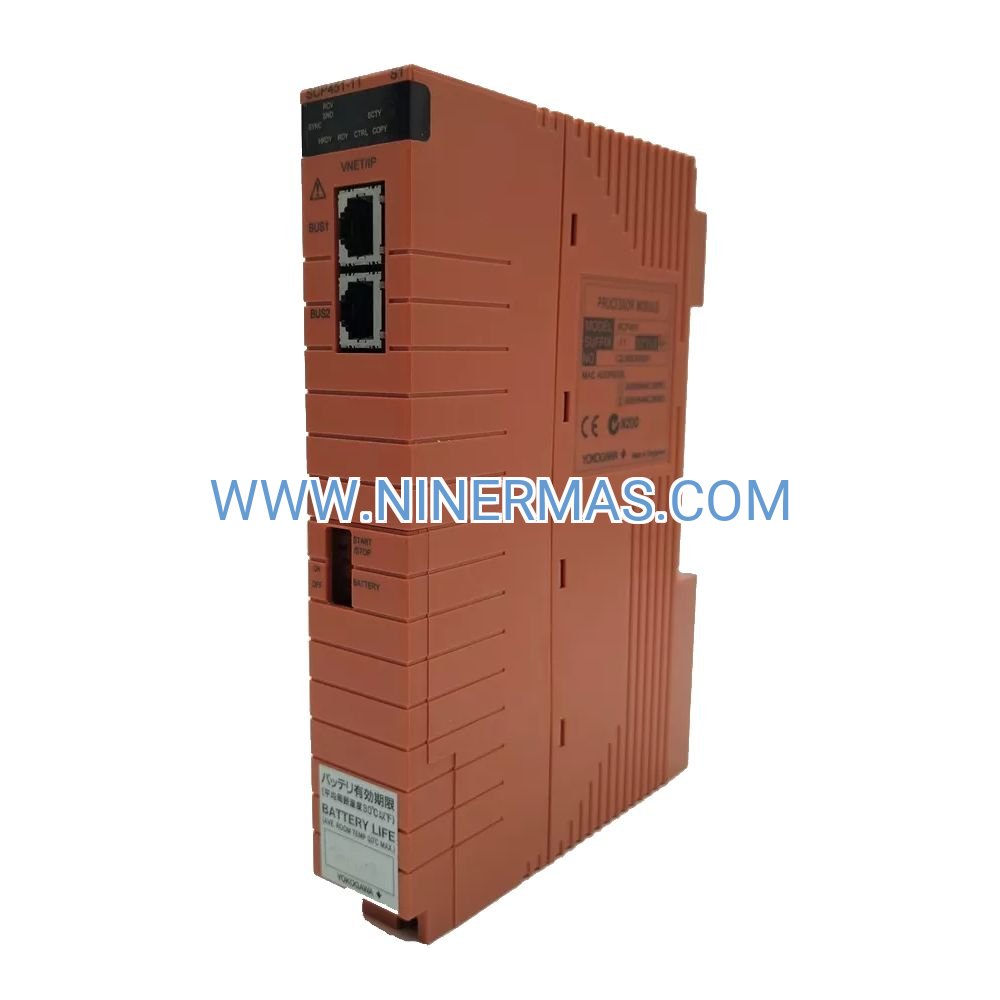
Click to Download PDFRelated products

Contact Info
-
Address:22 / F, South Wo Hang building, 148 Wing Lok Street, Sheung Wan, Western District, Hong Kong
-
Phone:+8618750215667
-
Email: