Description
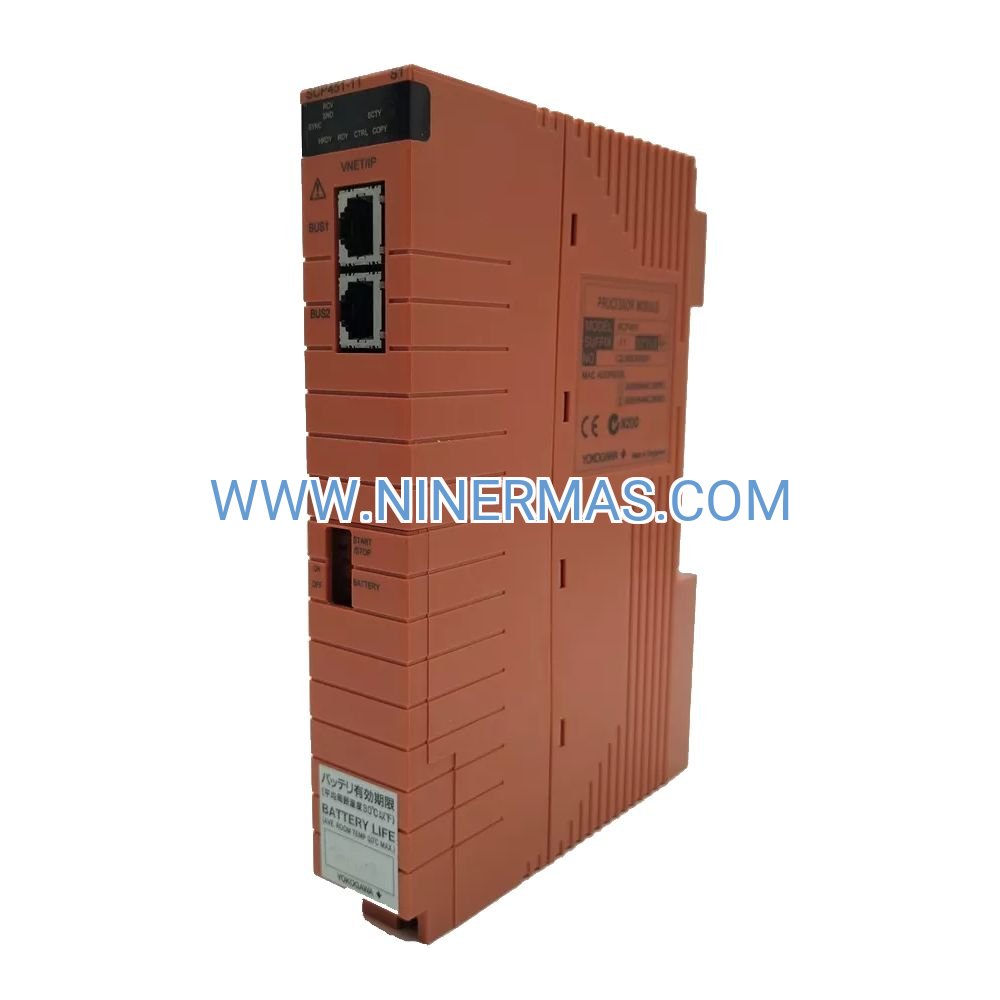
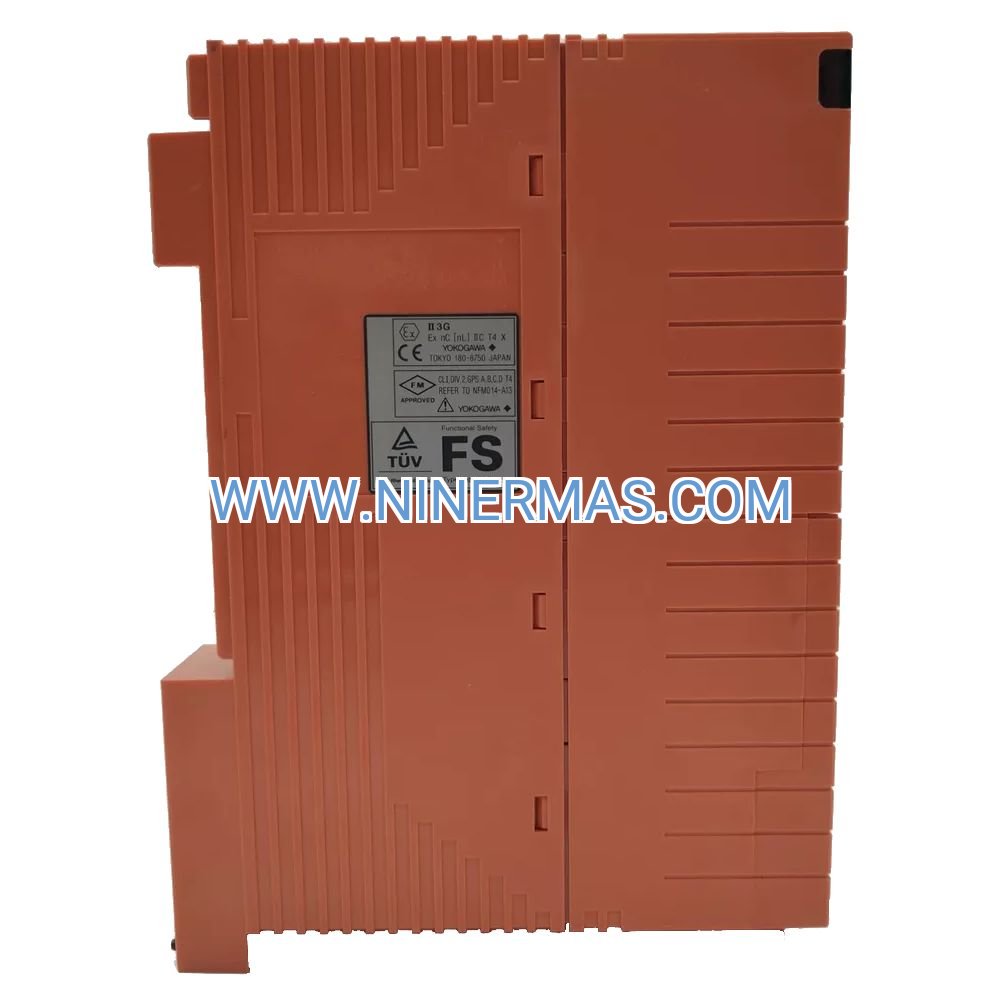
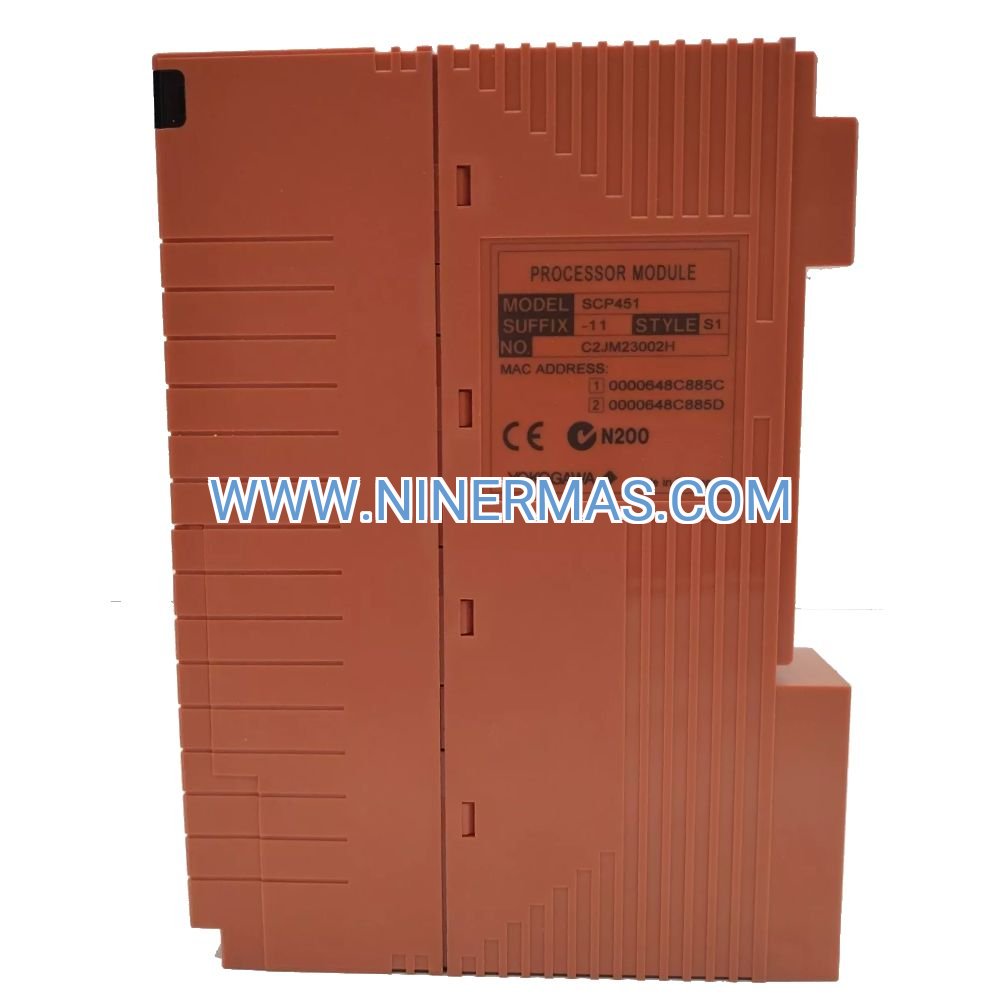
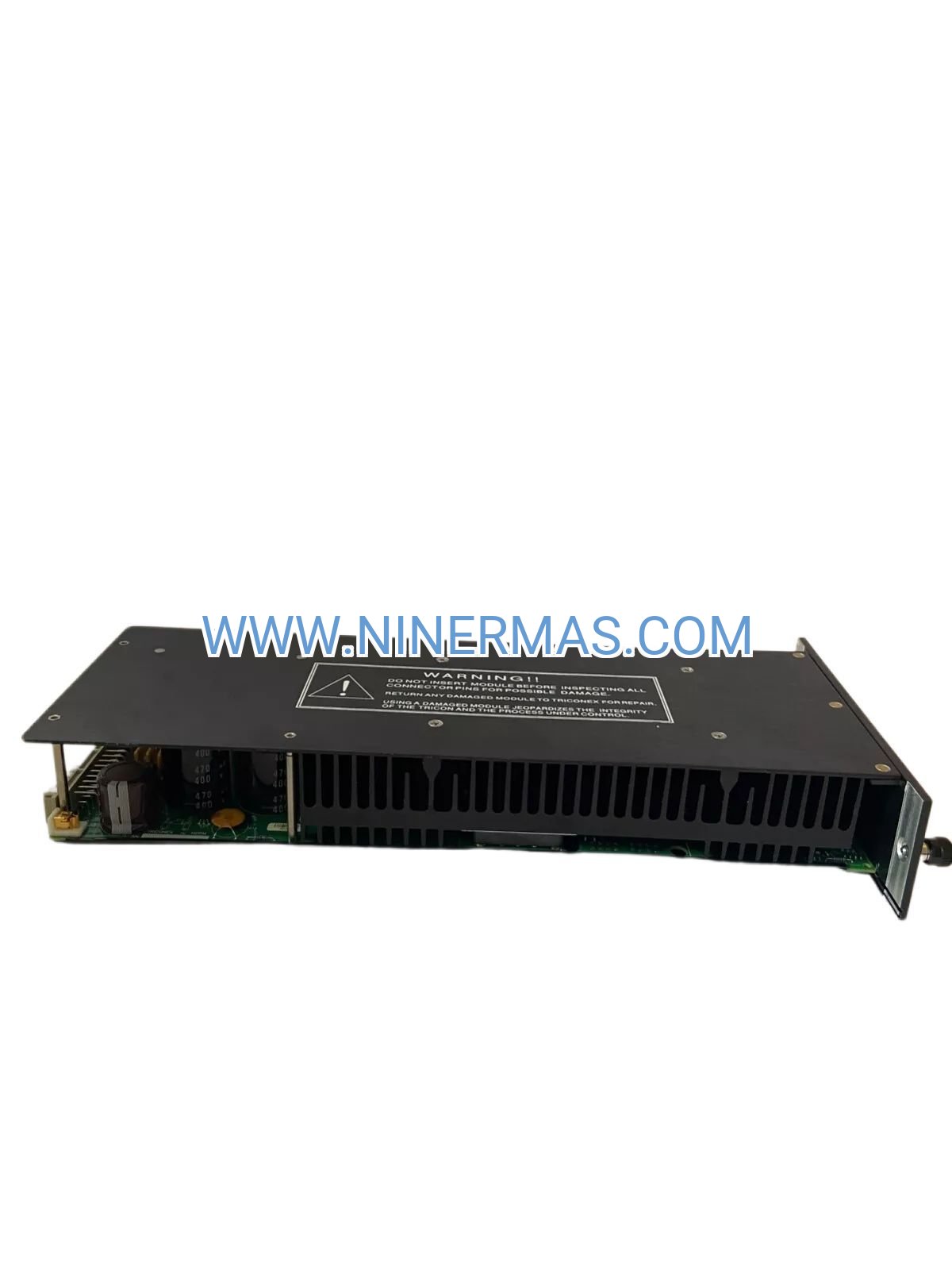
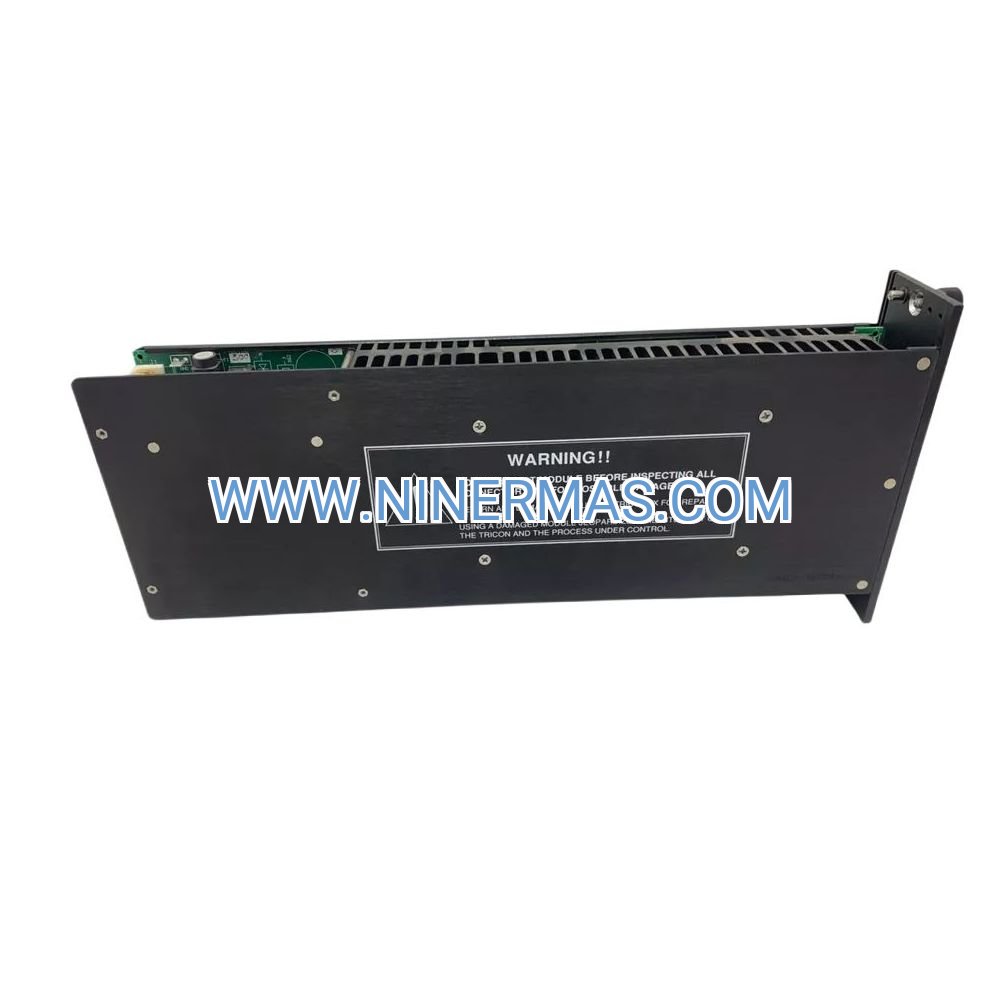
SCP451-11 Safety Processor Module (Industrial-Grade Redundant Controller)
The YOKOGAWA SCP451-11 represents a mission-critical safety processor engineered for fail-safe operation in hazardous industrial environments. Certified to SIL 3 standards under IEC 61508 and IEC 61511 frameworks, this dual-redundant controller delivers deterministic performance for emergency shutdown systems, burner management, and high-integrity pressure protection across oil & gas, chemical processing, and power generation sectors.
Designed for facilities where process safety cannot be compromised, the SCP451-11 integrates seamlessly into ProSafe-RS architectures, providing continuous protection even during component failures or maintenance cycles. Its advanced diagnostic capabilities detect 99% of potential faults before they impact operations, while automatic switchover mechanisms ensure zero-downtime transitions between redundant processors.
Industrial operators gain a proven solution combining regulatory compliance, operational reliability, and lifecycle cost efficiency—backed by YOKOGAWA's decades of safety system expertise and global support infrastructure.
Core Features & Business Value
→ SIL 3 Certified Safety Integrity: Meets IEC 61508/61511 requirements for the highest level of functional safety in process industries, reducing liability exposure and ensuring regulatory compliance across jurisdictions.
→ Dual-Redundant Architecture: Parallel processor configuration with automatic fault detection and seamless switchover eliminates single points of failure, achieving 99.99% availability for critical shutdown functions.
→ Deterministic Scan Performance: Configurable cycle times from 10-100ms guarantee predictable response to hazardous conditions, enabling precise timing for fast-acting safety interlocks and emergency sequences.
→ Comprehensive Self-Diagnostics: Continuous monitoring of CPU health, memory integrity, I/O communications, and power supplies provides early warning of degradation, supporting predictive maintenance strategies.
→ Cybersecurity Hardening: Built-in secure boot, encrypted Vnet/IP communications, and role-based access control protect safety logic from unauthorized modifications and cyber threats.
✓ Hot-Swappable Redundancy: Replace failed modules without system shutdown or process interruption, minimizing planned downtime and maximizing production continuity.
Typical Application Scenarios
Offshore Oil & Gas Platforms: Deploy for emergency shutdown (ESD) systems protecting wellheads, separators, and export pipelines. The SCP451-11's salt-fog resistance and extended temperature range (-20°C to +60°C) ensure reliable operation in harsh marine environments, while redundant architecture meets API RP 14C and API RP 17O safety requirements.
Petrochemical Refineries: Implement in burner management systems (BMS) controlling fired heaters, boilers, and furnaces. Deterministic scan cycles enable precise fuel-air ratio control and flame monitoring, preventing explosive atmospheres while maintaining thermal efficiency. Integration with DCS platforms provides unified alarm management.
Power Generation Facilities: Utilize for turbine overspeed protection, boiler trip systems, and generator excitation control. The processor's partial stroke testing (PST) capabilities enable online valve diagnostics without process shutdown, reducing proof test intervals and maintenance costs by 30-40%.
Chemical Manufacturing Plants: Apply to high-integrity pressure protection systems (HIPPS) safeguarding reactors, distillation columns, and storage vessels. SIL 3 certification supports compliance with OSHA PSM, EPA RMP, and EU Seveso III directives for major hazard facilities.
LNG Liquefaction Terminals: Control cryogenic emergency isolation, fire & gas detection interlocks, and compressor anti-surge protection. The module's Modbus TCP/IP and OPC UA interfaces facilitate integration with third-party safety sensors and actuators across distributed facilities.
Technical Parameters & Selection Guide
| Parameter | Specification |
|---|---|
| Safety Integrity Level | SIL 3 (IEC 61508/61511 certified) |
| Processor Configuration | Dual-redundant CPU with 1oo2D voting |
| Scan Cycle Range | 10-100ms (configurable, deterministic) |
| Program Memory | Expandable for complex safety logic |
| Communication Protocols | Vnet/IP (safety), Modbus TCP/IP, OPC UA |
| Diagnostic Coverage | >99% fault detection capability |
| Operating Temperature | -20°C to +60°C (-4°F to +140°F) |
| Power Input | 24VDC redundant with reverse polarity protection |
| Mounting Options | DIN rail or 19" rack-mount |
| MTBF (Mean Time Between Failures) | >100 years per IEC 61508 calculations |
Selection Criteria: Choose the SCP451-11 when your application demands SIL 3 certification, requires redundant processor architecture, or involves safety functions with demand rates <0.1 per year. For lower SIL requirements or simplex configurations, consider alternative ProSafe-RS controllers. Verify I/O capacity requirements against available expansion slots and network bandwidth for distributed architectures.
Extended Functions & Integration Capabilities
Advanced Programming Environment: Develop safety logic using IEC 61131-3 compliant languages including Function Block Diagram (FBD), Ladder Diagram (LD), and Structured Text (ST). The engineering workstation provides simulation modes for pre-commissioning validation, reducing site testing time by 50-60%.
Partial Stroke Testing (PST): Execute automated valve diagnostics during normal operation to verify actuator response without full closure. PST data feeds into proof test management systems, extending test intervals from 1 year to 3-5 years while maintaining SIL integrity.
Alarm & Event Management: Capture time-stamped safety events with 1ms resolution for incident investigation and regulatory reporting. Configurable alarm priorities and shelving functions reduce operator burden during upset conditions.
DCS Integration: Bi-directional data exchange with YOKOGAWA CENTUM VP/CS 3000 systems enables coordinated process control and safety actions. Safety-rated Modbus interfaces support third-party HMI and SCADA platforms without compromising SIL certification.
Cybersecurity Features: Implement defense-in-depth strategies with encrypted communications, digital signatures for logic downloads, and audit trails for configuration changes. Compliance with IEC 62443 industrial cybersecurity standards protects against evolving threats.
Delivery Timeline & Service Assurance
Standard Lead Time: 4-6 weeks for factory-new modules with full documentation package including FAT reports, calibration certificates, and IEC 61508 compliance declarations.
Expedited Delivery: 7-10 business days available for critical outage situations, subject to inventory availability and destination logistics.
Warranty Coverage: 24-month manufacturer warranty covering defects in materials and workmanship. Extended service agreements available for mission-critical installations requiring guaranteed response times.
Technical Support: Access to YOKOGAWA-certified application engineers for system design review, logic programming assistance, and troubleshooting support. Regional service centers provide on-site commissioning and lifecycle services.
Documentation Package: Comprehensive technical manuals, wiring diagrams, spare parts lists, and safety validation reports. Engineering tools include configuration software, simulation environments, and version control utilities.
Frequently Asked Questions
Q: How does the SCP451-11 interface with existing DCS or PLC systems in our facility?
A: The processor supports multiple integration pathways including Modbus TCP/IP for standard process data exchange, OPC UA for enterprise-level connectivity, and dedicated Vnet/IP safety network for SIL-rated communications. It can operate as a standalone safety system or integrate with YOKOGAWA CENTUM DCS platforms for unified alarm management and operator interfaces. Third-party system integration is supported through safety-rated gateways maintaining SIL 3 certification.
Q: What I/O capacity and expansion options are available for the SCP451-11 processor?
A: The base processor supports up to 2,048 I/O points through distributed ProSafe-RS I/O modules connected via redundant Vnet/IP networks. Expansion is achieved by adding remote I/O stations with hot-swappable modules for analog inputs, digital outputs, and specialty functions like HART communications or thermocouple inputs. Maximum network distance reaches 10km using fiber optic media.
Q: Can the SCP451-11 reduce our proof testing costs and downtime compared to traditional safety systems?
A: Yes—the processor's advanced diagnostics achieve >99% fault coverage, enabling proof test interval extensions from annual to 3-5 year cycles per IEC 61511 requirements. Partial stroke testing (PST) capabilities allow online valve diagnostics without process shutdown, reducing testing costs by 40-60%. Automated test documentation and failure mode analysis further streamline compliance activities.
Q: What environmental conditions and installation requirements apply to this safety processor?
A: The SCP451-11 operates reliably across -20°C to +60°C ambient temperatures with 5-95% relative humidity (non-condensing). It meets IP20 enclosure ratings for control room installations or can be housed in IP65 cabinets for harsh environments. Mounting options include standard DIN rail or 19" rack systems. Redundant 24VDC power supplies require separate sources for maximum availability.
Q: How does YOKOGAWA ensure cybersecurity for safety-critical control systems like the SCP451-11?
A: The processor implements multiple security layers including secure boot verification, encrypted Vnet/IP communications with authentication, role-based access control for engineering functions, and comprehensive audit logging. It complies with IEC 62443-3-3 security level SL2 requirements and supports network segmentation strategies isolating safety systems from enterprise networks. Regular security updates are available through controlled firmware release processes.
Q: What training and commissioning support does YOKOGAWA provide for new ProSafe-RS installations?
A: YOKOGAWA offers structured training programs covering system architecture, safety logic programming, commissioning procedures, and maintenance practices. Factory Acceptance Testing (FAT) services validate system configuration before shipment. On-site commissioning support includes loop checking, safety function verification, and operator training. Post-startup services encompass performance optimization, safety audits, and lifecycle management consulting.
Take the Next Step Toward Enhanced Process Safety
Protect your critical operations with proven SIL 3 safety technology. Contact our industrial automation specialists today for application-specific guidance, system architecture review, or detailed quotations. Our team will help you design a ProSafe-RS solution meeting your exact safety requirements, regulatory obligations, and operational objectives.
Request Technical Documentation: Receive comprehensive datasheets, application notes, and integration guides tailored to your industry sector.
Schedule a Consultation: Discuss your safety instrumented system requirements with YOKOGAWA-certified engineers who understand your process challenges.
Obtain a Quotation: Get competitive pricing for the SCP451-11 processor, compatible I/O modules, engineering services, and lifecycle support packages.
© 2026 NINERMAS COMPANY LIMITED. All rights reserved.
Original Source: https://ninermas.com
Contact: sale@ninermas.com | +0086 187 5021 5667
PDF Specification
Download PDF file here:
Click to Download PDFRelated products

Contact Info
-
Address:22 / F, South Wo Hang building, 148 Wing Lok Street, Sheung Wan, Western District, Hong Kong
-
Phone:+8618750215667
-
Email: