Original Industrial Spare Part
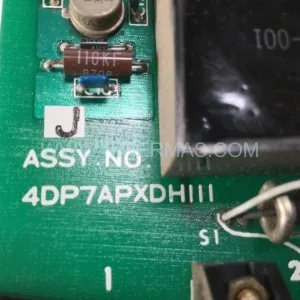
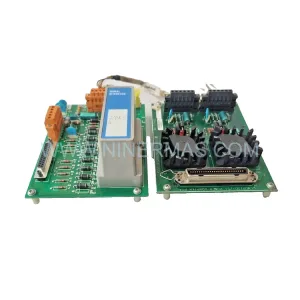
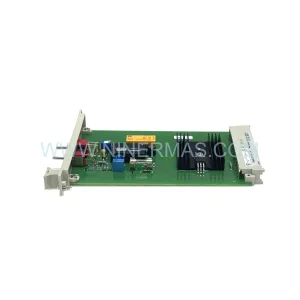
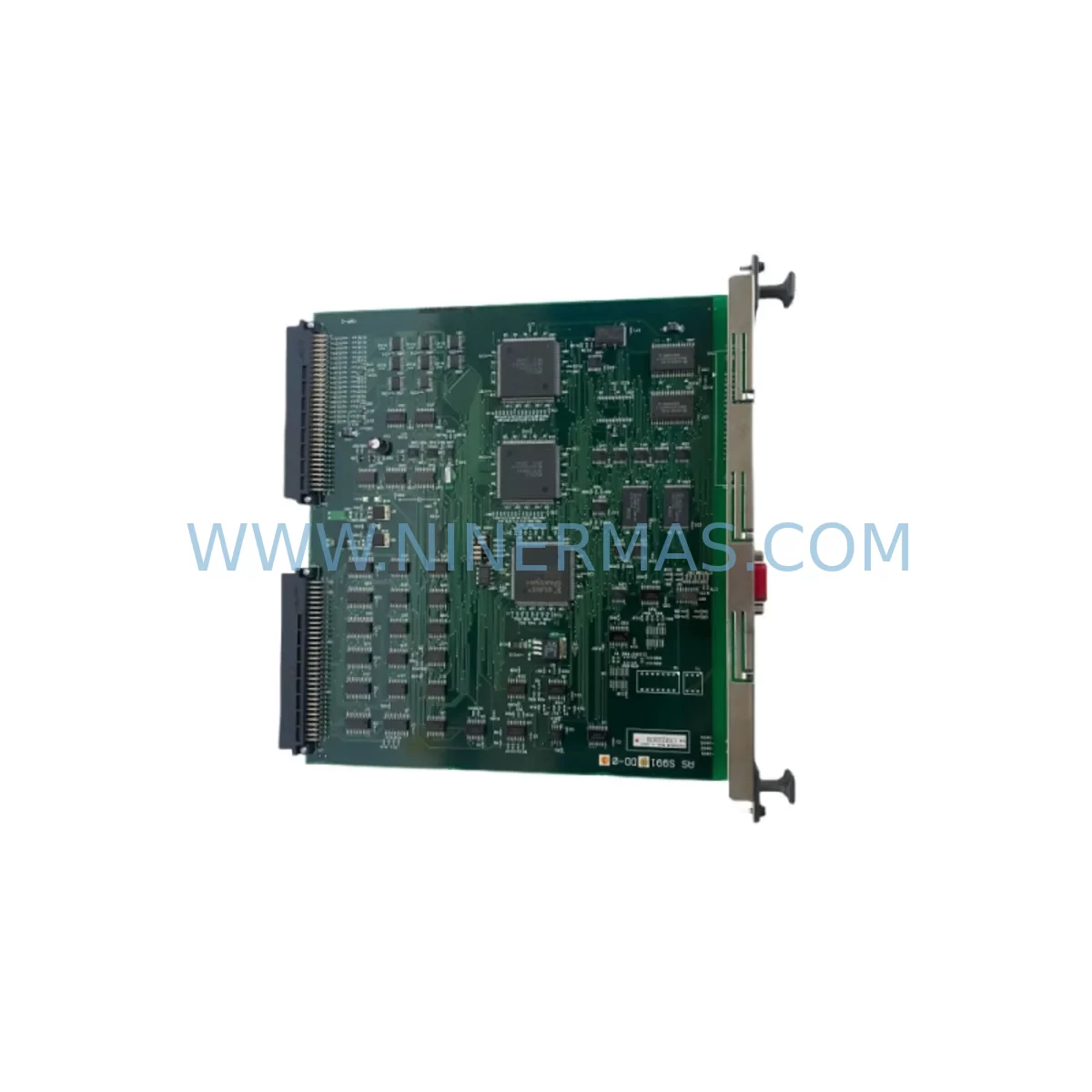
YOKOGAWA SB301 S1 Retrofit-Compatible Safety Bus for Legacy Systems
Verify the part, confirm the platform family, and move straight into quotation with the right commercial details.
RFQ Ready
- SKUSB301 S1
- CategorySIS Safety & Redundancy Systems
- BrandYokogawa
- SupportAvailability, lead time, condition, and shipping coordination
How Buyers Usually Use This Page
- Confirm the exact part number and platform family before sending the quote request.
- Use direct email when quantity, condition, and destination are already defined internally.
- Switch to the broader brand or category archive when you need alternates nearby.
Series Navigation
Move through the most common platform families behind this part.
Product RFQ
Send this part directly for quotation.
Include quantity, required condition, destination country, and target delivery timing. Current reference: YOKOGAWA SB301 S1 Retrofit-Compatible Safety Bus for Legacy Systems with SKU SB301 S1.
YOKOGAWA SB301 S1 Retrofit-Compatible Safety Bus for Legacy Systems
The YOKOGAWA SB301 S1 is a safety bus communication module designed for the ProSafe-RS Safety Instrumented System (SIS) platform. As legacy ProSafe-RS installations approach end-of-life or require capacity expansion, the SB301 S1 serves as a critical retrofit component enabling engineers to maintain IEC 61508 SIL-certified safety loop integrity without full system replacement. Whether you are migrating from an older ProSafe-RS R1 or R2 architecture, extending an existing safety network, or replacing a failed safety bus card in a live plant environment, the SB301 S1 provides the communication backbone that keeps your safety logic execution uninterrupted.
In modern brownfield automation projects, the SB301 S1 is frequently specified alongside the ProSafe-RS controller modules such as the SSC50S and SSC57S, which handle the safety logic execution, and the SCP401 or SCP451 communication processors that bridge the safety network to the plant DCS or SCADA layer. When upgrading a control cabinet that previously housed an older safety bus card, engineers must verify that the backplane slot assignment, the safety bus address configuration, and the inter-module wiring harness are all compatible with the SB301 S1 form factor before powering up the replacement unit.
For sites running YOKOGAWA CENTUM VP or CENTUM CS 3000 as the primary DCS, the SB301 S1 safety bus integrates through the Vnet/IP or ESB bus infrastructure. During migration planning, it is essential to confirm that the existing Vnet/IP switches, typically the ANS10D or ANS16D models, are running firmware versions that support the safety bus polling intervals required by the SB301 S1. Mismatched firmware can introduce latency in the safety response time, which must remain within the SIL-rated parameters defined in the Safety Requirements Specification.
Upgrade Compatibility Table
| Parameter | Detail |
|---|---|
| Part Number | SB301 S1 |
| Brand / Manufacturer | Yokogawa Electric Corporation |
| Series | ProSafe-RS Safety Instrumented System |
| Module Function | Safety Bus Communication Interface |
| Safety Certification | IEC 61508 SIL 2 / SIL 3 capable |
| Compatible Controllers | SSC50S, SSC57S, SCP401, SCP451 |
| Backplane Interface | ProSafe-RS dedicated safety backplane |
| Communication Protocol | ProSafe-RS Safety Bus (proprietary), Vnet/IP compatible |
| Installation Form Factor | DIN-rail / rack-mount per ProSafe-RS chassis |
| Country of Origin | Japan |
| Retrofit Recommendation | Direct replacement for legacy SB301 variants; verify slot address and bus termination |
| Commissioning Notes | Confirm safety bus address, backplane seating, and SIL loop validation after swap |
| Warranty | 12 Months — NINERMAS Quality Assurance |
Retrofit Planning for Existing Automation Systems
A successful SB301 S1 retrofit begins well before the maintenance window opens. The first step is a thorough audit of the existing ProSafe-RS chassis, identifying the current safety bus card slot position, the bus termination resistor status at both ends of the safety bus segment, and the revision level of the existing SB301 unit being replaced. In multi-chassis configurations, where a primary safety controller communicates with remote I/O nodes through extended safety bus segments, the SB301 S1 must be configured with the correct node address to avoid bus conflicts that could trigger a spurious trip.
Power supply capacity is a non-negotiable checkpoint. The ProSafe-RS chassis relies on redundant power supply modules — commonly the PW481 or PW482 — to deliver stable 24 VDC to all installed modules including the SB301 S1. Before inserting the replacement module, measure the actual load current on the active power supply rail and confirm that sufficient headroom exists to support the SB301 S1 without pushing the supply into overload territory. If the existing power supply modules are already near capacity due to previously added I/O modules or signal isolators, a parallel power supply upgrade should be planned as part of the same maintenance window.
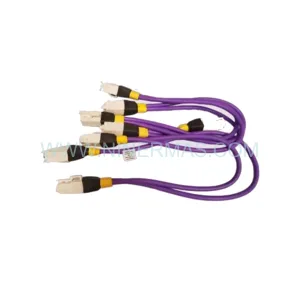
Terminal wiring and cable routing deserve equal attention. The safety bus cable connecting the SB301 S1 to adjacent modules or remote chassis must meet the shielding and impedance specifications defined in the ProSafe-RS hardware manual. In older installations, cable degradation or improper shield grounding can introduce noise that manifests as intermittent bus communication errors after the new module is installed. A pre-swap cable continuity and insulation resistance test eliminates this risk. Where the existing cable run passes through cable trays shared with high-voltage motor drive wiring or variable frequency drives, additional shielding or physical separation may be required to maintain signal integrity.
For plants that also operate YOKOGAWA Field Wireless devices or HART-enabled field instruments connected through the ProSafe-RS I/O modules — such as the SAI143 or SAI533 analog input cards — the SB301 S1 replacement must not disrupt the polling cycle that the safety controller uses to read process values from these field devices. Coordinate the swap timing with the control room operator to ensure that the safety logic is placed in bypass mode through the approved Management of Change procedure before any module is removed from the live chassis.
Downtime Control During System Migration
Minimizing unplanned downtime during a ProSafe-RS safety bus module replacement requires a structured hot-swap protocol where the plant safety management system permits it, or a tightly controlled cold-swap sequence where it does not. Begin by exporting the current ProSafe-RS project from the Safety Engineering Environment (SEE) workstation and storing a verified backup on an isolated engineering laptop. This backup preserves the complete safety logic, I/O assignments, module addresses, and cause-and-effect matrix that defines the safety function of the entire SIS loop.
During the physical swap, the SB301 S1 should be handled in accordance with ESD precautions — grounded wrist strap, anti-static mat, and module stored in its original anti-static packaging until the moment of installation. Once the replacement module is seated in the backplane and the bus termination is confirmed, power up the chassis and observe the module status LEDs. A solid green RUN indicator on the SB301 S1 confirms that the safety bus has been established and the module is communicating with the safety controller. Any flashing or red fault indicators require immediate investigation using the ProSafe-RS diagnostic tools available through the SEE workstation before the safety function is restored from bypass.
After the module is confirmed operational, perform a full SIL validation test on the affected safety loops — including input signal injection at the SAI or SDV I/O modules, logic execution verification at the SSC controller, and output actuation confirmation at the final element. Document the test results in the plant’s safety management system and obtain the required sign-off from the responsible functional safety engineer before returning the safety function to automatic mode. This disciplined approach ensures that the 12-month warranty on the SB301 S1 is supported by a complete commissioning record that satisfies both internal audit requirements and external regulatory inspections.
Retrofit Support FAQ
Q1: Is the SB301 S1 a direct drop-in replacement for older ProSafe-RS safety bus modules?
In most ProSafe-RS chassis configurations, the SB301 S1 is compatible with the same backplane slot used by earlier safety bus card revisions. However, you must verify the bus address DIP switch or firmware address setting on the replacement unit matches the address previously assigned to the failed module. A mismatch will prevent the safety controller from recognizing the new module and may trigger a system fault. NINERMAS supplies the SB301 S1 with full documentation support to assist your engineering team in confirming address compatibility before installation.
Q2: What pre-shipment testing does NINERMAS perform on the SB301 S1?
Every SB301 S1 unit dispatched by NINERMAS undergoes a functional power-on test and visual inspection to confirm that the module initializes correctly, all status LEDs respond as expected, and the connector pins and backplane edge contacts are free from damage or contamination. Units are then repackaged in anti-static materials with a test record included in the shipment. The 12-month warranty covers any manufacturing defect or functional failure that occurs under normal operating conditions from the date of delivery.
Q3: Can the SB301 S1 be used in a mixed ProSafe-RS and CENTUM VP integrated architecture?
Yes. The SB301 S1 safety bus module operates within the ProSafe-RS chassis and communicates with the CENTUM VP DCS through the defined safety bus gateway interface — typically managed by the SCP401 or SCP451 communication processor. The safety bus itself remains isolated from the CENTUM VP control network, preserving the functional separation required by IEC 61511. During integration commissioning, verify that the safety bus gateway configuration in the SEE workstation correctly maps the ProSafe-RS I/O tags to the corresponding CENTUM VP FCS function blocks.
Q4: What is the lead time and inventory availability for the SB301 S1?
NINERMAS maintains stock of the SB301 S1 to support urgent replacement requirements. Standard orders are processed and dispatched within 3–5 business days. For projects requiring multiple units or long-term spare parts program commitments, NINERMAS offers inventory reservation agreements to guarantee supply continuity over a 12–24 month horizon. Contact our technical sales team at sale@ninermas.com or +0086 187 5021 5667 to discuss your project timeline and volume requirements.
| Product Series | ProSafe-RS |
|---|---|
| Country of Origin | JP |
Catalog Continuation
More Yokogawa modules in the catalog.
Use the brand lane to compare nearby part numbers, platform-adjacent modules, and other inquiry-ready listings before sending your final RFQ.
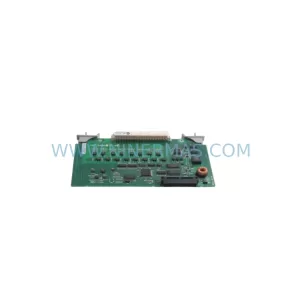
Catalog Continuation
Alternative parts within SIS Safety & Redundancy Systems.
Stay inside the same system family when you need substitutes, adjacent modules, or a broader shortlist for procurement review.
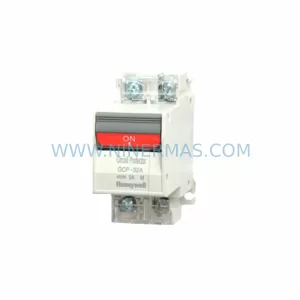
SKU: GCP-32AN 1A 2A 3A 4A 5A 7A 10A 15A 20A 25A 30A
Honeywell GCP-32AN Safety-Reliable Power Supply for Critical Sites
SKU: ACS880-01-04A8-5
ABB ACS880-01-04A8-5 Safety-Reliable VFD for Critical Control