Original Industrial Spare Part
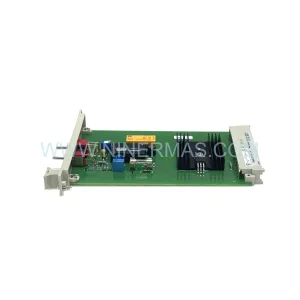
YOKOGAWA SAT145-S65 Retrofit-Compatible Safety Module
Verify the part, confirm the platform family, and move straight into quotation with the right commercial details.
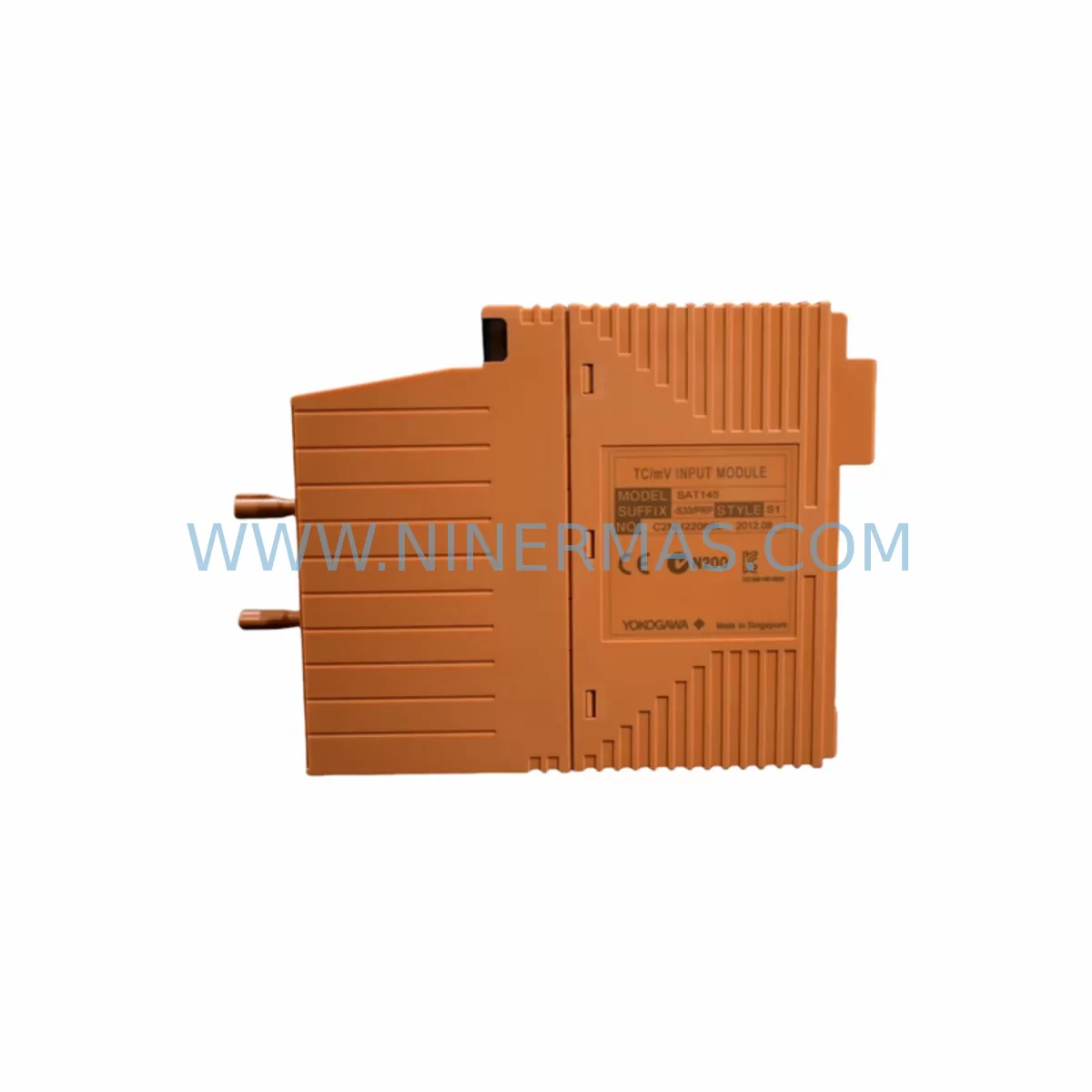
RFQ Ready
- SKUSAT145-S65
- CategorySIS Safety & Redundancy Systems
- BrandYokogawa
- SupportAvailability, lead time, condition, and shipping coordination
How Buyers Usually Use This Page
- Confirm the exact part number and platform family before sending the quote request.
- Use direct email when quantity, condition, and destination are already defined internally.
- Switch to the broader brand or category archive when you need alternates nearby.
Series Navigation
Move through the most common platform families behind this part.
Product RFQ
Send this part directly for quotation.
Include quantity, required condition, destination country, and target delivery timing. Current reference: YOKOGAWA SAT145-S65 Retrofit-Compatible Safety Module with SKU SAT145-S65.
YOKOGAWA SAT145-S65 Retrofit-Compatible Safety Module: Legacy System Compatibility & Smooth Upgrade Path
The YOKOGAWA SAT145-S65 is a safety instrumented system (SIS) module designed for use within the CENTUM VP and CS 3000 distributed control system platforms. As legacy automation infrastructure ages and original spare parts reach end-of-life, the SAT145-S65 serves as a critical retrofit-compatible replacement for facilities operating aging safety loops, interlock circuits, and process shutdown systems. NINERMAS maintains verified stock of the SAT145-S65 to support unplanned breakdowns, scheduled turnarounds, and long-term spare parts programs across petrochemical, power generation, and manufacturing sectors.
When planning a retrofit or spare parts replenishment around the SAT145-S65, engineers must confirm several key parameters before installation: available power budget on the existing CENTUM VP or CS 3000 power supply unit (such as the PW481 or PW482 series), terminal wiring compatibility with existing field junction boxes, backplane slot addressing within the safety control station, and whether the existing SCS (Safety Control Station) firmware version supports the module revision being installed. Failure to verify these parameters before hot-swap or cold-swap installation can result in extended downtime and program integrity issues.
Upgrade Compatibility Table
| Parameter | SAT145-S65 Specification | Retrofit Notes |
|---|---|---|
| Compatible Platform | CENTUM VP, CS 3000 | Verify SCS firmware revision before installation |
| Module Type | Safety Instrumented System (SIS) Module | Confirm slot assignment in safety control station |
| Backplane Interface | CENTUM VP / CS 3000 standard backplane | Check rack model (e.g., EB401, EB501) for slot availability |
| Power Requirement | Per YOKOGAWA SCS power budget | Verify PW481/PW482 capacity before adding module |
| Terminal Wiring | Standard YOKOGAWA field terminal block | Cross-reference existing wiring diagrams; confirm signal type |
| Communication Protocol | CENTUM VP internal bus / Vnet/IP | Confirm Vnet/IP node address does not conflict with existing SCS nodes |
| Program Compatibility | SCS application logic (IEC 61511) | Back up existing SCS program before replacement; validate logic post-swap |
| HMI Integration | CENTUM VP HIS / Exaopc OPC server | Confirm HMI faceplates reference correct module tag addresses |
| Installation Space | Standard CENTUM VP module form factor | Measure available rack space; confirm no adjacent module interference |
| Warranty | 12-Month Warranty — All units shipped by NINERMAS are tested and covered for 12 months from date of delivery. | |
Retrofit Planning for Existing Automation Systems
A successful SAT145-S65 retrofit begins well before the module arrives on-site. Maintenance engineers should start by auditing the existing CS 3000 or CENTUM VP safety control station configuration, identifying which rack (such as the EB401 or EB501 field control station) houses the module to be replaced, and confirming that the replacement SAT145-S65 revision matches or is backward-compatible with the installed SCS firmware. In many legacy plants, the SCS firmware has not been updated in years, making revision matching a critical first step.
Power supply verification is equally important. The PW481 or PW482 power supply modules feeding the safety control station must have sufficient headroom to support the SAT145-S65 without triggering undervoltage alarms or tripping the SCS into a safe state. Engineers should log current power consumption across all installed modules before adding or swapping any unit.
Terminal wiring must be cross-referenced against the original loop drawings. The SAT145-S65 interfaces with field devices through YOKOGAWA-standard terminal blocks, and any deviation in signal type — whether 4–20 mA analog, discrete 24 VDC, or HART-enabled — must be confirmed before energizing the loop. In facilities where the original wiring documentation is incomplete, a field survey of the junction box and marshalling cabinet is recommended prior to module swap.
For plants migrating from older CS 3000 hardware to CENTUM VP, the SAT145-S65 may be part of a broader platform migration that also involves replacing the SCS controller card, upgrading the Vnet/IP communication bus, and re-engineering HMI faceplates in the CENTUM VP Human Interface Station (HIS). In these scenarios, the SAT145-S65 is often installed alongside updated I/O modules such as the AAI143 analog input module or the ADV151 digital input module, which share the same backplane and must be addressed correctly to avoid node conflicts on the Vnet/IP network.
Control cabinet space planning is another frequently overlooked step. The SAT145-S65 occupies a standard CENTUM VP module slot, but adjacent modules — including communication interface units, signal conditioners, and signal isolators — must be accounted for in the rack layout. If the existing cabinet is near capacity, a supplementary EB401 expansion unit or a new control cabinet may be required as part of the upgrade scope.
For facilities running HART-enabled field instruments, the retrofit may also require updating the HART multiplexer or field device management software to recognize the new module’s I/O channel assignments. YOKOGAWA’s PRM (Plant Resource Manager) software is commonly used in CENTUM VP environments for this purpose and should be updated to reflect any changes in module addressing or channel configuration.
Finally, before the retrofit is considered complete, a full functional test of each safety loop connected to the SAT145-S65 must be performed. This includes proof testing of the SIS logic, verification of trip setpoints, and confirmation that the SCS correctly communicates module status to the CENTUM VP DCS via the Vnet/IP link. All test results should be documented in the plant’s safety management system in accordance with IEC 61511 requirements.
Downtime Control During System Migration
Minimizing downtime during a SAT145-S65 replacement requires a structured pre-outage preparation plan. The most effective approach is to stage the replacement module on the bench, verify its firmware revision, and perform a pre-installation functional check before the maintenance window begins. This eliminates the risk of discovering a revision mismatch or hardware fault during the outage itself.
Where the process safety requirements allow, a partial bypass of the affected safety loop — using a temporary jumper or a software bypass within the SCS — can maintain process continuity while the module is being swapped. This approach must be formally authorized through the plant’s management of change (MOC) procedure and documented in the safety case. The bypass duration should be minimized, and the loop must be restored and proof-tested before the bypass is lifted.
Protecting the existing SCS program logic is non-negotiable. Before any hardware change, the current SCS application program must be backed up to a secure location — both on the engineering workstation and on removable media. YOKOGAWA’s SCS Builder or CENTUM VP engineering environment should be used to export the program, and the backup should be verified by reloading it into the offline engineering environment before the outage begins.
Communication continuity on the Vnet/IP network must also be maintained during the swap. If the SAT145-S65 is part of a redundant SCS configuration, the redundant module should remain online while the primary is replaced, ensuring that the safety function is not interrupted. After the new module is installed and powered, the SCS redundancy switchover should be tested to confirm that both modules are synchronized and that the Vnet/IP link is stable.
Post-installation, the HMI operator screens in the CENTUM VP HIS should be checked to confirm that all module status indicators, alarm points, and process variable displays are functioning correctly. Any discrepancies in tag addressing or faceplate configuration should be resolved before the plant is returned to normal operation. A final sign-off by the responsible instrument engineer and the safety officer should be obtained before the maintenance record is closed.
Retrofit Support FAQ
Q1: Is the SAT145-S65 a direct drop-in replacement for the original YOKOGAWA CS 3000 safety module?
The SAT145-S65 is designed for use within the CENTUM VP and CS 3000 SIS architecture. In most cases it is a direct replacement, but engineers must verify the SCS firmware revision and backplane slot compatibility before installation. NINERMAS can provide the module datasheet and revision history to assist with compatibility verification prior to purchase.
Q2: What commissioning steps are required after installing the SAT145-S65?
After physical installation, the SCS must recognize the new module and assign it the correct I/O channel addresses. The engineer should use YOKOGAWA’s SCS Builder to download the application program to the new module, verify all I/O channel assignments, and perform a loop check on each connected field device. A proof test of the safety function must be completed and documented before the loop is returned to service.
Q3: Can the SAT145-S65 be used in a mixed CS 3000 / CENTUM VP environment?
Yes, in many retrofit scenarios the SAT145-S65 is installed in a plant where CS 3000 and CENTUM VP hardware coexist during a phased migration. In these environments, Vnet/IP node addressing must be carefully managed to avoid conflicts between the legacy CS 3000 nodes and the new CENTUM VP nodes. NINERMAS recommends consulting the YOKOGAWA system engineering team or a qualified system integrator to validate the network configuration before installation.
Q4: What does the 12-month warranty cover, and what is the lead time for in-stock units?
All SAT145-S65 units supplied by NINERMAS are covered by a 12-month warranty from the date of delivery, covering manufacturing defects and functional failures under normal operating conditions. In-stock units are typically dispatched within 1–3 business days. For urgent breakdown requirements, expedited shipping is available. Contact our team at sale@ninermas.com or +0086 187 5021 5667 to confirm current stock availability and lead time.
| Product Series | CENTUM VP |
|---|---|
| Country of Origin | JP |
Catalog Continuation
More Yokogawa modules in the catalog.
Use the brand lane to compare nearby part numbers, platform-adjacent modules, and other inquiry-ready listings before sending your final RFQ.
Catalog Continuation
Alternative parts within SIS Safety & Redundancy Systems.
Stay inside the same system family when you need substitutes, adjacent modules, or a broader shortlist for procurement review.
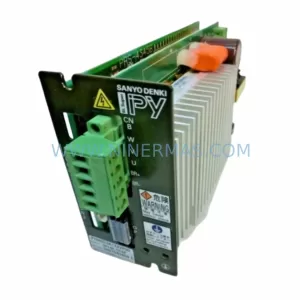
SKU: PYRG015K1XXVP00
SANYO DENKI PYRG015K1XXVP00 Safety-Reliable AC Servo Drive
SKU: EOCR-SSD 05 EOCRSSD-05DF7
Schneider EOCR-SSD 05 Safety-Reliable Motor Relay for Critical Control