Original Industrial Spare Part
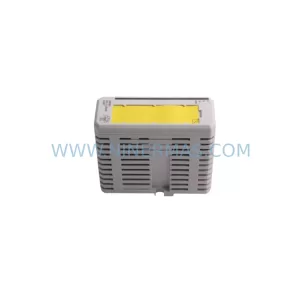
Yokogawa ADV159-P00 S1 Retrofit-Compatible I/O Module for Legacy Systems
Verify the part, confirm the platform family, and move straight into quotation with the right commercial details.
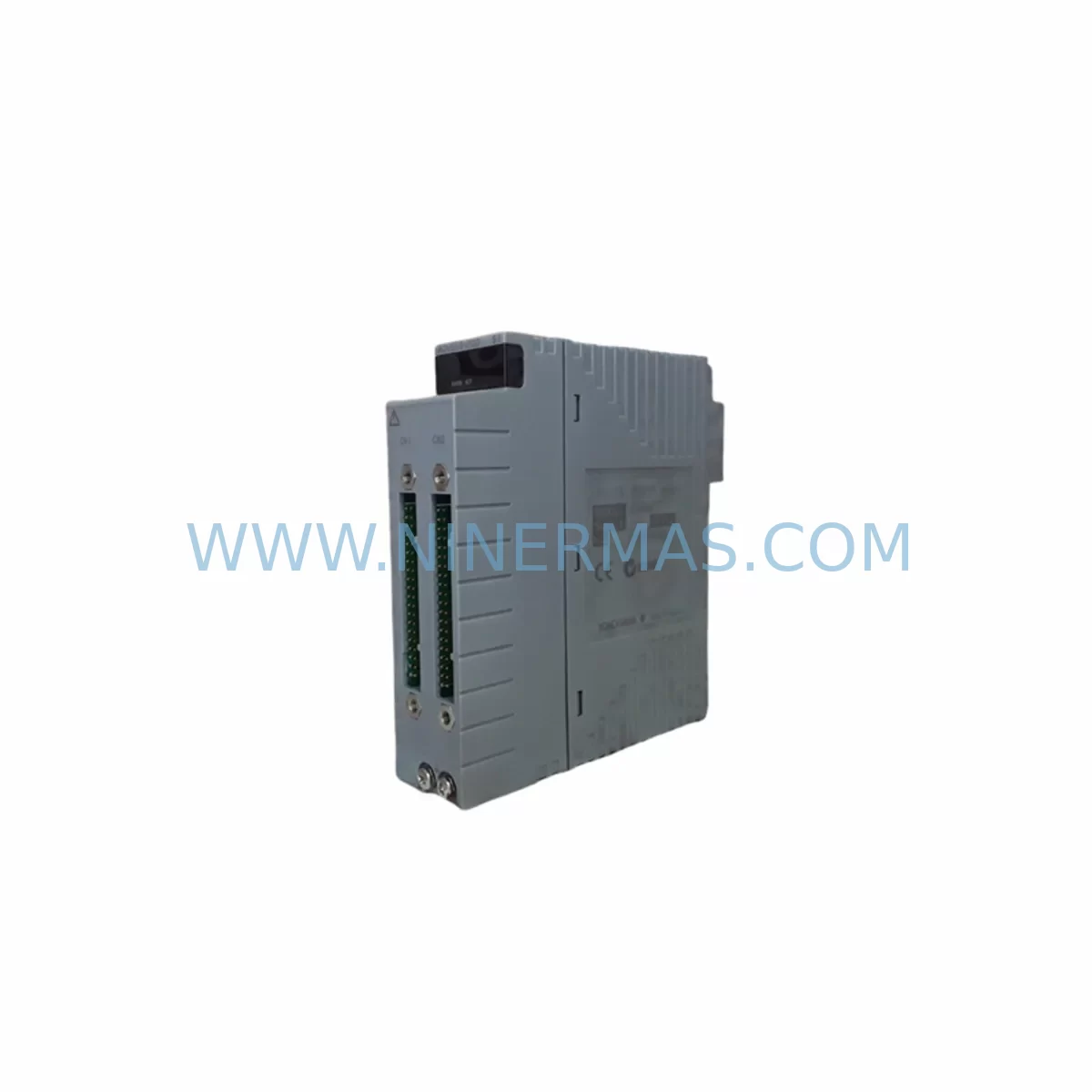
RFQ Ready
- SKUADV159-P00 S1
- CategoryDCS Distributed Control Systems
- BrandYokogawa
- SupportAvailability, lead time, condition, and shipping coordination
How Buyers Usually Use This Page
- Confirm the exact part number and platform family before sending the quote request.
- Use direct email when quantity, condition, and destination are already defined internally.
- Switch to the broader brand or category archive when you need alternates nearby.
Series Navigation
Move through the most common platform families behind this part.
Product RFQ
Send this part directly for quotation.
Include quantity, required condition, destination country, and target delivery timing. Current reference: Yokogawa ADV159-P00 S1 Retrofit-Compatible I/O Module for Legacy Systems with SKU ADV159-P00 S1.
Yokogawa ADV159-P00 S1 Retrofit-Compatible I/O Module: Seamless Legacy System Upgrade for CENTUM VP and CS 3000
The Yokogawa ADV159-P00 S1 is a high-reliability digital input/output module engineered for integration within the CENTUM VP and CS 3000 distributed control system platforms. As legacy automation infrastructure ages and original spare parts become increasingly difficult to source, the ADV159-P00 S1 serves as a critical retrofit-compatible replacement component — enabling plant engineers and maintenance teams to extend the operational life of existing control architectures without committing to a full system overhaul.
Designed for demanding industrial environments including oil and gas, petrochemical, power generation, pulp and paper, and pharmaceutical manufacturing, this module supports stable field signal acquisition and output control across multi-loop process configurations. Its compact form factor and standardized backplane interface make it a practical choice for control cabinet upgrades where installation space is constrained and downtime windows are narrow.
NINERMAS maintains verified stock of the ADV159-P00 S1 with full functional testing prior to shipment, backed by a 12-month warranty on all spare parts. Each unit is inspected against Yokogawa’s original hardware specifications to ensure compatibility with existing field wiring, terminal assignments, and software addressing schemes.
Upgrade Compatibility Table
| Parameter | ADV159-P00 S1 Specification | Retrofit / Replacement Notes |
|---|---|---|
| Compatible Platforms | CENTUM VP, CS 3000 | Verify firmware revision of FCU/FCS controller before swap |
| Backplane Interface | Yokogawa standard node bus | Confirm slot position and node address assignment in Engineering Builder |
| Terminal Wiring | Screw-type field terminal block | Re-use existing field cable terminations; verify signal polarity and shielding |
| Communication Protocol | Vnet/IP (CENTUM VP) / Ethernet (CS 3000) | No protocol migration required for same-generation replacement |
| Module Address | Configured via Engineering Builder / BKF | Retain original IOM address; re-download configuration after replacement |
| Installation Space | Standard Yokogawa I/O nest slot | Single-slot; no mechanical modification required |
| Power Consumption | Per Yokogawa IOM specification | Verify nest power supply (e.g., PW481, PW482) capacity before installation |
| HMI Compatibility | CENTUM VP HIS / CS 3000 HIS | No HMI screen rebuild required; tag database remains intact |
| Program Compatibility | Function Block / SFC logic retained | Re-download FCS application after hardware swap; verify alarm setpoints |
| Warranty | 12-Month Warranty — All units tested prior to shipment | |
Retrofit Planning for Existing Automation Systems
Replacing the ADV159-P00 S1 within an operational CENTUM VP or CS 3000 environment requires a structured approach that accounts for the interdependencies between hardware, software, and field instrumentation. Before initiating any module swap, maintenance engineers should conduct a full review of the existing I/O nest configuration, confirming the slot assignment, node bus address, and the current firmware version of the Field Control Station (FCS or FCU) to which the module reports.
Power supply capacity is a frequently overlooked constraint during retrofit planning. The nest power supply — commonly a PW481 or PW482 unit — must be verified to support the combined load of all installed I/O modules, particularly when the ADV159-P00 S1 is being added to a partially populated nest or replacing a module of a different power class. Insufficient power margin can cause intermittent faults or module initialization failures that are difficult to diagnose under time pressure.
Field wiring continuity must be confirmed before and after the swap. Terminal block assignments on the ADV159-P00 S1 follow Yokogawa’s standard pinout, but engineers should cross-reference the original loop drawings and instrument data sheets to verify signal type, range, and polarity. Where field cables use individual shielding, ensure shield termination practices are maintained to prevent noise ingress on analog channels adjacent to the replaced module.
For systems where the ADV159-P00 S1 interfaces with a Vnet/IP communication backbone, the module’s network node parameters must be consistent with the existing domain configuration. In CS 3000 installations using legacy Ethernet-based node buses, confirm that the replacement module’s hardware revision is compatible with the installed version of the BKF (Bus Coupler) or ESB bus interface card. Mismatched hardware revisions between the I/O module and the bus interface can prevent successful module recognition during FCS startup.
When the retrofit scope extends beyond a single module replacement — for example, when upgrading an entire I/O nest or migrating from CS 3000 to CENTUM VP — additional components typically involved include the ANB10D or ANB11D node interface units, ACM12 communication modules for serial device integration, ADV151 or ADV161 digital input modules for parallel channel expansion, and AAI141 or AAI143 analog input modules where mixed signal types are present in the same nest. HMI workstations running CENTUM VP HIS software will automatically recognize the replacement module once the FCS application is re-downloaded, provided the tag database and function block assignments remain unchanged.
Signal isolators — such as Yokogawa’s JUXTA series or equivalent DIN-rail mounted barriers — should be inspected during the retrofit to confirm that field-side signal conditioning remains within specification. Aging isolators in the same control cabinet may introduce offset errors that become apparent only after a module replacement, making pre-commissioning loop checks essential.
Programming cables and Engineering Builder workstation connectivity should be verified before the maintenance window begins. The CENTUM VP Engineering Builder requires a stable connection to the FCS domain controller to perform module configuration downloads. Confirm that the engineering PC’s network interface is correctly configured for the plant’s Vnet/IP subnet, and that no firewall rules will interrupt the download sequence during the critical post-swap commissioning phase.
Downtime Control During System Migration
Minimizing unplanned downtime during an ADV159-P00 S1 replacement requires preparation that begins well before the scheduled maintenance window. The most effective approach is to pre-stage the replacement module with its configuration parameters verified offline using Engineering Builder’s simulation or offline project environment, so that the only on-site activity required is the physical swap and a configuration re-download.
Where the process permits, consider placing the affected FCS loops in manual control mode prior to module removal. This preserves the last known output state on field devices — control valves, motor starters, and solenoids — and prevents the FCS from generating spurious output changes during the hardware transition. For critical loops where manual handover is not feasible, coordinate with the operations team to establish a safe fallback condition before the maintenance window opens.
The ADV159-P00 S1’s hot-swap capability within supported CENTUM VP nest configurations can significantly reduce process impact, but this must be confirmed against the specific FCS firmware version and nest type in use. Not all nest configurations support live module replacement; in those cases, a controlled FCS restart sequence must be planned and communicated to all affected control room operators in advance.
Post-swap commissioning should follow a structured loop check sequence: verify module recognition in Engineering Builder, confirm channel-by-channel signal integrity against the loop test sheet, check alarm and interlock setpoints against the approved instrument index, and obtain operations sign-off before returning loops to automatic control. Documenting the as-found and as-left conditions for each loop provides an audit trail that supports future maintenance planning and regulatory compliance.
NINERMAS ships all ADV159-P00 S1 units with pre-shipment functional test records, reducing the risk of receiving a non-functional module during a time-critical maintenance window. Our standard lead time and in-stock availability are designed to support both planned turnaround maintenance and emergency breakdown scenarios.
Retrofit Support FAQ
Q1: Is the ADV159-P00 S1 a direct drop-in replacement for the original Yokogawa module in my CS 3000 system?
A: In most CS 3000 and CENTUM VP installations, the ADV159-P00 S1 is a direct hardware replacement requiring no mechanical modification. However, you should verify the hardware revision suffix (S1) matches your system’s qualification records, and confirm that the FCS firmware version supports the module. A configuration re-download via Engineering Builder is required after the physical swap.
Q2: What wiring changes are needed when replacing the ADV159-P00 S1?
A: No field wiring changes are typically required. The terminal block pinout follows Yokogawa’s standard assignment for this module family. Retain all existing field cable connections and verify signal continuity with a loop test after installation. If the original module used a marshalling cabinet or junction box, confirm that the intermediate terminal assignments are consistent with the replacement unit’s channel mapping.
Q3: Does NINERMAS provide pre-shipment testing and a warranty for the ADV159-P00 S1?
A: Yes. Every ADV159-P00 S1 unit shipped by NINERMAS undergoes functional testing against Yokogawa’s original hardware specifications before dispatch. All units are covered by a 12-month warranty from the date of shipment. Test records are available upon request to support your incoming inspection and quality assurance process.
Q4: Can NINERMAS support emergency or short-lead-time orders for the ADV159-P00 S1?
A: NINERMAS maintains inventory of the ADV159-P00 S1 to support both planned maintenance schedules and unplanned breakdown situations. Contact our team directly to confirm current stock availability and lead time. We offer expedited dispatch for emergency requirements and can provide advance shipping documentation to support your procurement and customs clearance process.
| Product Series | CENTUM VP |
|---|---|
| Country of Origin | JP |
Catalog Continuation
More Yokogawa modules in the catalog.
Use the brand lane to compare nearby part numbers, platform-adjacent modules, and other inquiry-ready listings before sending your final RFQ.
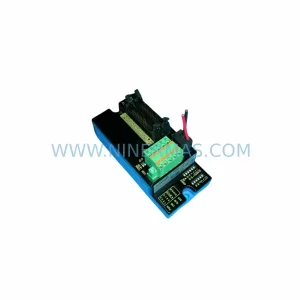
Catalog Continuation
Alternative parts within DCS Distributed Control Systems.
Stay inside the same system family when you need substitutes, adjacent modules, or a broader shortlist for procurement review.
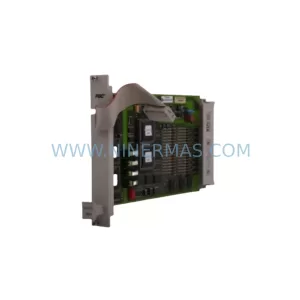
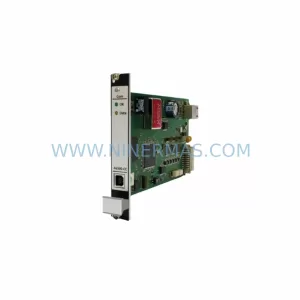
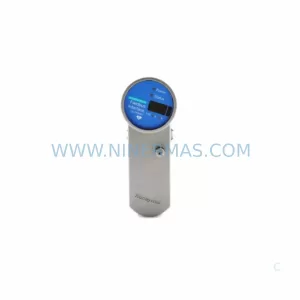
SKU: CC-PDIL51 CC-PDOD51 CC-PAIH51 CC-PAOH51
Honeywell CC-PDIL51 Service-Ready Spare Part for Industrial Maintenance
SKU: AI880A 3BSE039293R1
ABB 3BSE039293R1 Service-Ready Spare Part for Industrial Maintenance