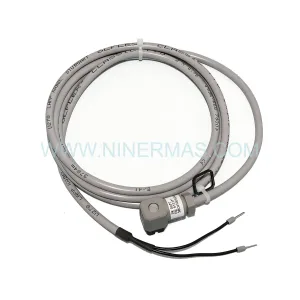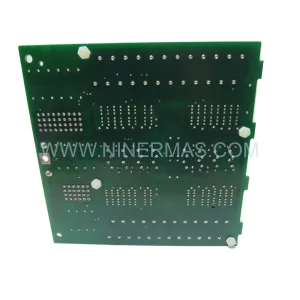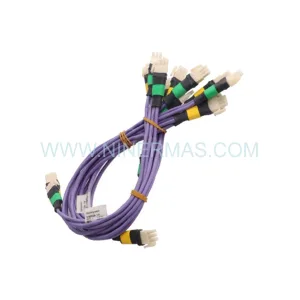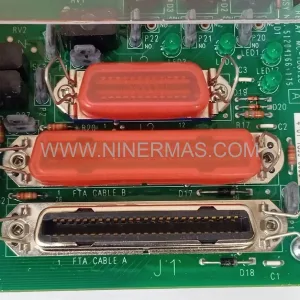
Original Industrial Spare Part
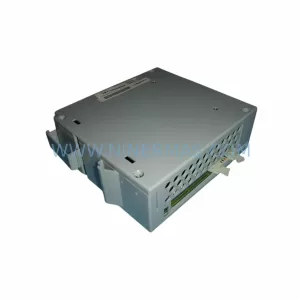
YOKOGAWA ADV142-S02 S1 Retrofit-Compatible I/O for Legacy Systems
Verify the part, confirm the platform family, and move straight into quotation with the right commercial details.
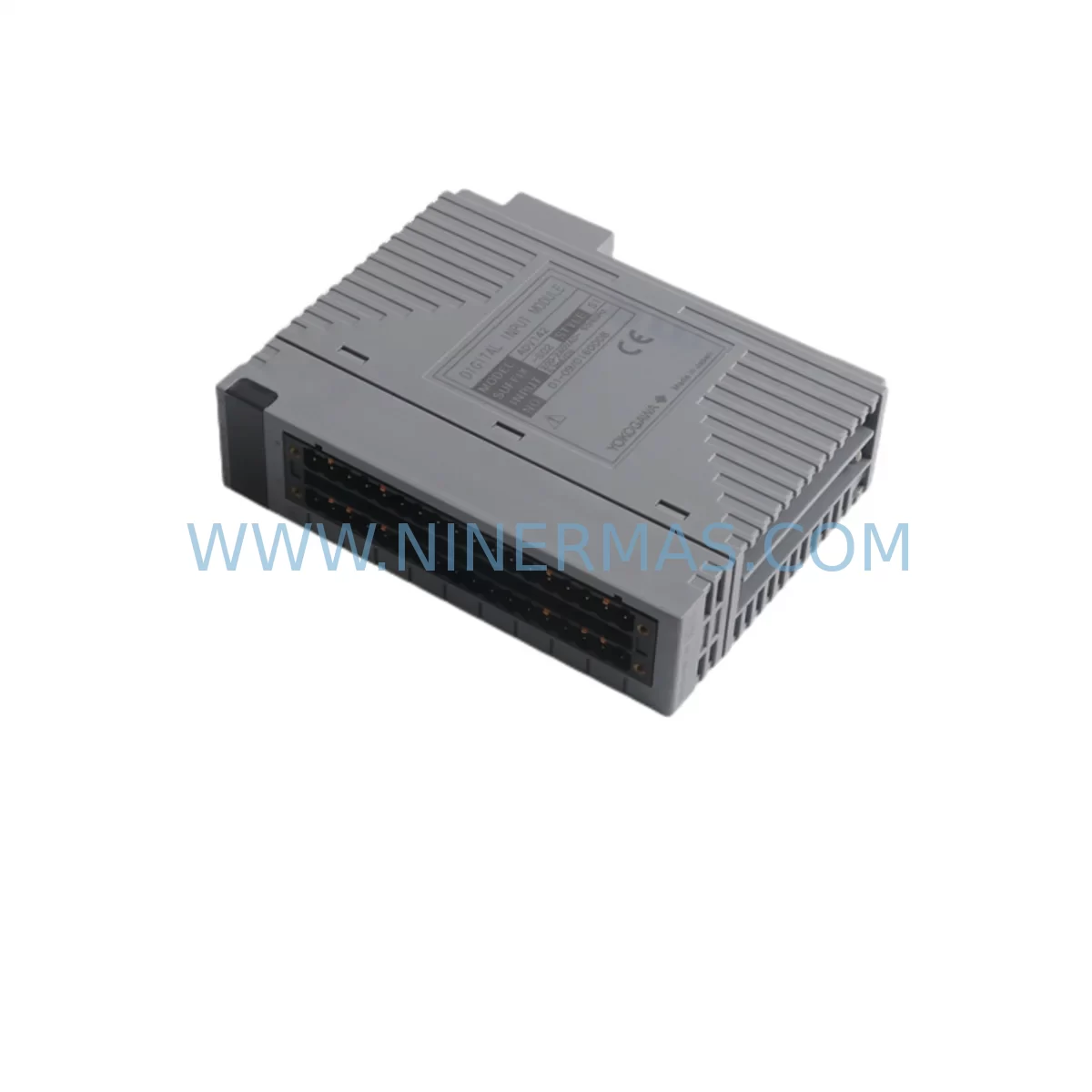
RFQ Ready
- SKUADV142-S02 S1
- CategoryDCS Distributed Control Systems
- BrandYokogawa
- SupportAvailability, lead time, condition, and shipping coordination
How Buyers Usually Use This Page
- Confirm the exact part number and platform family before sending the quote request.
- Use direct email when quantity, condition, and destination are already defined internally.
- Switch to the broader brand or category archive when you need alternates nearby.
Series Navigation
Move through the most common platform families behind this part.
Product RFQ
Send this part directly for quotation.
Include quantity, required condition, destination country, and target delivery timing. Current reference: YOKOGAWA ADV142-S02 S1 Retrofit-Compatible I/O for Legacy Systems with SKU ADV142-S02 S1.
YOKOGAWA ADV142-S02 S1 Retrofit-Compatible I/O Module for Legacy Systems
The YOKOGAWA ADV142-S02 S1 is a high-reliability analog input module engineered for seamless integration into existing CENTUM VP and CS 3000 distributed control system (DCS) architectures. As legacy automation infrastructure ages and original spare parts reach end-of-life, the ADV142-S02 S1 serves as a proven retrofit-compatible replacement that enables plant engineers to extend the operational lifespan of their control systems without committing to a full platform migration. Whether you are managing a refinery, chemical plant, power generation facility, or water treatment operation, this module delivers the signal conditioning, channel isolation, and backplane compatibility required to maintain continuous process control with minimal disruption.
Sourced directly from authorized supply chains and subjected to pre-shipment functional testing, every ADV142-S02 S1 unit shipped by NINERMAS COMPANY LIMITED is verified against YOKOGAWA factory specifications. Our inventory is maintained to support urgent retrofit and emergency replacement scenarios, with same-week dispatch available for in-stock units. All modules are covered by a 12-month warranty from the date of shipment.
Upgrade Compatibility Table
| Parameter | ADV142-S02 S1 (This Module) | Retrofit Notes |
|---|---|---|
| Compatible Platform | CENTUM VP, CS 3000 | Verify node address assignment before installation |
| Backplane Interface | YOKOGAWA standard DCS backplane | Confirm slot type matches existing nest/rack configuration |
| Signal Type | Analog Input (4–20 mA / voltage) | Check field wiring terminal polarity and shielding |
| Channel Isolation | Channel-to-channel isolation supported | Validate against existing I/O map in engineering station |
| Communication Protocol | YOKOGAWA internal DCS bus | No protocol conversion required for same-series replacement |
| Installation Format | Plug-in module, standard DCS nest | Confirm physical slot clearance and nest power budget |
| Replacement Scope | Direct drop-in for same SKU; cross-series with engineering review | Review I/O builder configuration in CENTUM VP Engineering |
| Commissioning Requirement | Module address confirmation, loop check, HMI tag verification | Recommend cold-standby swap procedure to minimize downtime |
| Warranty | 12 months from shipment date — NINERMAS COMPANY LIMITED | |
Retrofit Planning for Existing Automation Systems
Successful integration of the ADV142-S02 S1 into a brownfield automation environment requires a structured pre-installation assessment. Before removing the legacy module, engineers should export the current I/O builder database from the CENTUM VP Engineering environment and document all tag assignments, range settings, and alarm thresholds associated with the affected channels. This baseline record is essential for post-swap verification and HMI screen reconciliation.
Power budget confirmation is a critical first step. The existing nest or rack — typically an ANB10S or ANB11S field control station nest — must have sufficient available power capacity to support the ADV142-S02 S1 alongside co-installed modules such as the ADV151 analog output module, the AAI141 multi-channel analog input card, or any AAT141 temperature input modules sharing the same power rail. If the nest is operating near its rated capacity, a supplementary power supply unit such as the APS11S or APS12S may be required before the retrofit proceeds.
Terminal wiring adaptation is the next consideration. Field cables connected to the legacy module’s terminal block must be mapped against the ADV142-S02 S1 pinout. In most CS 3000 to CENTUM VP migration scenarios, the terminal block assignments are compatible, but engineers should verify signal polarity, shield grounding points, and cable routing clearance within the control cabinet. Where marshalling panels are in use, junction terminal blocks should be inspected for corrosion or loose connections before the new module is energized.
For systems that include FOUNDATION Fieldbus or HART-enabled field devices, the ADV142-S02 S1 supports HART pass-through on compatible channel configurations. This allows existing HART-capable transmitters — such as pressure, flow, or level instruments already wired to the legacy module — to retain their digital communication capability without rewiring. Engineers should confirm HART multiplexer settings within the CENTUM VP system configuration if HART data is being polled by an asset management application.
Where the retrofit scope extends beyond a single I/O module, it is common to simultaneously address adjacent infrastructure. Control bus cables connecting the field control station to the human interface station (HIS) should be inspected for integrity. Communication modules such as the ACM11 or ACM12 Vnet/IP interface cards, if present in the same cabinet, should be confirmed as firmware-compatible with the current CENTUM VP release. Similarly, if the retrofit is part of a broader migration from CS 3000 to CENTUM VP R6, the ESB bus coupler and associated SB401 or SB811 bus interface modules may require configuration updates to maintain seamless data exchange across the control network.
Finally, before closing the control cabinet, a full loop check should be performed on each channel of the ADV142-S02 S1 using a calibrated signal source. Confirm that each process variable appears correctly on the HMI faceplate, that alarm setpoints are active, and that trend historian tags are logging data as expected. Document the as-commissioned configuration and update the plant’s spare parts register to reflect the installed module’s serial number and firmware revision.
Downtime Control During System Migration
Minimizing unplanned downtime is the primary operational concern when replacing a live I/O module in a running DCS. The ADV142-S02 S1 supports a cold-standby swap procedure that, when properly planned, can reduce the control interruption window to under 15 minutes per module position. The recommended approach is to pre-configure the replacement module offline using a spare engineering station, load the correct I/O builder configuration, and verify the module’s self-diagnostic status before bringing it to the field.
Where the process cannot tolerate even brief signal interruption, a parallel wiring strategy can be employed: the new ADV142-S02 S1 is installed in an adjacent available slot, field signals are re-terminated to the new module’s terminal block, and the I/O tag assignments are updated in the CENTUM VP database before the legacy module is decommissioned. This approach preserves the original program logic, maintains HMI display continuity, and eliminates the risk of process upsets caused by signal loss during the swap interval.
For multi-module retrofit campaigns — such as a full nest replacement or a phased migration across multiple field control stations — NINERMAS recommends staging modules in the order of lowest process criticality to highest, allowing the engineering team to refine the swap procedure and confirm compatibility before addressing safety-critical loops. All replaced modules should be retained on-site for a minimum of 30 days post-commissioning as a contingency measure, ensuring rapid rollback capability if unexpected compatibility issues emerge during the initial operating period.
Pre-shipment functional testing performed by NINERMAS on every ADV142-S02 S1 unit significantly reduces the risk of infant-failure events in the field. Each module is powered, addressed, and subjected to a channel-by-channel signal injection test before packaging, with test records available upon request. Combined with the 12-month warranty coverage, this testing protocol gives plant maintenance teams confidence that the replacement module will perform reliably from the moment it is energized.
Retrofit Support FAQ
Q1: Is the ADV142-S02 S1 a direct drop-in replacement for the same SKU installed in a CS 3000 system?
In most cases, yes. The ADV142-S02 S1 is designed for compatibility within the YOKOGAWA CENTUM VP and CS 3000 platform families. However, engineers should confirm the nest type, slot assignment, and I/O builder tag configuration before installation, as minor firmware or hardware revision differences may require a configuration update in the engineering station.
Q2: What commissioning steps are required after installing the replacement module?
After physical installation, the module address must be confirmed via the CENTUM VP Engineering environment. A full loop check on all active channels is required, followed by HMI tag verification and historian trend confirmation. If HART devices are connected, HART communication should be validated through the asset management interface. Total commissioning time for a single module replacement is typically 1–3 hours depending on channel count and process complexity.
Q3: Can NINERMAS supply the ADV142-S02 S1 with pre-shipment testing documentation?
Yes. All ADV142-S02 S1 modules supplied by NINERMAS COMPANY LIMITED undergo pre-shipment functional testing. Test records confirming channel performance, power consumption, and self-diagnostic status are available upon request. Units are shipped with original or equivalent packaging to prevent transit damage, and the 12-month warranty is activated from the shipment date.
Q4: What is the typical lead time and inventory availability?
NINERMAS maintains stock of the ADV142-S02 S1 to support urgent retrofit and emergency replacement requirements. In-stock units are typically dispatched within 3–5 business days. For large-quantity orders or long-term supply agreements, please contact our sales team to discuss scheduling and pricing. Emergency same-week dispatch is available for confirmed in-stock inventory.
| Product Series | CENTUM VP |
|---|---|
| Country of Origin | JP |
Catalog Continuation
More Yokogawa modules in the catalog.
Use the brand lane to compare nearby part numbers, platform-adjacent modules, and other inquiry-ready listings before sending your final RFQ.
Catalog Continuation
Alternative parts within DCS Distributed Control Systems.
Stay inside the same system family when you need substitutes, adjacent modules, or a broader shortlist for procurement review.
SKU: High Performance Communication Controller
Honeywell 51401635-150 Service-Ready Spare for C300
SKU: 6DD2920-0AR2 6DD2920-OAR2
Siemens 6DD2920-0AR2 Service-Ready Spare Part for Industrial Maintenance