Original Industrial Spare Part
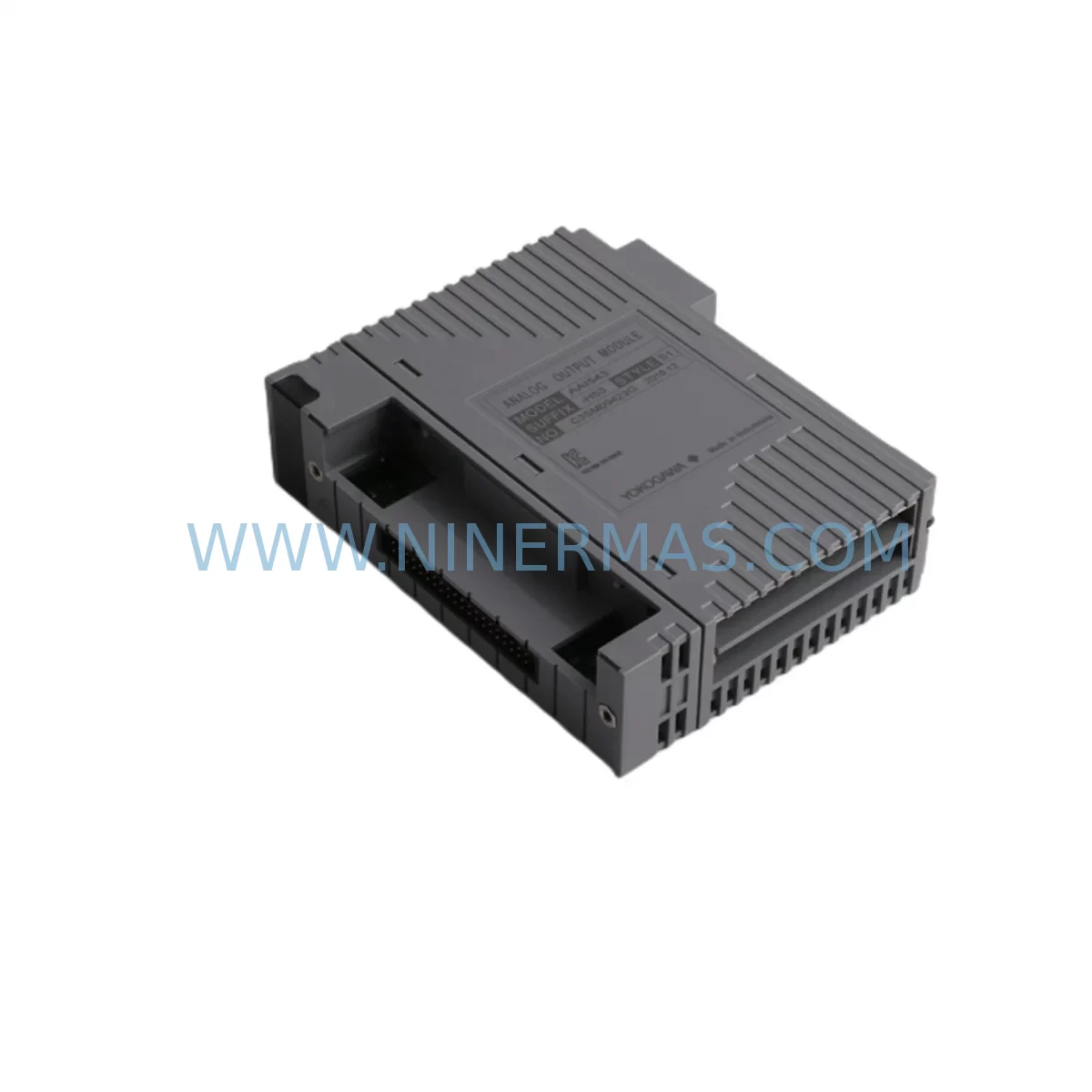
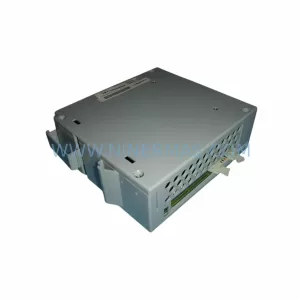
YOKOGAWA AAI543-H53 S1 Retrofit-Compatible Analog Input for Legacy
Verify the part, confirm the platform family, and move straight into quotation with the right commercial details.
RFQ Ready
- SKUAAI543-H53 S1
- CategoryDCS Distributed Control Systems
- BrandYokogawa
- SupportAvailability, lead time, condition, and shipping coordination
How Buyers Usually Use This Page
- Confirm the exact part number and platform family before sending the quote request.
- Use direct email when quantity, condition, and destination are already defined internally.
- Switch to the broader brand or category archive when you need alternates nearby.
Series Navigation
Move through the most common platform families behind this part.
Product RFQ
Send this part directly for quotation.
Include quantity, required condition, destination country, and target delivery timing. Current reference: YOKOGAWA AAI543-H53 S1 Retrofit-Compatible Analog Input for Legacy with SKU AAI543-H53 S1.
YOKOGAWA AAI543-H53 S1 Retrofit-Compatible Analog Input Module for Legacy CENTUM VP Systems
The YOKOGAWA AAI543-H53 S1 is a high-precision analog input module engineered for seamless integration into CENTUM VP distributed control system architectures. As legacy automation infrastructure ages and original spare parts reach end-of-life, the AAI543-H53 S1 has become a critical retrofit component for facilities seeking to extend the operational lifespan of their existing control platforms without committing to a full system overhaul. Whether you are managing a refinery, chemical plant, power generation facility, or continuous process line, this module delivers the signal accuracy and system compatibility required to maintain production continuity while modernizing your I/O layer.
Designed as a direct retrofit replacement for discontinued analog input cards within the CENTUM VP field control station (FCS) environment, the AAI543-H53 S1 supports standard 4–20 mA current loop inputs and is fully compatible with the CENTUM VP backplane bus architecture. Engineers undertaking legacy panel upgrades will find that this module slots into existing rack positions without requiring mechanical modification, significantly reducing installation time and minimizing the risk of wiring errors during changeover.
Upgrade Compatibility Table
| Parameter | AAI543-H53 S1 Specification | Retrofit Notes |
|---|---|---|
| Module Type | Analog Input (AI) | Direct replacement for legacy AI cards in CENTUM VP FCS racks |
| Signal Range | 4–20 mA / 1–5 V DC | Verify field wiring signal type before installation; no signal converter required for standard loops |
| Channel Count | 16 channels (isolated) | Confirm channel mapping matches existing I/O assignment in FCS configuration |
| Backplane Interface | CENTUM VP FCS bus | Compatible with standard CENTUM VP node units; verify node address assignment before hot-swap |
| Communication Protocol | Vnet/IP (internal FCS bus) | No protocol migration required; integrates natively with existing Vnet/IP topology |
| Power Supply | Supplied via backplane (24 V DC) | Confirm power budget of existing power supply module (e.g., PW481 or PW482) before adding modules |
| Installation Format | Rack-mount, plug-in card | Fits standard CENTUM VP node unit slots; no additional mounting hardware required |
| HMI Compatibility | CENTUM VP HIS (Human Interface Station) | Existing HMI faceplates and trend displays remain valid; tag re-mapping may be required if slot address changes |
| Programming Compatibility | Compatible with existing FCS function block logic | No recompilation required if module address is preserved; verify I/O builder settings in CENTUM VP Engineering Environment |
| Warranty | 12-Month Warranty | Covered from date of shipment; includes functional testing and burn-in verification before dispatch |
Retrofit Planning for Existing Automation Systems
A successful retrofit of the AAI543-H53 S1 into an operating CENTUM VP system requires careful pre-installation planning across several interdependent subsystems. Before scheduling a maintenance window, engineers should audit the existing node unit configuration to confirm available slot positions and verify that the installed power supply module — typically a PW481 or PW482 — has sufficient capacity to support the additional analog input load. Overloading the power rail is one of the most common causes of post-retrofit instability, and this check should be completed before any physical work begins.
Terminal wiring is the next critical checkpoint. The AAI543-H53 S1 connects to field instruments via a dedicated terminal board, and the wiring layout must be cross-referenced against the existing loop drawings to confirm that signal polarity, shielding practice, and cable routing are consistent with the module’s input specifications. In systems where the original terminal board has been in service for many years, it is advisable to inspect connector condition and replace corroded terminals before re-energizing the loop.
For facilities running mixed I/O architectures — for example, combining the AAI543-H53 S1 with analog output modules such as the AAO141-S or digital input cards like the ADV151-P — the I/O builder within the CENTUM VP Engineering Environment must be updated to reflect the new module’s slot address and channel configuration. Failure to synchronize the I/O builder with the physical hardware will result in communication faults at the FCS level and may trigger process alarms during startup.
Communication link integrity should also be verified as part of the retrofit plan. The CENTUM VP Vnet/IP network connects field control stations to the human interface station (HIS) and the engineering workstation. Any changes to node unit configuration — including module replacement — should be followed by a Vnet/IP diagnostic scan to confirm that all nodes are visible and that no address conflicts have been introduced. If the retrofit is being performed alongside a broader communication protocol migration, such as transitioning from legacy ESB-Bus to Vnet/IP, the AAI543-H53 S1’s native Vnet/IP compatibility makes it a natural fit for the upgraded network topology.
Where the retrofit involves expanding I/O capacity — for example, adding measurement points to an existing control loop or integrating new field instruments into an aging control cabinet — the AAI543-H53 S1 can be paired with signal isolators and marshalling panels to extend reach without compromising signal integrity. In applications where intrinsic safety barriers are required, confirm that the module’s input impedance is compatible with the selected barrier type before finalizing the design.
HMI screen updates are often overlooked during module replacement projects. If the AAI543-H53 S1 is installed in a different slot position than its predecessor, the tag addresses referenced in CENTUM VP HIS graphic displays will need to be updated to reflect the new I/O path. This is particularly important in facilities where operators rely on real-time trend displays and alarm summary screens that are directly linked to specific I/O tags. Coordinating HMI updates with the control system engineer before the maintenance window closes will prevent operator confusion during the post-retrofit startup phase.
Finally, if the retrofit is part of a broader control cabinet upgrade that includes replacing the node unit itself — for example, migrating from an older AFV10D field control unit to a current-generation AFC30D — the AAI543-H53 S1’s compatibility with the CENTUM VP platform ensures that existing function block programs can be migrated with minimal modification, preserving years of accumulated control logic and tuning parameters.
Downtime Control During System Migration
Minimizing unplanned downtime is the primary operational concern during any analog input module replacement in a live process environment. The AAI543-H53 S1 supports hot-swap installation in CENTUM VP systems equipped with redundant power and communication paths, allowing the module to be replaced without shutting down the entire field control station. However, the specific hot-swap procedure must be validated against the installed FCS firmware version and node unit type before execution — not all CENTUM VP configurations support live module replacement without a brief I/O interruption.
To protect existing program logic during the migration, it is strongly recommended to perform a full FCS backup using the CENTUM VP Engineering Environment before any hardware changes are made. This backup captures the current function block diagram, I/O assignments, tuning parameters, and alarm setpoints, providing a reliable restore point in the event that the retrofit introduces unexpected configuration conflicts. The backup file should be stored on both the engineering workstation and an offline archive medium before work begins.
Field control continuity can be maintained during the module swap by placing the affected control loops in manual mode at the HIS operator station. This prevents the FCS from generating spurious output signals to final control elements — such as control valves or variable speed drives — while the analog input channel is temporarily offline. Once the AAI543-H53 S1 is seated and the I/O builder configuration has been downloaded to the FCS, the loops can be returned to automatic mode in a controlled sequence, with the operator monitoring process variables at the HIS to confirm stable signal recovery.
Post-installation commissioning should include a channel-by-channel signal verification test, applying a known 4–20 mA reference signal to each input and confirming that the FCS reads the expected engineering unit value within the specified accuracy tolerance. Any channel that fails this test should be investigated for wiring faults, terminal board issues, or configuration errors before the loop is returned to service. Documenting the commissioning results provides a baseline for future maintenance and supports the 12-month warranty claim process if a module defect is identified after installation.
Retrofit Support FAQ
Q: Is the AAI543-H53 S1 a direct drop-in replacement for older CENTUM VP analog input modules?
A: In most cases, yes. The AAI543-H53 S1 is designed to fit standard CENTUM VP node unit slot positions and uses the same backplane bus interface as earlier-generation analog input cards. However, customers should confirm the specific slot type and node unit model before ordering to ensure full mechanical and electrical compatibility. Our technical team can assist with compatibility verification based on your existing system documentation.
Q: What pre-shipment testing is performed on the AAI543-H53 S1?
A: Every unit undergoes functional testing and burn-in verification before dispatch. This includes channel-by-channel signal accuracy checks across the full 4–20 mA input range, backplane communication verification, and visual inspection for mechanical integrity. A test report is available upon request and accompanies units supplied under formal purchase orders.
Q: What does the 12-month warranty cover?
A: The 12-month warranty covers manufacturing defects and functional failures under normal operating conditions, commencing from the date of shipment. It does not cover damage resulting from incorrect installation, overvoltage conditions, or unauthorized modification. Warranty claims are supported by our technical team and typically resolved through advance replacement to minimize customer downtime.
Q: How quickly can the AAI543-H53 S1 be shipped, and is stock available?
A: We maintain ready stock of the AAI543-H53 S1 to support urgent retrofit and breakdown replacement requirements. Standard lead time for in-stock units is 3–7 business days for international shipments. Express dispatch options are available for critical plant situations. Contact our sales team at sale@ninermas.com or +0086 187 5021 5667 to confirm current availability and arrange expedited delivery.
| Product Series | CENTUM VP |
|---|---|
| Country of Origin | JP |
Catalog Continuation
More Yokogawa modules in the catalog.
Use the brand lane to compare nearby part numbers, platform-adjacent modules, and other inquiry-ready listings before sending your final RFQ.
Catalog Continuation
Alternative parts within DCS Distributed Control Systems.
Stay inside the same system family when you need substitutes, adjacent modules, or a broader shortlist for procurement review.
SKU: High Performance Communication Controller
Honeywell 51401635-150 Service-Ready Spare for C300
SKU: 6DD2920-0AR2 6DD2920-OAR2
Siemens 6DD2920-0AR2 Service-Ready Spare Part for Industrial Maintenance