Original Industrial Spare Part
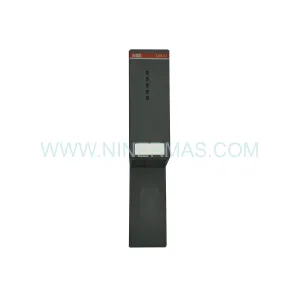
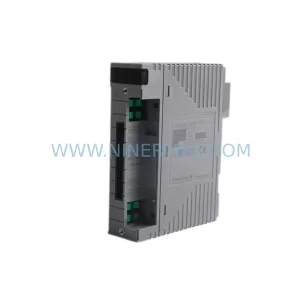
Yokogawa AAI143-S03 S1 Retrofit-Compatible Analog Input Module
Verify the part, confirm the platform family, and move straight into quotation with the right commercial details.
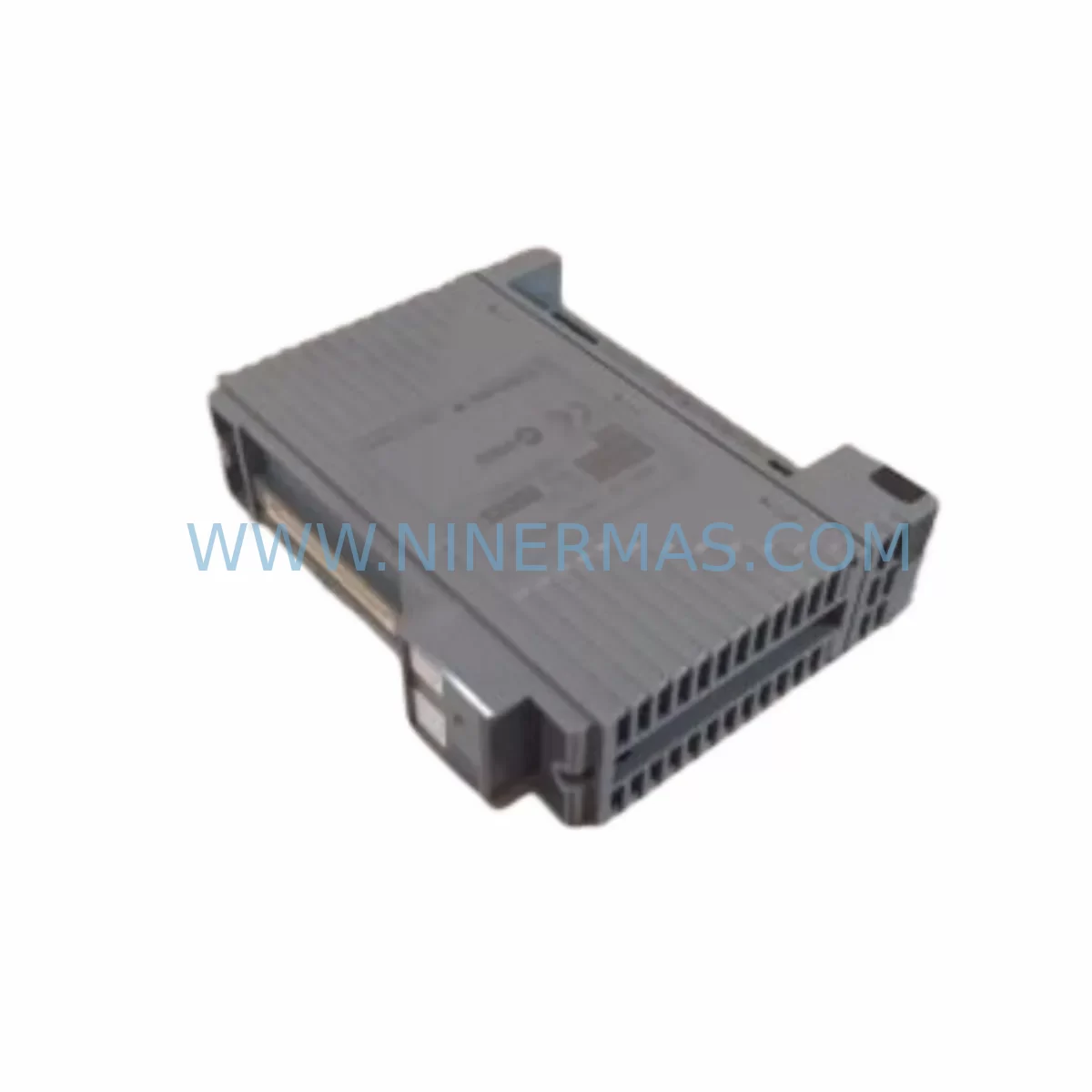
RFQ Ready
- SKUAAI143-S03 S1
- CategoryDCS Distributed Control Systems
- BrandYokogawa
- SupportAvailability, lead time, condition, and shipping coordination
How Buyers Usually Use This Page
- Confirm the exact part number and platform family before sending the quote request.
- Use direct email when quantity, condition, and destination are already defined internally.
- Switch to the broader brand or category archive when you need alternates nearby.
Series Navigation
Move through the most common platform families behind this part.
Product RFQ
Send this part directly for quotation.
Include quantity, required condition, destination country, and target delivery timing. Current reference: Yokogawa AAI143-S03 S1 Retrofit-Compatible Analog Input Module with SKU AAI143-S03 S1.
Yokogawa AAI143-S03 S1 Retrofit-Compatible Analog Input Module: Seamless Legacy System Upgrade
The Yokogawa AAI143-S03 S1 is a high-precision analog input module engineered for industrial process control environments, specifically designed to serve as a retrofit-compatible replacement within Yokogawa CENTUM VP and CENTUM CS 3000 distributed control system (DCS) architectures. As legacy automation infrastructure ages and original spare parts reach end-of-life, the AAI143-S03 S1 provides a reliable, tested, and immediately deployable solution for facilities seeking to extend the operational lifespan of their existing control platforms without committing to a full system overhaul.
For plant engineers and maintenance teams managing aging DCS installations, sourcing a verified replacement for discontinued I/O modules is one of the most time-sensitive challenges in industrial operations. The AAI143-S03 S1 addresses this directly — offering compatibility with the standard CENTUM VP I/O nest and node bus architecture, preserving existing field wiring terminations, and maintaining signal integrity across 4–20 mA analog input channels. Whether you are replacing a failed module on an active production line or building a strategic spare parts inventory to reduce future downtime risk, this module delivers the performance and compatibility your system demands.
Upgrade Compatibility Table
| Parameter | AAI143-S03 S1 Specification | Retrofit Notes |
|---|---|---|
| Compatible Platform | CENTUM VP, CENTUM CS 3000 | Verify FCS node type before installation |
| Signal Type | 4–20 mA Analog Input | Confirm field wiring polarity and shielding |
| Channel Count | 16 Channels (per module) | Match channel assignments in existing I/O map |
| Installation Interface | Standard CENTUM I/O Nest / Backplane Slot | Confirm slot address and nest bus compatibility |
| Communication Protocol | Yokogawa Node Bus (internal DCS bus) | No protocol migration required for same-platform swap |
| Power Supply Requirement | Supplied via I/O nest backplane | Verify nest power capacity before adding modules |
| Replacement for Discontinued Models | AAI143-S00, AAI143-S01, AAI143-S02 variants | Confirm suffix compatibility with system revision |
| Commissioning Requirement | Module address configuration via Engineering PC | Use CENTUM VP Builder or CS 3000 Engineering Tool |
| HMI Impact | No HMI screen changes required for direct swap | Verify tag assignments remain consistent |
| Warranty | 12-Month Warranty | Covered from date of shipment; includes functional testing |
Retrofit Planning for Existing Automation Systems
Successful integration of the AAI143-S03 S1 into an existing CENTUM VP or CS 3000 system requires a structured pre-installation assessment. Before removing the failed or end-of-life module, engineers should document the current I/O nest slot assignment, confirm the node bus address configured in the FCS (Field Control Station), and verify that the replacement module’s suffix revision (S1) is accepted by the installed system software version. In most CENTUM VP installations, the AAI143-S03 S1 is a direct slot-for-slot replacement, requiring no changes to the existing terminal block wiring or field cable routing.
Power budget verification is a critical step often overlooked during emergency replacements. The I/O nest — typically an ANB10D or ANB11D nest unit — has a defined maximum power draw per slot. When adding or replacing modules such as the AAI143-S03 S1 alongside other active modules like the AAI835-S or AAI841-S analog output modules, the cumulative power consumption must remain within the nest’s rated capacity. Exceeding this limit can cause intermittent module faults or communication dropouts on the node bus.
Terminal block wiring should be inspected and re-torqued during any module swap. The AAI143-S03 S1 uses the standard CENTUM terminal assembly, compatible with the ATD series terminal boards. If the existing installation uses an ATD5D or ATD5S terminal board, no rewiring is required — the field cables connect directly to the same terminal positions. For installations where the terminal board itself has been damaged or corroded, replacement with a new ATD5D unit is recommended before commissioning the new analog input module.
In systems where the CENTUM CS 3000 is being partially migrated toward CENTUM VP, the AAI143-S03 S1 can serve as a bridging component — maintaining analog input functionality on legacy nests while other parts of the control system are upgraded. During this transition, communication modules such as the ACM12 or ESB bus coupler modules may need to be reconfigured to recognize the updated I/O map. Engineers should also verify that the CENTUM VP Builder project file accurately reflects the physical slot assignments of all AAI143-series modules across each FCS node.
For facilities managing a broader control cabinet upgrade — including replacement of the AIP588 power supply module or the addition of new I/O nests — the AAI143-S03 S1 fits naturally into the expanded I/O architecture without requiring changes to the existing PLC ladder logic or function block diagrams. Signal isolators, where used between field instruments and the DCS input terminals, should be verified for compatibility with the module’s input impedance specifications to avoid signal offset errors after replacement.
Programming cable access via the CENTUM VP Engineering PC is required to complete the module address assignment and perform a final online verification. The engineering tool will confirm that the AAI143-S03 S1 is recognized on the node bus and that all 16 analog input channels are reporting correctly before the system is returned to automatic control mode.
Downtime Control During System Migration
Minimizing production downtime during a DCS module replacement is a primary concern for any plant operations team. The AAI143-S03 S1 is pre-tested and function-verified prior to shipment, which eliminates the risk of receiving a defective replacement unit and having to repeat the shutdown sequence. Each module undergoes channel-by-channel signal verification across the full 4–20 mA input range before packaging, ensuring that the unit will perform correctly from the moment it is installed.
For planned maintenance windows, the recommended approach is to prepare the replacement AAI143-S03 S1 in advance — confirming the node bus address, pre-labeling the terminal connections, and staging the engineering PC with the correct project file loaded. This preparation reduces the actual installation time to under 30 minutes in most cases, allowing the control system to be returned to service well within a standard shift maintenance window.
In emergency replacement scenarios where the failed module has caused a process shutdown, the AAI143-S03 S1’s compatibility with the existing CENTUM VP or CS 3000 configuration means that no program modifications are required. The original function block logic, PID control parameters, alarm setpoints, and HMI tag assignments remain intact. The engineering tool simply needs to confirm module recognition on the node bus, after which the FCS can be restarted and the process returned to automatic control without any re-engineering of the control strategy.
Maintaining a strategic inventory of one or two AAI143-S03 S1 modules as on-site spares is strongly recommended for facilities where analog input failures would result in significant production losses. Given the 12-month warranty coverage from date of shipment and the module’s long shelf life when stored in appropriate conditions, holding spare inventory is a cost-effective risk mitigation strategy compared to the cost of unplanned downtime.
Retrofit Support FAQ
Q1: Is the AAI143-S03 S1 a direct replacement for earlier AAI143 suffix variants?
In most CENTUM VP and CS 3000 installations, the S1 suffix revision is backward compatible with S00 and S02 variants in the same slot position. However, it is recommended to verify the system software revision level using the CENTUM VP Builder engineering tool before installation, as certain early CS 3000 revisions may require a firmware acknowledgment step during commissioning.
Q2: Will I need to rewire the field terminals when replacing the module?
No rewiring is required if the existing ATD series terminal board is in good condition. The AAI143-S03 S1 uses the same terminal board interface as previous AAI143 variants. Simply disconnect the terminal board from the old module, install the new module in the same nest slot, and reconnect the terminal board. Verify terminal torque values and inspect for corrosion before reconnecting.
Q3: How is the module commissioned after installation?
After physical installation, connect the CENTUM VP Engineering PC to the FCS via the engineering network. Open the project file and perform an online module recognition scan. The AAI143-S03 S1 should appear automatically in the correct slot position. Verify all 16 channel readings against known field instrument values before releasing the system to automatic control. Total commissioning time is typically 20–45 minutes depending on the number of channels requiring verification.
Q4: What does the 12-month warranty cover, and is in-stock inventory available?
The 12-month warranty covers manufacturing defects and functional failures under normal operating conditions, commencing from the date of shipment. Each unit is function-tested prior to dispatch. In-stock inventory is maintained to support urgent replacement requirements, with same-day or next-business-day dispatch available for confirmed orders. Contact our team to verify current stock availability and lead times for your specific quantity requirement.
| Product Series | CENTUM VP |
|---|---|
| Country of Origin | JP |
Catalog Continuation
More Yokogawa modules in the catalog.
Use the brand lane to compare nearby part numbers, platform-adjacent modules, and other inquiry-ready listings before sending your final RFQ.
Catalog Continuation
Alternative parts within DCS Distributed Control Systems.
Stay inside the same system family when you need substitutes, adjacent modules, or a broader shortlist for procurement review.
SKU: PM632 3BSE005831R1
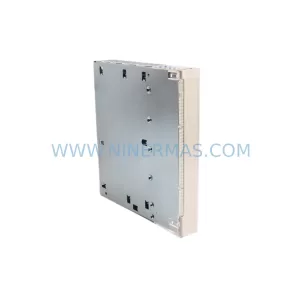
ABB PM632 3BSE005831R1 Retrofit-Compatible Processor for Legacy Systems
SKU: High Performance Communication Controller
Honeywell 51401635-150 Service-Ready Spare for C300