
Description
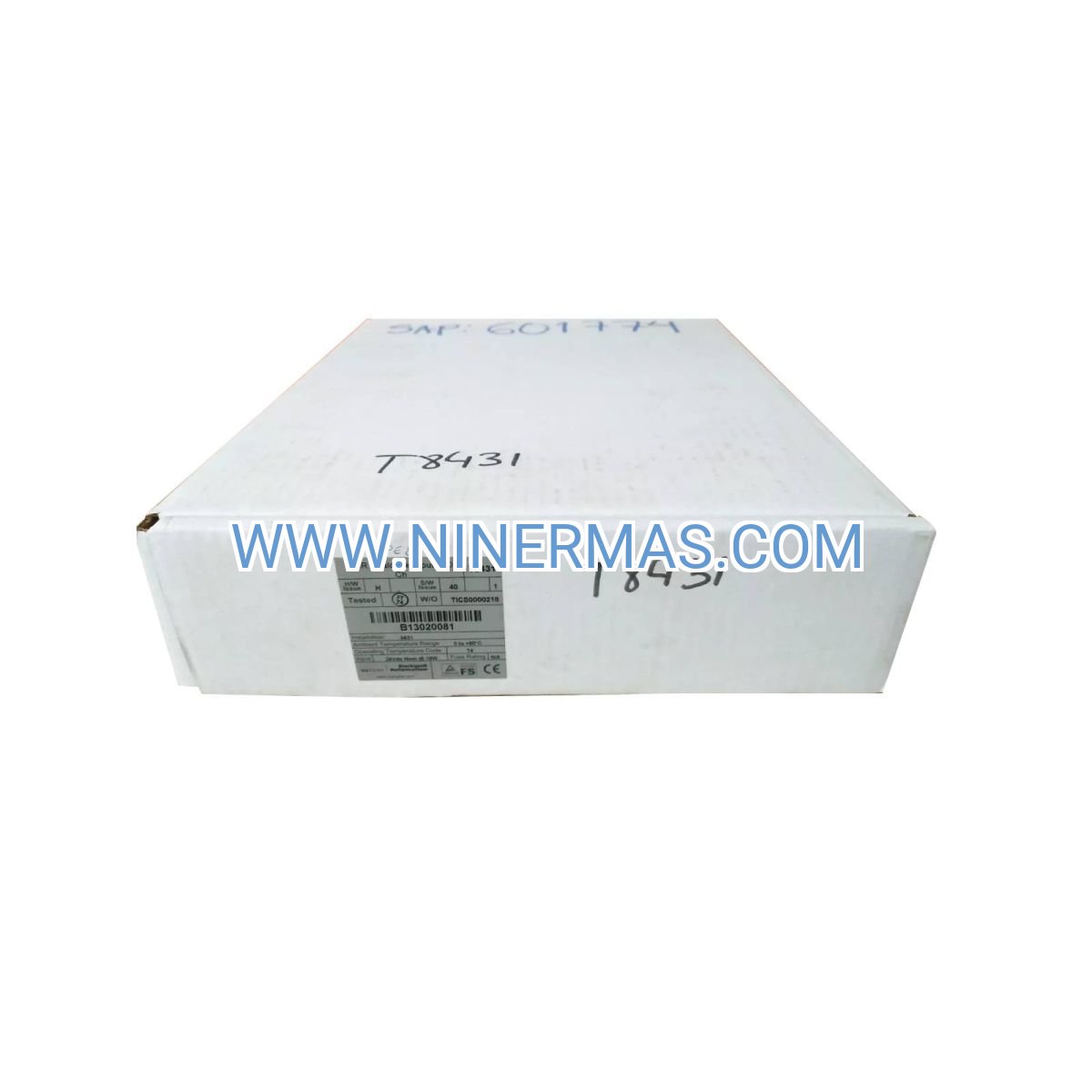
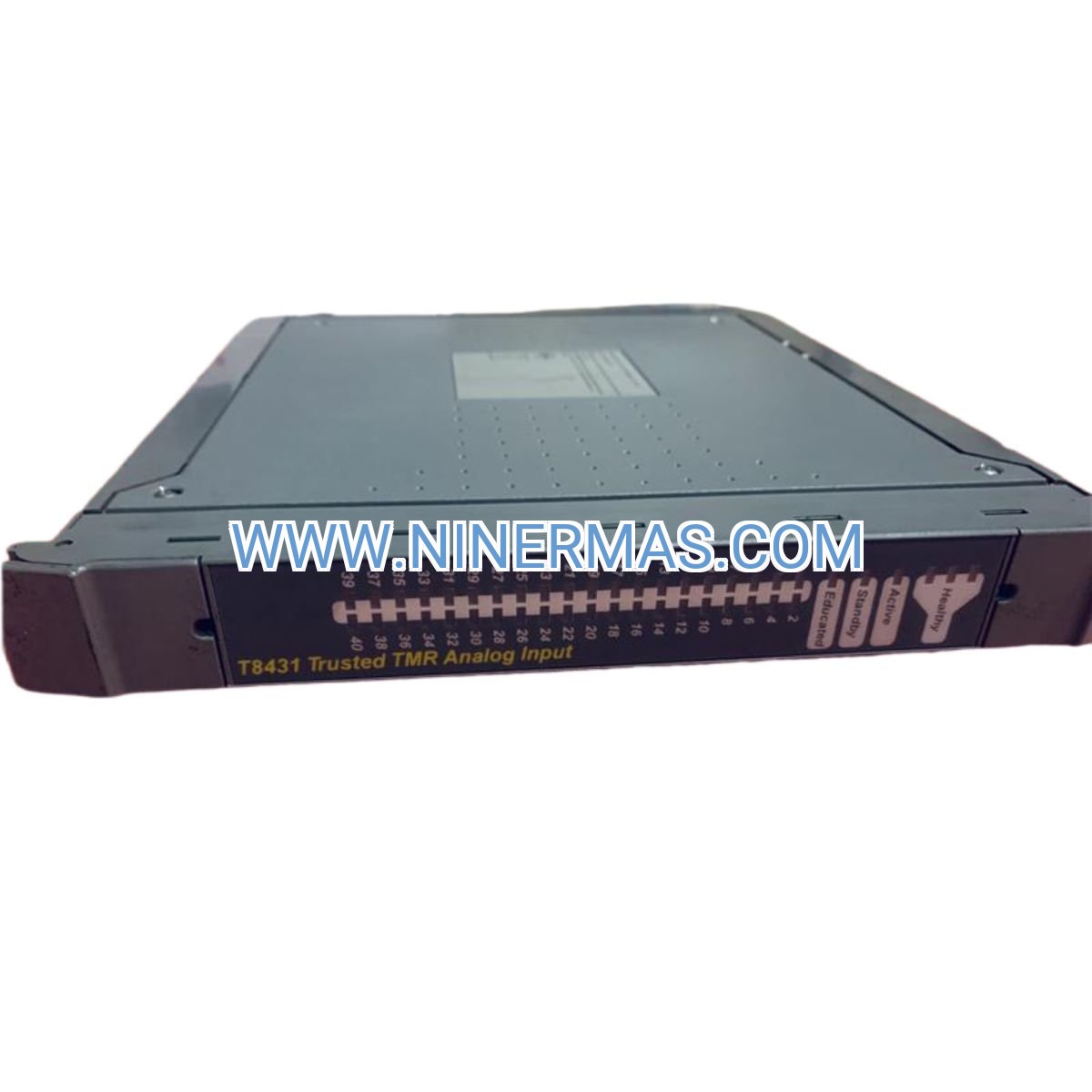
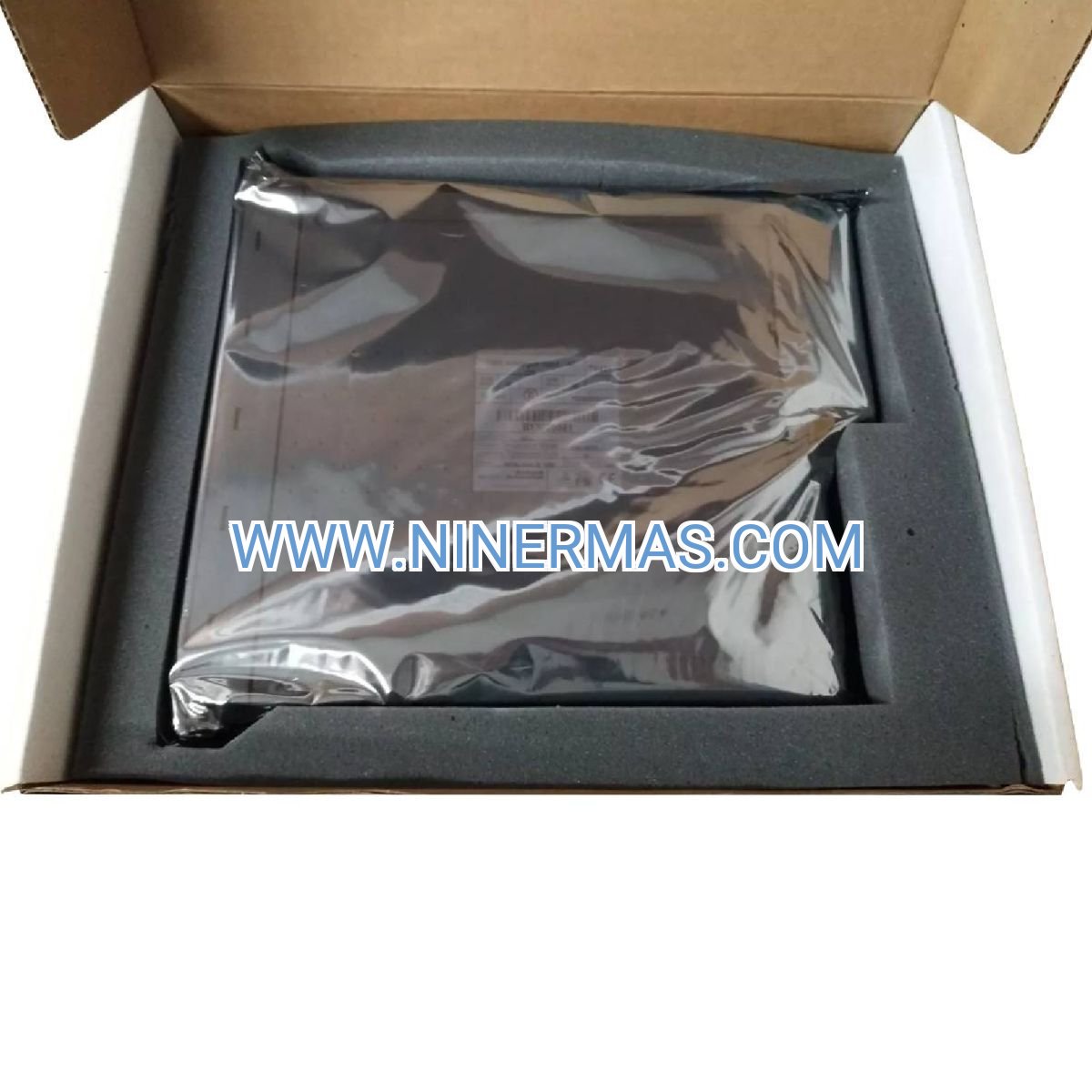
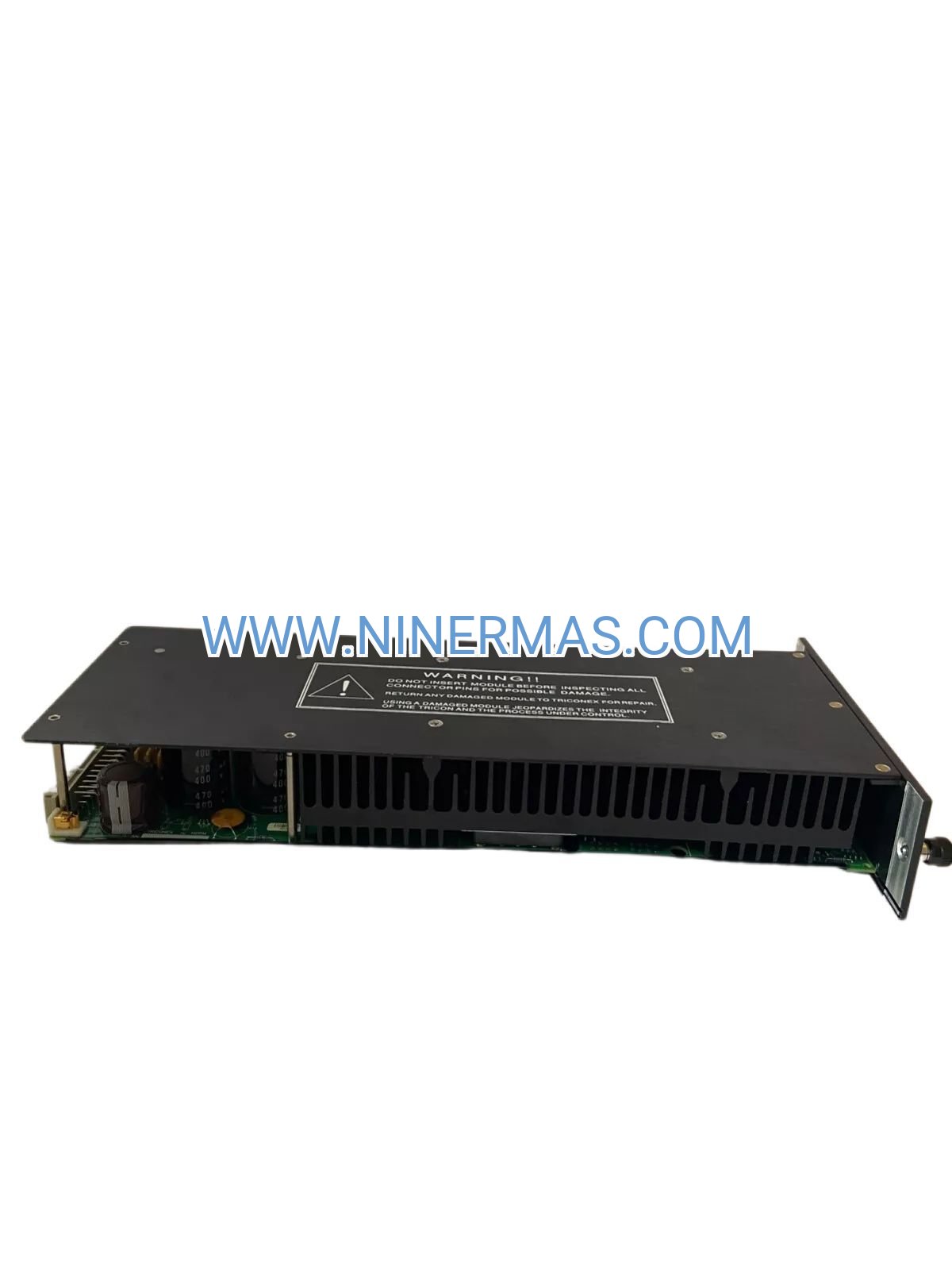
T8431C Triconex TMR Analog Input Module (Industrial-Grade Safety I/O)
The T8431C represents Schneider Electric's flagship solution for fault-tolerant analog signal acquisition in safety-critical environments. Engineered with Triple Modular Redundant architecture, this 24 Vdc input module delivers continuous operation even during component failures, making it the cornerstone of emergency shutdown systems across oil refineries, chemical plants, and power generation facilities. Designed for engineers who demand zero-compromise reliability, the T8431C transforms unpredictable process variables into actionable safety decisions through its 40-channel sourcing input design.
Industrial operators face mounting pressure to maintain uptime while meeting stringent safety standards. Traditional single-channel input modules create vulnerability points where sensor failures can trigger false alarms or, worse, mask genuine hazards. The T8431C eliminates this risk through continuous self-diagnostics and automatic fault correction, ensuring your safety instrumented systems maintain SIL 3 integrity throughout their operational lifecycle. Whether you're retrofitting legacy Triconex platforms or designing greenfield installations, this module provides the foundation for regulatory compliance and operational excellence.
With hot-swap capability and comprehensive diagnostic reporting, the T8431C minimizes maintenance windows while maximizing system visibility. Each of the 40 sourcing inputs undergoes independent TMR processing, delivering 16-bit resolution with built-in noise rejection for accurate measurement in electrically harsh environments. From subsea control systems to pharmaceutical batch reactors, this module serves as the trusted interface between your field instrumentation and critical safety logic.
Core Capabilities & Business Value
→ Triple Modular Redundant Processing
Three independent microprocessors analyze each input signal simultaneously, voting out erroneous readings in real-time. This architecture eliminates single points of failure while maintaining continuous operation during component degradation, reducing unplanned shutdowns by up to 95% compared to simplex systems.
✓ 40 Sourcing Analog Inputs
High-density channel configuration reduces cabinet footprint and wiring complexity. Sourcing input design simplifies sensor integration with two-wire transmitters, cutting installation costs by 30-40% versus sinking input alternatives while improving signal integrity in long cable runs.
✓ SIL 3 Certified Safety Performance
IEC 61508 certification validates systematic capability for the highest safety integrity level in process industries. Proven failure rates and diagnostic coverage enable compliance with API, OSHA PSM, and international safety regulations without extensive validation testing.
→ Hot-Swappable Maintenance
Field-replaceable design allows module exchange during live operation without process interruption. Automatic configuration download from the controller eliminates manual programming, reducing mean time to repair from hours to minutes and preserving production schedules.
✓ Extended Temperature Range (-40°C to +70°C)
Military-grade component selection ensures reliable operation in extreme climates, from Arctic gas processing to Middle Eastern desert installations. Conformal coating protects against humidity, salt spray, and chemical exposure in offshore and coastal environments.
→ 16-Bit Resolution with Advanced Filtering
High-precision analog-to-digital conversion captures subtle process variations critical for early fault detection. Integrated signal conditioning rejects electromagnetic interference from VFDs and welding equipment, maintaining measurement accuracy within ±0.1% of span.
Industry Applications & Problem Solving
Upstream Oil & Gas Production
Offshore platforms deploy the T8431C for wellhead pressure monitoring and separator level control in emergency shutdown systems. The module's TMR architecture prevents spurious trips that cost operators $500K-$2M per incident, while its marine-rated construction withstands corrosive saltwater environments and vibration from drilling operations.
Refining & Petrochemical Processing
Crude distillation units and catalytic crackers rely on T8431C modules for furnace temperature monitoring and reactor pressure interlocks. The 40-channel density consolidates multiple measurement points into single I/O racks, reducing panel space requirements by 60% while simplifying loop testing during turnarounds.
Power Generation & Cogeneration
Combined-cycle plants integrate T8431C modules into turbine control systems for flame detection, bearing temperature monitoring, and steam pressure protection. Hot-swap capability enables preventive maintenance during low-demand periods without forcing unit outages, preserving capacity payments and grid reliability commitments.
Chemical Manufacturing & Specialty Materials
Batch reactors handling exothermic processes use T8431C inputs for multi-point temperature profiling and pressure relief valve monitoring. The module's fast scan rates (typically 10-50ms) detect runaway reactions before thermal excursions exceed safe operating limits, protecting personnel and capital equipment.
Pharmaceutical & Biotechnology
Cleanroom fermentation systems leverage T8431C modules for dissolved oxygen measurement and pH control in bioreactor safety circuits. SIL 3 certification supports FDA 21 CFR Part 11 compliance while TMR diagnostics provide audit trails for batch record documentation and regulatory inspections.
Technical Specifications & Selection Criteria
| Parameter | Specification |
|---|---|
| Input Channels | 40 sourcing analog inputs (TMR architecture) |
| Nominal Voltage | 24 Vdc (18-32 Vdc operating range) |
| Input Configuration | Sourcing (positive logic) |
| Resolution | 16-bit ADC (0.0015% of full scale) |
| Accuracy | ±0.1% of span (including linearity, repeatability) |
| Update Rate | Configurable 10-100ms per channel |
| Isolation | 1500 Vac channel-to-backplane, 500 Vac channel-to-channel |
| Operating Temperature | -40°C to +70°C (-40°F to +158°F) |
| Storage Temperature | -40°C to +85°C (-40°F to +185°F) |
| Humidity | 5% to 95% RH non-condensing |
| Safety Certification | SIL 3 per IEC 61508, TÜV certified |
| Hazardous Area | Class I Division 2 / ATEX Zone 2 approved |
| Dimensions | Standard Triconex chassis slot (single-width) |
| Weight | 1.3 kg (2.87 lbs) |
| Power Consumption | 12W typical, 15W maximum |
Selection Guidelines: Choose the T8431C when your application requires SIL 3 safety integrity with high channel density. For lower channel counts (8-16 inputs), consider the T8110C or T8111C alternatives. If your sensors use sinking output configuration, specify the T8432C sinking input variant. Verify compatibility with your Triconex controller generation (Tricon, Trident, or Tri-GP platforms) before ordering. For applications requiring intrinsic safety barriers in Zone 0/1 hazardous areas, consult factory application engineers for barrier selection and wiring diagrams.
Advanced Integration Features
Seamless Triconex Ecosystem Compatibility
The T8431C auto-configures within TriStation 1131 programming environment, inheriting tag names, engineering units, and alarm setpoints from your safety logic database. Native support for HART-over-analog enables simultaneous process variable measurement and smart transmitter diagnostics without additional hardware, reducing commissioning time by 40% compared to discrete HART multiplexers.
Predictive Maintenance Diagnostics
Built-in health monitoring tracks signal quality metrics including noise levels, drift trends, and loop resistance. Diagnostic alarms provide early warning of sensor degradation, wiring faults, or power supply issues before they impact safety system availability. Integration with Schneider Electric's EcoStruxure platform enables cloud-based analytics for fleet-wide performance benchmarking.
Cybersecurity Hardening
Firmware authentication and encrypted configuration downloads protect against unauthorized modifications in connected industrial environments. The module's isolated architecture prevents lateral movement of cyber threats between field networks and safety logic, supporting IEC 62443 security level requirements for critical infrastructure protection.
Delivery Timeline & Service Commitments
Standard Lead Time: 3-5 business days for in-stock units; 4-6 weeks for factory-fresh orders with full traceability documentation
Expedited Service: Next-flight-out available for emergency replacements (subject to inventory availability)
Warranty Coverage: 12 months comprehensive warranty covering manufacturing defects and performance deviations
Technical Support: Lifetime application engineering assistance including loop design review, configuration validation, and troubleshooting guidance
Documentation Package: Includes installation manual, wiring diagrams, TriStation configuration examples, and SIL certification reports
Frequently Asked Questions
How does TMR voting improve safety system reliability compared to dual-redundant designs?
Triple Modular Redundancy uses three independent processing channels with majority voting, allowing the system to identify and isolate faulty components automatically. Unlike dual-redundant (1oo2) architectures that require manual intervention when channels disagree, TMR continues operating with full diagnostic coverage even after a single failure. This reduces spurious trip rates by 10-100x while maintaining SIL 3 integrity, critical for applications where false shutdowns carry severe economic or safety consequences.
Can I mix T8431C modules with legacy Triconex I/O in the same chassis?
Yes, the T8431C maintains backward compatibility with earlier Triconex analog input modules within Tricon and Trident controllers. However, verify your controller firmware revision supports mixed I/O configurations—some early Tricon versions require firmware updates for full T8431C feature support. Consult Schneider Electric's compatibility matrix or contact our technical team with your controller serial number for specific guidance.
What field wiring practices optimize signal integrity for the 40 sourcing inputs?
Use shielded twisted-pair cable (Belden 9841 or equivalent) with shields grounded at the module end only to prevent ground loops. Maintain minimum 6-inch separation from AC power cables and route I/O wiring in dedicated conduit separate from motor control circuits. For cable runs exceeding 300 meters, specify 4-20mA transmitters with HART communication to compensate for voltage drop. The module's 18-32 Vdc input range provides margin for typical loop resistance, but calculate worst-case voltage drop during design validation.
Does the T8431C support remote I/O configurations for distributed control architectures?
The T8431C operates exclusively in local chassis configurations within Triconex main processors or expansion racks. For remote I/O applications, consider Triconex's RXM or EICM communication modules paired with remote I/O chassis. These systems extend TMR architecture over fiber optic or Ethernet networks up to 10km, ideal for pipeline monitoring or multi-unit plant layouts where centralized safety logic controls distributed field equipment.
What calibration intervals does Schneider Electric recommend for maintaining SIL 3 certification?
The T8431C module itself requires no periodic calibration—factory calibration remains stable throughout the module's operational life. However, field transmitters and sensors connected to the module should follow manufacturer-recommended calibration schedules (typically 12-24 months for process transmitters). The module's diagnostic capabilities detect sensor drift and out-of-range conditions, but cannot compensate for systematic sensor errors. Maintain calibration records for connected instruments as part of your safety system proof test documentation.
How do I size power supply capacity when adding T8431C modules to existing Triconex systems?
Each T8431C draws maximum 15W from the chassis backplane. Sum the power consumption of all installed modules and compare against your power supply rating (typically 150W for standard Triconex chassis). Include 20% margin for inrush current during hot-swap operations. If approaching power supply limits, consider upgrading to high-capacity power modules (PS3701/PS3702) or distributing I/O across multiple chassis with dedicated supplies. Our application engineers can perform load calculations based on your specific configuration.
Take the Next Step
Ready to enhance your safety instrumented system with proven TMR technology? Our technical sales team can provide application-specific recommendations, compatibility verification, and competitive quotations within 24 hours. Contact us today to discuss your project requirements or request detailed engineering specifications.
© 2026 NINERMAS COMPANY LIMITED. All rights reserved.
Original Source: https://ninermas.com
Contact: sale@ninermas.com | +0086 187 5021 5667
Related products

Contact Info
-
Address:22 / F, South Wo Hang building, 148 Wing Lok Street, Sheung Wan, Western District, Hong Kong
-
Phone:+8618750215667
-
Email: