Description
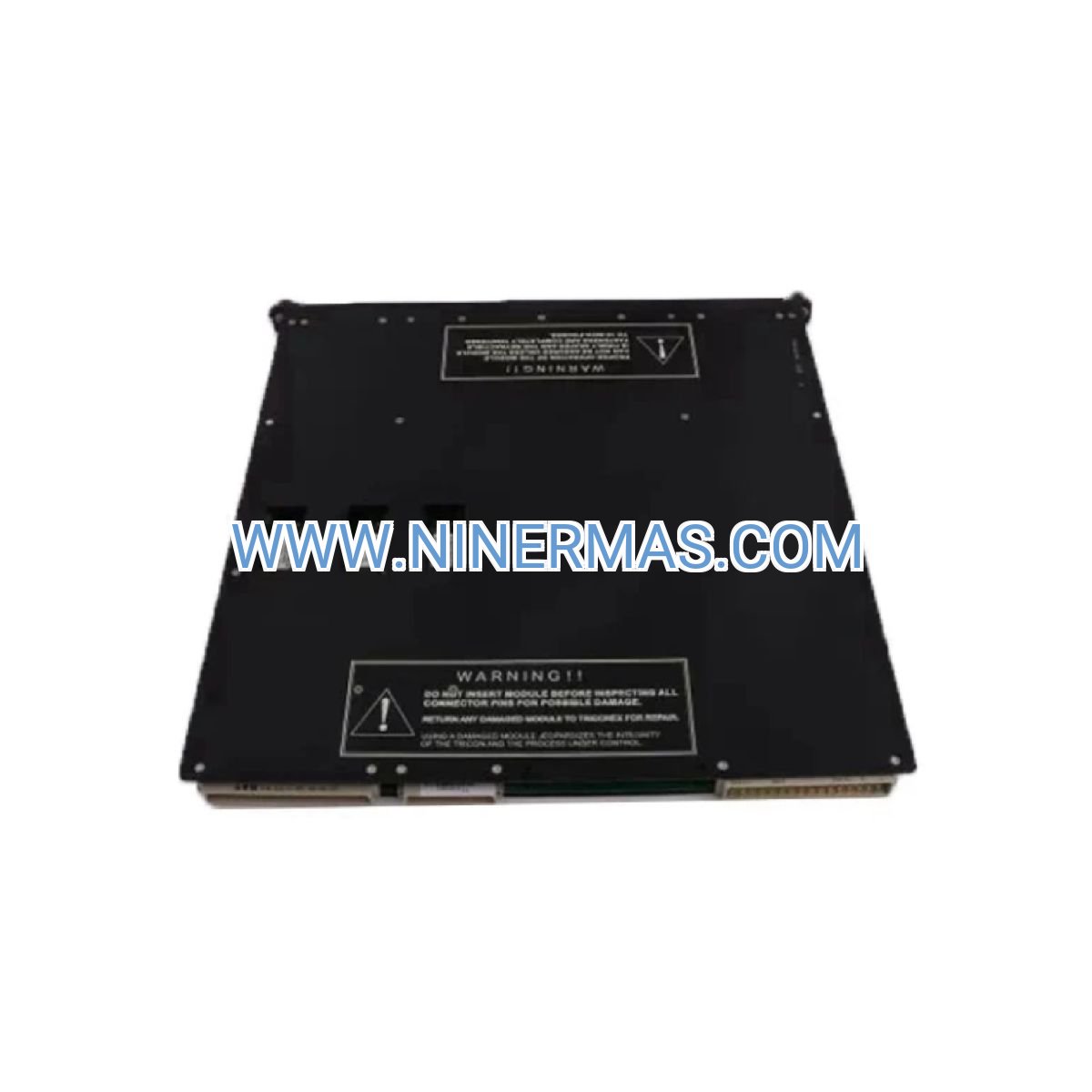
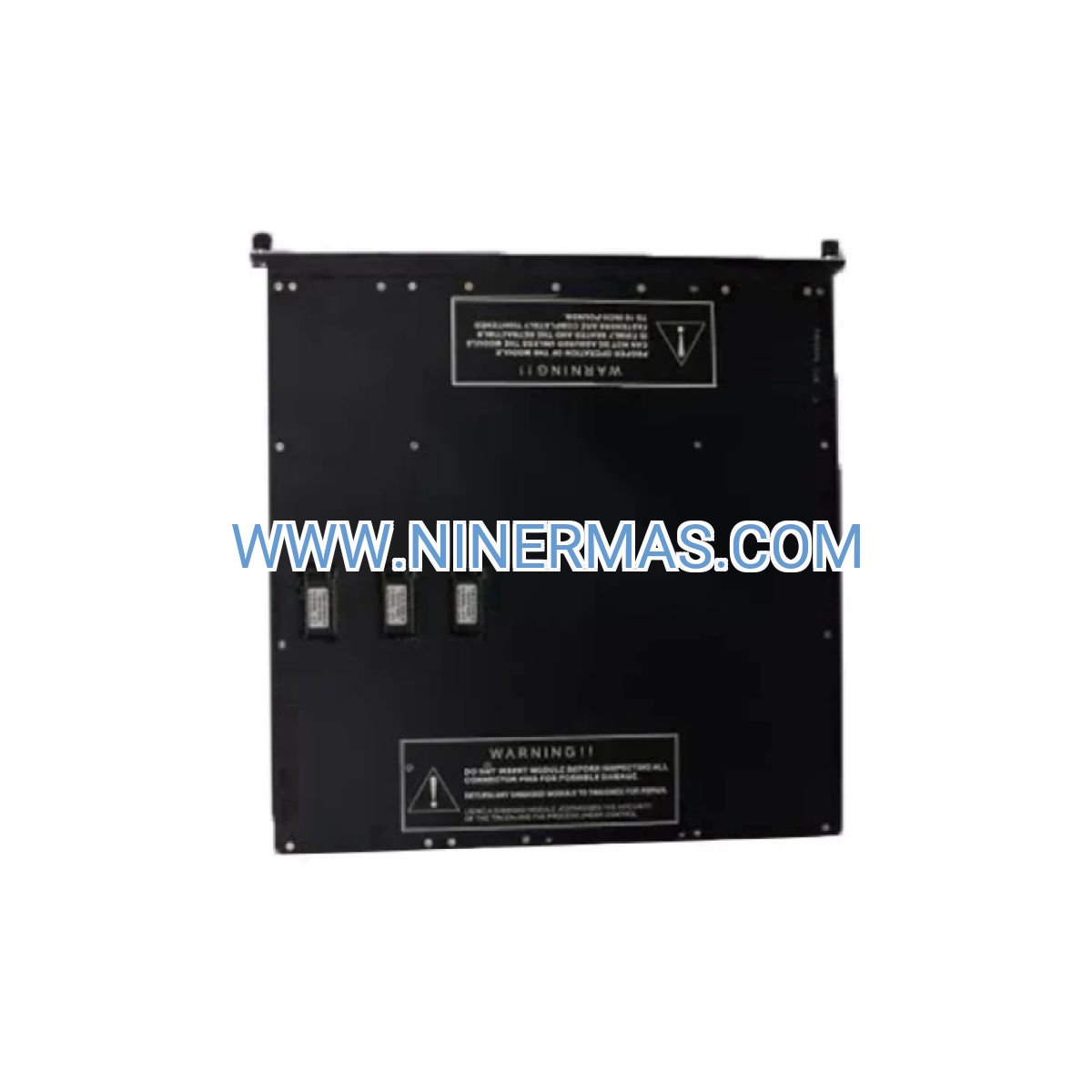
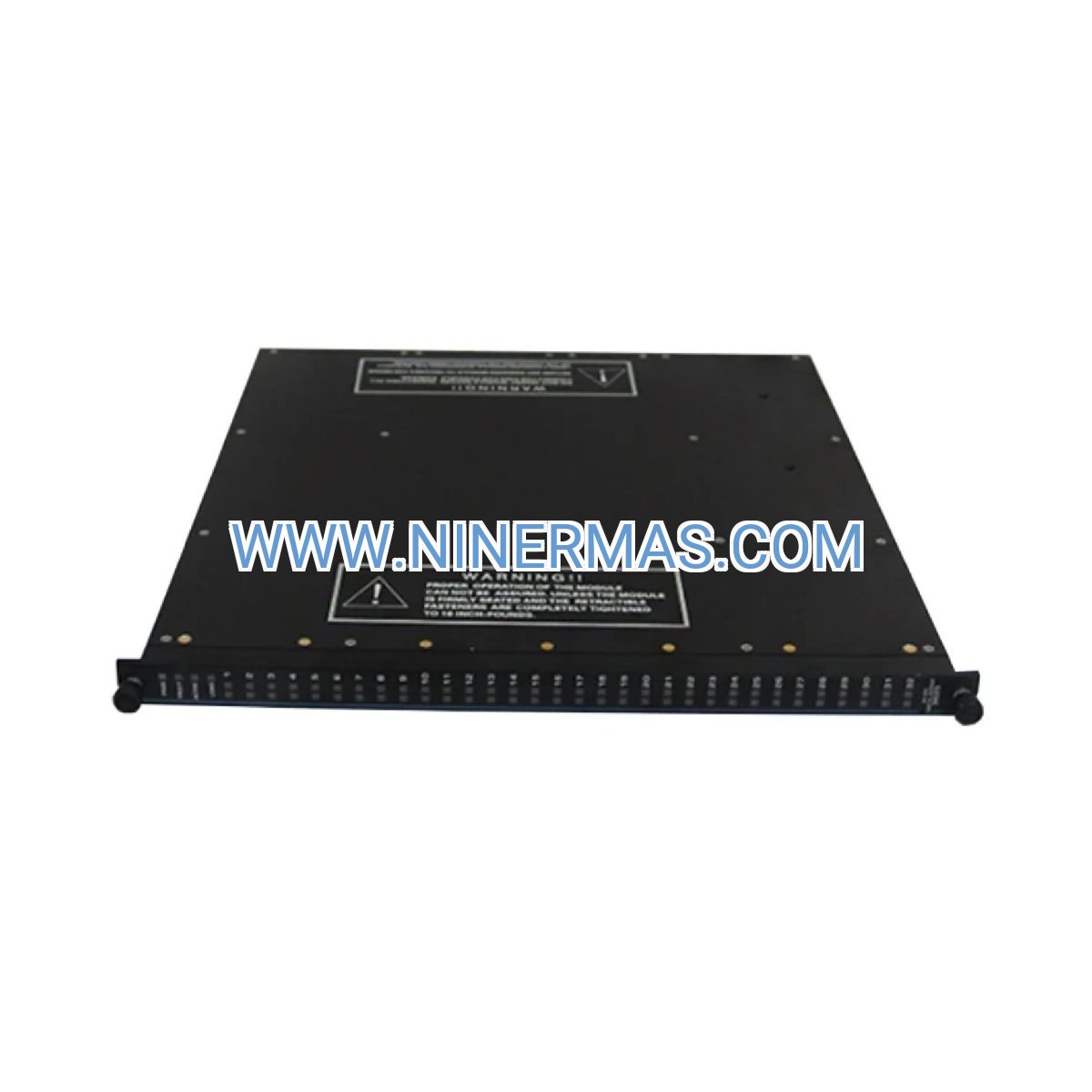
AP3101 Triconex Communication Module (Industrial-Grade TMR Interface)
The AP3101 represents Triconex's advanced approach to safety-critical data transmission, delivering triple-modular redundant (TMR) communication architecture for process industries where system availability directly impacts personnel safety and asset protection. This module serves as the intelligent gateway between Triconex safety controllers and distributed field devices, SCADA networks, and third-party control systems.
Engineered for oil & gas refineries, chemical processing plants, power generation facilities, and offshore platforms, the AP3101 addresses the fundamental challenge of maintaining deterministic communication under fault conditions. When conventional communication modules fail, the AP3101's voting logic automatically isolates faulty channels while sustaining uninterrupted data flow—eliminating single points of failure that could compromise emergency shutdown sequences or fire detection networks.
With SIL 3 certification per IEC 61508 and proven MTBF exceeding 100,000 hours, this module transforms communication reliability from a vulnerability into a competitive advantage. Operators gain the confidence to extend maintenance intervals, reduce spare inventory costs, and achieve regulatory compliance without sacrificing operational flexibility.
Core Features & Benefits
→ Triple Modular Redundancy (TMR) Architecture
Three independent communication processors execute identical operations simultaneously, with majority voting logic detecting and masking transient faults. Business value: Achieve 99.99% communication availability even during component failures, reducing unplanned shutdowns by up to 40%.
→ Hot-Swappable Field Replacement
Replace failed modules during live operation without interrupting safety functions or requiring system shutdown. Business value: Eliminate planned downtime windows for maintenance, saving $15,000-$50,000 per avoided shutdown event in typical process facilities.
→ Multi-Protocol Support (Triconex TriStation + Modbus TCP/IP)
Native integration with TriStation engineering software plus industry-standard Modbus for third-party HMI/SCADA connectivity. Business value: Reduce integration engineering costs by 30% compared to custom protocol development.
✓ Cybersecurity-Hardened Design
AES-256 encrypted data streams, role-based access control, and audit logging meet IEC 62443 industrial cybersecurity standards. Business value: Protect critical infrastructure from unauthorized access while maintaining compliance with NERC CIP and API 1164 requirements.
✓ Built-In Diagnostic Intelligence
Real-time health monitoring with LED status indicators and remote diagnostic registers accessible via OPC UA/DA servers. Business value: Reduce mean time to repair (MTTR) by 50% through predictive maintenance alerts.
✓ Extended Temperature Range (-40°C to +70°C)
Operates reliably in harsh environments including outdoor enclosures, offshore platforms, and desert installations. Business value: Eliminate costly HVAC systems in remote locations, reducing total cost of ownership by 15-25%.
Typical Application Scenarios
Emergency Shutdown (ESD) Systems in Refineries
The AP3101 coordinates multi-stage shutdown sequences across distributed field devices when hazardous conditions are detected. In a typical refinery ESD application, the module manages communication between 50-200 safety I/O points, transmitting critical trip signals with deterministic latency under 10 milliseconds. This prevents catastrophic events like overpressure ruptures or toxic gas releases that could result in $10M+ losses and regulatory penalties.
Fire & Gas Detection Networks in Offshore Platforms
Offshore installations deploy the AP3101 to link flame detectors, gas sensors, and deluge systems in Zone 2 hazardous areas. The module's ATEX/IECEx certification and conformal coating withstand salt spray, vibration, and temperature cycling. Operators achieve 24/7 monitoring of 100+ detection points with automatic failover, meeting API RP 14C safety requirements while reducing false alarm rates by 60%.
Burner Management Systems (BMS) in Power Plants
Combined-cycle power plants utilize the AP3101 for flame monitoring and fuel valve control in gas turbine burners. The module's TMR architecture ensures continuous communication during single-channel failures, preventing nuisance trips that cost $500,000+ per event in lost generation revenue. Integration with plant DCS systems enables centralized monitoring without compromising safety layer independence.
Turbomachinery Protection in Compressor Stations
Natural gas pipeline compressor stations rely on the AP3101 to interface vibration sensors, temperature probes, and emergency trip valves protecting multi-million-dollar turbomachinery assets. The module's 100 Mbps data transfer rate supports high-speed vibration analysis (up to 25.6 kHz sampling) for early detection of bearing failures, reducing unplanned outages by 35%.
SCADA Integration for Multi-Site Operations
Chemical manufacturers with distributed production facilities use the AP3101 to bridge Triconex safety controllers to enterprise SCADA networks. Secure data tunneling and protocol conversion enable real-time visibility into safety system status across 10-50 remote sites, improving corporate safety KPI reporting and regulatory audit readiness.
Technical Parameters & Selection Guide
| Parameter | Specification | Selection Criteria |
|---|---|---|
| Communication Architecture | Triple Modular Redundant (TMR) | Required for SIL 3 applications per IEC 61508 |
| Supported Protocols | Triconex TriStation, Modbus TCP/IP | Choose based on HMI/SCADA vendor compatibility |
| Data Transfer Rate | Up to 100 Mbps | Sufficient for 118 I/O modules per chassis |
| Network Topology | Dual Ethernet ports (ring/parallel) | Implement ring topology for network-level redundancy |
| Operating Temperature | -40°C to +70°C | Verify against site ambient conditions |
| Power Consumption | 12W typical, 15W max | Calculate total chassis power budget |
| MTBF | >100,000 hours | Factor into spare parts strategy |
| Certifications | SIL 3, ATEX/IECEx Zone 2 | Match to hazardous area classification |
| Firmware Compatibility | Tricon v9.x and later | Verify existing system firmware version |
Selection Recommendations: For new SIL 3 safety system installations, the AP3101 provides optimal cost-performance balance when managing 30-118 I/O modules. For smaller systems (<30 modules), consider the Triconex 4351B with integrated dual Ethernet. For legacy system upgrades, verify firmware compatibility with existing Tricon controllers—systems running firmware older than v9.0 may require controller upgrades before AP3101 deployment.
Extended Functions
Industrial IoT Integration: The AP3101 supports OPC UA server functionality (via TriStation gateway), enabling secure data exchange with cloud-based predictive analytics platforms. Customers leverage this capability to implement condition-based maintenance programs, reducing maintenance costs by 20-30% through optimized spare parts inventory and labor scheduling.
Advanced Diagnostics & Trending: Built-in data logging captures communication statistics (packet loss, latency, error rates) for post-incident analysis and performance optimization. Export diagnostic data to third-party tools like OSIsoft PI or Honeywell Uniformance for long-term trending and regulatory compliance documentation.
Customization Options: Factory-configurable firmware variants support specialized protocols including DNP3 (for utility SCADA) and HART-IP (for smart field device integration). Contact engineering services for custom protocol development—typical lead time 12-16 weeks with minimum order quantities of 10 units.
Delivery & Service Assurance
Standard Delivery: 3-5 business days for in-stock units via express courier (DHL/FedEx). All modules ship with factory calibration certificates, test reports, and installation quick-start guides.
Custom Configuration Lead Time: 4-6 weeks for firmware customization or special testing requirements (extended temperature qualification, seismic certification).
Warranty Coverage: 12-month manufacturer warranty covering defects in materials and workmanship. Extended warranties available up to 60 months with annual health check services.
Technical Support: 24/7 phone and email support included for first 90 days post-purchase. Access to Triconex engineering knowledge base, firmware updates, and remote diagnostic assistance via secure VPN.
Documentation Package: Each module includes installation manual, configuration guide, Modbus register map, and AutoCAD dimensional drawings. TriStation software configuration files available for download from customer portal.
Frequently Asked Questions
How does the AP3101 handle communication during module replacement?
The TMR architecture allows hot-swapping of individual modules without interrupting data flow. When you remove a module, the remaining two processors continue voting and maintain communication. After inserting the replacement module, it automatically synchronizes within 2-3 seconds and rejoins the voting triad. No manual configuration or system restart required.
What cable specifications are required for reliable installation?
Use shielded twisted-pair (STP) Category 6 or higher Ethernet cable for all connections. Maximum cable run between modules is 100 meters (328 feet) without repeaters. For outdoor or high-EMI environments, specify industrial-grade cable with UV-resistant jacket and drain wire for shield grounding. Terminate shields at one end only to prevent ground loops.
Can I monitor AP3101 health status remotely without TriStation software?
Yes, the module exposes diagnostic registers via Modbus TCP that can be polled by any SCADA system or OPC server. Key parameters include module temperature, communication error counters, voting status, and firmware version. Set up alarm thresholds in your HMI to receive notifications when error rates exceed acceptable limits (typically >1 error per 10,000 packets).
Does the AP3101 support redundant network paths for additional reliability?
Absolutely. The dual Ethernet ports enable ring topology (using Rapid Spanning Tree Protocol) or parallel network paths. This provides network-level redundancy beyond the module's internal TMR redundancy. In a ring configuration, a single cable break won't interrupt communication—data automatically reroutes through the alternate path within 50 milliseconds.
What's the typical power consumption impact when adding AP3101 modules?
Each AP3101 draws 12W under normal operation, with brief 15W peaks during initialization. For a fully populated chassis with 8 communication modules, total power consumption is approximately 96-120W. Ensure your Triconex power supply (8310 or equivalent) has sufficient capacity—we recommend maintaining 20% power margin for future expansion.
How do I verify compatibility with my existing Triconex system?
Check your Tricon controller firmware version in TriStation software (Help → About). The AP3101 requires firmware v9.0 or later. If you're running older firmware, you'll need to perform a controller firmware upgrade before installing AP3101 modules. Contact technical support for upgrade planning assistance—typical upgrade projects take 2-4 weeks including testing and validation.
Take the Next Step
Ready to enhance your safety system communication reliability? Contact our industrial automation specialists for application-specific guidance, pricing quotations, and technical feasibility assessments. We provide complimentary system architecture reviews to ensure optimal module selection and configuration for your unique process requirements.
Request a Quote: Email your system specifications and quantity requirements to receive a detailed proposal within 24 hours.
Schedule a Technical Consultation: Book a 30-minute call with our certified Triconex engineers to discuss integration challenges, migration strategies, or performance optimization opportunities.
© 2026 NINERMAS COMPANY LIMITED. All rights reserved.
Original Source: https://ninermas.com
Contact: sale@ninermas.com | +0086 187 5021 5667
Related products

Contact Info
-
Address:22 / F, South Wo Hang building, 148 Wing Lok Street, Sheung Wan, Western District, Hong Kong
-
Phone:+8618750215667
-
Email: