Description
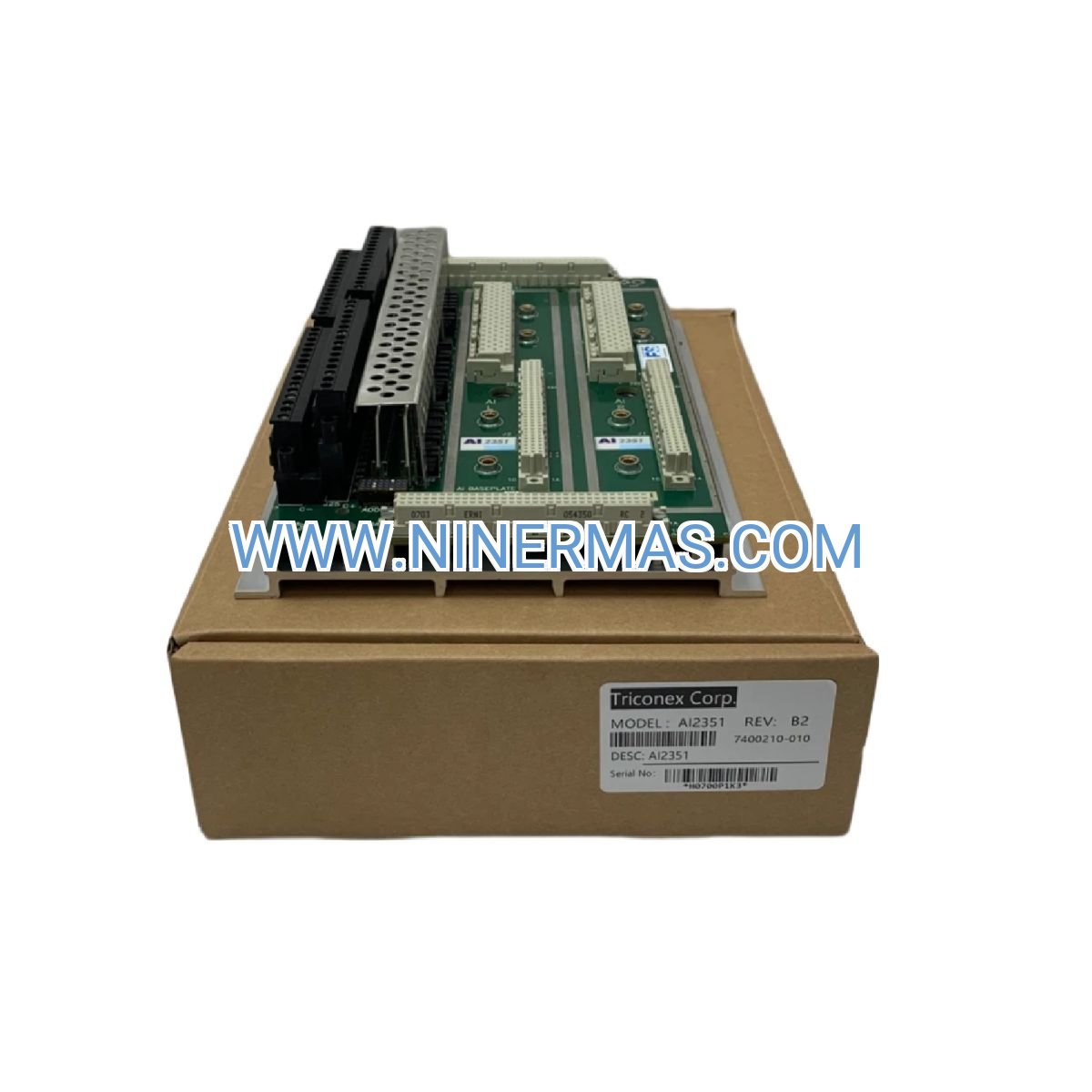
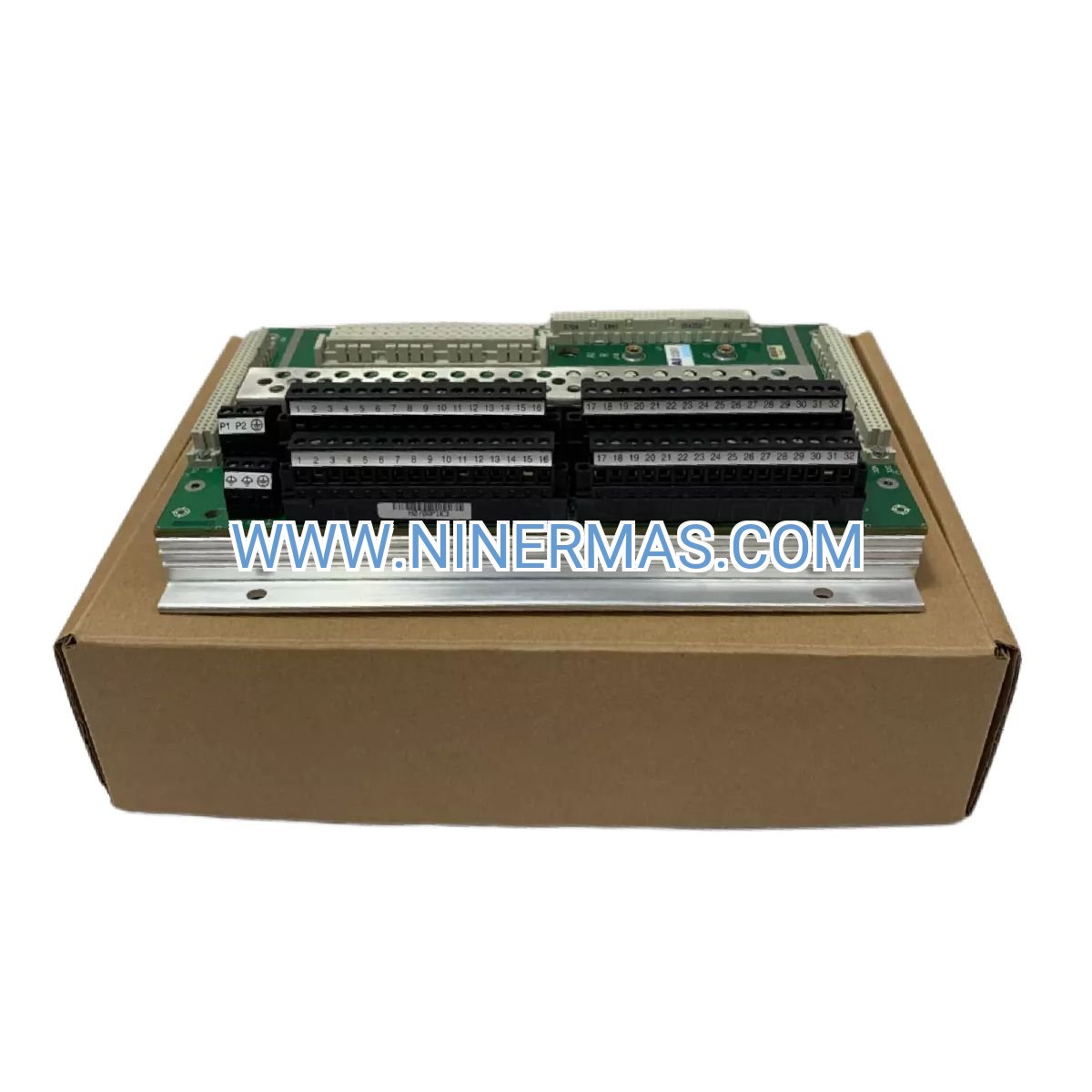
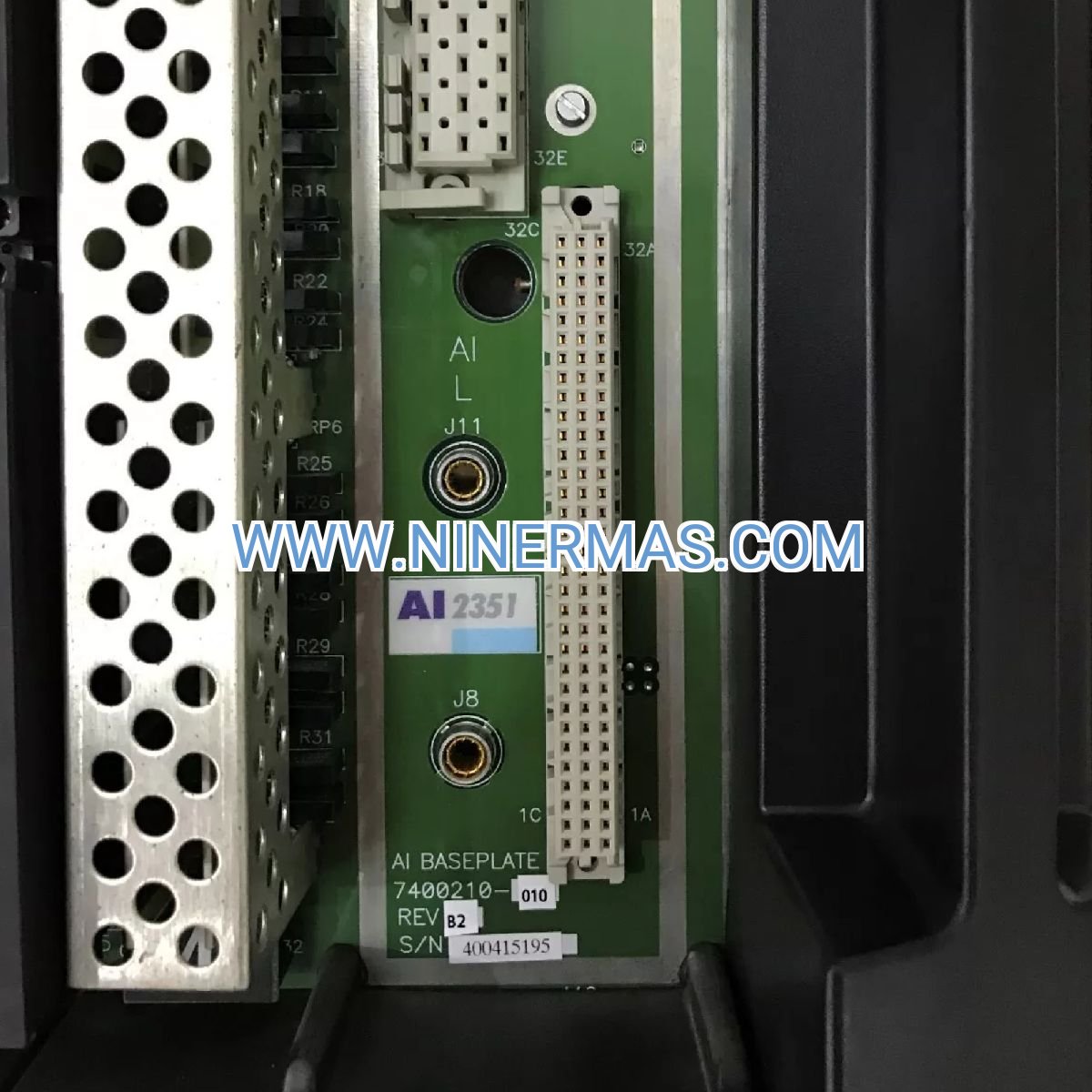
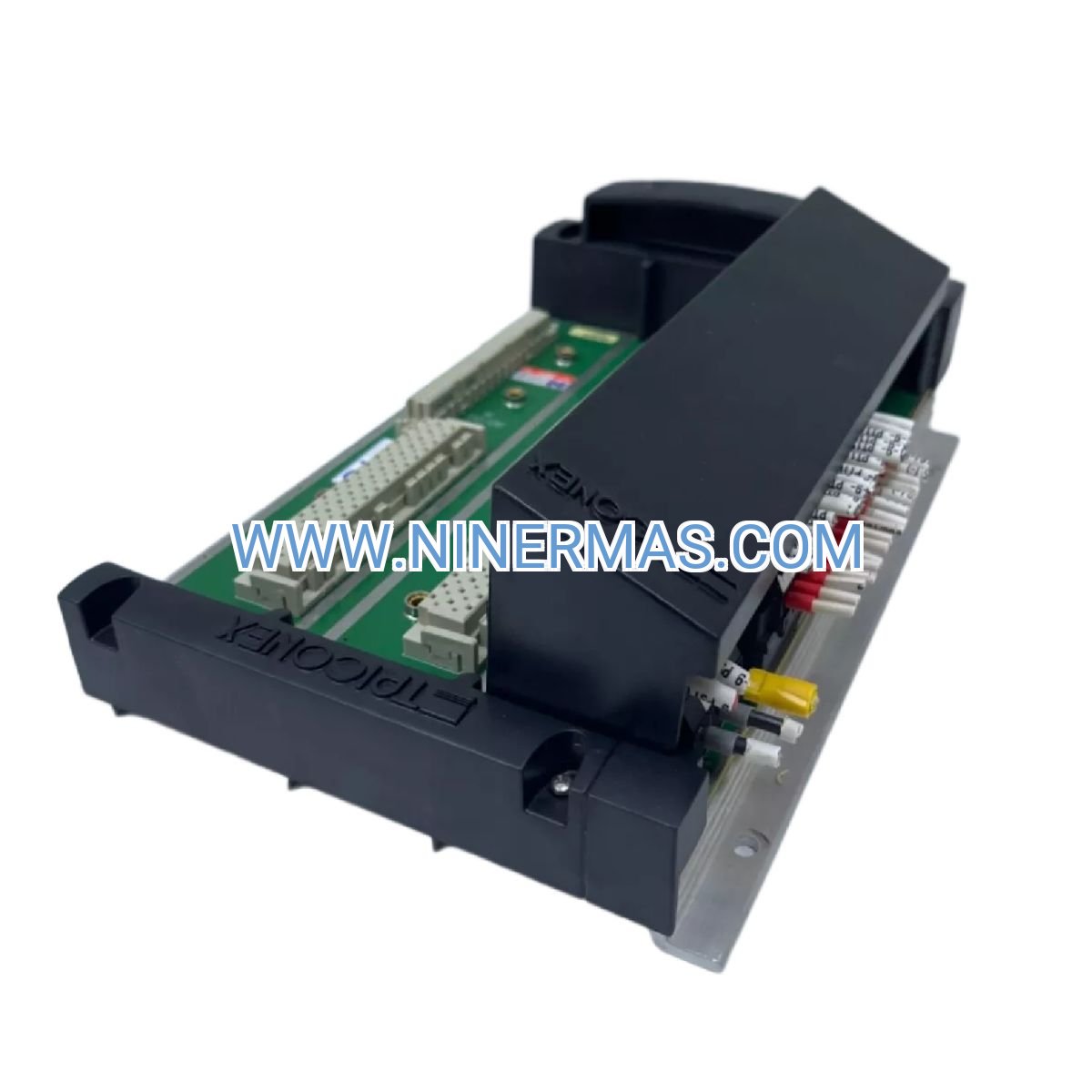
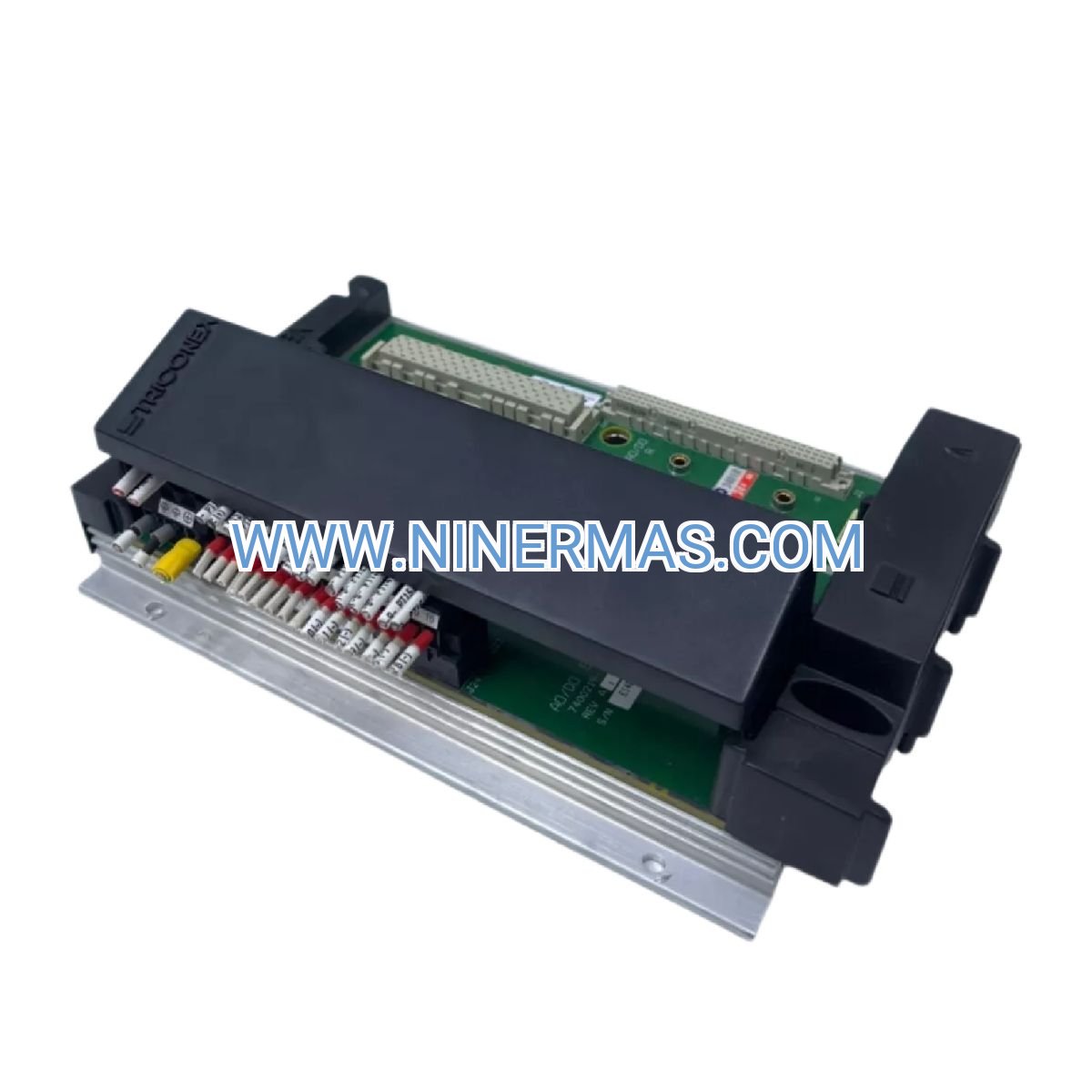
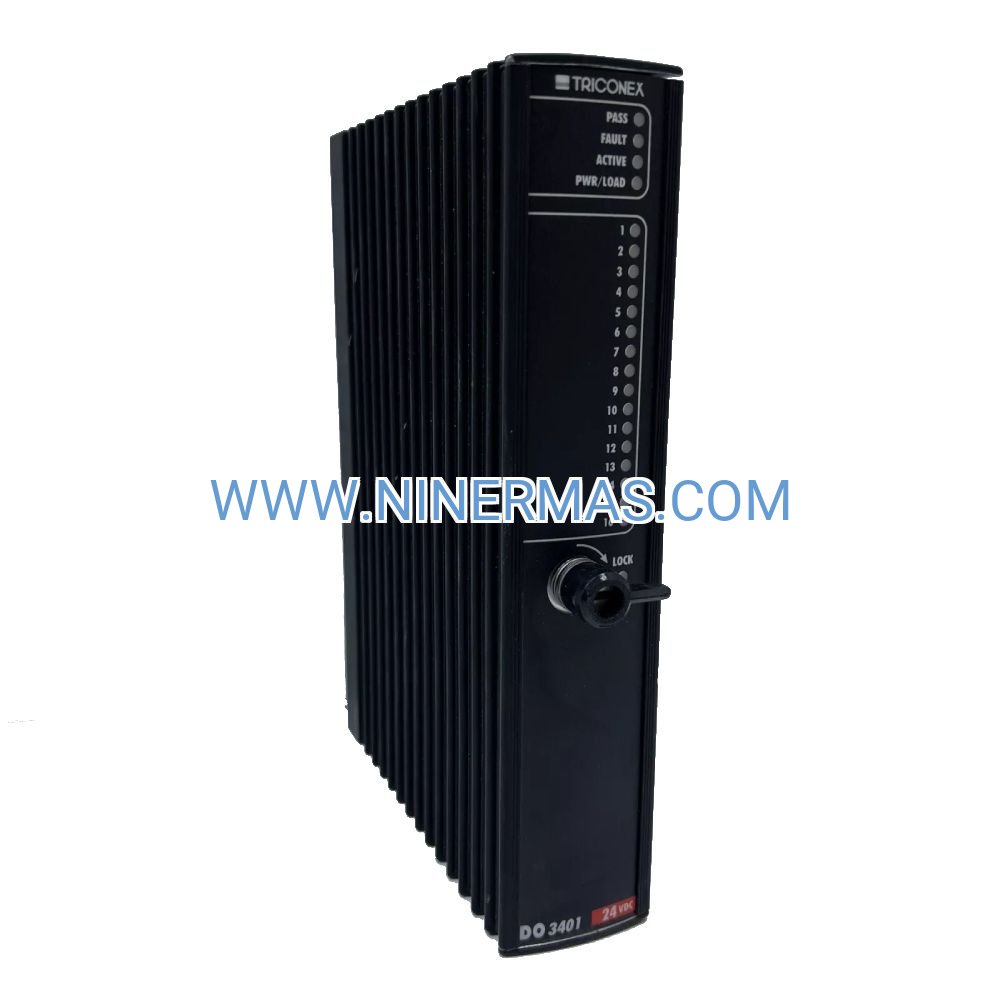
7400210-010 Digital Input Module (Industrial-Grade TMR Safety I/O)
The Triconex 7400210-010 represents a mission-critical component in safety instrumented systems, delivering fault-tolerant digital signal acquisition through proven Triple Modular Redundant technology. Engineered for 120V AC/DC field devices, this module ensures uninterrupted monitoring of safety-critical inputs across oil & gas, chemical processing, and power generation facilities where system availability directly impacts operational safety and regulatory compliance.
Designed for integration within Schneider Electric's Tricon platform, the 7400210-010 addresses the fundamental challenge of single-point failures in safety systems. Process engineers and control system integrators rely on this module to maintain continuous operation during component degradation, eliminating costly unplanned shutdowns while meeting IEC 61508 SIL 3 certification requirements for high-demand safety applications.
With diagnostic coverage exceeding 99% and sub-10ms response times, this digital input module delivers the performance and reliability demanded by emergency shutdown systems, fire and gas detection networks, and burner management applications. Its channel-level isolation and self-diagnostic capabilities provide the foundation for safety architectures that protect personnel, assets, and environmental compliance across the most demanding industrial environments.
Core Features & Business Value
✓ Triple Modular Redundant Architecture
Three independent processing channels vote on each input signal, automatically masking single-channel failures without process interruption. This translates to 99.9%+ system availability and elimination of safety-related production losses.
✓ 120V AC/DC Universal Input Compatibility
Direct interface with standard industrial field devices eliminates signal conditioning costs and simplifies installation. Reduces engineering time by 30-40% compared to multi-voltage configurations requiring external converters.
✓ SIL 3 Certified Safety Integrity
IEC 61508 certification enables compliance with API, OSHA, and international safety standards. Documented proof test intervals and failure rate data streamline safety lifecycle management and regulatory audits.
✓ Comprehensive Diagnostic Coverage
Continuous self-testing of power supplies, signal paths, and voting logic detects 99%+ of dangerous failures. Predictive fault annunciation enables proactive maintenance scheduling, reducing emergency callouts by up to 60%.
✓ Hot-Swappable Field Serviceability
Online module replacement during operation maintains process continuity during maintenance activities. Minimizes planned downtime windows and supports 24/7 operational requirements in continuous process industries.
✓ Channel-to-Channel Isolation
Electrical isolation between input channels and backplane prevents fault propagation and ground loop interference. Ensures signal integrity in electrically noisy environments typical of heavy industrial facilities.
Industrial Application Scenarios
→ Emergency Shutdown Systems (ESD)
Monitors critical shutdown valves, pressure relief devices, and emergency stop circuits in refineries and chemical plants. When integrated with high-integrity output modules, the 7400210-010 forms the input layer of safety loops achieving PFDavg values below 10⁻⁴, meeting the most stringent safety integrity requirements for process hazard mitigation.
→ Fire & Gas Detection Networks
Interfaces with flame detectors, combustible gas sensors, and manual call points across offshore platforms and LNG facilities. TMR voting eliminates nuisance trips from sensor drift while ensuring genuine alarm conditions trigger immediate protective actions, balancing safety with operational efficiency.
→ Burner Management Systems (BMS)
Processes inputs from flame scanners, air flow switches, and fuel valve limit switches in boiler and furnace applications. Sub-10ms scan times enable rapid flame failure detection, preventing dangerous fuel accumulation and ensuring compliance with NFPA 85 and FM approval requirements.
→ Turbomachinery Protection
Acquires signals from vibration monitors, bearing temperature sensors, and overspeed detection systems protecting gas turbines and compressors. Redundant architecture prevents spurious trips that cost $50,000-$500,000 per event in lost production and restart procedures.
→ Pipeline Safety Interlock Systems
Monitors leak detection systems, block valve positions, and pressure boundary integrity across midstream oil & gas infrastructure. Geographically distributed installations benefit from proven field reliability and extended MTBF exceeding 100,000 hours in harsh environmental conditions.
Technical Parameters & Selection Guide
| Parameter | Specification | Engineering Notes |
|---|---|---|
| Input Voltage Range | 120V AC/DC nominal (85-140V) | Accommodates ±15% supply variation |
| Safety Integrity Level | SIL 3 per IEC 61508 | PFDavg: 10⁻⁴ to 10⁻⁵ range |
| Scan Cycle Time | <10ms typical | Deterministic response for fast processes |
| Diagnostic Coverage | >99% | Continuous self-test and voting verification |
| Operating Temperature | 0°C to 60°C (32°F to 140°F) | Suitable for climate-controlled enclosures |
| Humidity Range | 5% to 95% non-condensing | Conformal coating protects against moisture |
| MTBF | >100,000 hours | Proven field reliability data |
| Certifications | IEC 61508, FM, CSA, ATEX | Global hazardous area approvals |
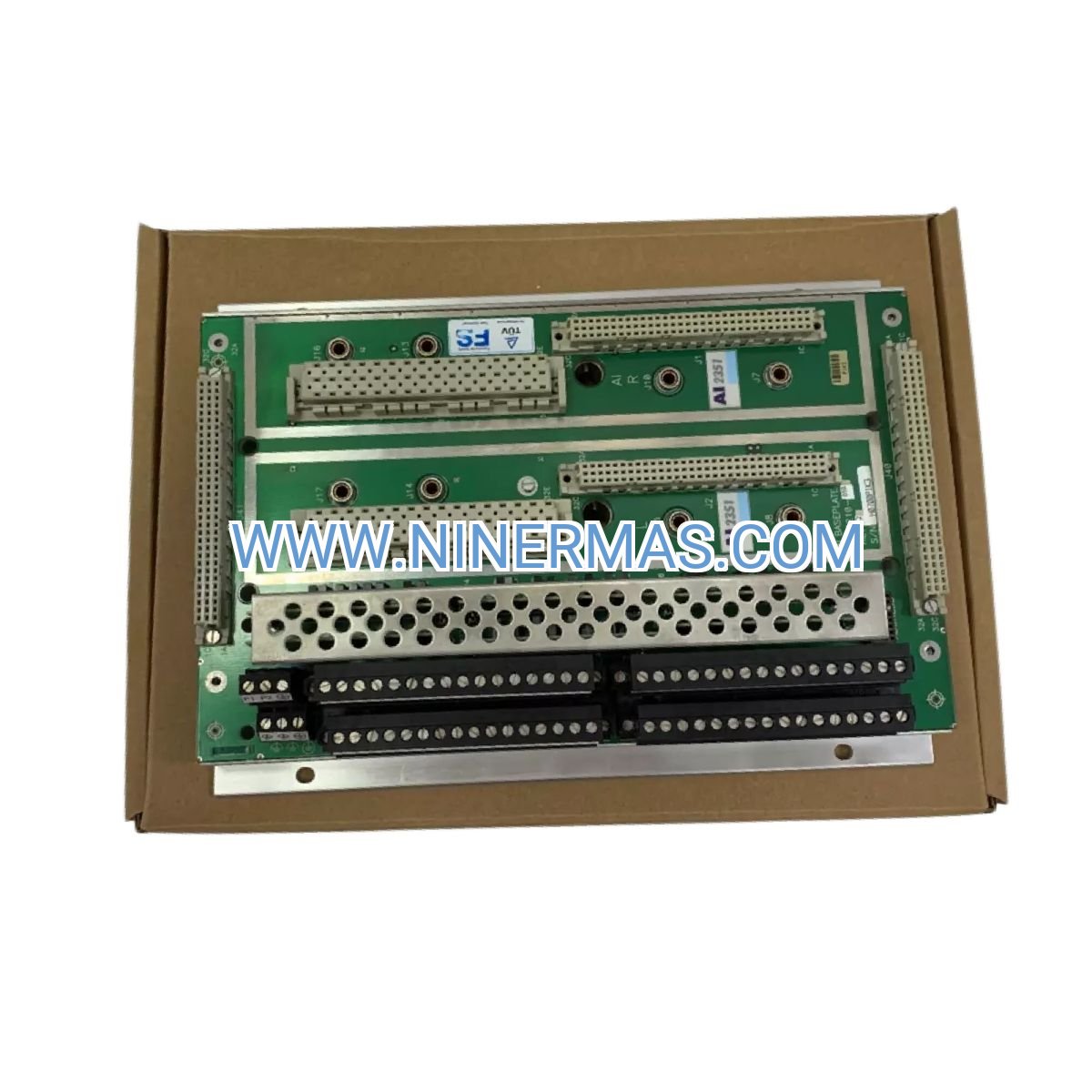
Selection Criteria: Choose the 7400210-010 when your application requires SIL 3 safety integrity for 120V digital inputs. For 24V DC field devices, consider alternative Triconex input modules optimized for low-voltage signals. Applications demanding analog signal processing should evaluate thermocouple or RTD input modules within the same TMR platform. Verify termination panel compatibility and chassis slot availability during system design to ensure proper integration with existing Tricon infrastructure.
System Integration & Extended Capabilities
The 7400210-010 operates within Triconex chassis configurations supporting up to 118 I/O modules per main chassis, with expansion capabilities through remote I/O networks. Communication occurs via the proprietary TriStation protocol, enabling seamless integration with engineering workstations running TriStation 1131 development software for IEC 61131-3 compliant programming.
Advanced diagnostic data streams to plant-wide DCS and SCADA systems through Modbus TCP/IP and OPC interfaces, providing real-time visibility into module health, channel status, and voting discrepancies. This integration supports predictive maintenance strategies and reduces mean time to repair (MTTR) by pinpointing fault locations before complete module failure.
For complete safety loop architectures, pair the 7400210-010 with TMR output modules and communication processors to achieve end-to-end redundancy. The module's hot-swap capability enables online replacement without disrupting adjacent I/O channels, supporting maintenance windows in 24/7 continuous process operations.
Delivery Timeline & Service Commitment
Standard Delivery: 3-5 business days for in-stock units via express courier with full tracking and insurance. All modules ship factory-sealed with calibration certificates and test reports documenting TMR functionality verification.
Warranty Coverage: 12-month manufacturer warranty covering defects in materials and workmanship. Warranty includes advance replacement service for critical applications requiring minimal downtime exposure.
Technical Support: Direct access to application engineers with Triconex system expertise for integration guidance, troubleshooting assistance, and configuration optimization. Support includes review of I/O assignment strategies and safety loop validation.
Documentation Package: Each shipment includes installation manual, wiring diagrams, safety manual addendum, and IEC 61508 certification documentation required for safety lifecycle compliance and regulatory submissions.
Frequently Asked Questions
How does TMR voting handle simultaneous multi-channel failures?
The 7400210-010 employs 2-out-of-3 voting logic, requiring agreement from at least two channels to determine the valid input state. If two channels fail simultaneously (an extremely rare event given independent failure modes), the system transitions to a safe state and annunciates a critical fault requiring immediate maintenance intervention.
What field wiring practices optimize signal integrity for 120V inputs?
Use shielded twisted-pair cable with shields grounded at the module termination point only. Maintain minimum 6-inch separation from high-voltage power cables and variable frequency drives. Route input cables in dedicated conduit separate from output and communication wiring to minimize electromagnetic interference.
Can this module interface with dry contact inputs from mechanical switches?
Yes, when field devices provide volt-free contacts, external 120V AC/DC power supplies can be configured to energize the input circuits. Consult the installation manual for proper wiring configurations ensuring TMR channel independence and avoiding common-mode failure paths through shared power sources.
What proof test procedures validate continued SIL 3 performance?
IEC 61508 compliance requires periodic proof testing at intervals determined by your safety integrity calculations (typically 1-5 years). Tests include forced channel failures, voting verification, and diagnostic response validation. Detailed procedures are provided in the safety manual to maintain certified PFDavg values throughout the safety lifecycle.
How does the module perform in high-vibration environments?
The 7400210-010 meets IEC 60068-2-6 vibration specifications for industrial environments. For extreme vibration applications (offshore platforms, reciprocating compressor installations), verify chassis mounting meets manufacturer specifications and consider additional shock isolation for the entire Tricon enclosure.
What cybersecurity features protect against unauthorized access?
The Tricon platform implements role-based access control, encrypted TriStation communications, and audit logging of all configuration changes. Physical key-switch protection prevents unauthorized online modifications. For enhanced security, deploy the system within segmented industrial networks following IEC 62443 defense-in-depth principles.
Take the Next Step
Secure your critical safety systems with proven TMR technology. Contact our application engineering team to discuss your specific requirements, receive detailed integration guidance, and obtain formal quotations for your project. Our specialists can review your safety integrity calculations, recommend optimal I/O configurations, and provide lifecycle cost analysis comparing TMR versus conventional redundancy approaches.
Request a technical consultation: Share your P&ID markups and safety requirement specifications for customized system architecture recommendations.
© 2026 NINERMAS COMPANY LIMITED. All rights reserved.
Original Source: https://ninermas.com
Contact: sale@ninermas.com | +0086 187 5021 5667
Related products

Contact Info
-
Address:22 / F, South Wo Hang building, 148 Wing Lok Street, Sheung Wan, Western District, Hong Kong
-
Phone:+8618750215667
-
Email: