Description
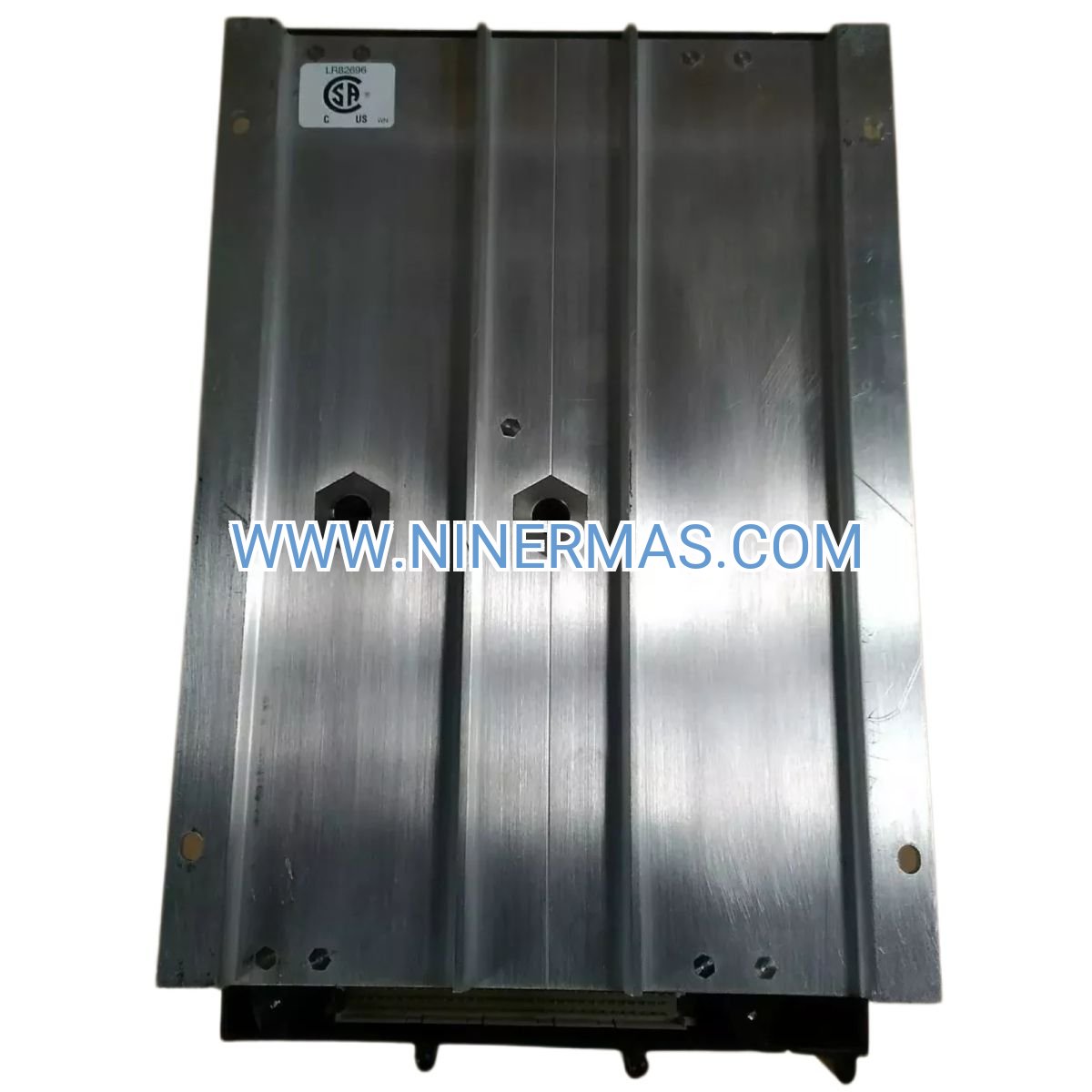
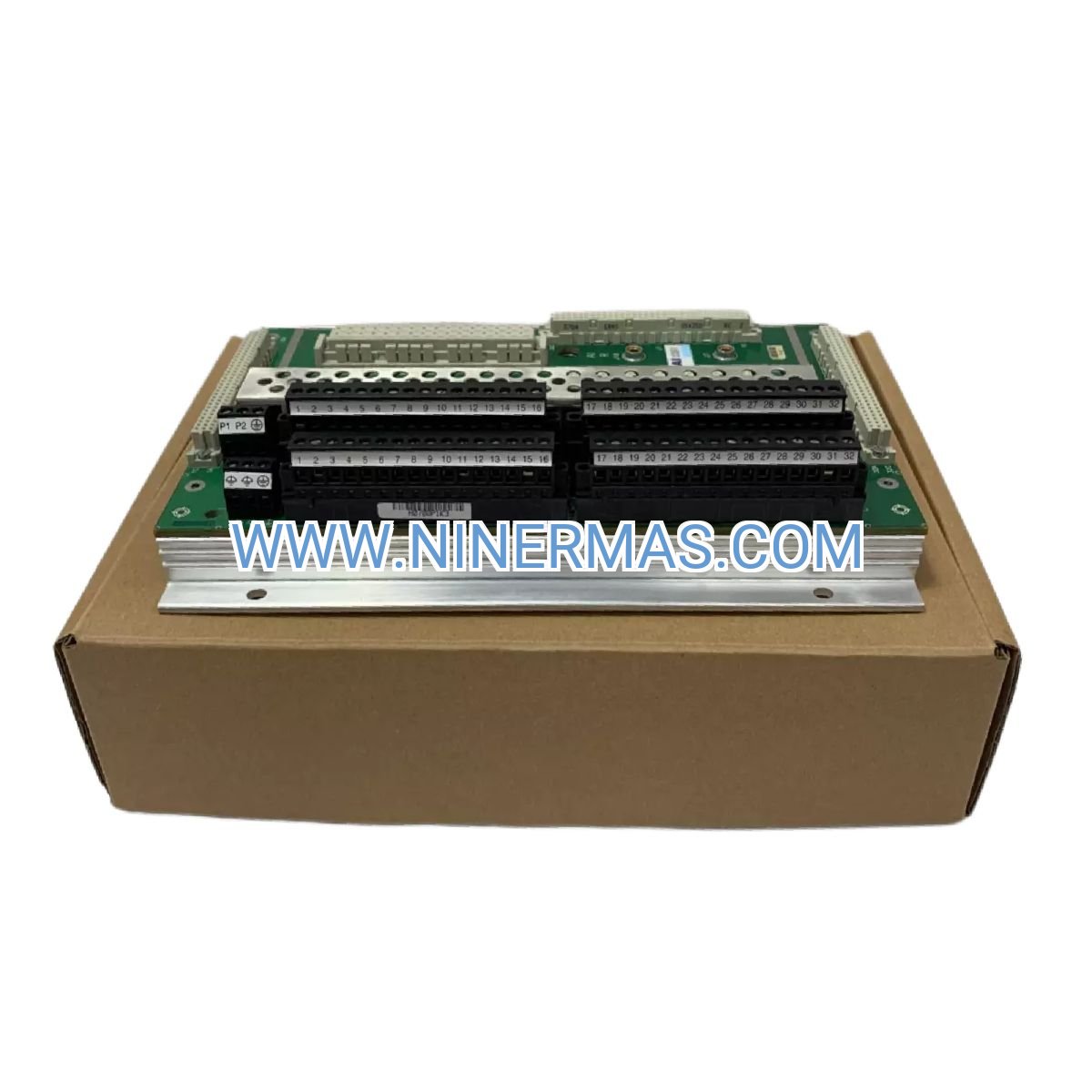
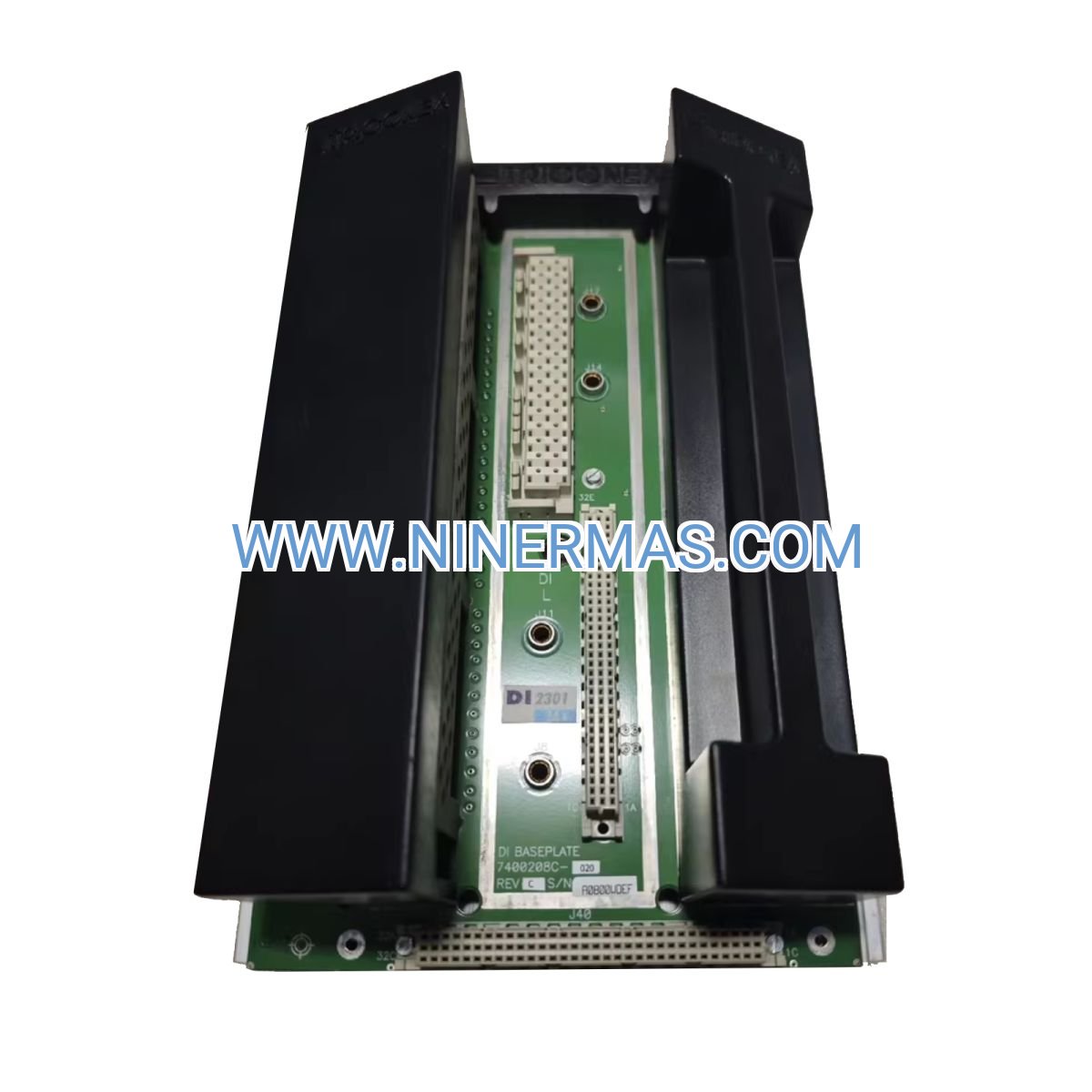
7400208C-020 Digital Input Baseplate (Industrial-Grade TMR Platform)
The 7400208C-020 is a precision-engineered digital input baseplate designed to host DI2301 modules in Triple Modular Redundant (TMR) safety instrumented systems. Built for SIL 3 certified environments, this platform delivers fault-tolerant signal routing and mechanical stability across oil & gas, chemical processing, and power generation facilities where process safety is non-negotiable.
Engineered for mission-critical applications, the baseplate eliminates single points of failure through its three independent signal channels. Plant operators gain continuous monitoring capability even during component degradation, while maintenance teams benefit from hot-swap functionality that preserves uptime during module replacement. The robust construction withstands industrial environments characterized by vibration, electromagnetic interference, and temperature extremes.
Whether you're upgrading legacy safety systems or designing new installations, the 7400208C-020 provides the foundation for reliable emergency shutdown, fire & gas detection, and burner management applications. Pre-configured terminal blocks accelerate commissioning timelines while reducing wiring errors that compromise system integrity.
Core Features & Benefits
→ Fault-Tolerant Architecture
Three independent signal paths ensure uninterrupted operation during single-channel failures. The TMR voting logic automatically isolates faulty channels while maintaining full diagnostic visibility, delivering 99.9% availability in safety-critical loops.
→ Zero-Downtime Maintenance
Hot-swappable module design allows technicians to replace DI2301 cards without de-energizing the system. This capability reduces planned maintenance windows by 75% and eliminates costly production interruptions in continuous process industries.
→ Industrial Hardening
Military-grade materials resist corrosion, thermal cycling, and mechanical shock. The baseplate operates reliably in environments ranging from -40°C Arctic installations to +60°C desert refineries, with EMI immunity exceeding IEC 61000-6-2 standards.
✓ Simplified Field Wiring
Color-coded terminal blocks with laser-etched labels reduce installation time by 40%. Captive screw terminals prevent loose connections, while built-in strain relief protects against cable pull forces during maintenance activities.
✓ Diagnostic Transparency
Integrated LED indicators provide real-time status for power, communication, and fault conditions. TriStation software integration enables remote health monitoring, predictive maintenance alerts, and detailed event logging for regulatory compliance.
✓ Scalable System Topology
Supports both centralized and distributed I/O architectures through Remote Extender Module (RXM) compatibility. Deploy up to 118 I/O modules per controller, with fiber-optic links extending distances to 20 kilometers for geographically dispersed installations.
Typical Application Scenarios
Emergency Shutdown Systems (ESD)
Monitors critical process variables including high-pressure trips, low-level alarms, and thermal runaway detectors. When hazardous conditions are detected, the baseplate routes shutdown commands to final control elements within 50 milliseconds, preventing equipment damage and personnel injury in petrochemical complexes.
Fire & Gas Detection Networks
Interfaces with UV/IR flame detectors, multi-spectrum smoke sensors, and toxic gas monitors across offshore platforms and LNG terminals. The TMR architecture ensures alarm signals reach control rooms even if two detection channels fail simultaneously, meeting API RP 14C voting requirements.
Burner Management Systems
Tracks ignition confirmation, flame scanner status, and safety interlock chains in industrial boilers and process heaters. By preventing false trips that cost $50,000+ per incident, the baseplate pays for itself within the first year of operation in high-availability furnace applications.
Turbomachinery Protection
Receives signals from vibration probes, bearing RTDs, and overspeed sensors protecting centrifugal compressors valued at $2M+. The 10-millisecond scan time enables rapid detection of bearing failures, preventing catastrophic rotor damage in pipeline compression stations.
Pipeline Leak Detection
Processes inputs from pressure transmitters, flow meters, and hydrocarbon sensors along crude oil and natural gas transmission lines. The baseplate's noise immunity ensures accurate leak localization in electrically harsh environments near high-voltage power corridors.
Technical Parameters & Selection Guide
| Parameter | Specification |
|---|---|
| Model Number | 7400208C-020 |
| Module Compatibility | DI2301 Digital Input (TMR) |
| Safety Integrity Level | SIL 3 (IEC 61508 / IEC 61511) |
| Operating Temperature | 0°C to +60°C (32°F to 140°F) |
| Storage Temperature | -40°C to +85°C (-40°F to 185°F) |
| Humidity Tolerance | 5% to 95% RH (non-condensing) |
| Vibration Resistance | 5g @ 10-150 Hz (IEC 60068-2-6) |
| EMI Immunity | Industrial Level (IEC 61000-6-2) |
| Mounting Options | DIN rail / Panel mount |
| Dimensions (H×W×D) | 220 × 180 × 85 mm |
| Weight | 2.0 kg (4.4 lbs) |
| Power Consumption | Supplied via chassis backplane |
| MTBF | >200,000 hours (MIL-HDBK-217F) |
Selection Criteria: Choose the 7400208C-020 when your application requires SIL 3 certification, TMR voting, and compatibility with existing Triconex Tricon/Trident controllers. For analog input applications, consider the 7400209 series baseplates. Verify chassis slot availability and power budget before ordering—each baseplate with populated DI2301 modules draws approximately 8W from the PS series power supply.
Extended Functions
IoT Integration Capability
When paired with Triconex CyberSentry modules, the baseplate enables secure remote monitoring via OPC UA and Modbus TCP protocols. Plant engineers access real-time I/O status through SCADA systems while maintaining IEC 62443 cybersecurity compliance through encrypted communication channels.
Advanced Diagnostics
Built-in self-test routines execute every 100 milliseconds, detecting open circuits, short circuits, and signal drift before they impact process safety. Predictive algorithms analyze historical fault patterns to recommend preventive maintenance 30 days before component end-of-life.
Customization Options
Factory-configured terminal labeling available for project-specific tag naming conventions. Custom conformal coating provides enhanced protection in corrosive atmospheres containing H₂S, chlorine, or salt spray. Contact our engineering team for hazardous area certifications (ATEX, IECEx, CSA) when deploying in Zone 1/Division 1 locations.
Delivery & Service Assurance
Lead Time: Standard units ship within 3-5 business days from our regional distribution centers. Custom-configured baseplates require 2-3 weeks for factory programming and testing. Expedited delivery available for emergency shutdowns and unplanned outages.
Warranty Coverage: 12-month comprehensive warranty covers manufacturing defects, material failures, and workmanship issues. Extended warranties up to 5 years available for critical infrastructure projects.
Technical Support: Access to certified Triconex specialists with average response time <4 hours. Our team provides commissioning assistance, troubleshooting guidance, and system optimization recommendations throughout the product lifecycle.
Documentation Package: Each baseplate includes installation manual, wiring diagrams, dimensional drawings, and material certifications. TriStation configuration files and sample ladder logic available for download to accelerate system integration.
Frequently Asked Questions
What is the maximum field wiring distance for digital input signals?
Shielded twisted-pair cables support runs up to 300 meters (984 feet) while maintaining signal integrity. For longer distances, deploy Remote Extender Modules (RXM) with fiber-optic links extending to 20 km. Always use 18 AWG minimum wire gauge for power-limited circuits.
Can I mix different baseplate revisions in the same chassis?
Yes, the 7400208C-020 is backward compatible with 7400208A and 7400208B revisions. However, maintain consistent firmware versions across all modules to prevent communication errors. Consult the Triconex Product Compatibility Matrix before mixing hardware generations.
How does the hot-swap procedure work without causing spurious trips?
The TMR voting algorithm continues processing signals from the two remaining channels during module replacement. TriStation software places the affected channel in bypass mode, preventing fault alarms. After installing the new module, the system automatically synchronizes and restores triple redundancy within 5 seconds.
What power supply capacity is required for a fully populated chassis?
Each DI2301 module consumes approximately 2.5W. A baseplate with three modules draws 7.5W total. The PS3701 power supply provides 60W capacity, supporting up to 8 fully populated digital input baseplates. Always maintain 20% power margin for system reliability.
Is the baseplate suitable for SIL 4 applications?
The 7400208C-020 is certified to SIL 3 per IEC 61508. For SIL 4 requirements, implement additional architectural constraints such as 2oo3 voting with diverse technology (e.g., relay-based backup systems). Consult a certified functional safety engineer for SIL 4 system design.
Does the baseplate support remote I/O configurations?
Yes, when used with RXM4 Remote Extender Modules, the baseplate operates in distributed architectures. Fiber-optic links provide electrical isolation and immunity to ground loops, ideal for installations spanning multiple buildings or hazardous area boundaries.
Take the Next Step
Secure your process safety infrastructure with the 7400208C-020 baseplate. Our application engineers are ready to assist with system design, product selection, and technical specifications tailored to your facility requirements.
Request a quote today: Contact our team at sale@ninermas.com or call +0086 187 5021 5667 to discuss your project timeline and delivery options. Volume discounts available for multi-unit orders.
© 2026 NINERMAS COMPANY LIMITED. All rights reserved.
Original Source: https://ninermas.com
Contact: sale@ninermas.com | +0086 187 5021 5667
Related products

Contact Info
-
Address:22 / F, South Wo Hang building, 148 Wing Lok Street, Sheung Wan, Western District, Hong Kong
-
Phone:+8618750215667
-
Email: