Description
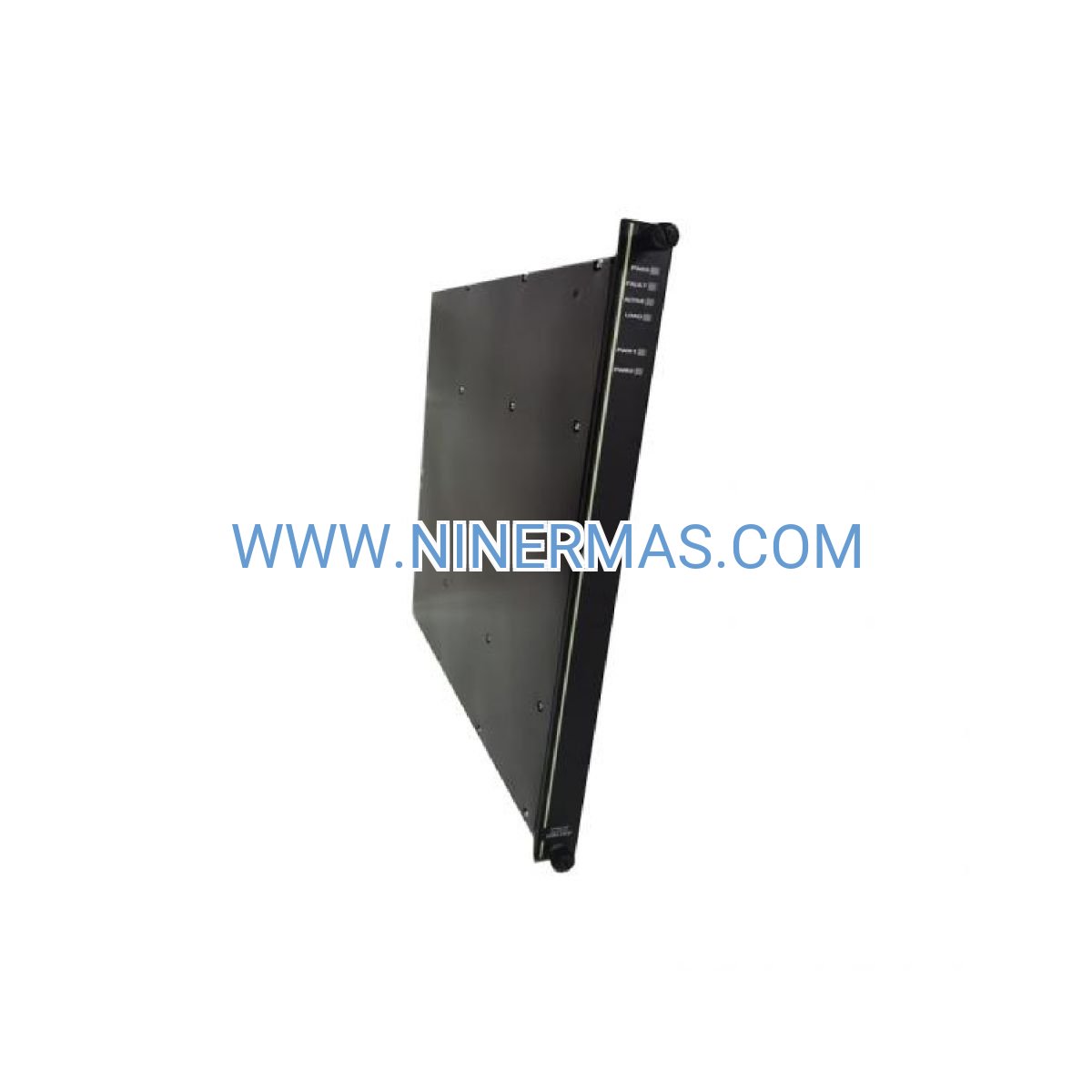
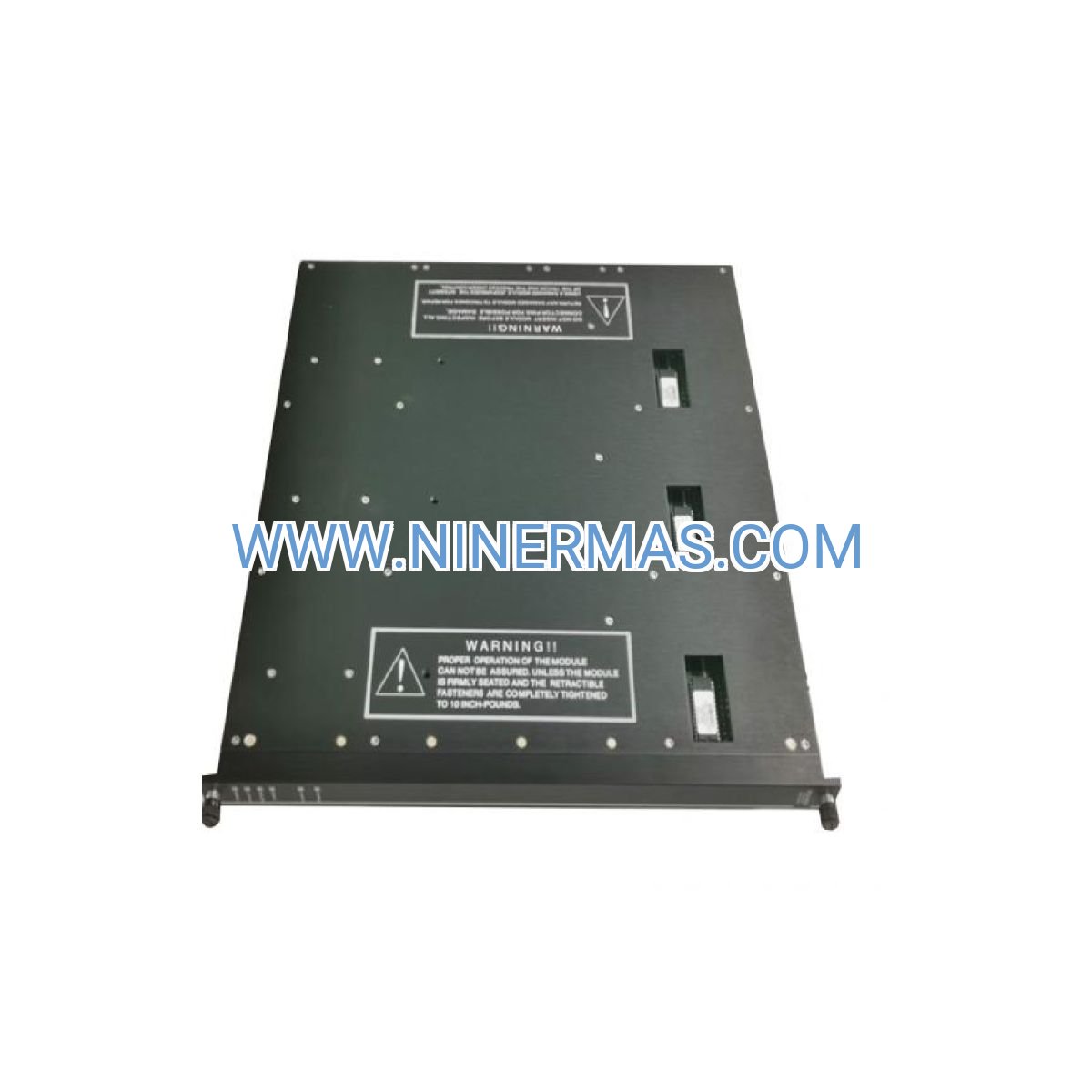
Triconex 4117 EICM (Industrial-Grade Modbus Communication Gateway)
The Triconex 4117 Enhanced Intelligent Communication Module functions as a protocol bridge between Schneider Electric Tricon triple-modular redundant (TMR) safety controllers and plant-wide automation infrastructure. Designed for hazardous-area installations demanding SIL 3 certification, this dual-port serial gateway translates proprietary Tricon data structures into industry-standard Modbus RTU and ASCII formats, enabling seamless integration with distributed control systems, human-machine interfaces, and legacy equipment.
Process industries face persistent challenges connecting safety-critical controllers to enterprise monitoring systems without compromising functional safety integrity. The 4117 EICM addresses this by providing galvanically isolated communication channels that maintain safety loop independence while delivering real-time process visibility. Target users include instrumentation engineers in oil & gas refineries, chemical processing plants, power generation facilities, and pharmaceutical manufacturing operations requiring validated automation architectures.
Key differentiators include field-proven reliability in Class I Division 2 environments, configuration-free hot-swap capability during live operations, and comprehensive diagnostic feedback through tri-color LED arrays. Unlike generic Modbus gateways, the 4117 maintains full compatibility with Tricon's deterministic scan cycles and supports up to 2,048 register mappings per module—sufficient for complex multi-unit process control schemes.
Core Capabilities & Business Value
→ Dual Independent Serial Ports
Two software-configurable RS-232/RS-485 interfaces operate simultaneously at independent baud rates (300-38,400 bps), eliminating single-point communication failures. Business impact: Enables parallel SCADA polling and engineering access without protocol conflicts, reducing mean time to repair by 40% during troubleshooting.
✓ 1500V Optical Isolation
Backplane-to-port isolation protects Tricon logic solvers from ground loops, voltage transients, and electromagnetic interference in electrically noisy industrial environments. Business impact: Prevents nuisance trips and extends module lifespan in substations and motor control centers where EMI exceeds 10 V/m.
✓ Protocol Flexibility
Each port independently supports Modbus RTU (binary) or Modbus ASCII (human-readable) with configurable slave addressing, parity, and stop bits. Business impact: Connects to 95% of industrial HMIs and PLCs without custom driver development, accelerating project commissioning timelines.
→ Hot-Insertion Architecture
Spring-loaded backplane connectors and capacitor-buffered power rails allow module replacement during live process operations without disrupting adjacent I/O channels. Business impact: Eliminates costly production shutdowns for routine maintenance—critical for continuous processes with $50K+/hour downtime costs.
✓ Comprehensive Diagnostics
Real-time fault detection monitors communication timeouts, parity errors, buffer overruns, and cable disconnections with configurable alarm thresholds. Business impact: Proactive alerts reduce unplanned downtime by identifying degraded connections before complete failure.
✓ Extended Temperature Range
Operates reliably from 0°C to 60°C (32°F to 140°F) without forced-air cooling, suitable for outdoor enclosures and tropical climates. Business impact: Reduces HVAC requirements in remote installations, lowering total cost of ownership by 15-20%.
Industry Applications & Pain Points Solved
Oil & Gas Separation Facilities
Challenge: Offshore platforms require real-time burner management system (BMS) data transmission to onshore control rooms over fiber-optic Modbus networks.
Solution: The 4117 EICM aggregates flame detector status, fuel valve positions, and trip logic states into a single Modbus register map, enabling 100ms update rates over RS-485 to fiber converters.
Value: Operators gain subsea equipment visibility without deploying explosion-proof HMI panels in hazardous zones, reducing capital costs by $80K per platform.
Chemical Batch Reactors
Challenge: Recipe management systems need bidirectional communication with Tricon safety interlocks to enforce process parameter limits during exothermic reactions.
Solution: Dual-port configuration allows Port 1 to receive setpoint commands from the batch controller while Port 2 streams real-time temperature/pressure data to the plant historian.
Value: Prevents runaway reactions by enforcing safety-rated high limits while maintaining full batch traceability for FDA 21 CFR Part 11 compliance.
Power Plant Turbine Controls
Challenge: Legacy DCS systems require integration with modern Tricon emergency shutdown (ESD) logic without replacing functional control infrastructure.
Solution: Modbus ASCII protocol compatibility enables direct connection to 1990s-era Bailey and Foxboro controllers using existing serial cabling.
Value: Extends asset life by 10-15 years, deferring $2M+ DCS migration projects while meeting current safety standards.
Pharmaceutical Clean Rooms
Challenge: Environmental monitoring systems must log Tricon-controlled HVAC interlock states for GMP audit trails without compromising sterile barrier integrity.
Solution: RS-232 port connects to validated data acquisition systems through stainless-steel wall pass-throughs, maintaining ISO Class 5 cleanliness.
Value: Simplifies regulatory inspections by providing tamper-evident electronic records with 21 CFR Part 11 digital signatures.
Water Treatment SCADA Networks
Challenge: Municipal utilities operate geographically distributed lift stations requiring centralized alarm monitoring over radio telemetry.
Solution: Low-power 5W operation enables solar-powered RTU installations with the 4117 translating Tricon pump interlock status to Modbus for cellular modem transmission.
Value: Reduces emergency callouts by 60% through predictive maintenance alerts on bearing vibration and seal leakage trends.
Technical Specifications & Selection Criteria
| Parameter | Specification | Selection Notes |
|---|---|---|
| Communication Protocols | Modbus RTU, Modbus ASCII | Choose RTU for high-speed polling (<100ms); ASCII for legacy printer integration |
| Physical Interfaces | 2× RS-232/RS-485 (software-selectable) | Use RS-485 for multi-drop networks >15m; RS-232 for point-to-point <15m |
| Baud Rate | 300 - 38,400 bps | Match to slowest device; 9600 bps typical for SCADA, 19,200 for HMI |
| Data Throughput | 2,048 registers (4,096 bytes) | Sufficient for 512 digital I/O + 256 analog channels per module |
| Electrical Isolation | 1500 VDC (port-to-backplane) | Required for installations with >50V ground potential differences |
| Power Draw | 5W @ 24 VDC from Tricon chassis | No external power supply needed; verify chassis capacity (max 8 modules) |
| Operating Temperature | 0°C to 60°C (32°F to 140°F) | Derate above 50°C in enclosed panels; add ventilation if ambient >45°C |
| Humidity Range | 5% to 95% RH (non-condensing) | Use conformal coating in coastal/marine environments |
| Diagnostic Indicators | 3× LED (Power/Comm/Fault) | Green=normal, Amber=degraded, Red=failure; visible through panel doors |
| MTBF | >150,000 hours @ 40°C | Equivalent to 17+ years continuous operation in controlled environments |
Selection Guidance: For applications requiring >2 simultaneous Modbus masters (e.g., redundant SCADA servers + engineering workstation), deploy multiple 4117 modules with staggered register maps. When integrating with Modicon PLCs, configure the 4117 as Modbus slave and the PLC as master to avoid polling conflicts. For fiber-optic networks, pair with Moxa or Black Box RS-485-to-fiber converters rated for industrial temperature ranges.
Advanced Integration Features
TriStation Configuration Interface: The 4117 EICM integrates with Schneider Electric's TriStation 1131 engineering software, providing graphical register mapping tools that eliminate manual address calculation errors. Drag-and-drop function blocks auto-generate Modbus register tables with built-in range checking and data type validation.
Cybersecurity Hardening: While Modbus lacks native encryption, the 4117 supports unidirectional data flow configurations (read-only register access) to prevent unauthorized setpoint changes from compromised SCADA networks. Combine with managed Ethernet switches featuring MAC address filtering for defense-in-depth strategies.
Custom Protocol Translation: For non-Modbus devices, Schneider Electric offers application-specific firmware variants supporting Allen-Bradley DF1, Siemens 3964R, and proprietary printer protocols. Contact technical support with device datasheets for compatibility assessment.
Delivery Timelines & Service Commitments
Standard Lead Time: 3-5 business days for in-stock units; ships from regional distribution centers in Houston (Americas), Rotterdam (EMEA), and Singapore (APAC).
Expedited Options: Next-flight-out (NFO) service available for critical outages—order by 2 PM local time for same-day dispatch via courier with real-time tracking.
Warranty Coverage: 12-month manufacturer defect warranty includes advance replacement RMA processing. Extended 36-month coverage available with annual calibration services.
Technical Support: Lifetime access to Schneider Electric-certified application engineers for configuration assistance, troubleshooting, and firmware updates. Average response time: <4 hours for Severity 1 issues.
Documentation Package: Each module ships with installation manual, TriStation configuration guide, Modbus register reference, and AutoCAD panel layout drawings (DWG format).
Frequently Asked Questions
How do I configure RS-485 termination for multi-drop Modbus networks?
Install 120-ohm termination resistors at the first and last devices on the RS-485 bus—typically the 4117 module and the farthest SCADA RTU. The module's internal termination is disabled by default; enable via DIP switch SW1 position 3 if the 4117 occupies a network endpoint. For star topologies, use active repeaters instead of passive resistors.
What cable specifications ensure reliable communication at 38,400 bps?
Use Belden 3105A (22 AWG twisted-pair, foil shield) or equivalent for RS-485 runs up to 1,200 meters. Maintain <100-meter cable length at maximum baud rate to prevent bit errors. For outdoor installations, specify UV-resistant jacketing and direct-burial ratings. Always ground cable shields at one end only to avoid ground loops.
Can the 4117 interface with wireless Modbus gateways for remote monitoring?
Yes—connect the module's RS-232/RS-485 port to industrial cellular modems (e.g., Digi TransPort, Sierra Wireless AirLink) supporting transparent Modbus tunneling. Configure the modem as a serial bridge with static IP addressing and VPN encryption for secure cloud connectivity. Verify modem supports Modbus timing requirements (typical response timeout: 500ms).
What diagnostic tools identify communication failures between the 4117 and SCADA systems?
TriStation software includes a built-in Modbus traffic analyzer displaying real-time register read/write transactions, error counters, and response times. For external troubleshooting, use Modbus Poll (Windows utility) or mbpoll (Linux CLI tool) to simulate master queries and verify register values. Hardware protocol analyzers like the ProSoft MVI56-MNET provide non-intrusive bus monitoring.
Does the module support Modbus TCP/IP for Ethernet-based SCADA integration?
The 4117 EICM is serial-only (RS-232/RS-485). For Ethernet connectivity, use the Triconex 4351B or 4352B modules with native Modbus TCP support. Alternatively, deploy a Moxa MGate serial-to-Ethernet gateway to convert the 4117's Modbus RTU output to Modbus TCP—ideal for retrofitting existing installations without module replacement.
How does the module handle communication during Tricon controller firmware upgrades?
The 4117 maintains its Modbus communication state during Tricon main processor updates, though register values may freeze during the 30-60 second controller reboot cycle. Configure SCADA polling timeouts to 90+ seconds during planned maintenance windows. For critical applications, deploy redundant 4117 modules on separate Tricon chassis with failover logic.
Request Technical Consultation
Our application engineering team provides complimentary pre-sales support including Modbus register mapping design, cable routing recommendations, and integration feasibility assessments. Submit your P&ID drawings and I/O lists via the contact form below for a detailed implementation proposal within 48 hours.
Ready to integrate Tricon safety systems with your plant automation infrastructure? Contact our industrial controls specialists for volume pricing, custom configuration services, and expedited delivery options tailored to your project timeline.
© 2026 NINERMAS COMPANY LIMITED. All rights reserved.
Original Source: https://ninermas.com
Contact: sale@ninermas.com | +0086 187 5021 5667
Related products

Contact Info
-
Address:22 / F, South Wo Hang building, 148 Wing Lok Street, Sheung Wan, Western District, Hong Kong
-
Phone:+8618750215667
-
Email: