Description
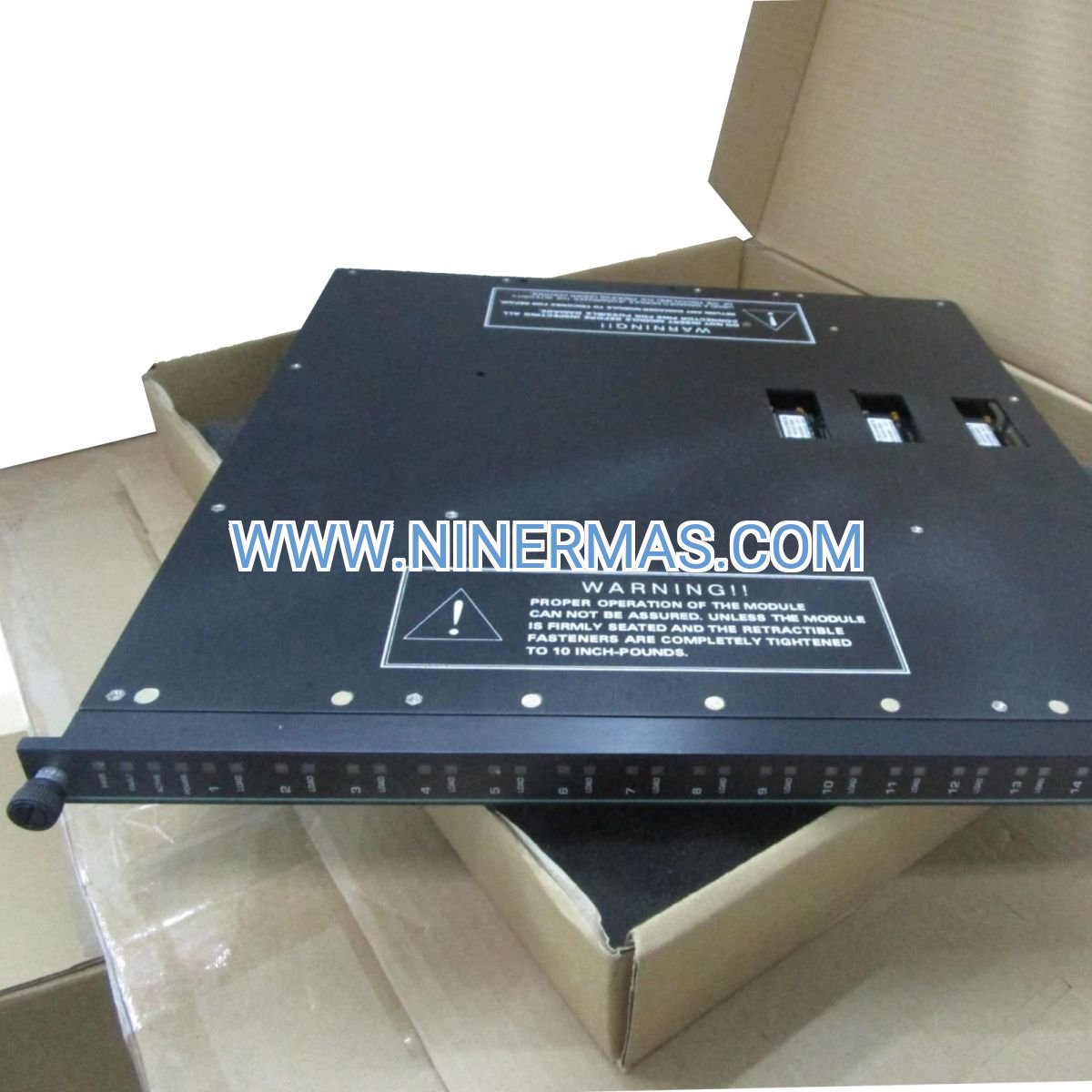
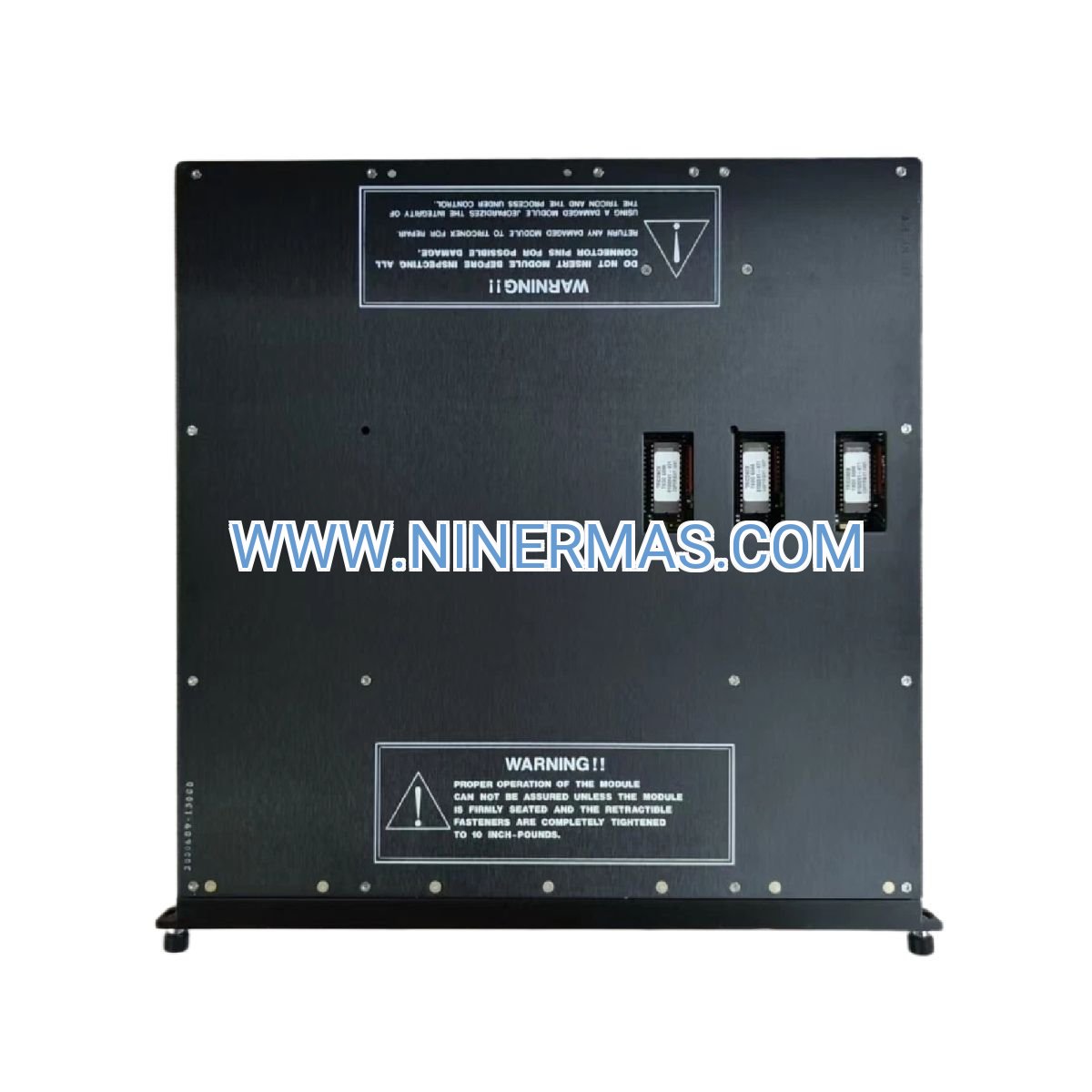
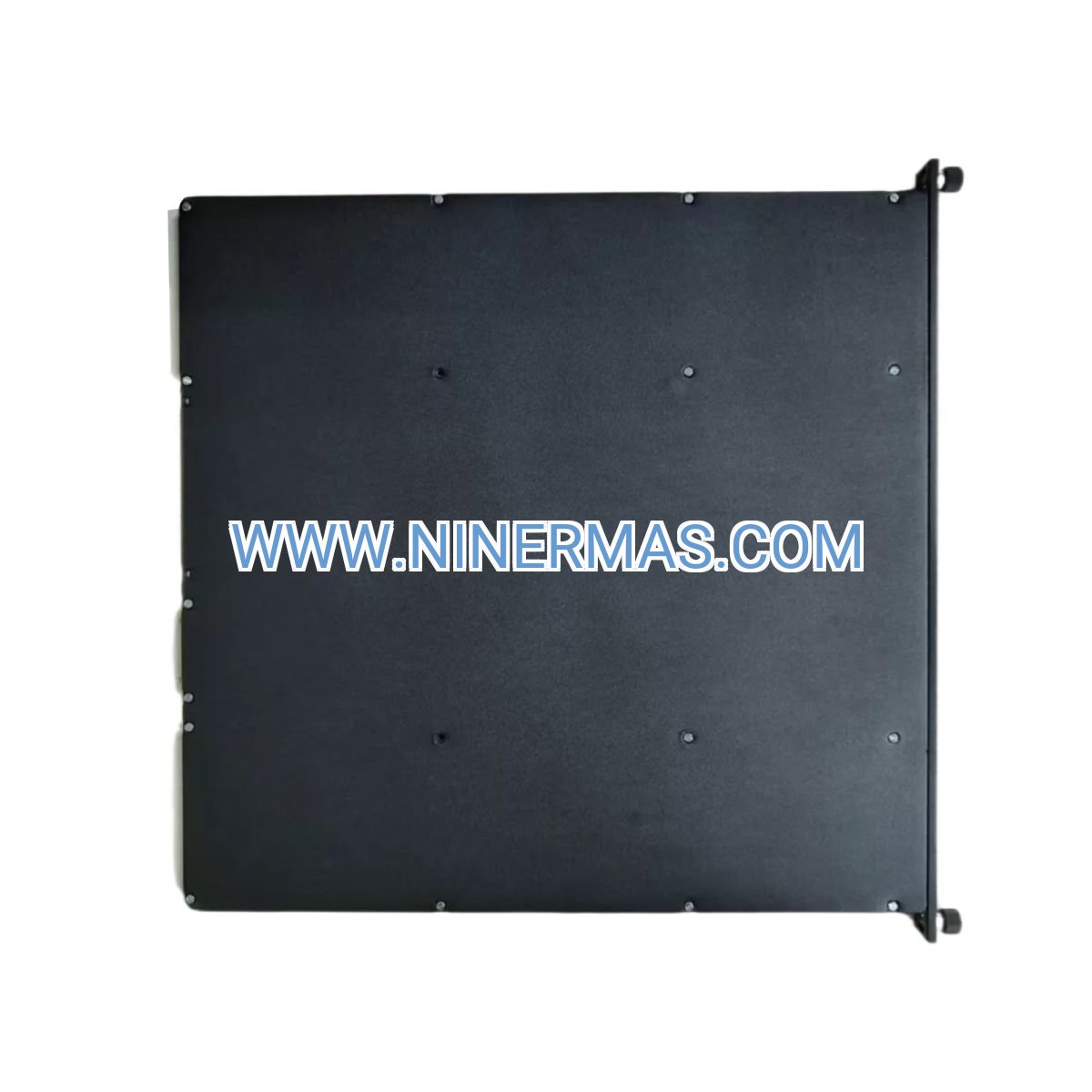
Triconex 3807 TMR Analog Output Module (Industrial-Grade Bipolar Control Solution)
The Triconex 3807 represents a mission-critical analog output solution engineered for safety instrumented systems where failure is not an option. Built on triple-modular redundant (TMR) architecture, this 4-channel bipolar module delivers ±60V DC output capability with continuous fault detection and automatic voting logic. Designed for seamless integration with Trident and Tricon platforms, the 3807 serves industries where process safety, regulatory compliance, and operational continuity converge—from offshore oil platforms to nuclear power facilities.
Safety system engineers and automation professionals rely on the 3807 when standard analog outputs cannot meet SIL 3 integrity requirements. Whether you're retrofitting legacy emergency shutdown systems or designing greenfield process control architectures, this module provides the fault-tolerant foundation that keeps critical operations running even during component failures. With IEC 61508 certification and TÜV validation, the 3807 meets the most stringent international safety standards.
What sets the 3807 apart is its ability to maintain precise analog control while simultaneously monitoring system health across three independent channels. When one channel experiences drift or failure, the TMR voting logic automatically isolates the fault without interrupting output signals—eliminating unplanned shutdowns and reducing maintenance costs by up to 40% compared to simplex architectures.
Core Features & Business Value
→ Triple-Modular Redundant Architecture
Three independent processing channels continuously cross-verify outputs, automatically voting out faults while maintaining system operation. This translates to 99.99% uptime in safety-critical applications where every second of downtime costs thousands in lost production.
→ Bipolar ±60V Output Range
Unlike standard 0-10V modules, the 3807 supports both positive and negative voltage signals, enabling direct control of proportional valves, VFDs, and actuators that require bidirectional command signals—eliminating the need for external signal conditioning.
→ 12-Bit Resolution with ±0.25% Accuracy
High-precision digital-to-analog conversion ensures smooth valve positioning and setpoint control, reducing process variability and improving product quality in applications like chemical dosing and temperature regulation.
✓ Hot-Swappable Design
Replace modules during live operation without system shutdown or process interruption. Maintenance teams can perform repairs during production runs, maximizing asset utilization and avoiding costly scheduled downtime.
✓ Channel-to-Channel Isolation
Electrical isolation between outputs prevents ground loops and cross-talk, ensuring signal integrity in electrically noisy industrial environments with multiple grounding points and high-power equipment.
✓ IEC 61508 SIL 3 Certification
Meets the highest safety integrity level for continuous process control, satisfying regulatory requirements for hazardous area installations and reducing liability exposure in safety-critical applications.
Technical Parameters & Selection Guide
| Parameter | Specification |
|---|---|
| Output Channels | 4 independent bipolar analog outputs |
| Voltage Range | -60V to +60V DC |
| Resolution | 12-bit (4096 steps) |
| Accuracy | ±0.25% of full scale |
| Update Rate | 100 ms per channel |
| Operating Temperature | 0°C to 60°C (32°F to 140°F) |
| Power Consumption | 8W typical from backplane |
| Safety Certification | IEC 61508 SIL 3, TÜV certified |
| Platform Compatibility | Triconex Trident, Tricon v9+ |
Selection Criteria: Choose the 3807 when your application requires bipolar voltage output for proportional control devices, SIL 3 safety integrity, or TMR fault tolerance. For unipolar 0-10V applications, consider the 3481 series. For discrete on/off control, digital output modules provide more cost-effective solutions. Verify chassis compatibility and available slot positions before ordering.
Industry Applications & Use Cases
Emergency Shutdown Systems (ESD)
In offshore oil & gas platforms, the 3807 controls proportional safety valves during emergency depressurization sequences. When gas detection systems trigger shutdown protocols, the module provides precise valve positioning to gradually reduce pressure—preventing water hammer and equipment damage while ensuring personnel safety. The TMR architecture guarantees valve control even if one processing channel fails during the critical shutdown sequence.
Burner Management Systems (BMS)
Power generation facilities use the 3807 to modulate fuel valve positions in boiler control systems. The bipolar output enables both opening and closing commands to motorized valves, maintaining optimal air-fuel ratios across varying load conditions. SIL 3 certification satisfies NFPA 85 requirements for combustion safety, while the 100ms update rate ensures responsive flame control during load changes.
Chemical Process Control
Petrochemical plants deploy the 3807 for reactor temperature control via steam valve modulation. The module's ±0.25% accuracy maintains setpoint stability within ±0.5°C, critical for polymerization reactions where temperature excursions cause product quality defects. Hot-swap capability allows maintenance during continuous production campaigns that run 90+ days between turnarounds.
Variable Frequency Drive (VFD) Control
Critical pumping systems in water treatment facilities rely on the 3807 for speed reference signals to VFDs. The bipolar output accommodates both forward and reverse rotation commands, enabling bidirectional flow control in filtration backwash cycles. TMR voting prevents spurious trips that would interrupt municipal water supply.
Pipeline Pressure Regulation
Natural gas transmission operators use the 3807 to control pressure regulating valves at compressor stations. The module maintains pipeline pressure within ±2% of setpoint across seasonal demand fluctuations, optimizing throughput while preventing over-pressure conditions that trigger safety relief valves and product loss.
Extended Capabilities & Integration
The 3807 integrates seamlessly with TriStation 1131 development software, providing graphical function block programming and real-time diagnostics. Built-in self-test routines continuously monitor output circuit integrity, detecting open circuits, short circuits, and load faults before they impact process control. Diagnostic data streams to plant DCS systems via Modbus TCP or OPC interfaces, enabling predictive maintenance strategies.
For distributed control architectures, the module supports remote I/O configurations through RXM (Remote Extender Module) connectivity, allowing I/O placement up to 12 kilometers from the main controller. This reduces wiring costs in large facilities and enables zone-based safety system architectures. The module's conformal coating protects against corrosive atmospheres in chemical processing environments, extending service life beyond 15 years in harsh conditions.
Advanced users can leverage the module's calibration features to compensate for field device non-linearities, implementing custom transfer functions that improve control accuracy without external signal conditioners. The 3807 also supports partial stroke testing (PST) of safety valves, enabling online proof testing that satisfies IEC 61511 requirements while avoiding full process shutdowns.
Delivery Timeline & Service Commitment
Standard Delivery: 3-5 business days for in-stock units via express courier with tracking. All modules undergo factory testing and include calibration certificates traceable to NIST standards.
Warranty Coverage: 12-month comprehensive warranty covering manufacturing defects, component failures, and workmanship issues. Warranty includes advance replacement service to minimize downtime during failure events.
Technical Support: Pre-sales application engineering assistance for system design and module selection. Post-sales support includes configuration guidance, troubleshooting assistance, and firmware update recommendations. Support available via email, phone, and remote desktop sessions.
Documentation Package: Each module ships with installation manual, wiring diagrams, TriStation configuration examples, and safety certification documents. Dimensional drawings and 3D CAD models available for panel design integration.
Frequently Asked Questions
How does the TMR voting logic handle channel failures in the 3807 module?
The module continuously compares outputs from three independent channels using median value selection. When one channel deviates beyond tolerance thresholds, the voting logic automatically excludes that channel and continues operation using the two remaining channels. Diagnostic alarms notify operators of the degraded state, allowing scheduled maintenance without emergency shutdowns. The system can tolerate one channel failure while maintaining SIL 3 integrity.
What cable specifications ensure optimal signal integrity for bipolar analog outputs?
Use shielded twisted-pair cable rated for 300V minimum, 18-22 AWG conductor size. Shield must be grounded at the module end only to prevent ground loops. Maximum recommended cable length is 300 meters (1000 feet) for ±60V signals. For longer distances, consider 4-20mA current loop outputs or fiber-optic signal converters to maintain accuracy.
Can the 3807 module interface with legacy Tricon controllers running older firmware versions?
The 3807 requires Tricon firmware version 9.0 or later for full functionality. Controllers running v8.x firmware may experience limited diagnostic capabilities. Firmware upgrades are available through authorized Triconex service centers. Verify your chassis firmware version using TriStation software before ordering to ensure compatibility.
What are the power supply requirements for operating four output channels simultaneously?
The module draws 8W typical from the Triconex backplane power supply. Ensure your chassis power budget has sufficient margin—each main chassis supports up to 150W total I/O load. For systems with multiple analog output modules, calculate total power consumption and verify against chassis specifications to prevent brownout conditions during startup.
How do I perform calibration verification on installed 3807 modules without removing them from service?
TriStation software includes online calibration check routines that inject test signals and compare actual outputs against expected values using precision measurement equipment. Connect a calibrated voltmeter to output terminals and execute the built-in test sequence. The procedure takes approximately 15 minutes per channel and can be performed during normal operation if the controlled device can tolerate brief test signals.
Does the module support partial stroke testing for safety valve proof testing requirements?
Yes, the 3807 can execute partial stroke test sequences when programmed through TriStation logic. Configure output ramp profiles that move the valve 10-15% of full travel while monitoring position feedback. This satisfies IEC 61511 proof test requirements without full process shutdown, reducing testing costs and production interruptions. Consult your safety instrumented function (SIF) documentation for specific test interval requirements.
Ready to Upgrade Your Safety System?
The Triconex 3807 delivers the fault-tolerant analog control your critical processes demand. Whether you're designing new safety instrumented systems or upgrading legacy architectures to meet current SIL 3 standards, this module provides proven reliability backed by thousands of installations worldwide.
Contact our application engineers today to discuss your specific requirements, receive technical specifications, and get a detailed quotation. We provide complete system integration support—from initial design consultation through commissioning and ongoing technical assistance.
© 2026 NINERMAS COMPANY LIMITED. All rights reserved.
Original Source: https://ninermas.com
Contact: sale@ninermas.com | +0086 187 5021 5667
Related products

Contact Info
-
Address:22 / F, South Wo Hang building, 148 Wing Lok Street, Sheung Wan, Western District, Hong Kong
-
Phone:+8618750215667
-
Email: