Description
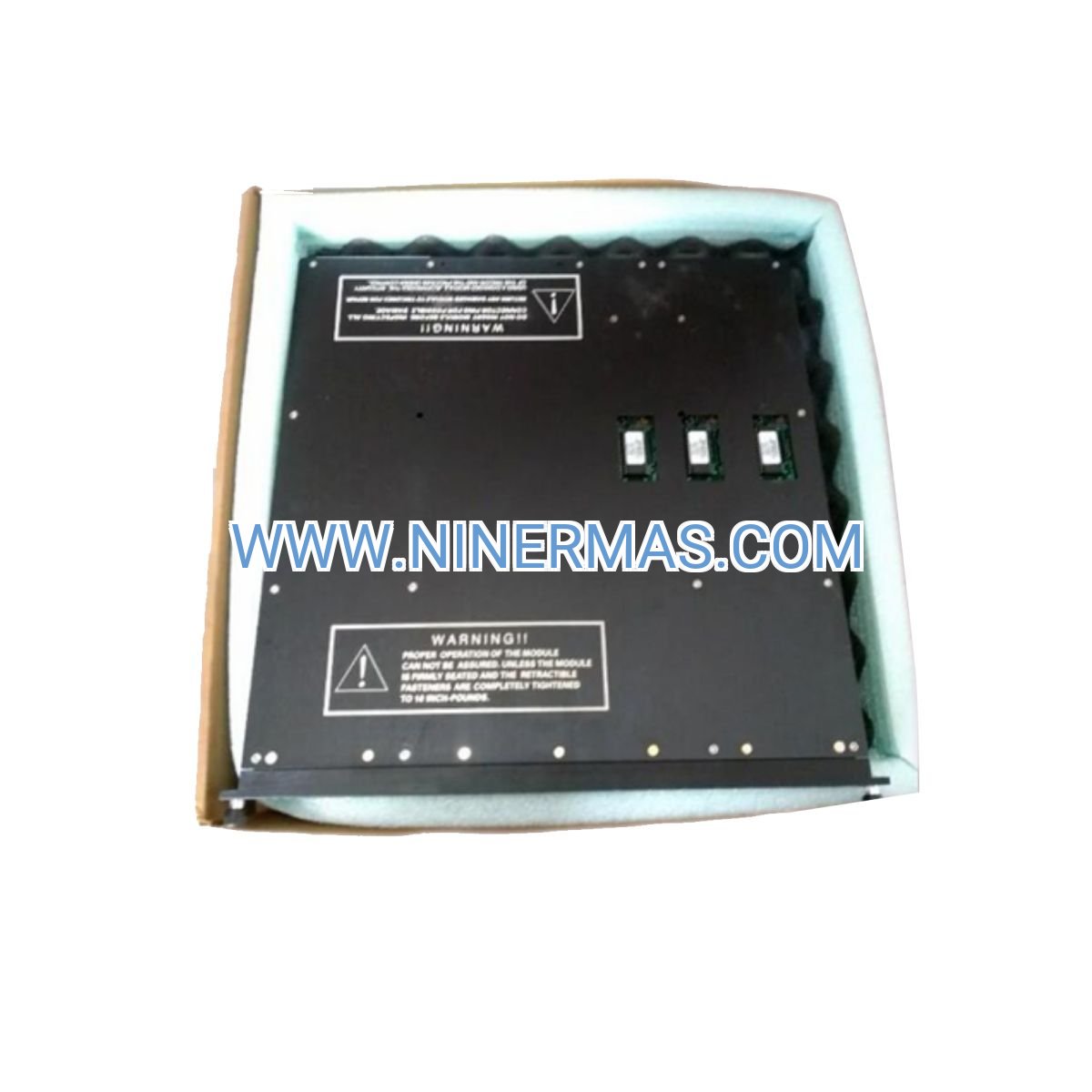
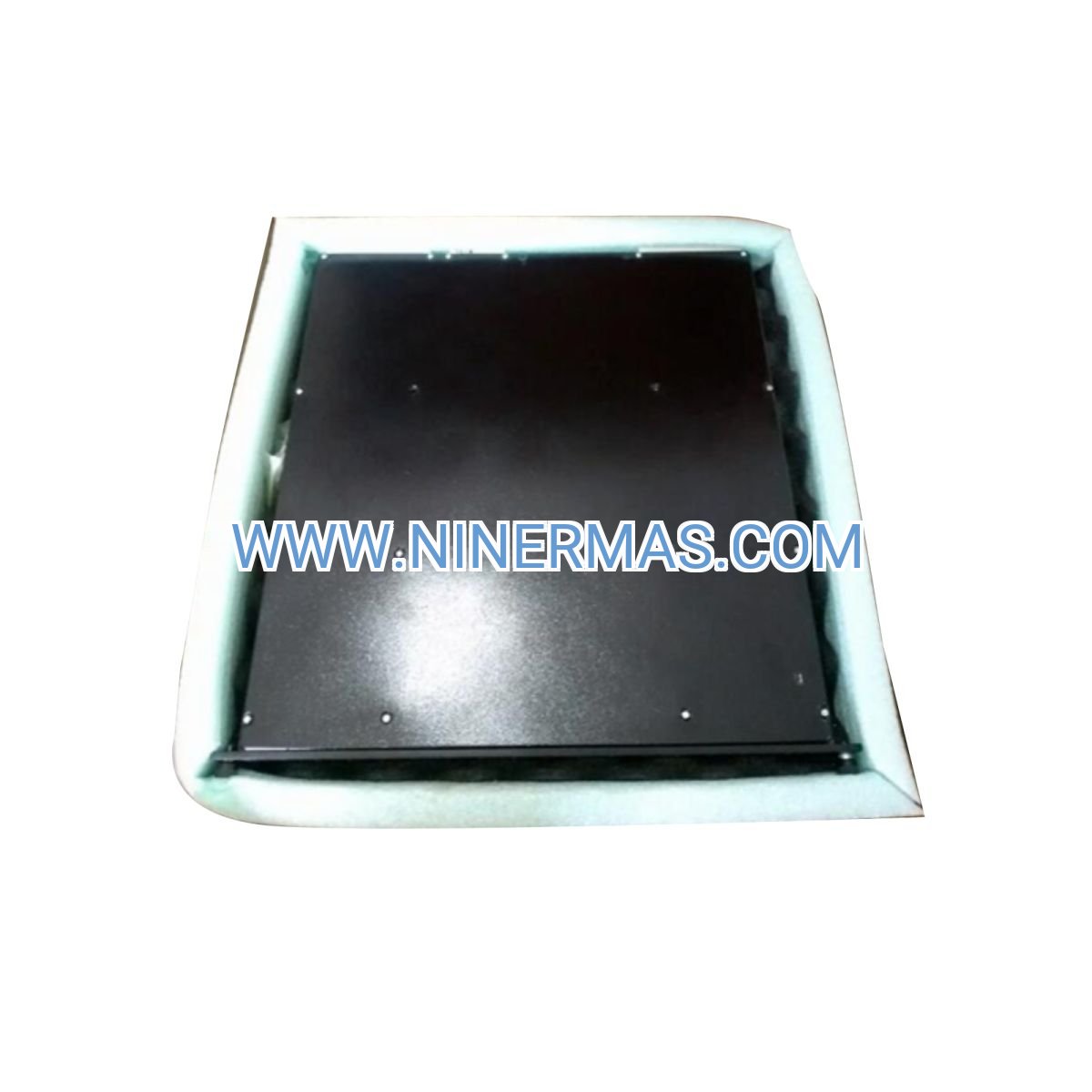
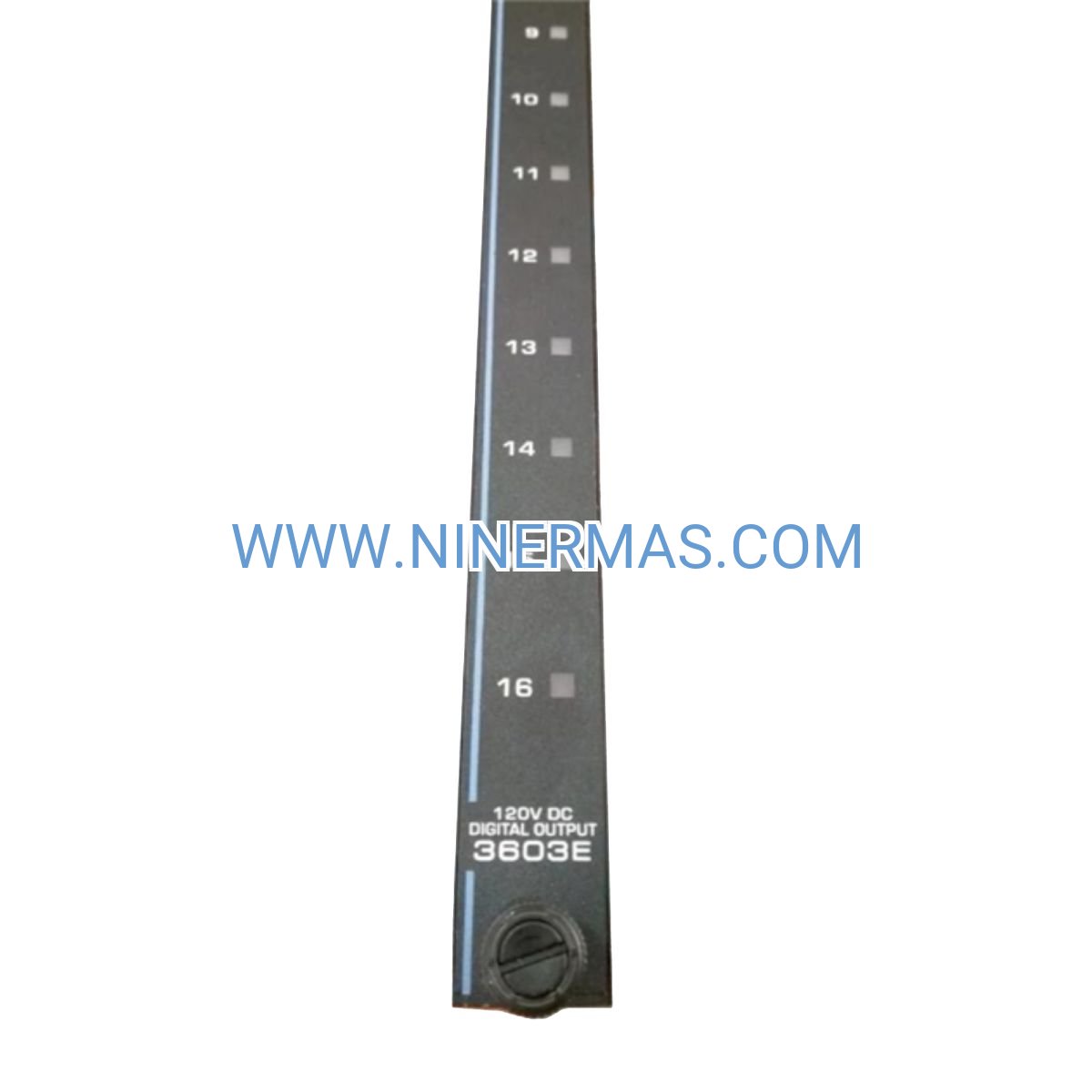
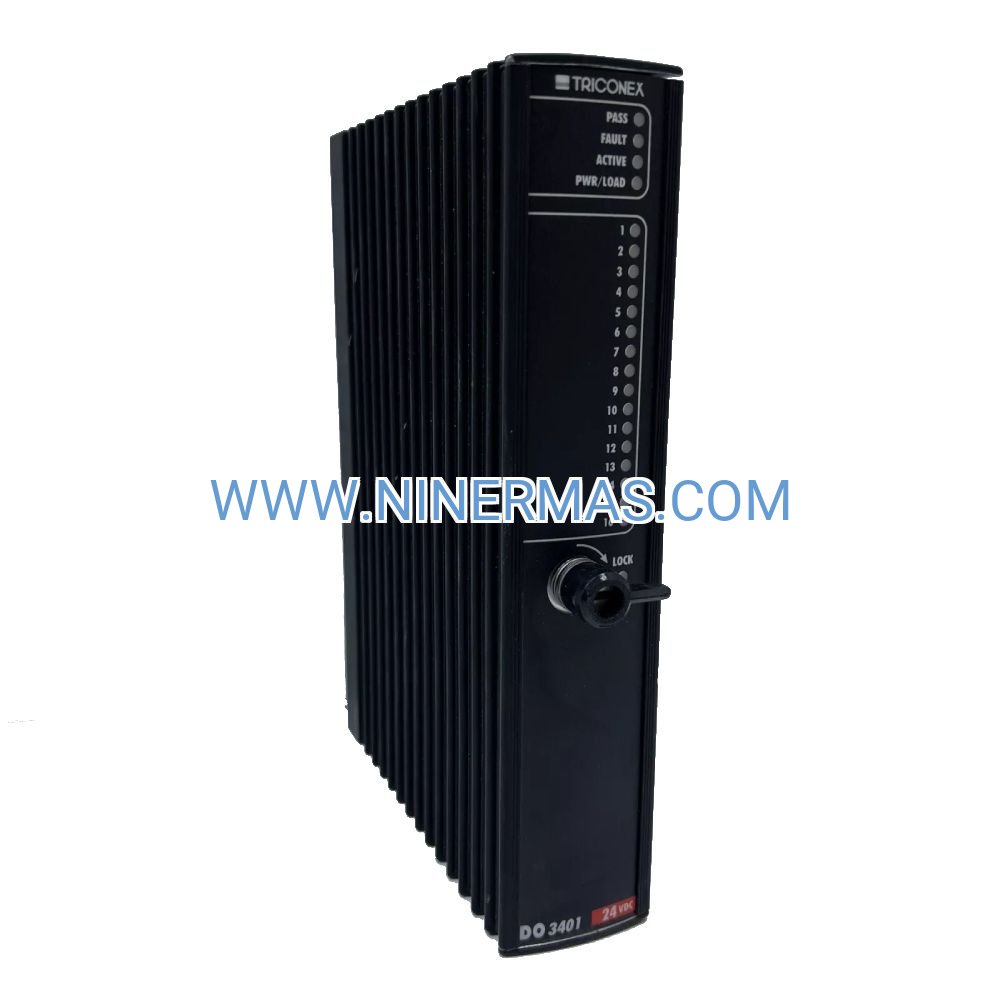
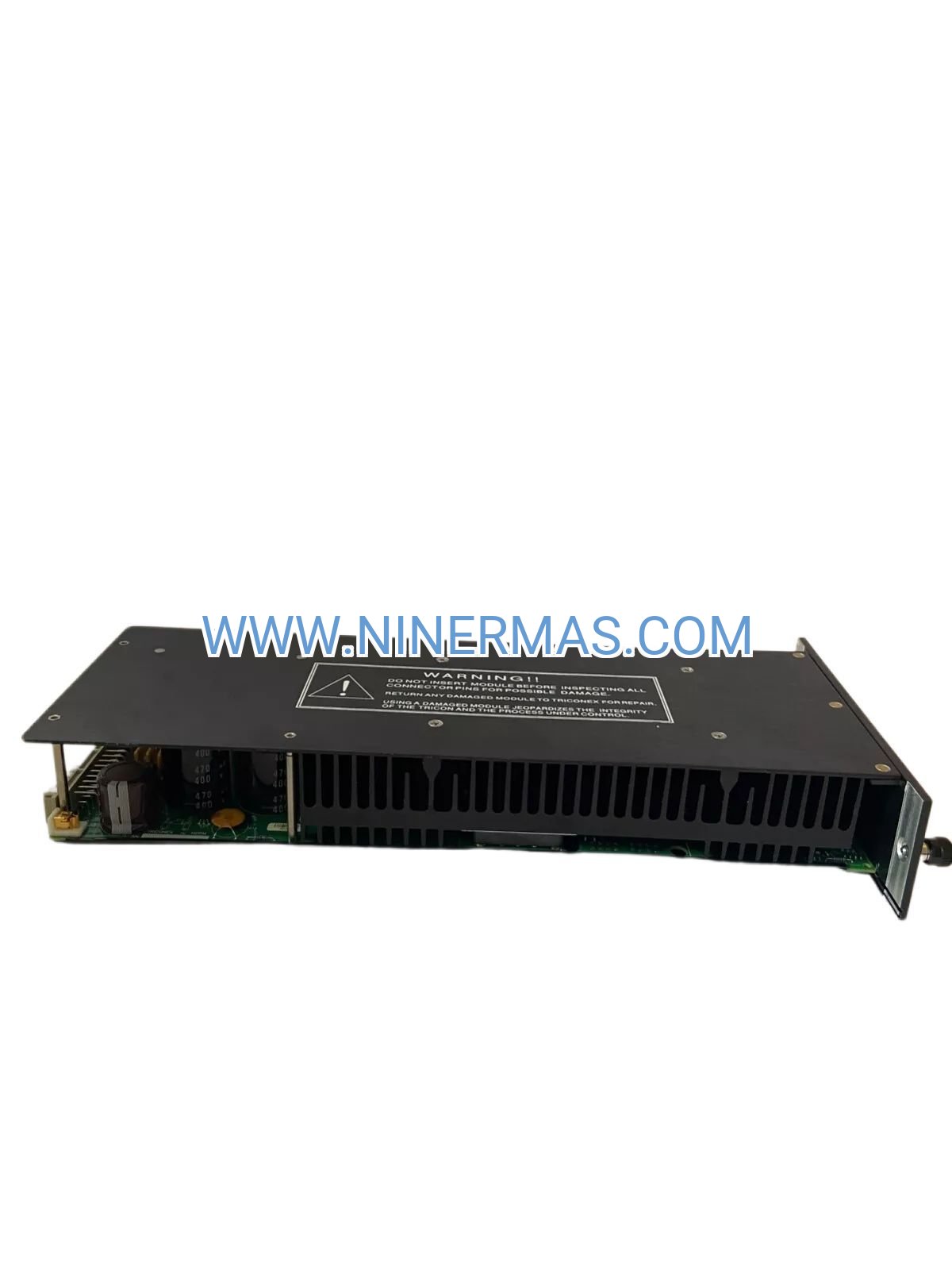
Triconex 3603E Digital Output Module (Industrial-Grade TMR Safety Controller)
The Triconex 3603E represents a proven solution in safety-rated digital output technology, delivering fault-tolerant control for high-consequence industrial processes. Built on Triple Modular Redundant (TMR) architecture, this 24VDC output module provides continuous operation with zero compromise on safety integrity, making it the preferred choice for emergency shutdown systems, fire & gas detection, and critical process interlocks across oil & gas, petrochemical, and power generation facilities.
Designed for environments where output failure could result in catastrophic consequences, the 3603E addresses the fundamental challenge of maintaining safe operation during component degradation or electrical faults. Target users include safety engineers, control system integrators, and plant operators managing SIL 3-rated safety instrumented systems who require certified, field-proven hardware with comprehensive diagnostic capabilities.
Key advantages include hot-swappable installation for zero-downtime maintenance, backward compatibility with legacy Triconex platforms reducing retrofit costs, and pre-certified compliance to IEC 61508/61511 standards that accelerates project approval cycles and third-party validation processes.
Core Features & Benefits
→ Triple Modular Redundant Voting Logic
Three independent processing channels execute parallel output decisions with 2-out-of-3 voting, ensuring correct operation continues even when a single channel experiences hardware failure or electrical noise interference. Business value: eliminates spurious trips that cost $50K-$500K per incident in lost production.
→ Continuous Self-Diagnostics (>99% Coverage)
Real-time monitoring detects wiring faults, load anomalies, power supply degradation, and internal component drift before they compromise safety functions. Business value: predictive maintenance scheduling reduces emergency callouts by 60% and extends mean time between failures.
✓ SIL 3 Pre-Certification Package
Factory-certified to IEC 61508 SIL 3, IEC 61511, and API RP 556 standards with complete safety manual and FMEDA documentation included. Business value: reduces certification engineering costs by $15K-$40K per project and shortens approval timelines from 6 months to 8 weeks.
✓ Hot-Swappable Field Replacement
DIN rail mounting with keyed connectors enables module replacement during live operation without system shutdown or safety function bypass. Business value: maintains continuous protection during maintenance windows and eliminates $100K+ planned outage costs.
✓ Wide Operating Temperature Range (-40°C to +70°C)
Military-grade component selection and conformal coating protection ensure reliable operation in extreme ambient conditions including offshore platforms, desert facilities, and arctic installations. Business value: reduces climate control infrastructure costs and enables deployment in remote locations.
✓ 2A Per-Channel Load Capacity
Direct drive capability for solenoid valves, contactors, and alarm annunciators eliminates external relay requirements and associated wiring complexity. Business value: reduces panel space requirements by 30% and simplifies troubleshooting with fewer failure points.
Application Scenarios
Emergency Shutdown Systems (ESD) – Oil & Gas Production
Controls pneumatic isolation valves, blowdown systems, and emergency depressurization circuits on offshore platforms and onshore processing facilities. Addresses the critical challenge of preventing hydrocarbon releases during overpressure events, equipment failures, or fire detection scenarios. Delivers certified SIL 3 protection with <10ms response time that meets API RP 14C requirements and reduces insurance premiums by demonstrating quantified risk reduction.
Fire & Gas Detection Systems – Petrochemical Plants
Activates deluge systems, foam suppression equipment, HVAC isolation dampers, and mass notification devices when combustible gas or flame detectors trigger alarm conditions. Solves the reliability challenge of coordinating multiple suppression zones while preventing false activations that waste suppressant chemicals and disrupt production. Provides TMR voting that eliminates 98% of nuisance trips while maintaining <1×10⁻⁴ probability of failure on demand.
Burner Management Systems – Power Generation
Sequences fuel gas valves, pilot igniters, and flame safeguarding interlocks in boiler startup/shutdown procedures for combined-cycle plants and industrial steam generators. Addresses the safety-critical requirement of preventing furnace explosions during light-off sequences while maintaining rapid response to flame-out conditions. Delivers NFPA 85 compliant control with diagnostic coverage that identifies valve sticking or igniter degradation 72 hours before failure.
Process Safety Interlocks – Chemical Manufacturing
Enforces safe operating limits in exothermic reactors, distillation columns, and batch polymerization processes by controlling cooling water valves, emergency venting systems, and feed isolation equipment. Solves the challenge of maintaining product quality while preventing runaway reactions that could result in vessel rupture or toxic releases. Provides deterministic response with <5ms output update rates that enable intervention before process variables exceed critical thresholds.
High Integrity Pressure Protection (HIPPS) – Pipeline Systems
Operates fast-acting isolation valves that prevent pipeline overpressure by closing in <2 seconds when upstream pressure exceeds design limits. Addresses the economic challenge of avoiding costly pressure relief valve discharges and environmental releases while protecting downstream equipment rated for lower pressures. Delivers SIL 3 risk reduction that enables HIPPS deployment as an alternative to mechanical relief systems, reducing CAPEX by $200K-$800K per installation.
Technical Parameters & Selection Guide
| Parameter | Specification |
|---|---|
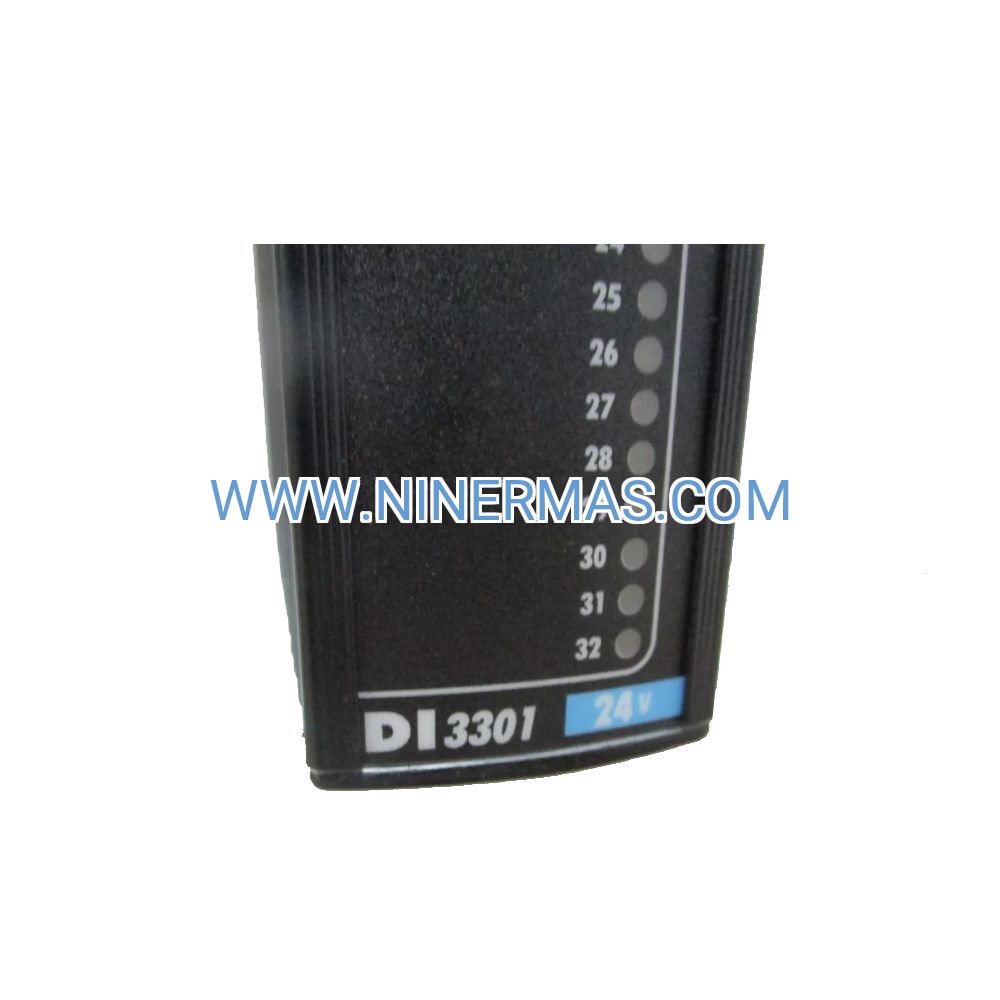
| Output Channels | 32 points per module (TMR architecture) |
| Output Voltage | 24VDC nominal (18-30VDC operating range) |
| Load Current | 2A continuous per channel, 3A surge (100ms) |
| Safety Integrity Level | SIL 3 certified (IEC 61508/61511) |
| Diagnostic Coverage | >99% with continuous self-testing |
| Response Time | <10ms typical (input change to output update) |
| Operating Temperature | -40°C to +70°C (-40°F to +158°F) |
| Storage Temperature | -40°C to +85°C |
| Humidity | 5% to 95% non-condensing |
| Vibration Resistance | 5g peak, 10-150Hz (IEC 60068-2-6) |
| Shock Resistance | 30g, 11ms duration (IEC 60068-2-27) |
| EMI/EMC Compliance | IEC 61000-6-2, IEC 61000-6-4 |
| Hazardous Area Rating | Zone 2 / Division 2 (with approved enclosure) |
| MTBF | >200,000 hours (MIL-HDBK-217F) |
| Power Consumption | 8W typical (no load), 72W maximum (full load) |
| Mounting | DIN rail (35mm) with Triconex chassis integration |
| Dimensions | 280mm H × 35mm W × 200mm D |
| Weight | 0.7 kg |
Selection Criteria: Choose the 3603E when your application requires SIL 3-rated digital outputs with TMR fault tolerance for controlling final elements in safety instrumented functions. This module is optimal for new installations requiring IEC 61511 compliance and retrofit projects upgrading from relay-based logic or single-channel PLC outputs. For applications requiring analog output control (4-20mA) or higher channel density (>32 points), consult the Triconex 3604E or 3625A alternatives. Verify that your existing Triconex controller firmware supports 3603E integration—compatibility requires TriStation 1131 v4.9.0 or later for full diagnostic functionality.
Extended Functions
IoT Integration & Remote Monitoring: The 3603E supports integration with Schneider Electric's EcoStruxure platform via Triconex communication modules, enabling cloud-based performance analytics, predictive maintenance alerts, and remote diagnostic access. OPC UA connectivity allows seamless data exchange with enterprise MES/SCADA systems for real-time safety system health monitoring and compliance reporting.
Advanced Diagnostic Features: Beyond standard TMR voting, the module provides channel-specific fault isolation, load current trending, and output waveform analysis that identifies degrading field wiring or actuator coil resistance changes up to 30 days before failure. Diagnostic data logs support root cause analysis and regulatory incident reporting requirements.
Customization Options: Factory configuration services available for pre-programmed output forcing patterns, custom diagnostic thresholds, and application-specific voting logic. Conformal coating upgrades and extended temperature variants (-55°C to +85°C) available for extreme environment deployments including subsea control systems and arctic installations.
Delivery & Service Assurance
Lead Time: Standard delivery 3-5 business days for in-stock units; custom configurations and factory-sealed modules ship within 10-15 business days. Expedited 24-hour shipping available for emergency replacement requirements with premium freight surcharge.
Warranty Coverage: 12-month manufacturer warranty covering defects in materials and workmanship from date of shipment. Warranty includes free replacement module, return shipping labels, and advance exchange service to minimize downtime during failure events.
Technical Support: Lifetime access to application engineering support including configuration assistance, troubleshooting guidance, firmware compatibility verification, and integration consulting. Support available via email, phone, and remote desktop sessions during business hours (GMT+8, 9:00-18:00 weekdays).
Documentation Package: Each module ships with safety manual, installation guide, wiring diagrams, FMEDA report, IEC 61508 certificate, and TriStation configuration templates. Additional resources include AutoCAD panel drawings, spare parts lists, and recommended maintenance procedures.
Frequently Asked Questions
What communication protocols does the Triconex 3603E output module support for remote diagnostics?
The 3603E integrates with Triconex controllers that support Modbus TCP/IP, proprietary Triconex Network Protocol (TNP), and OPC UA via gateway modules. Remote diagnostic access requires TriStation 1131 software connected through secure VPN or dedicated communication processors—the module itself does not have standalone Ethernet connectivity.
Can the 3603E digital output module handle inductive loads like solenoid valves without external suppression?
Yes, each output channel includes integrated flyback diode protection rated for inductive loads up to 2A continuous. For loads exceeding 2A or requiring AC voltage switching, external contactors or solid-state relays are recommended. The module's diagnostic system monitors back-EMF signatures to detect coil degradation in connected solenoids.
How does the TMR architecture improve safety system availability compared to simplex output modules?
TMR voting allows the 3603E to continue safe operation during single-channel failures without requiring system shutdown or safety function bypass. Quantified availability improvement: 99.97% vs. 99.2% for simplex designs, translating to 23 fewer hours of safety system unavailability per year. Diagnostics flag failed channels for scheduled replacement during planned maintenance windows.
What installation requirements apply when deploying the 3603E in hazardous area classifications?
The module is certified for Zone 2 / Division 2 installations when mounted in NEMA 4X or IP66-rated enclosures with proper grounding and cable gland sealing. For Zone 1 / Division 1 applications, the module must be installed in purged/pressurized enclosures meeting IEC 60079-2 Type X or Y pressurization requirements. Consult local authority having jurisdiction (AHJ) for specific area classification approvals.
Does the Triconex 3603E require specialized configuration software or can it integrate with standard PLC programming tools?
Configuration requires Schneider Electric's TriStation 1131 software (IEC 61131-3 compliant) for function block programming, I/O mapping, and diagnostic setup. The module cannot be programmed using Rockwell RSLogix, Siemens TIA Portal, or other third-party PLC tools. TriStation licenses are sold separately; demo versions available for evaluation and training purposes.
What energy efficiency benefits does the 3603E provide compared to relay-based output systems?
Solid-state output switching eliminates mechanical relay coil power consumption (typically 2-5W per relay), reducing panel heat load by 60-150W for a 32-point system. Lower thermal dissipation extends enclosure cooling system lifespan and reduces HVAC energy costs by approximately $200-$400 annually in climate-controlled installations. Zero contact wear also eliminates relay replacement costs averaging $15-$30 per point every 3-5 years.
Take the Next Step
Ready to enhance your safety instrumented system with proven TMR technology? Contact our application engineering team for project-specific configuration guidance, compatibility verification with your existing Triconex infrastructure, or to request a detailed quotation including volume pricing and delivery timelines. Our specialists can assist with safety integrity level calculations, I/O point mapping, and integration planning to ensure seamless deployment.
Request a quote: sale@ninermas.com | Technical inquiries: +0086 187 5021 5667
© 2026 NINERMAS COMPANY LIMITED. All rights reserved.
Original Source: https://ninermas.com
Contact: sale@ninermas.com | +0086 187 5021 5667
Related products

Contact Info
-
Address:22 / F, South Wo Hang building, 148 Wing Lok Street, Sheung Wan, Western District, Hong Kong
-
Phone:+8618750215667
-
Email: