Description
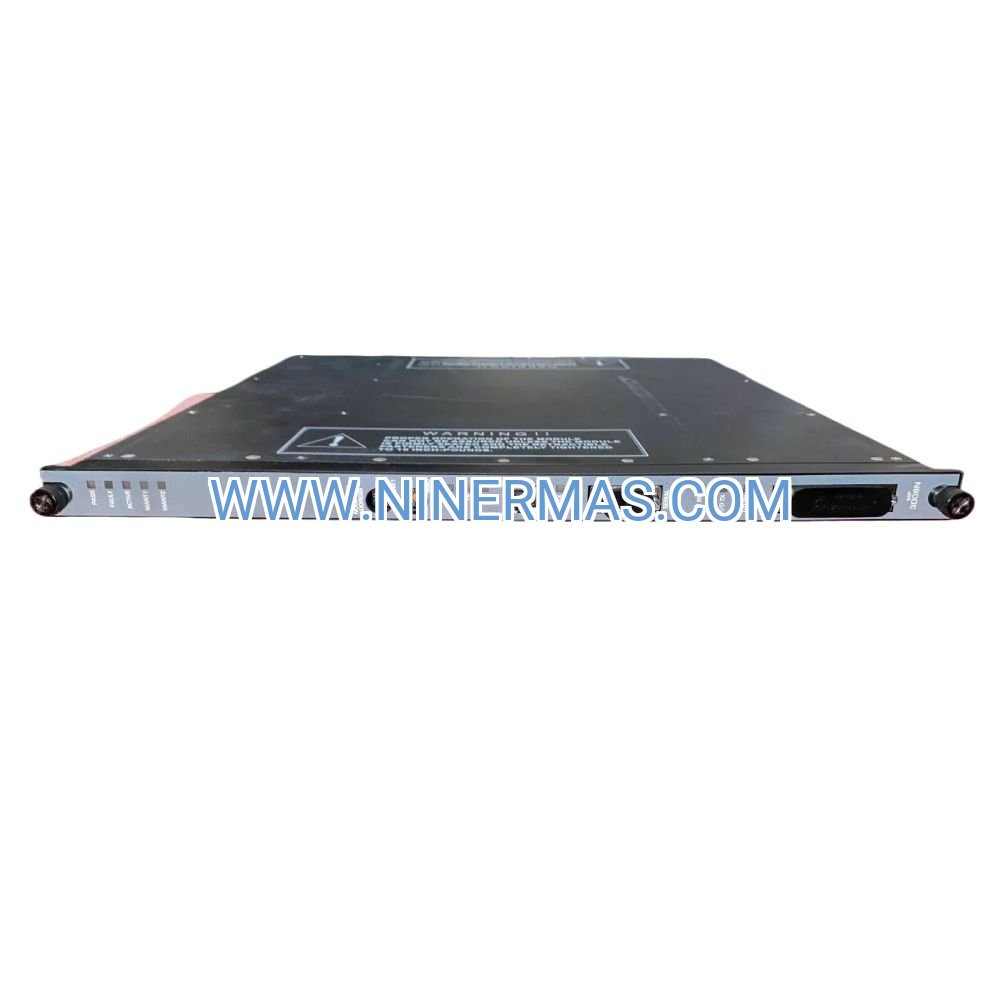
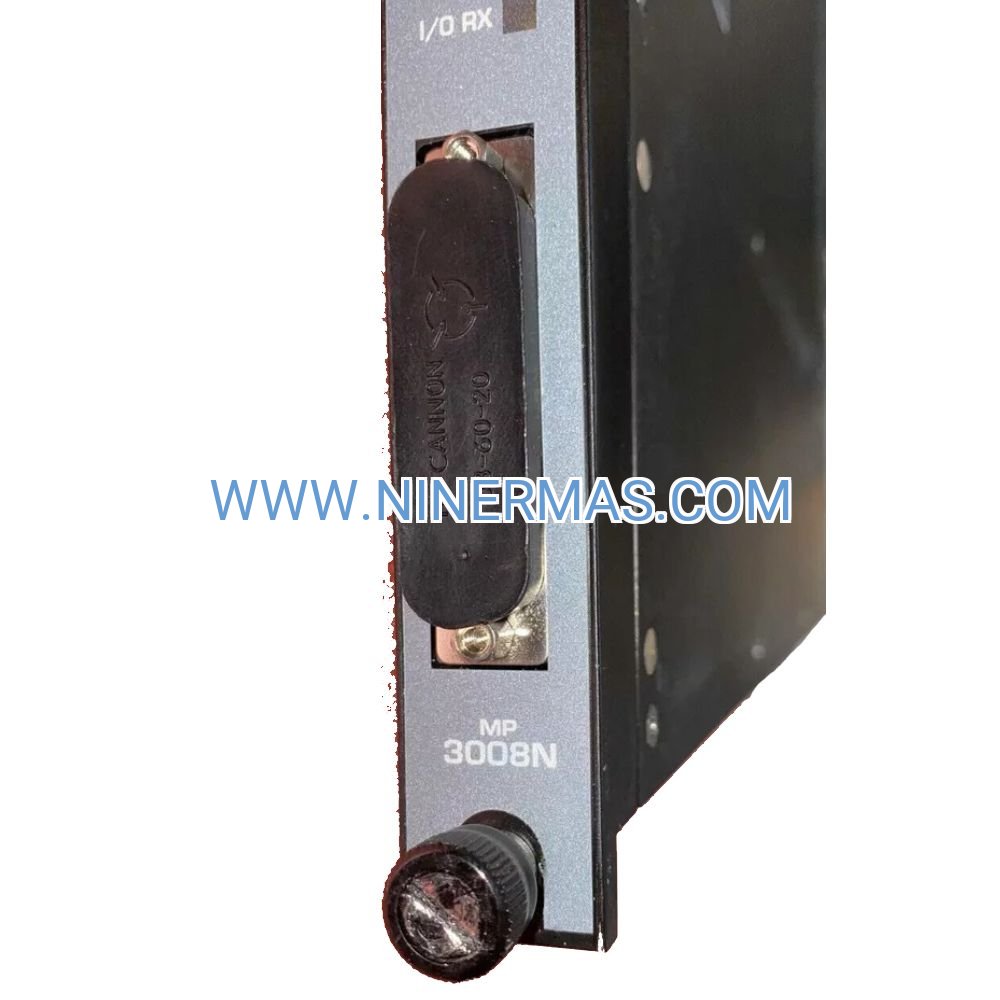
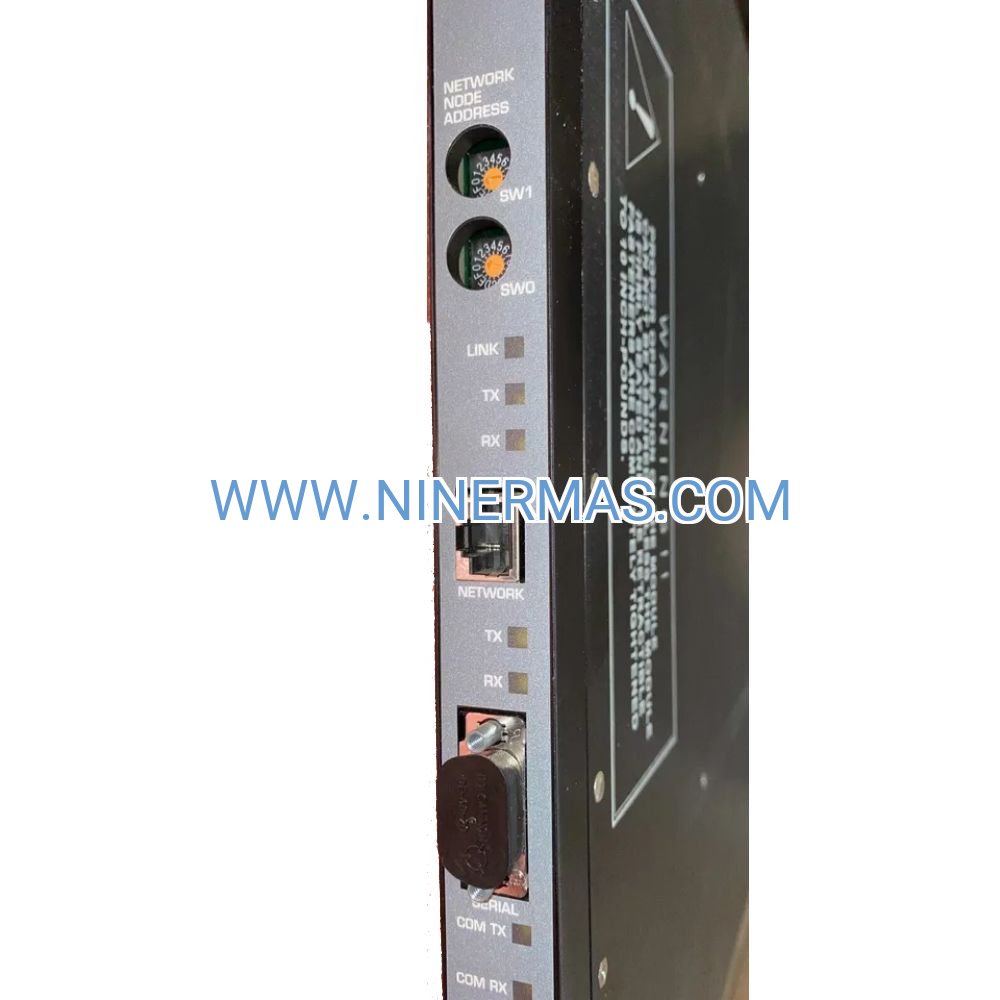
3008N Triconex Main Processor – Industrial-Grade TMR Safety Controller
The 3008N Triconex Main Processor delivers mission-critical control for safety instrumented systems where failure is not an option. Built on proven Triple Modular Redundant technology, this processor maintains operational integrity through component-level failures, ensuring uninterrupted protection in oil & gas, chemical processing, and power generation facilities worldwide.
Designed for Tricon V10 platforms, the 3008N combines 32-bit RISC processing power with intelligent fault detection, enabling real-time safety logic execution while continuously monitoring system health. Its hot-swappable architecture eliminates planned downtime for maintenance, while SIL 3 certification guarantees compliance with the most stringent international safety standards.
Whether you're upgrading legacy emergency shutdown systems or deploying new fire & gas detection networks, the 3008N provides the reliability foundation that safety engineers demand. With over 100,000 hours MTBF and field-proven performance across thousands of installations, this processor represents the industry benchmark for fault-tolerant control.
Core Features & Benefits
✓ Triple Modular Redundancy (TMR) Architecture
Three parallel processors execute identical logic with continuous cross-verification. 2oo3 voting logic automatically isolates faults while maintaining full control authority, delivering 99.99% availability even during component failures.
✓ SIL 3 Safety Integrity Certification
IEC 61508 compliant design validated by TÜV Rheinland ensures regulatory compliance for safety instrumented functions. Reduces liability exposure while meeting API, NFPA, and ISA standards for high-consequence applications.
✓ Hot-Swap Maintenance Capability
Replace individual processor modules during live operation without system shutdown or safety function interruption. Minimizes maintenance windows and eliminates production losses during routine service.
✓ Extended Environmental Qualification
Operates reliably from -40°C to +70°C in harsh industrial environments. Conformal coating and ruggedized construction withstand vibration, humidity, and electromagnetic interference common in offshore and heavy industrial settings.
✓ Comprehensive Diagnostic Monitoring
Built-in self-test routines continuously verify processor health, memory integrity, and communication pathways. Predictive fault alerts enable proactive maintenance before failures impact operations.
Application Scenarios
→ Emergency Shutdown Systems (ESD)
Protects personnel and assets in refineries, chemical plants, and offshore platforms by executing rapid shutdown sequences when hazardous conditions are detected. The 3008N's deterministic scan cycle ensures sub-second response to critical events, while TMR architecture prevents spurious trips that cost millions in lost production.
→ Fire & Gas Detection Networks
Processes inputs from hundreds of flame detectors, gas sensors, and manual call points to coordinate suppression systems and evacuation protocols. Fault tolerance ensures detection capability remains intact even during detector failures or maintenance activities.
→ Burner Management Systems (BMS)
Controls safe startup, operation, and shutdown of industrial boilers and furnaces in compliance with NFPA 85/86 standards. Prevents explosive atmospheres through precise fuel-air ratio control and flame monitoring with certified safety integrity.
→ Turbomachinery Protection
Monitors vibration, temperature, and pressure parameters on gas turbines, steam turbines, and compressors. Executes protective shutdowns within milliseconds when operating limits are exceeded, preventing catastrophic equipment damage.
→ Pipeline Safety Systems
Manages leak detection, overpressure protection, and emergency isolation valves across thousands of kilometers of transmission pipelines. Distributed control architecture with 3008N processors at critical nodes ensures localized response to pipeline integrity threats.
Technical Parameters & Selection Guide
| Parameter | Specification | Selection Consideration |
| Processing Architecture | 32-bit RISC, 33 MHz, TMR | Suitable for complex safety logic with <5,000 function blocks |
| User Memory | 4 MB program / 2 MB data | Adequate for medium to large SIS applications (up to 118 I/O modules) |
| Scan Cycle Range | 10 ms – 200 ms (configurable) | 10-20 ms for fast ESD, 50-100 ms for F&G, 100-200 ms for BMS |
| Communication Interfaces | Dual Ethernet, RS-232/485 | Ethernet for HMI/SCADA, serial for legacy device integration |
| Power Requirement | 45W total (15W per module) | Ensure UPS capacity accounts for full TMR power draw |
| Environmental Rating | -40°C to +70°C, 5-95% RH | Extended range variant required for outdoor/offshore installations |
| Safety Certification | IEC 61508 SIL 3, TÜV certified | Meets global regulatory requirements for safety-critical applications |
Selection Criteria: Choose the 3008N when your application requires SIL 3 capability with moderate I/O density (up to 118 modules). For larger systems exceeding 150 I/O points, consider the 3009 processor with expanded memory. For compact skid-mounted systems with <50 I/O, the 3007 variant offers cost-effective TMR protection.
Extended Functions
IoT & Remote Monitoring Integration
OPC UA server functionality enables secure connectivity to cloud-based asset performance management platforms. Stream real-time diagnostics, alarm histories, and performance metrics to centralized monitoring centers for multi-site operations.
Cybersecurity Hardening
V10 firmware includes role-based access control, encrypted communication channels, and audit logging to comply with IEC 62443 industrial cybersecurity standards. Protects against unauthorized configuration changes and network-based attacks.
Advanced Diagnostics Suite
Predictive maintenance algorithms analyze processor performance trends to forecast component end-of-life. Automated health reports reduce troubleshooting time and optimize spare parts inventory.
Custom Logic Libraries
Pre-validated function blocks for common safety applications (high-integrity pressure protection, two-out-of-three voting, partial stroke testing) accelerate engineering and reduce validation costs.
Delivery & Service Assurance
Lead Time: Standard stock items ship within 3-5 business days. Custom-configured systems with factory acceptance testing require 4-6 weeks from order confirmation.
Warranty Coverage: 12-month comprehensive warranty covering manufacturing defects, firmware issues, and performance deviations from published specifications. Extended warranty options available for critical applications.
Technical Support: Lifetime access to application engineers for TriStation programming assistance, system diagnostics, and migration planning. Remote support available 24/7 for emergency troubleshooting.
Documentation Package: Includes installation manual, configuration guide, I/O wiring diagrams, TriStation software license, factory test reports, and calibration certificates. IEC 61508 compliance documentation provided for SIL verification.
Frequently Asked Questions
How does the 3008N processor handle communication failures between redundant modules?
Each processor module operates independently with dedicated I/O communication. If inter-module communication fails, the system continues operating in simplex mode with full functionality while generating diagnostic alarms for maintenance attention.
What is the maximum I/O capacity supported by a single 3008N processor?
The 3008N supports up to 118 I/O modules per chassis, accommodating approximately 2,000-3,000 I/O points depending on module density. For larger systems, multiple processors can be networked using Tricon Communication Modules.
Can existing Tricon V9 programs be migrated to V10 systems with the 3008N?
Yes, TriStation software includes migration tools that convert V9 logic to V10 format with automated syntax checking. Most applications migrate with minimal modifications, though thorough validation testing is recommended.
What energy efficiency improvements does the 3008N offer compared to legacy processors?
The 3008N consumes 30% less power than equivalent V8 processors while delivering 40% faster scan times. Reduced heat generation also lowers cooling requirements in control room environments.
How is remote monitoring configured for offshore installations with limited bandwidth?
The processor supports data compression and configurable polling intervals to optimize bandwidth usage. Critical alarms can be prioritized for immediate transmission while historical data synchronizes during off-peak periods.
What installation requirements are necessary for proper TMR operation?
Each processor module requires independent power feeds from separate UPS circuits. Chassis backplane must be properly grounded, and communication cables should follow recommended routing to avoid electromagnetic interference.
Take the Next Step
Protect your critical operations with proven TMR technology trusted by safety engineers worldwide. Contact our application specialists for system sizing assistance, migration planning from legacy platforms, or technical clarification on your specific safety instrumented system requirements.
Request a detailed quotation including processor modules, I/O components, programming software, and commissioning support tailored to your application. Our team provides complete lifecycle support from initial design through ongoing maintenance optimization.
© 2026 NINERMAS COMPANY LIMITED. All rights reserved.
Original Source: https://ninermas.com
Contact: sale@ninermas.com | +0086 187 5021 5667
PDF Specification
Download PDF file here:
Click to Download PDFRelated products

Contact Info
-
Address:22 / F, South Wo Hang building, 148 Wing Lok Street, Sheung Wan, Western District, Hong Kong
-
Phone:+8618750215667
-
Email: