


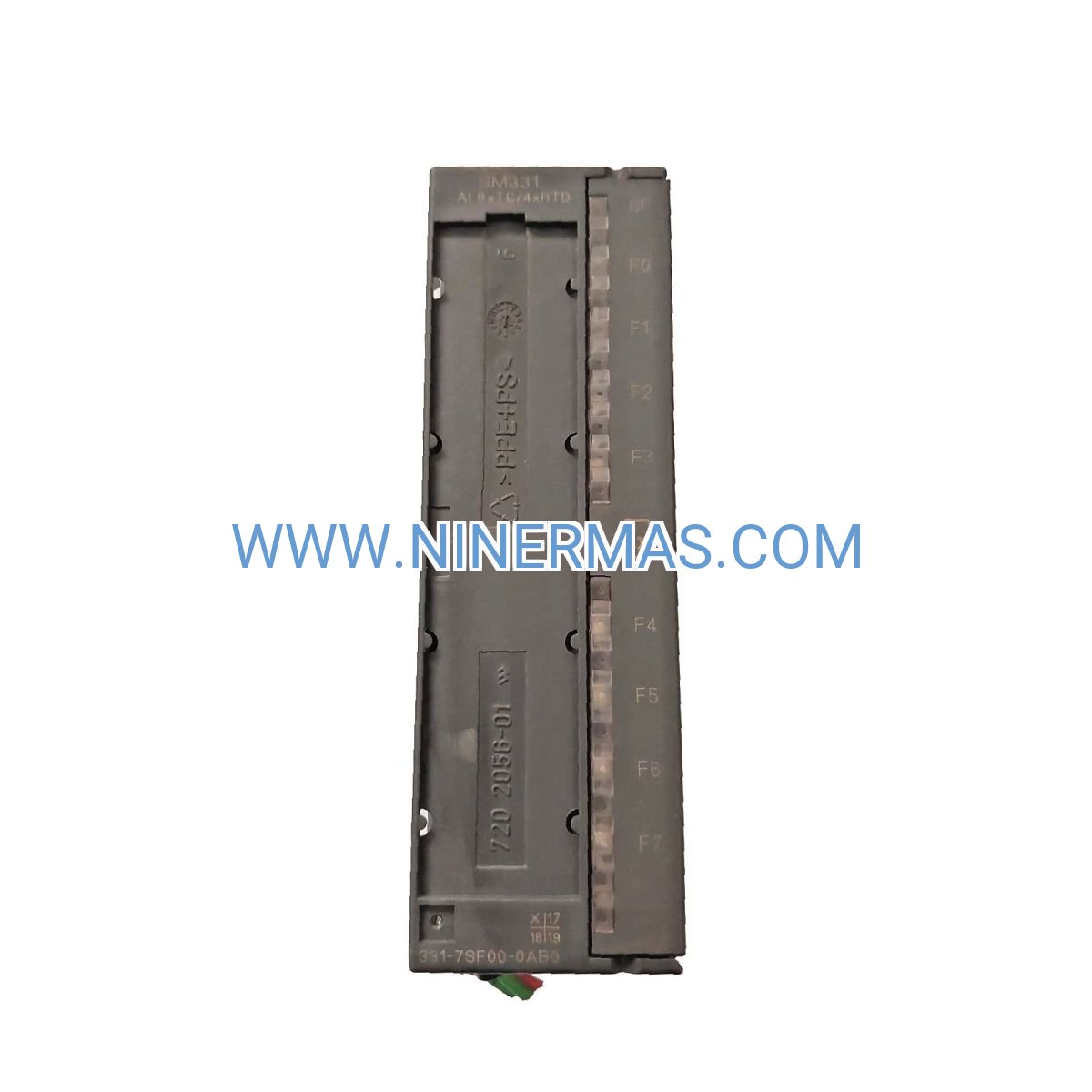
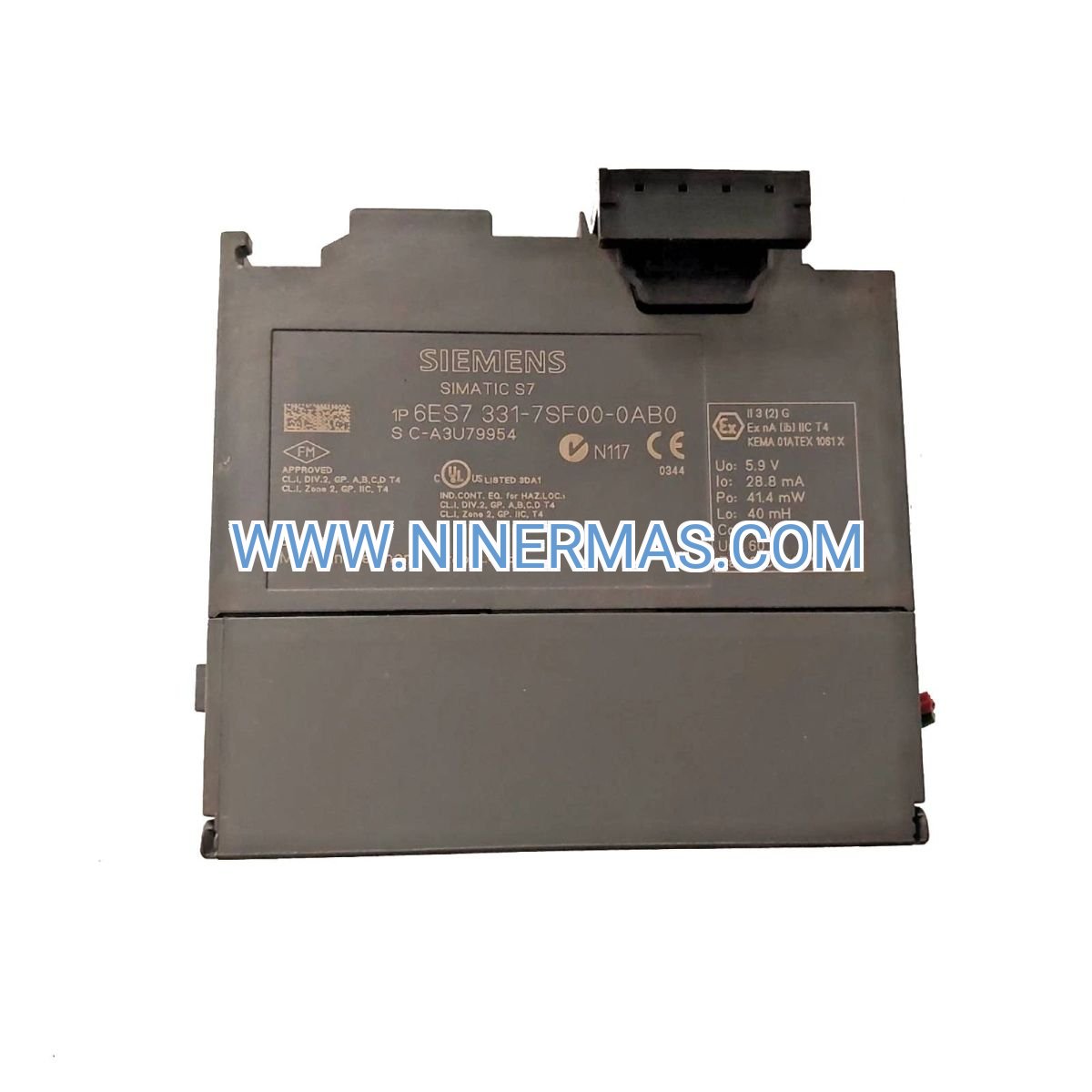
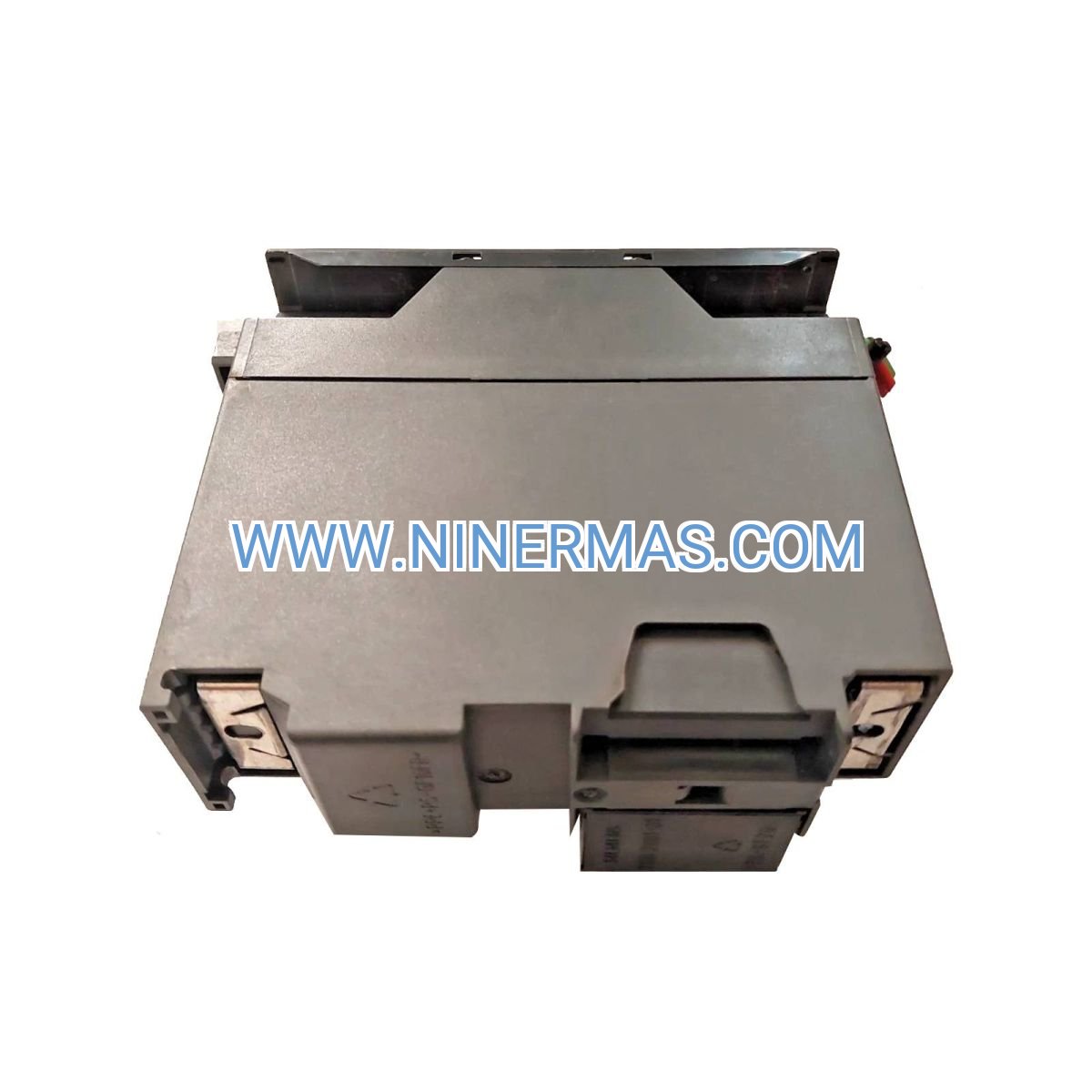
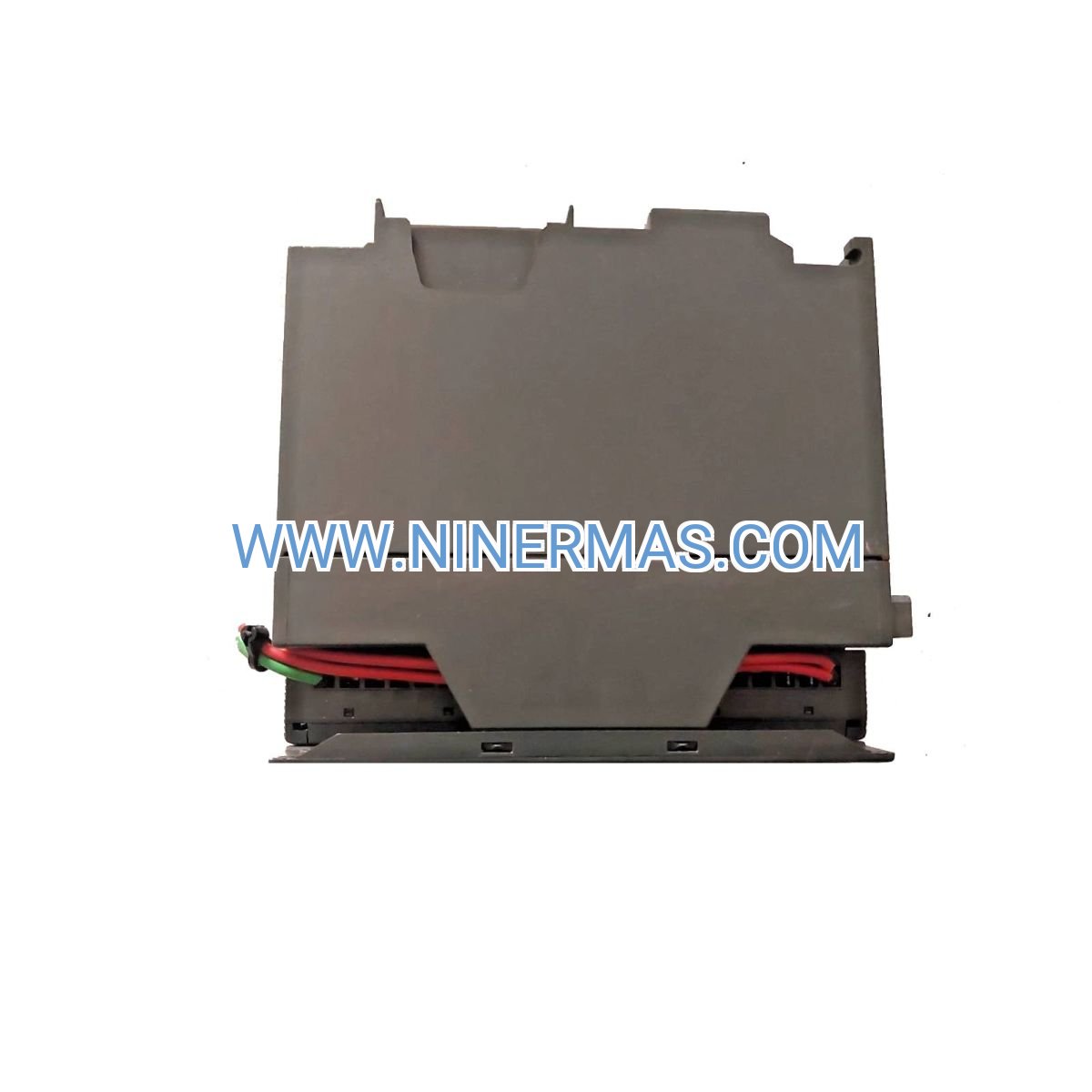
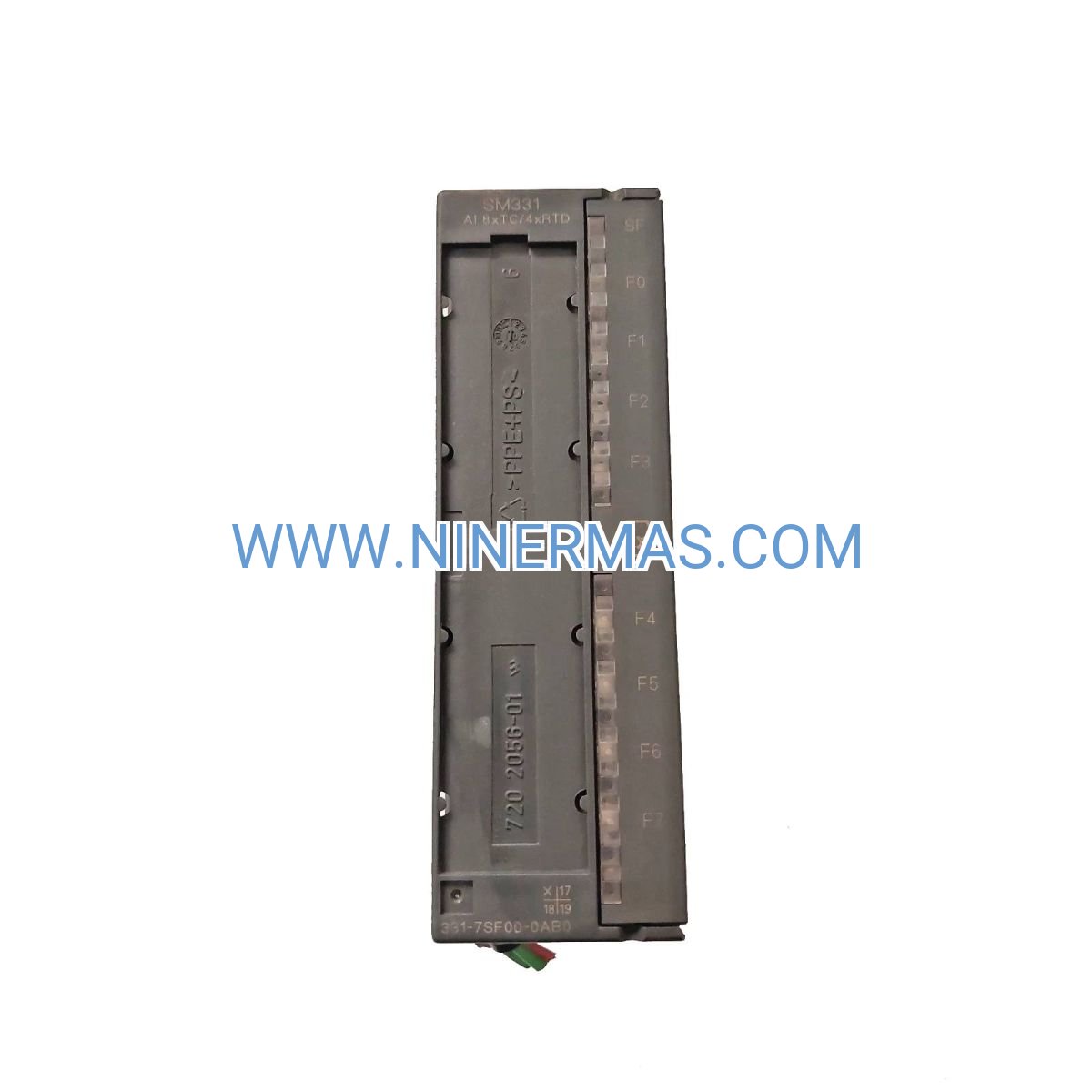
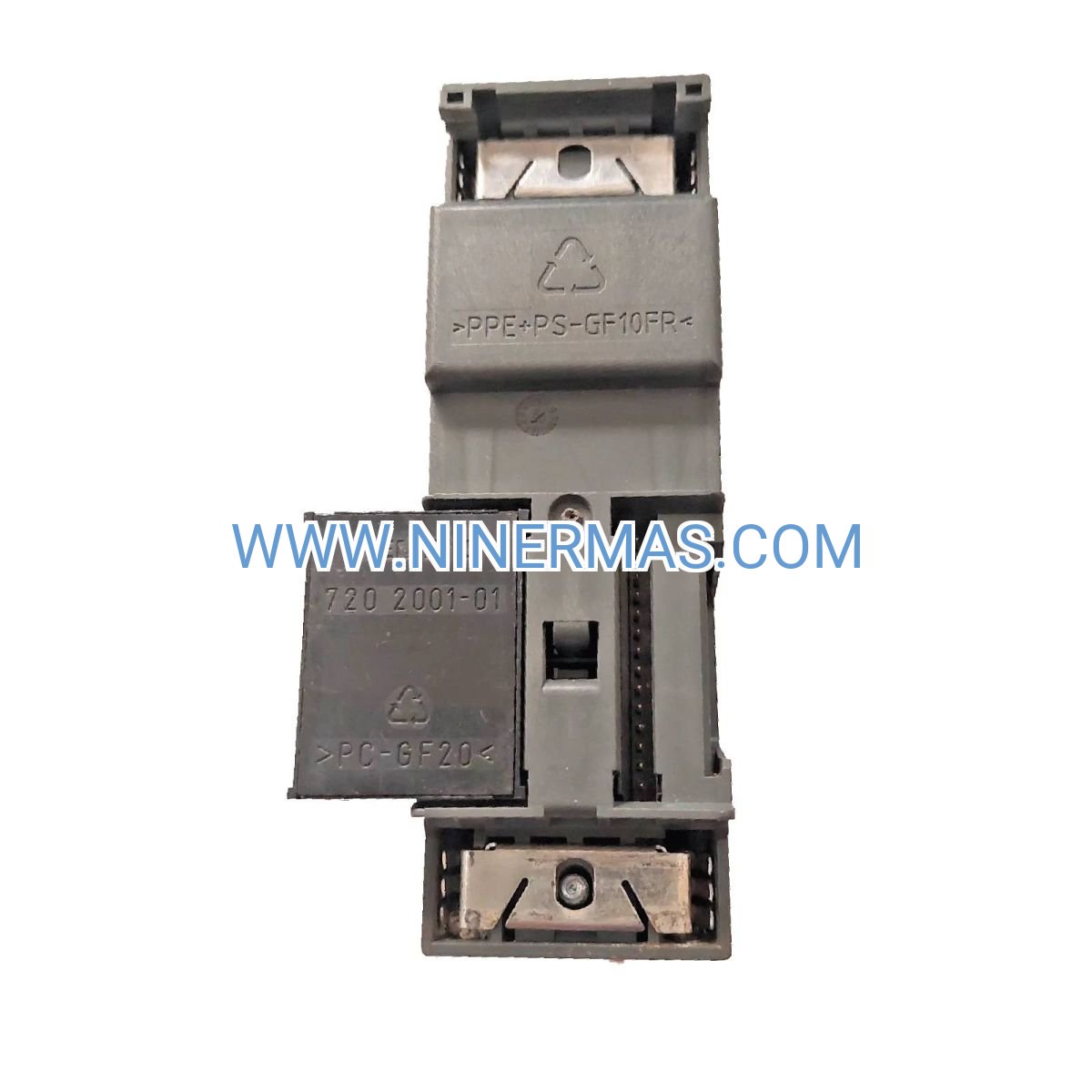
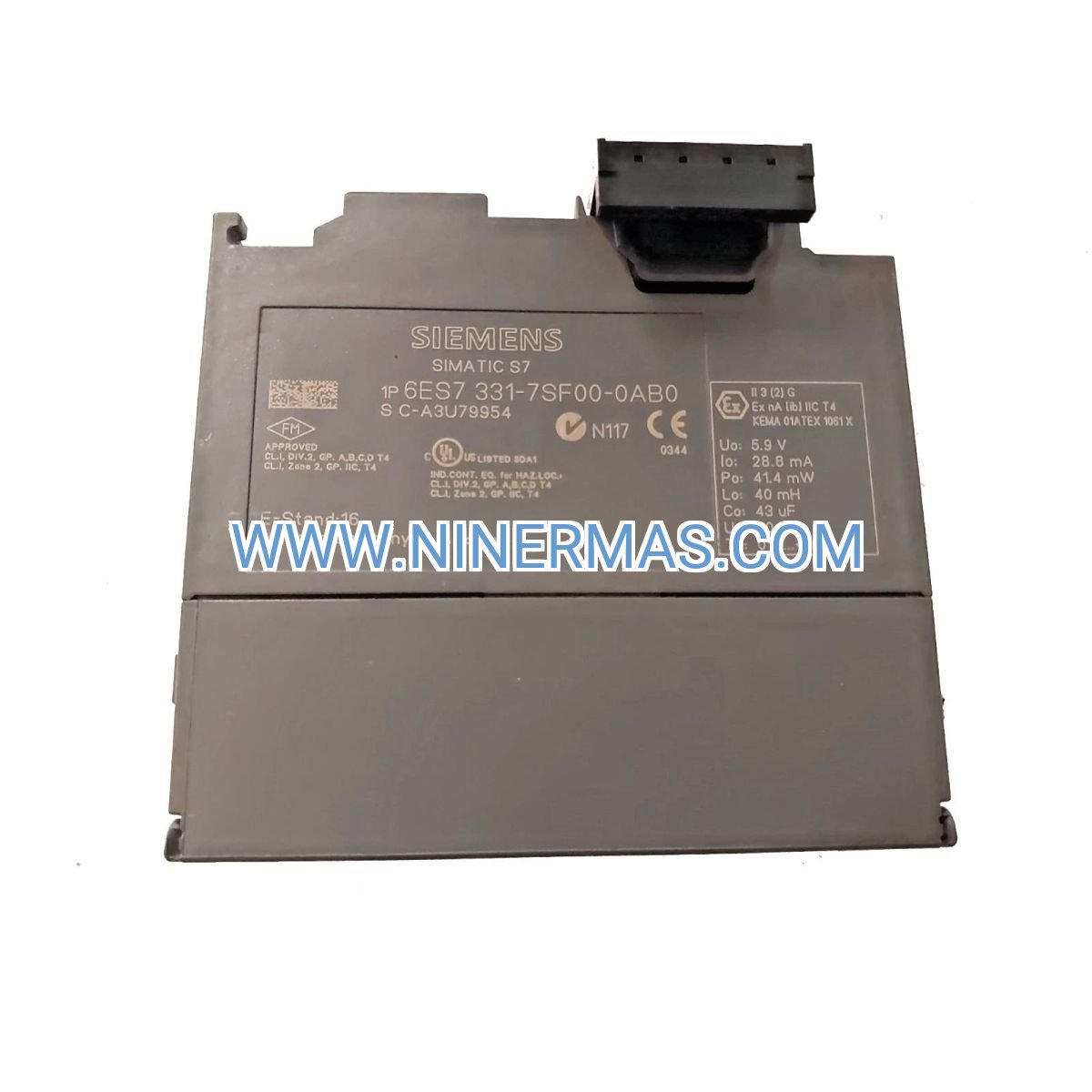
Siemens 6ES7331-7PF11-0AB0 | SM 331 Safety Analog Input Module | SIL 3 Certified
Description
Siemens SM 331 Safety Analog Input Module (Industrial-Grade Failsafe Control Solution)
The Siemens 6ES7331-7PF11-0AB0 SM 331 Safety Analog Input Module is a factory-certified failsafe analog input device designed for safety-critical temperature and process monitoring applications. Through integrated SIL 3 (Safety Integrity Level 3) certification and advanced diagnostic capabilities, this module delivers continuous, reliable monitoring of thermocouple (TC) and resistance temperature detector (RTD) signals within S7-300F safety systems.
Engineered for industries where process deviation can lead to catastrophic consequences—such as chemical processing, oil & gas refining, pharmaceutical manufacturing, and power generation—this module addresses critical challenges including sensor drift detection, signal integrity validation, redundant channel monitoring, and compliance with IEC 61508 functional safety standards.
With standardized configuration templates and flexible channel mapping, the SM 331 safety module is ideal for safety engineers, control system integrators, plant automation teams, and OEM equipment manufacturers requiring certified safety I/O. Contact our application engineers for safety loop design consultation and compliance documentation.
Core Functions & Technical Advantages
- SIL 3 Certified Failsafe Operation
Compliant with IEC 61508 and IEC 61511 standards, the module performs continuous self-diagnostics and cross-channel comparison to detect sensor faults, wire breaks, and signal anomalies, ensuring safe shutdown when deviations exceed configured thresholds. - Dual-Channel Redundancy Architecture
Each safety function utilizes paired input channels with 1oo2 (one-out-of-two) or 2oo2 voting logic, providing fault tolerance and eliminating single points of failure in critical temperature monitoring loops. - Universal TC/RTD Signal Compatibility
Supports industry-standard thermocouple types (J, K, T, E, N, R, S, B) and RTD configurations (Pt100, Pt1000, Ni100), with automatic cold junction compensation and linearization for accurate temperature measurement across -200°C to +1750°C ranges. - High-Resolution 16-Bit Conversion
Delivers ±0.1% full-scale accuracy with 16-bit A/D resolution, enabling precise detection of process temperature changes critical for reactor control, furnace monitoring, and thermal safety interlocks. - Comprehensive Diagnostic Coverage
Built-in diagnostics monitor sensor short circuits, open circuits, out-of-range signals, and module internal faults, with diagnostic data accessible via STEP 7 Safety programming environment for predictive maintenance. - Seamless S7-300F Integration
Hot-swappable installation on S7-300 mounting rails with automatic hardware detection, configured through STEP 7 Safety Advanced software with pre-validated safety function blocks (F-I/O DB).
Typical Application Scenarios
This safety analog input module is specifically designed for applications demanding certified functional safety and continuous process monitoring:
- Chemical Reactor Temperature Monitoring
Ensures exothermic reaction temperatures remain within safe operating limits, triggering emergency cooling or feed shutdown when safety thresholds are exceeded, preventing runaway reactions. - Burner Management Systems (BMS)
Monitors flame temperature and furnace zones in boilers, heaters, and incinerators, providing safety-rated interlocks to prevent fuel accumulation and explosion hazards in accordance with NFPA 85/86 standards. - Pharmaceutical Sterilization & Cleanroom Control
Validates autoclave sterilization cycles and cleanroom HVAC temperatures with traceable, audit-compliant data logging, meeting FDA 21 CFR Part 11 and EU GMP Annex 11 requirements. - Oil & Gas Pipeline Heating Trace Monitoring
Supervises heat tracing circuits on viscous product pipelines and winterization systems, detecting overheating or heating failure conditions that could lead to product solidification or fire hazards. - Power Plant Turbine & Generator Protection
Monitors bearing temperatures, winding temperatures, and exhaust gas temperatures in steam and gas turbines, initiating safe turbine trip sequences when abnormal thermal conditions are detected.
Technical Parameters & Selection Guide
To facilitate engineering design and procurement, we provide detailed specifications for the 6ES7331-7PF11-0AB0 module. Custom safety loop configurations are available based on project-specific requirements.
| Parameter | Specification |
|---|---|
| Order Number | 6ES7331-7PF11-0AB0 |
| Product Family | SIMATIC S7-300 Safety |
| Safety Integrity Level | SIL 3 (IEC 61508), Category 4 (EN 954-1), PLe (ISO 13849-1) |
| Number of Channels | 8 failsafe analog inputs (4 safety functions with 1oo2 configuration) |
| Input Signal Types | Thermocouple (TC): J, K, T, E, N, R, S, B RTD: Pt100, Pt1000, Ni100 (2-wire, 3-wire, 4-wire) |
| Measurement Range | -200°C to +1750°C (depending on sensor type) |
| Resolution | 16-bit (0.1°C typical for Pt100) |
| Accuracy | ±0.1% of full scale ±0.5°C (at 25°C ambient) |
| Conversion Time | 100 ms per channel (configurable) |
| Isolation Voltage | 2500 V AC (channel-to-bus), 500 V AC (channel-to-channel) |
| Power Supply | 24 V DC via S7-300 backplane (typical 150 mA) |
| Operating Temperature | 0°C to +60°C (horizontal installation) |
| Protection Rating | IP20 (for control cabinet installation) |
| Dimensions (W×H×D) | 40 mm × 125 mm × 120 mm |
| Mounting | S7-300 standard rail (35 mm DIN rail compatible) |
| Programming Software | STEP 7 Safety Advanced V5.5 or TIA Portal Safety V13+ |
| Certification | CE, UL, cULus, ATEX, IECEx, EAC |
Selection Recommendations: When specifying this module, consider the following factors: total number of safety temperature loops required, sensor types and wiring configurations (2/3/4-wire), required response time for safety functions, ambient temperature and EMC environment, and integration with existing S7-300F CPU models (CPU 315F-2 DP or higher recommended). For application-specific safety calculations (PFDavg, SFF, HFT), consult our certified functional safety engineers who can provide SIL verification reports and safety manual documentation.
Extended Functionality & System Integration
- PROFIBUS DP/PROFINET IO Connectivity: Seamless integration with distributed safety systems via PROFIBUS DP or PROFINET IO with PROFIsafe protocol, enabling remote I/O architectures and reduced wiring costs in large-scale plants.
- Redundant CPU Configuration Support: Compatible with S7-300F redundant CPU configurations (H-systems) for high-availability applications requiring zero unplanned downtime.
- Safety Program Library Integration: Pre-certified safety function blocks available in STEP 7 Safety library, including high/low temperature limit monitoring, rate-of-change detection, and sensor validation algorithms.
- Diagnostic Data Logging: Continuous diagnostic event logging with timestamp and channel identification, exportable to SCADA/HMI systems for compliance reporting and root cause analysis.
- Hot-Swap Capability: Module replacement without system shutdown (when configured in redundant architecture), minimizing maintenance downtime and production interruption.
Delivery, Service & Quality Assurance
Product Condition: Factory-new, sealed in original Siemens packaging with full manufacturer warranty and traceability documentation.
Lead Time: Standard stock items ship within 2-5 business days; custom-configured modules or large-volume orders typically require 2-4 weeks (subject to Siemens factory availability).
Warranty Coverage: 12-month comprehensive warranty covering manufacturing defects and component failures; extended warranty and advance replacement programs available for critical applications.
Technical Support: Pre-sales application engineering support including safety loop design review, SIL calculation verification, and STEP 7 Safety programming consultation. Post-sales support includes remote diagnostics, firmware updates, and on-site commissioning assistance (regional availability varies).
Documentation Package: Each module ships with complete technical documentation including product manual, safety manual (per IEC 61508-2), electrical connection diagrams, STEP 7 Safety GSD files, and certificate of conformity. SIL verification reports and TÜV certification documents available upon request.
Quality Certifications: ISO 9001:2015 quality management, ISO 14001 environmental compliance, and authorized Siemens solution partner status ensuring genuine products and factory-backed support.
Frequently Asked Questions (FAQ)
Q: How does the Siemens SM 331 safety analog input module integrate with existing S7-300 PLC systems?
A: The module installs directly onto standard S7-300 mounting rails and connects via the S7-300 backplane bus. Configuration is performed through STEP 7 Safety Advanced software, which automatically generates safety-certified I/O data blocks (F-I/O DB). The module requires an S7-300F safety CPU (such as CPU 315F-2 DP or higher) and is not compatible with standard non-safety S7-300 CPUs. Hardware configuration includes assigning F-addresses and configuring safety parameters such as discrepancy time and sensor type.
Q: What is the maximum number of safety temperature monitoring loops this module can support?
A: The 6ES7331-7PF11-0AB0 provides 8 physical analog input channels, which can be configured as 4 independent safety functions using 1oo2 (one-out-of-two) redundant architecture. Each safety function uses two channels for cross-comparison and fault detection. For applications requiring more safety loops, multiple SM 331 modules can be installed on the same S7-300 rack (up to 8 modules per CPU, depending on CPU model and available F-I/O addresses).
Q: What level of energy savings or efficiency improvement can be expected with safety analog input modules?
A: Safety analog input modules do not directly reduce energy consumption; their primary function is ensuring process safety and preventing hazardous conditions. However, by enabling precise temperature control and early fault detection, they indirectly contribute to operational efficiency by preventing emergency shutdowns, reducing product waste from out-of-specification batches, and minimizing unplanned maintenance. In process industries, avoiding a single safety-related shutdown can save $50,000-$500,000+ in lost production and emergency response costs.
Q: What are the environmental and installation requirements for this safety module?
A: The module is rated IP20 and designed for installation inside climate-controlled control cabinets. Operating temperature range is 0°C to +60°C (horizontal mounting); for vertical mounting or higher ambient temperatures, derating may be required. The module requires a clean, dry environment with relative humidity ≤95% (non-condensing). Electrical isolation of 2500V AC (channel-to-bus) provides protection against industrial EMI, but proper grounding and shielded sensor cables are recommended in high-noise environments. Minimum clearance of 25mm above and below the module is required for adequate convection cooling.
Q: Does this module support remote monitoring, data acquisition, and communication protocols?
A: Yes, the SM 331 safety module fully supports remote monitoring through PROFIBUS DP or PROFINET IO networks using the PROFIsafe safety protocol. Safety-relevant process data and diagnostic information can be accessed by SCADA systems, HMI panels, and cloud-based monitoring platforms via OPC UA, Modbus TCP, or Siemens proprietary protocols (S7 communication). Real-time temperature data, alarm status, and diagnostic events are available for integration with plant-wide asset management systems. For cybersecurity compliance, all communications support encrypted channels and role-based access control per IEC 62443 standards.
Q: What sensor types and wiring configurations are compatible with this module?
A: The module supports all common industrial temperature sensors including thermocouples (Types J, K, T, E, N, R, S, B) and RTDs (Pt100, Pt1000, Ni100). RTD sensors can be connected in 2-wire, 3-wire, or 4-wire configurations; 4-wire is recommended for highest accuracy as it eliminates lead resistance errors. Thermocouple inputs include automatic cold junction compensation. Maximum sensor cable length is 200 meters for RTD (with appropriate cable resistance compensation) and 100 meters for thermocouples (using shielded extension-grade wire). Sensor specifications and calibration certificates should be documented for safety validation and regulatory compliance.
Request Technical Consultation & Quotation
To receive a detailed application-specific solution proposal, technical specification review, or commercial quotation, please provide the following project information to our safety systems engineering team:
- Project name and industry sector
- Number of safety temperature monitoring points required
- Sensor types and temperature ranges (TC types, RTD configurations)
- Required Safety Integrity Level (SIL 1/2/3) and applicable standards
- Existing S7-300F CPU model and STEP 7 software version
- Environmental conditions (ambient temperature, hazardous area classification if applicable)
- Project timeline and delivery location
Our certified functional safety engineers will provide one-on-one consultation including safety loop architecture recommendations, SIL verification calculations, and STEP 7 Safety programming guidance.
© 2026 NINERMAS COMPANY LIMITED. All rights reserved.
Original Source: https://ninermas.com
Contact: sale@ninermas.com | +0086 187 5021 5667
Related products

Contact Info
-
Address:22 / F, South Wo Hang building, 148 Wing Lok Street, Sheung Wan, Western District, Hong Kong
-
Phone:+8618750215667
-
Email:
