Original Industrial Spare Part
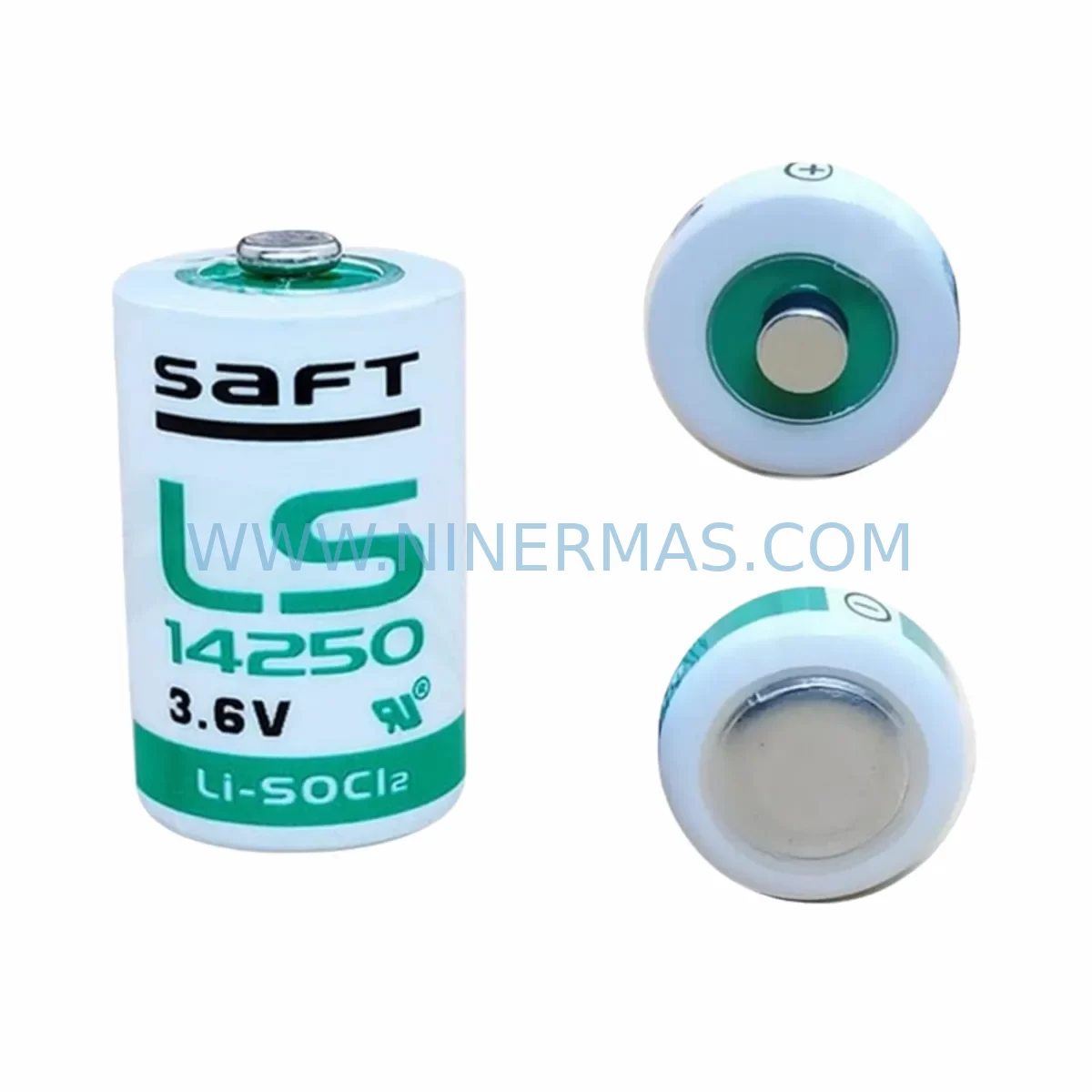
Saft LS14250 Retrofit-Compatible Lithium Battery for Legacy Systems
Verify the part, confirm the platform family, and move straight into quotation with the right commercial details.
RFQ Ready
- SKULS14250
- CategoryPLC & Industrial Automation Modules
- BrandSaft
- SupportAvailability, lead time, condition, and shipping coordination
How Buyers Usually Use This Page
- Confirm the exact part number and platform family before sending the quote request.
- Use direct email when quantity, condition, and destination are already defined internally.
- Switch to the broader brand or category archive when you need alternates nearby.
Series Navigation
Move through the most common platform families behind this part.
Product RFQ
Send this part directly for quotation.
Include quantity, required condition, destination country, and target delivery timing. Current reference: Saft LS14250 Retrofit-Compatible Lithium Battery for Legacy Systems with SKU LS14250.
Saft LS14250 Retrofit-Compatible Lithium Battery for Legacy Systems
The Saft LS14250 is a 3.6V 1/2AA lithium thionyl chloride (Li-SOCl₂) primary battery engineered for long-term, maintenance-free operation in industrial control environments. As a direct retrofit-compatible replacement for aging PLC, SCADA, DCS, and CNC backup power circuits, the LS14250 delivers stable voltage output, ultra-low self-discharge, and a wide operating temperature range — making it the preferred choice for engineers managing legacy system upgrades, spare parts lifecycle extension, and unplanned downtime prevention across process and discrete manufacturing facilities.
When a legacy controller loses its RAM backup battery, the consequences extend far beyond a simple cell swap. Engineers must verify that the replacement battery matches the original voltage rating, physical form factor (1/2AA, 14.5 × 25 mm), connector pinout, and PCB footprint before installation. The LS14250 meets the original Saft specification and is widely accepted as a drop-in replacement in Siemens S5 and S7 series PLCs, Schneider Electric Modicon TSX and Quantum platforms, ABB AC500 and AC31 controllers, YOKOGAWA CENTUM VP and CS3000 DCS systems, and GE Fanuc Series 90 CNCs — all of which rely on a 3.6V lithium cell to retain program memory, clock data, and configuration parameters during power interruptions.
Upgrade Compatibility Table
| Parameter | Saft LS14250 Specification | Retrofit Notes |
|---|---|---|
| Nominal Voltage | 3.6 V | Verify legacy controller accepts 3.6V Li cell; do not substitute 3.0V CR1/2AA |
| Form Factor | 1/2AA (14.5 × 25 mm) | Confirm PCB holder or wire-lead connector matches; axial or radial lead variants available |
| Capacity | 1200 mAh (typical) | Adequate for 5–10 year RAM retention in most PLC/DCS backup circuits |
| Chemistry | Lithium Thionyl Chloride (Li-SOCl₂) | Non-rechargeable primary cell; do not connect to charging circuits |
| Operating Temperature | −60°C to +85°C | Suitable for outdoor cabinets, foundry environments, and cold-storage automation |
| Self-Discharge Rate | <1% per year | Long shelf life supports strategic spare parts stocking programs |
| Communication Compatibility | N/A (passive power component) | No protocol dependency; compatible with all fieldbus and Ethernet-based control platforms |
| Installation Space | Standard 1/2AA footprint | Fits existing battery holders without mechanical modification in most legacy controllers |
| Replacement Recommendation | Replace every 5–7 years or on low-battery alarm | Schedule replacement during planned maintenance windows to avoid unplanned memory loss |
| Commissioning Check | Verify RAM retention after swap; reload program if memory cleared | Keep a verified program backup on programming device or memory card before replacement |
| Warranty | 12 Months | Covered from date of shipment; includes pre-shipment voltage and capacity verification |
Retrofit Planning for Existing Automation Systems
A battery replacement on a legacy controller is rarely an isolated task — it is typically the trigger point for a broader system health review. When field engineers arrive on-site to replace an LS14250 in a Siemens S7-300 CPU 315-2DP, for example, they will simultaneously inspect the Siemens 6ES7 307-1EA01-0AA0 PS307 power supply module for output voltage stability, check the 6ES7 321-1BL00-0AA0 SM321 digital input module for terminal corrosion, and confirm that the 6ES7 390-1AE80-0AA0 S7-300 rail and backplane connectors are free of oxidation. Any of these components showing signs of wear should be flagged for replacement during the same maintenance window to avoid a second unplanned shutdown.
On Schneider Electric Modicon platforms, the LS14250 is commonly found in TSX P57 Premium CPUs and Quantum 140 CPU series controllers. During a battery swap on these units, engineers should also verify the condition of the TSX PSY 2600M power supply, inspect 140 ACI 030 00 analog input modules for calibration drift, and confirm that the Modbus Plus or Ethernet TCP/IP communication card retains its IP configuration after the memory backup is restored. If the controller is being migrated from a Modbus RTU network to a PROFINET or EtherNet/IP architecture, the battery replacement window is an ideal time to install the new communication interface module and update the HMI screen tag mappings before the system is returned to production.
For YOKOGAWA CENTUM VP and CS3000 DCS installations, the LS14250 supports memory retention in FCU (Field Control Unit) processor cards. During planned outages, engineers should cross-check the AMN11 or AMN21 node interface units, inspect AAI141 analog input modules for signal drift, and verify that Vnet/IP or ESB bus communication links are operating within specification. A signal isolator — such as a YOKOGAWA MTL5041 or equivalent DIN-rail isolator — should be tested for loop integrity if the I/O wiring runs through hazardous area barriers.
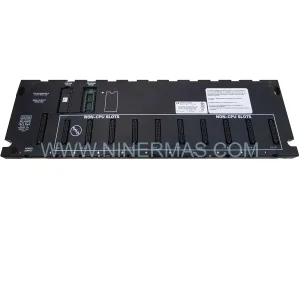
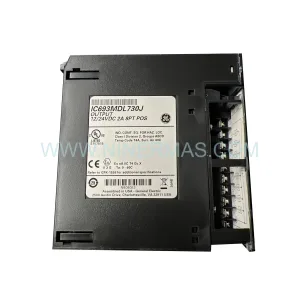
In GE Fanuc Series 90-30 and 90-70 CNC and PLC environments, the LS14250 retains ladder logic and motion parameters in IC693CPU374 and IC697CPU772 CPU modules. Before replacing the battery, engineers must back up the program using a GE Fanuc programming cable (IC690ACC901) and Proficy Machine Edition software. After the swap, the I/O configuration should be verified against the original rack layout, particularly if IC693MDL655 discrete output modules or IC693ALG392 analog output modules have been added or relocated since the original commissioning.
Downtime Control During System Migration
Minimizing production downtime during a battery replacement or broader control system retrofit requires disciplined pre-outage preparation. The following practices are recommended for engineers managing LS14250 replacements in live industrial environments:
Program Backup Before Power Interruption: Always upload and verify the current PLC or DCS program to an offline storage device — a laptop with the OEM programming software, a Siemens MMC memory card, a Schneider Electric SFP memory extension card, or a YOKOGAWA engineering workstation snapshot — before disconnecting the battery. A verified backup eliminates the risk of permanent program loss if the capacitor-backed RAM does not hold during the cell swap.
Hot-Swap vs. Cold-Swap Assessment: Some controllers support battery replacement under power (hot-swap), relying on an internal supercapacitor to maintain RAM during the brief disconnection. Confirm this capability in the CPU hardware manual before proceeding. For controllers that require a full power-down (cold-swap), coordinate with the production scheduler to align the outage with a planned shift change or low-demand period. Typical LS14250 replacement time is under five minutes once the cabinet is open and the CPU is accessible.
Post-Replacement Verification: After installing the new LS14250, power up the controller and confirm that the program, I/O configuration, communication parameters, HMI tag assignments, and real-time clock are intact. For SCADA-connected systems, verify that the OPC-UA or Modbus TCP data link re-establishes correctly and that historian tags resume logging without gaps. Document the replacement date, battery lot number, and post-swap verification results in the site maintenance log to support future lifecycle planning.
Spare Parts Stocking Strategy: Given the LS14250’s role as a critical single-point-of-failure component in legacy controllers, maintaining a minimum buffer stock of 5–10 units per site is strongly recommended. NINERMAS supports long-term supply agreements and bulk order programs with fixed lead times, enabling maintenance teams to replenish stock without emergency procurement delays.
Retrofit Support FAQ
Q1: Is the Saft LS14250 a direct replacement for the battery in my Siemens S7-300 CPU?
Yes. The LS14250 is the OEM-specified battery for most Siemens S7-300 and S5 series CPUs. It is a direct drop-in replacement requiring no wiring modification. Confirm the connector type (axial wire leads vs. PCB pin) matches your specific CPU variant before ordering.
Q2: Will my PLC program be lost when I replace the battery?
It depends on the controller. Many modern PLCs include a supercapacitor that maintains RAM for 30–60 seconds during battery swap, allowing hot-swap replacement without program loss. For older controllers without this feature, always upload and verify the program before disconnecting the battery. NINERMAS recommends performing a full program backup as standard procedure regardless of controller type.
Q3: How do I verify the new battery is functioning correctly after installation?
After installation, power cycle the controller and confirm the low-battery alarm is cleared. Check the real-time clock for accuracy and verify that all program blocks, data blocks, and I/O configurations are intact. For DCS systems, confirm that the field control unit resumes normal scan cycle operation and that all Vnet/IP or ESB communication links are active.
Q4: What is the warranty and supply commitment for the Saft LS14250?
All LS14250 units supplied by NINERMAS carry a 12-month warranty from the date of shipment. Each batch undergoes pre-shipment voltage and open-circuit voltage (OCV) testing to confirm cell integrity. NINERMAS maintains in-stock inventory and supports long-term supply programs for customers requiring scheduled replenishment across multiple sites or fiscal years.
| Product Series | Legacy |
|---|
Catalog Continuation
Alternative parts within PLC & Industrial Automation Modules.
Stay inside the same system family when you need substitutes, adjacent modules, or a broader shortlist for procurement review.
SKU: 14L41-RS0B0-B24R-ST5S00N-R0SU
LENZE 14L41-RS0B0-B24R-ST5S00N-R0SU Retrofit for Legacy Systems
SKU: CI540 3BSE001077R1
ABB CI540 3BSE001077R1 Spare Part for Industrial Maintenance
SKU: ZINT-541 3AUA00000658960
ABB ZINT-541 3AUA00000658960 Retrofit-Compatible Inverter Power Module