Original Industrial Spare Part
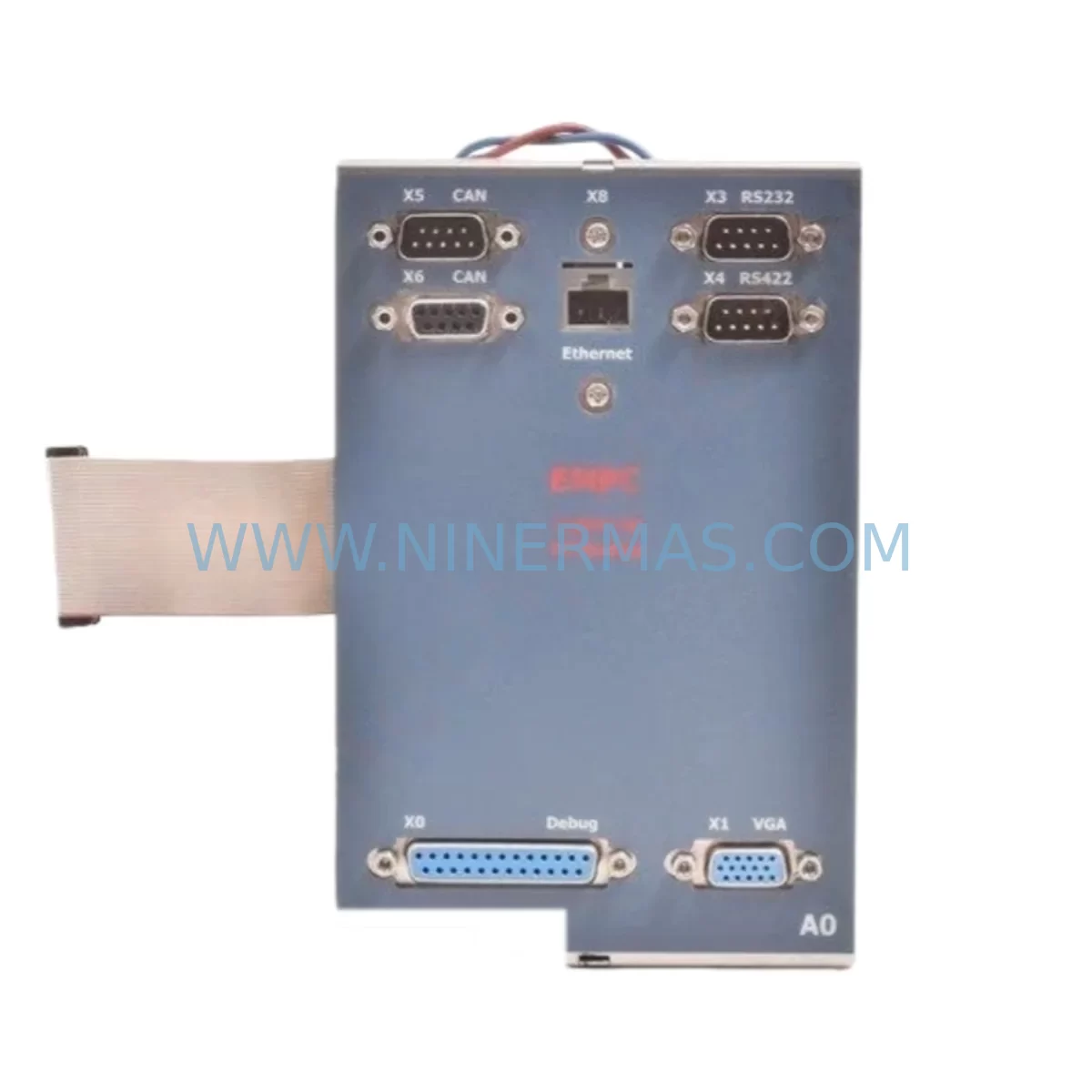
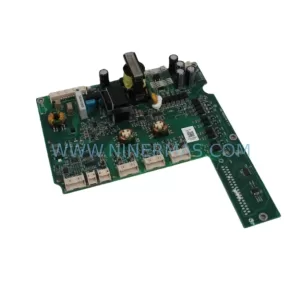
Reiter EMPC ZGR 100 001 Retrofit-Compatible Controller for Legacy Systems
Verify the part, confirm the platform family, and move straight into quotation with the right commercial details.
RFQ Ready
- SKUEMPC ZGR 100 001
- CategoryPLC & Industrial Automation Modules
- BrandReiter
- SupportAvailability, lead time, condition, and shipping coordination
How Buyers Usually Use This Page
- Confirm the exact part number and platform family before sending the quote request.
- Use direct email when quantity, condition, and destination are already defined internally.
- Switch to the broader brand or category archive when you need alternates nearby.
Series Navigation
Move through the most common platform families behind this part.
Product RFQ
Send this part directly for quotation.
Include quantity, required condition, destination country, and target delivery timing. Current reference: Reiter EMPC ZGR 100 001 Retrofit-Compatible Controller for Legacy Systems with SKU EMPC ZGR 100 001.
Reiter EMPC ZGR 100 001 Retrofit-Compatible Controller for Legacy Systems
The Reiter EMPC ZGR 100 001 is a retrofit-compatible programmable logic controller designed to serve as a direct replacement and upgrade solution for aging ZGR Series automation platforms. As industrial facilities face increasing pressure to extend the operational life of legacy control systems — while simultaneously managing the risks of discontinued spare parts and obsolete firmware — the EMPC ZGR 100 001 provides a reliable, field-proven pathway to modernize control cabinet infrastructure without requiring a full system overhaul.
Whether your facility is running an end-of-life ZGR-based control platform or managing a multi-cabinet automation environment where individual modules have reached their discontinuation date, the EMPC ZGR 100 001 is engineered to integrate into existing backplane architectures with minimal rewiring. Engineers and maintenance teams undertaking a retrofit project must carefully verify several critical parameters before installation: power supply capacity at the rack level, terminal block wiring compatibility, backplane slot addressing, module I/O mapping, and the integrity of existing ladder logic or function block programs stored in the original controller.
Before committing to a swap-out, it is strongly recommended to document the current program backup using the original Reiter programming cable or a compatible USB-to-serial interface. Confirm that the HMI screen layouts — particularly any operator panels linked to the ZGR Series via proprietary communication links — remain compatible with the updated controller’s data register mapping. In many retrofit scenarios, the Reiter ZGR 200 series power supply module must also be evaluated to ensure it can sustain the additional current draw introduced by the EMPC ZGR 100 001 under full I/O load.
Upgrade Compatibility Table
| Parameter | Legacy ZGR System | EMPC ZGR 100 001 | Notes |
|---|---|---|---|
| Backplane Interface | ZGR Standard Bus | ZGR Standard Bus | Direct slot-compatible |
| Power Requirement | 24V DC / 5A typical | 24V DC / 5A typical | Verify rack PSU capacity |
| Communication Protocol | RS-232 / RS-485 | RS-232 / RS-485 | Protocol migration not required |
| I/O Addressing | Fixed module addressing | Configurable via software | Re-map if slot position changes |
| Programming Interface | Reiter ZGR Programming Cable | USB / RS-232 compatible | Use existing cable or adapter |
| HMI Compatibility | ZGR-linked operator panels | Compatible with ZGR HMI range | Verify register mapping |
| Installation Footprint | Standard ZGR rack slot | Standard ZGR rack slot | No mechanical modification needed |
| Replacement Recommendation | Discontinued ZGR 100 variants | EMPC ZGR 100 001 | Verified drop-in replacement |
| Commissioning Focus | Program upload & I/O test | Program restore & loop check | Full functional test recommended |
| Warranty | N/A (EOL) | 12-Month Warranty | Covered from date of shipment |
Retrofit Planning for Existing Automation Systems
A successful retrofit using the EMPC ZGR 100 001 begins well before the physical module arrives on-site. Maintenance engineers should start by auditing the full control cabinet layout, identifying every active module in the ZGR rack — including digital input modules, analog output cards, communication interface units, and the primary power distribution assembly. In many legacy installations, the ZGR rack may also house a Reiter ZGR-NET communication module responsible for linking the PLC to upstream SCADA systems or distributed I/O nodes via RS-485 Modbus RTU.
When planning the physical swap, confirm that the installation space within the control cabinet allows for safe extraction of the existing controller without disturbing adjacent terminal blocks or signal isolators mounted on DIN rails nearby. In tightly packed cabinets, it is common to find Reiter ZGR analog input expansion modules, 24V DC relay output cards, and dedicated signal conditioning units occupying slots immediately adjacent to the main CPU. These must remain undisturbed during the replacement procedure to avoid unintended I/O interruptions on live production lines.
For facilities that have integrated the ZGR platform with third-party HMI panels — such as operator touchscreens communicating over RS-232 or a dedicated Reiter ZGR HMI link — it is essential to verify that the communication baud rate, parity settings, and data register addresses configured in the HMI project file match the default parameters of the EMPC ZGR 100 001. In some cases, a minor update to the HMI screen project may be required to align variable addresses with the replacement controller’s memory layout.
Additionally, if the legacy system includes a Reiter ZGR 100 series expansion backplane or a secondary rack connected via a rack extension cable, the EMPC ZGR 100 001 must be configured to recognize the extended I/O range during initial startup. This is typically handled through the controller’s configuration software, where engineers assign module slot addresses and define the I/O scan sequence. Shipping tests performed prior to dispatch include power-on verification, communication link checks, and basic I/O simulation to confirm the unit is fully operational before it reaches the customer site.
Downtime Control During System Migration
Minimizing unplanned downtime is the primary concern for any maintenance team executing a controller replacement on an active production line. When migrating from a legacy ZGR controller to the EMPC ZGR 100 001, the recommended approach is to perform a full program backup from the existing unit during a scheduled maintenance window — ideally during a planned production stop or shift changeover. This backup should be stored in at least two separate locations: a local engineering workstation and a secure off-site archive.
Before powering down the legacy controller, document the current state of all physical I/O signals, including the status of digital outputs, analog setpoints, and any active communication sessions with remote devices. This snapshot serves as the baseline for post-installation verification. Once the EMPC ZGR 100 001 is physically installed in the rack slot, restore the program backup and perform a controlled power-up sequence, monitoring the system’s diagnostic LEDs and communication status indicators throughout the startup process.
To further reduce risk, consider staging the replacement in a parallel test environment where the new controller can be pre-loaded with the production program and validated against simulated I/O signals before being deployed to the live system. This approach — sometimes referred to as a shadow commissioning procedure — allows engineers to identify any program compatibility issues, register mapping discrepancies, or communication timing differences without exposing the production process to unnecessary risk. The EMPC ZGR 100 001’s 12-month warranty covers the unit from the date of shipment, providing additional assurance during the post-installation stabilization period.
Retrofit Support FAQ
Q1: Is the EMPC ZGR 100 001 a direct drop-in replacement for discontinued ZGR 100 series controllers?
A: Yes. The EMPC ZGR 100 001 is designed to occupy the same rack slot as legacy ZGR 100 series units, using the same backplane bus interface and power connector pinout. In most installations, no mechanical modification to the control cabinet is required. However, engineers should verify the firmware version compatibility and re-upload the existing program after installation.
Q2: What commissioning steps are required after installing the EMPC ZGR 100 001?
A: After physical installation, restore the program backup to the new controller using the Reiter programming cable or USB adapter. Perform a full I/O loop check to verify that all digital and analog signals are correctly mapped. Confirm communication links to HMI panels and any networked devices are active and responding. Run the system in manual mode before switching to automatic control to validate all output functions.
Q3: Does the unit ship pre-tested, and what does the 12-month warranty cover?
A: Every EMPC ZGR 100 001 unit undergoes power-on testing, communication verification, and basic I/O simulation prior to shipment. The 12-month warranty covers manufacturing defects and component failures under normal operating conditions, commencing from the date of shipment. Warranty claims are supported by our technical team at sale@ninermas.com.
Q4: What is the typical lead time and stock availability?
A: The EMPC ZGR 100 001 is maintained in stock to support urgent retrofit and emergency replacement requirements. Standard orders are processed and dispatched within 1–3 business days. For large-quantity orders or long-term supply agreements, please contact our sales team directly to discuss inventory reservation and delivery scheduling.
| Product Series | Legacy |
|---|
Catalog Continuation
Alternative parts within PLC & Industrial Automation Modules.
Stay inside the same system family when you need substitutes, adjacent modules, or a broader shortlist for procurement review.
SKU: 14L41-RS0B0-B24R-ST5S00N-R0SU
LENZE 14L41-RS0B0-B24R-ST5S00N-R0SU Retrofit for Legacy Systems
SKU: CI540 3BSE001077R1
ABB CI540 3BSE001077R1 Spare Part for Industrial Maintenance
SKU: ZINT-541 3AUA00000658960
ABB ZINT-541 3AUA00000658960 Retrofit-Compatible Inverter Power Module