Original Industrial Spare Part
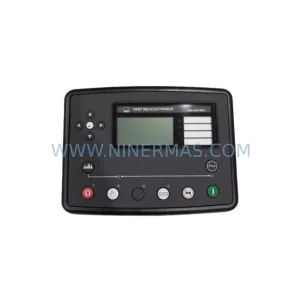
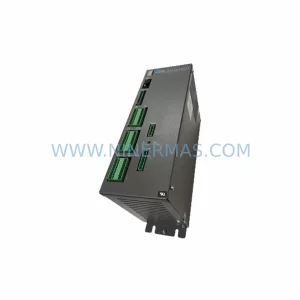
NINERMAS DSE9701 MKII Retrofit-Compatible Generator Controller
Verify the part, confirm the platform family, and move straight into quotation with the right commercial details.
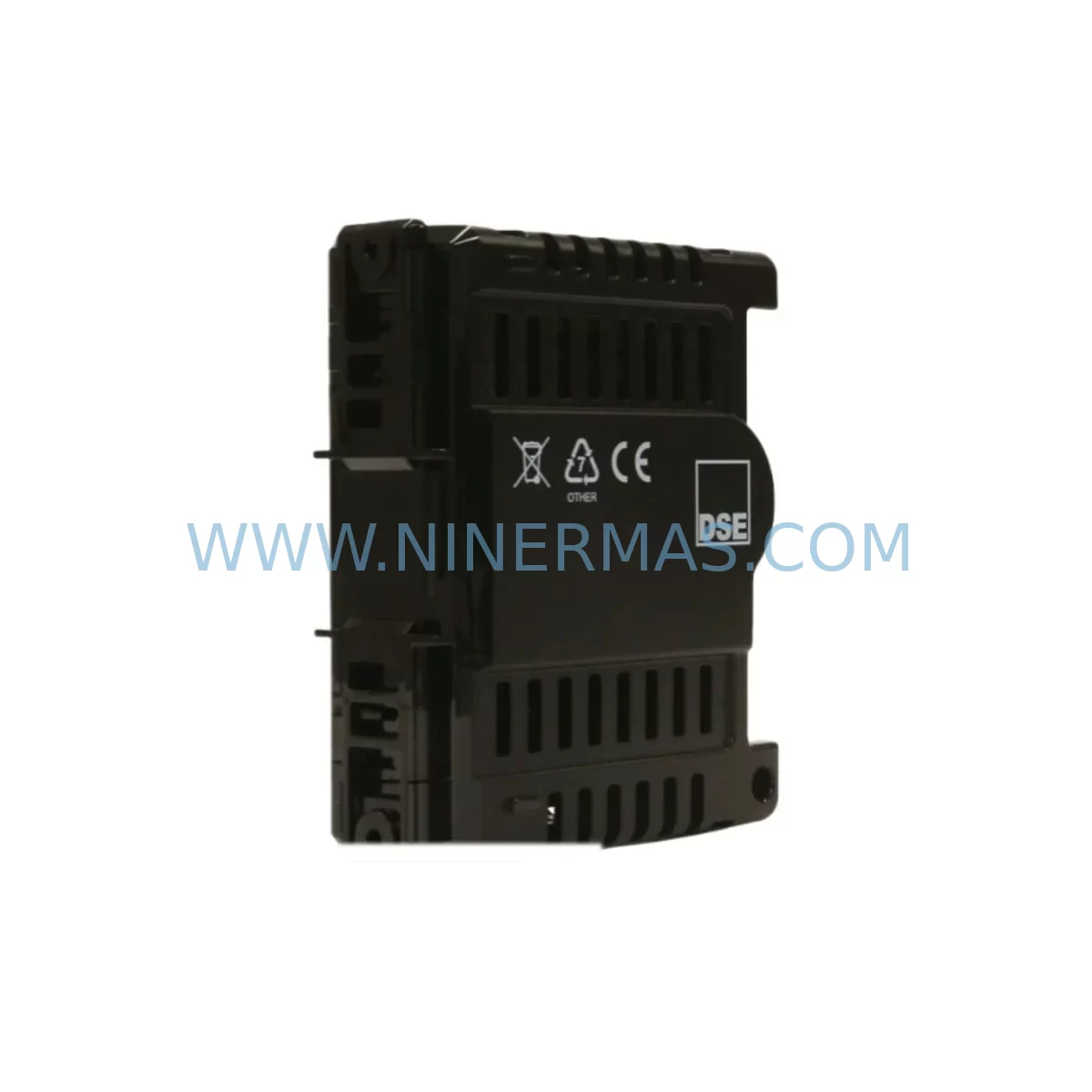
RFQ Ready
- SKUDSE9701 MKII
- CategoryPLC & Industrial Automation Modules
- BrandDeep Sea Electronics
- SupportAvailability, lead time, condition, and shipping coordination
How Buyers Usually Use This Page
- Confirm the exact part number and platform family before sending the quote request.
- Use direct email when quantity, condition, and destination are already defined internally.
- Switch to the broader brand or category archive when you need alternates nearby.
Series Navigation
Move through the most common platform families behind this part.
Product RFQ
Send this part directly for quotation.
Include quantity, required condition, destination country, and target delivery timing. Current reference: NINERMAS DSE9701 MKII Retrofit-Compatible Generator Controller with SKU DSE9701 MKII.
NINERMAS DSE9701 MKII Retrofit-Compatible Generator Controller: Legacy System Upgrade & Smooth Migration
The Deep Sea Electronics DSE9701 MKII is a professional-grade automatic generator controller engineered for seamless integration into existing power generation and industrial control systems. As a direct retrofit replacement for the discontinued DSE9700 series, the DSE9701 MKII is the preferred solution for facilities engineers, OEM integrators, and maintenance teams seeking to modernize aging control panels without full system redesign. NINERMAS maintains verified stock of the DSE9701 MKII with a 12-month warranty, pre-shipment functional testing, and same-week dispatch capability.
Whether you are managing a critical standby power system, upgrading a legacy genset control cabinet, or replacing a failed DSE9700 unit in a live facility, the DSE9701 MKII delivers the compatibility, reliability, and technical depth required for mission-critical retrofit projects.
Upgrade Compatibility Table
| Parameter | DSE9700 (Legacy) | DSE9701 MKII (Replacement) | Retrofit Notes |
|---|---|---|---|
| Mounting Format | Panel-mount, DIN-rail compatible | Panel-mount, DIN-rail compatible | Direct physical fit; no panel modification required in most installations |
| Supply Voltage | 8–35 VDC | 8–35 VDC | Verify existing PSU output; compatible with standard 12V/24V DC bus |
| Communication Interface | RS-232 / RS-485 (Modbus RTU) | RS-232 / RS-485 / USB (Modbus RTU) | Existing Modbus RTU wiring retained; USB port enables direct PC configuration |
| Terminal Wiring | Screw-terminal block (legacy pinout) | Screw-terminal block (backward-compatible pinout) | Verify terminal mapping against DSE9700 wiring diagram before energising |
| I/O Configuration | Fixed I/O, limited expansion | Configurable I/O, expanded digital inputs/outputs | Re-map I/O assignments in DSE Configuration Suite software |
| HMI / Display | LCD with keypad | Colour LCD with enhanced keypad navigation | HMI screen layouts differ; update SCADA/HMI templates accordingly |
| Firmware / Configuration | DSE Config Suite (legacy version) | DSE Config Suite v4.x and above | Export legacy config file; import and validate in new firmware environment |
| Module Address | Fixed address (hardware DIP) | Software-configurable node address | Set node address via DSE Config Suite to match existing network topology |
| Installation Space | Standard panel cutout | Identical panel cutout dimensions | No panel re-cutting required; confirm depth clearance behind panel |
| Warranty | End-of-life / no support | 12-Month Warranty (NINERMAS) | Includes pre-shipment functional test report |
Retrofit Planning for Existing Automation Systems
Successful retrofit of the DSE9701 MKII into a legacy genset control system requires a structured pre-installation assessment. The first step is a thorough review of the existing control cabinet layout, including available rail space, cable routing, and the position of adjacent modules such as the DSE8610 MKII load controller or DSE8620 AMF module, which frequently share the same backplane or DIN rail assembly in multi-generator installations.
Power supply verification is critical. The existing DSE9701 MKII draws from the same 8–35 VDC bus as its predecessor, but engineers should confirm that the installed DC power supply module — often a DSE9480 battery charger or equivalent 24V regulated PSU — can sustain the combined load of all active modules after replacement. Undersized power supplies are a common cause of post-retrofit instability.
Terminal wiring adaptation is the most labour-intensive phase of the retrofit. The DSE9701 MKII uses a backward-compatible screw-terminal layout, but individual signal assignments — particularly for configurable digital inputs connected to remote start, emergency stop, and fuel solenoid circuits — must be cross-referenced against the original DSE9700 wiring schedule. Where the legacy system used a DSE890 PC interface kit or DSE8001 remote annunciator panel, communication cable routing and RS-485 termination resistors should be inspected and replaced if degraded.
For installations that include a DSE855 Ethernet communications module or a DSE860 PC interface module for SCADA integration, the Modbus RTU register map of the DSE9701 MKII should be validated against the existing SCADA polling configuration. While the core register structure is preserved from the DSE9700 series, extended status registers and alarm codes may differ, requiring updates to the SCADA driver or OPC server tag database.
I/O expansion requirements should be assessed early. If the legacy system relied on a DSE125 expansion module for additional digital inputs or a DSE120 remote I/O module for distributed sensor inputs, compatibility with the DSE9701 MKII’s expansion bus must be confirmed. In most cases, existing DSE expansion modules are directly compatible, but firmware version alignment between the controller and expansion units is essential to avoid address conflicts.
HMI screen templates stored in the existing SCADA or panel-mounted HMI — particularly those built around the DSE9700’s alarm list structure and engine parameter display pages — will require revision to reflect the DSE9701 MKII’s updated data model. This is typically a half-day task for an experienced controls engineer familiar with the DSE configuration environment.
Before energising the retrofitted system, a bench-level functional test using the DSE Config Suite software is strongly recommended. This allows engineers to validate the uploaded configuration file, confirm I/O mapping, simulate start/stop sequences, and verify alarm thresholds without exposing the live generator set to risk. NINERMAS supplies each DSE9701 MKII unit with a pre-shipment test report confirming basic functional verification.
Downtime Control During System Migration
Minimising downtime during a DSE9700 to DSE9701 MKII migration is achievable with disciplined pre-planning. The most effective strategy is to complete all configuration work — including firmware upload, I/O mapping, Modbus address assignment, and HMI template revision — on a bench unit before the scheduled maintenance window. This reduces live panel exposure to the physical swap and final commissioning verification only.
Where the generator set supports a manual bypass or local control mode, operators should confirm that the engine can be held in manual run during the controller swap to maintain site power continuity. In critical facilities such as hospitals, data centres, or water treatment plants, a temporary portable generator or UPS bridge may be required to cover the transition period.
The original DSE9700 configuration file should be exported and archived before removal. Even if the file cannot be directly imported into the DSE9701 MKII firmware environment, it serves as the definitive reference for replicating setpoints, timer values, protection thresholds, and alarm configurations. Experienced engineers typically complete the full parameter re-entry in under two hours using the archived file as a checklist.
Post-installation, a structured commissioning sequence should cover: DC supply voltage verification, digital input simulation (remote start, emergency stop, low fuel), output relay function test (fuel solenoid, starter motor, alarm outputs), communication link confirmation (Modbus RTU polling from SCADA), and a full auto-start/auto-stop cycle under no-load conditions. This sequence typically requires 60–90 minutes on site and should be completed before returning the system to automatic standby mode.
NINERMAS technical support is available via email and telephone to assist with configuration queries, wiring clarifications, and commissioning guidance throughout the retrofit process.
Retrofit Support FAQ
Q1: Is the DSE9701 MKII a direct drop-in replacement for the DSE9700?
Yes. The DSE9701 MKII shares the same panel cutout dimensions and DIN-rail mounting format as the DSE9700, making it a direct physical replacement. Terminal wiring is backward-compatible, though individual signal assignments should be verified against the original wiring schedule before energising. The DSE9701 MKII requires configuration via DSE Config Suite software, which is available as a free download from the manufacturer.
Q2: Does NINERMAS provide pre-shipment testing and what does the 12-month warranty cover?
Every DSE9701 MKII unit supplied by NINERMAS undergoes a pre-shipment functional test covering power-up, display operation, communication port activity, and basic I/O verification. A test report is included with each shipment. The 12-month warranty covers manufacturing defects and functional failures under normal operating conditions. It does not cover damage resulting from incorrect wiring, overvoltage, or physical mishandling on site.
Q3: Can the DSE9701 MKII communicate with existing Modbus RTU SCADA systems without protocol changes?
Yes. The DSE9701 MKII supports Modbus RTU over RS-485, which is the same protocol used by the DSE9700. The core register map is preserved, allowing most existing SCADA polling configurations to operate without modification. Extended registers for new alarm codes and status flags may require minor updates to the SCADA tag database. NINERMAS can provide the full Modbus register map upon request.
Q4: What is the typical lead time and do you hold stock?
NINERMAS maintains verified stock of the DSE9701 MKII and can dispatch same-week for most orders. For urgent retrofit projects or bulk procurement, please contact our sales team directly at sale@ninermas.com or +0086 187 5021 5667 to confirm current availability and arrange priority shipment.
| Product Series | Other series |
|---|---|
| Country of Origin | GB |
Catalog Continuation
More Deep Sea Electronics modules in the catalog.
Use the brand lane to compare nearby part numbers, platform-adjacent modules, and other inquiry-ready listings before sending your final RFQ.
Catalog Continuation
Alternative parts within PLC & Industrial Automation Modules.
Stay inside the same system family when you need substitutes, adjacent modules, or a broader shortlist for procurement review.
SKU: C3419 , 716-140139-211 E82EV371K2C TYPE N.C. O.P. 0.39~0.59MPA 543574
Lenze E82EV371K2C Retrofit-Compatible Drive for Legacy Systems
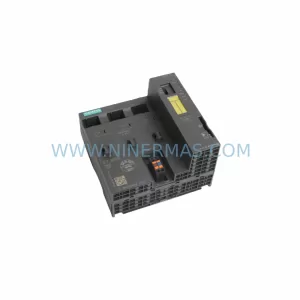
SKU: 6ES7151-8FB01-0AB0
Siemens 6ES7151-8FB01-0AB0 Service-Ready Spare Part
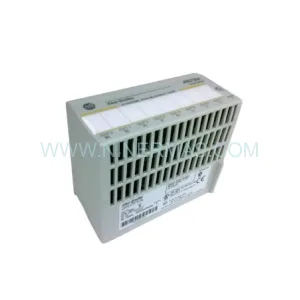
SKU: SC752A-001-01
Pacific Scientific SC752A-001-01 Service-Ready Spare Part