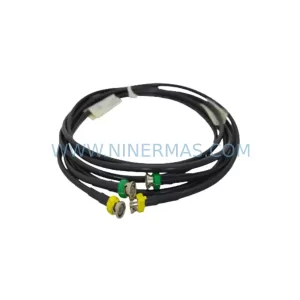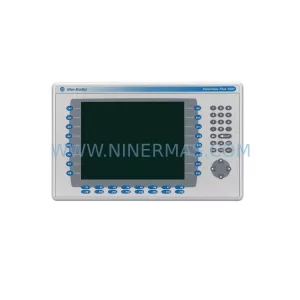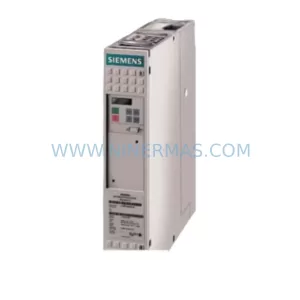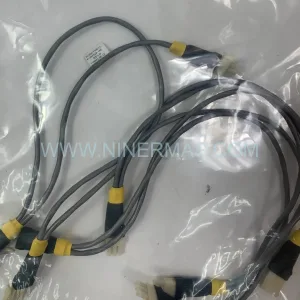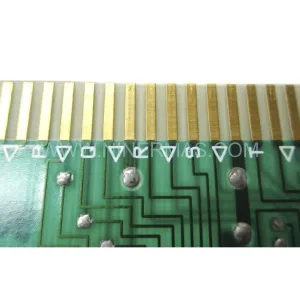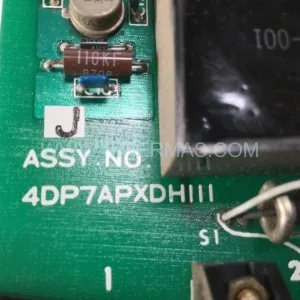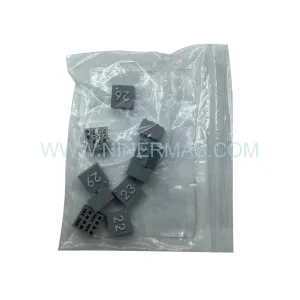
Original Industrial Spare Part
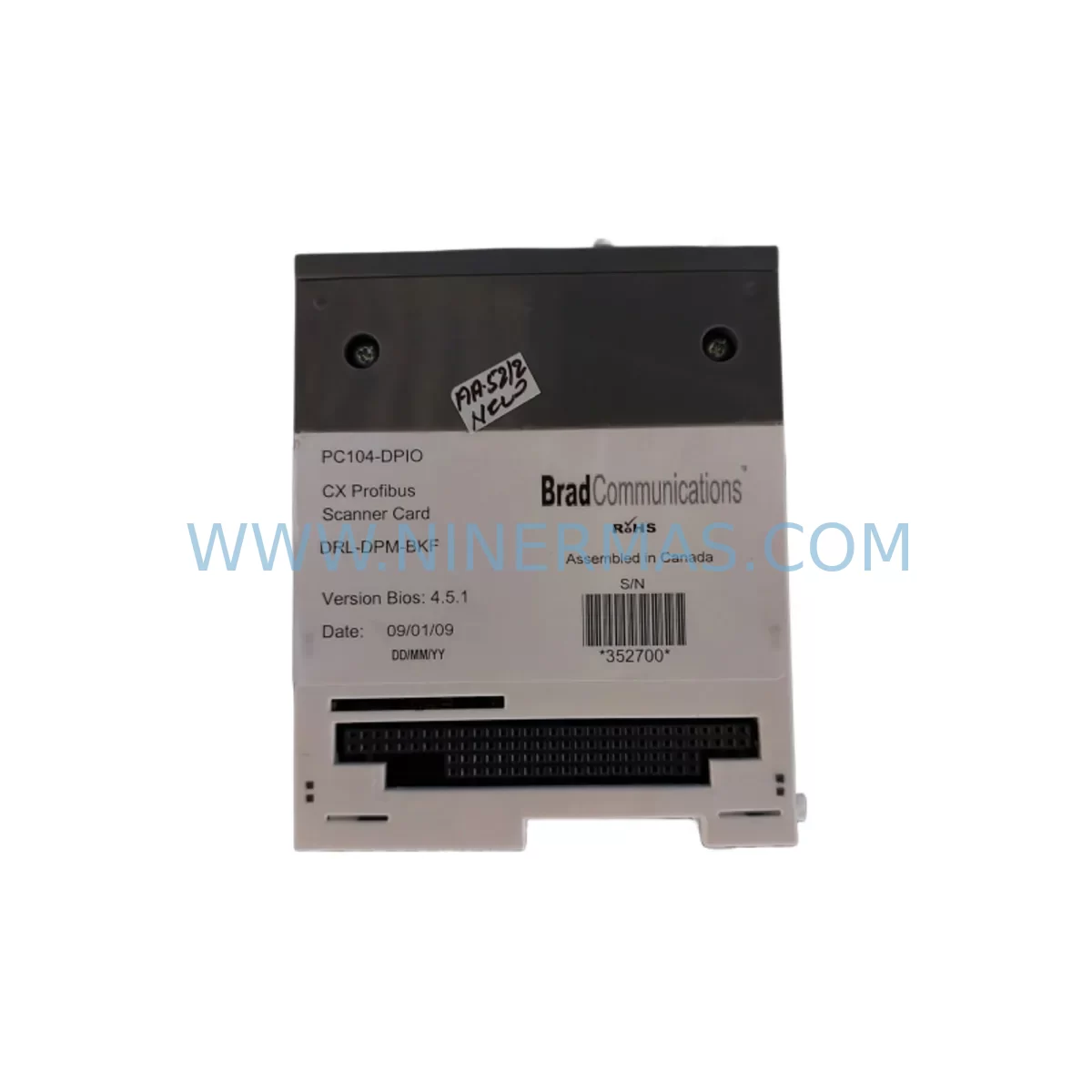
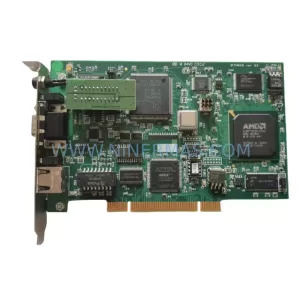
Molex DRL-DPM-BKF Retrofit Safety Network Interface Module
Verify the part, confirm the platform family, and move straight into quotation with the right commercial details.
RFQ Ready
- SKUDRL-DPM-BKF
- CategorySIS Safety & Redundancy Systems
- BrandMolex
- SupportAvailability, lead time, condition, and shipping coordination
How Buyers Usually Use This Page
- Confirm the exact part number and platform family before sending the quote request.
- Use direct email when quantity, condition, and destination are already defined internally.
- Switch to the broader brand or category archive when you need alternates nearby.
Series Navigation
Move through the most common platform families behind this part.
Product RFQ
Send this part directly for quotation.
Include quantity, required condition, destination country, and target delivery timing. Current reference: Molex DRL-DPM-BKF Retrofit Safety Network Interface Module with SKU DRL-DPM-BKF.
Molex DRL-DPM-BKF Retrofit Safety Network Interface Module: Legacy System Compatible Upgrade
The Molex DRL-DPM-BKF is a ruggedized safety network interface module engineered for demanding industrial environments where legacy system continuity and field-proven reliability are non-negotiable. As automation engineers and maintenance teams face the challenge of sustaining aging control architectures, the DRL-DPM-BKF provides a direct retrofit path for facilities operating legacy DeviceNet-based safety networks, enabling smooth migration without full system replacement. Whether you are managing a brownfield upgrade, replacing an end-of-life safety node, or extending the operational life of an existing control cabinet, this module delivers the compatibility, durability, and documentation support required for confident deployment.
Designed to interface with ruggedized backplane systems and safety-rated network topologies, the DRL-DPM-BKF supports installations where environmental exposure — vibration, temperature cycling, and EMI — demands more than standard commercial-grade hardware. Its compact form factor is suited for integration into existing control enclosures without requiring structural modification, a critical advantage when downtime budgets are tight and physical space inside the cabinet is constrained by legacy rack geometry.
Upgrade Compatibility Table
| Parameter | DRL-DPM-BKF Specification | Retrofit Consideration |
|---|---|---|
| Module Type | Safety Network Interface Module | Direct replacement for legacy Molex DRL-series safety nodes |
| Network Protocol | DeviceNet (CAN-based) | Verify existing trunk cable, drop cable lengths, and termination resistors |
| Backplane Interface | DRL ruggedized backplane | Confirm backplane slot assignment and module address DIP settings |
| Power Supply Requirement | 24 VDC (network-supplied) | Validate existing DeviceNet power tap capacity before installation |
| Terminal Wiring | Standard DeviceNet 5-pin connector (V+, V-, CAN_H, CAN_L, Shield) | Inspect existing connector condition; replace if oxidized or damaged |
| Communication Compatibility | DeviceNet Safety (CIP Safety) | Confirm scanner firmware supports CIP Safety protocol revision |
| Installation Space | Single-slot DRL backplane module | Verify slot availability; adjacent module clearance for heat dissipation |
| Commissioning | Node address configuration via rotary switch or software | Match original node address; update scanner configuration table |
| Pre-Shipment Testing | Yes — functional and safety validation | Test report available upon request |
| Warranty | 12 Months | Covers manufacturing defects; field installation support available |
Retrofit Planning for Existing Automation Systems
Successful integration of the Molex DRL-DPM-BKF into a legacy control system begins well before the module arrives on-site. Retrofit planning must account for the full scope of the safety network architecture, including the DeviceNet scanner module housed in the main PLC rack, the safety I/O nodes distributed across the machine, and the HMI panels that display safety status and fault diagnostics. In many legacy installations, the DeviceNet scanner — often a Molex DeviceNet Master or a third-party equivalent — holds a configuration table that maps each node address to its expected electronic data sheet (EDS) file. When replacing the DRL-DPM-BKF, engineers must verify that the replacement module’s EDS file is loaded into the scanner and that the node address matches the original assignment.
Power budget validation is equally critical. The DeviceNet trunk line supplying the DRL-DPM-BKF must have sufficient current capacity to support the module alongside all other connected nodes. In aging installations, power taps and trunk cables may have degraded, reducing available current margin. A network power audit using a DeviceNet network analyzer should be completed before commissioning the replacement module. If the existing Molex DeviceNet power supply is operating near its rated output, consider upgrading to a higher-capacity unit during the same maintenance window to avoid repeat interventions.
Terminal wiring at the drop cable connection point must be inspected carefully. Legacy DeviceNet connectors — particularly open-style micro connectors — are prone to oxidation and mechanical wear after years of service. Replacing the drop cable connector during the module swap eliminates a common source of intermittent communication faults. The five-wire DeviceNet connection (V+, V−, CAN_H, CAN_L, and shield) must be verified for correct polarity and shield continuity before powering the network.
Backplane slot assignment and module addressing require attention in multi-slot DRL rack configurations. If the original DRL-DPM-BKF occupied a specific slot position that influenced its logical address or I/O mapping within the safety controller, the replacement must be installed in the same slot. In systems where the safety PLC — such as a Molex safety controller or a compatible third-party safety CPU — uses slot-based I/O addressing, an incorrect slot assignment will cause a configuration mismatch fault that prevents the safety system from entering run mode. Confirm the slot map against the original system documentation before physical installation.
HMI screen updates may be required if the original safety network interface module was referenced by name or node address in operator interface graphics. Safety status indicators, fault acknowledgment screens, and diagnostic pages that display DeviceNet node health should be reviewed and updated to reflect the replacement module’s configuration. In facilities using legacy Molex or third-party HMI terminals, this may require connecting a programming laptop and using the original HMI development software to push updated screen logic.
Communication link verification should be performed using a DeviceNet diagnostic tool after the module is installed and powered. Confirm that the DRL-DPM-BKF appears on the network scan, that its EDS parameters match the scanner’s configuration, and that no duplicate node addresses exist on the trunk. Safety network integrity — including response time verification and safety function validation — must be completed in accordance with the applicable machinery safety standard before returning the system to production.
For facilities managing multiple control cabinets with similar legacy DeviceNet safety architectures, stocking a spare DRL-DPM-BKF as part of a long-term spare parts program significantly reduces unplanned downtime risk. Molex DRL-series components, including backplane units, safety I/O expansion modules, and communication interface cards, are increasingly difficult to source through standard distribution channels as the product line approaches end-of-life. Securing inventory through a specialist supplier with documented pre-shipment testing and a 12-month warranty provides the supply chain assurance needed for multi-year maintenance planning.
Downtime Control During System Migration
Minimizing production interruption during a safety network interface module replacement requires a structured approach to pre-staging, execution, and verification. Before the maintenance window begins, the replacement DRL-DPM-BKF should be bench-tested alongside the DeviceNet scanner configuration to confirm communication establishment and correct I/O mapping. This pre-commissioning step — performed in a controlled environment using a portable DeviceNet power supply and a laptop running the scanner configuration software — eliminates the most common causes of extended downtime: EDS file mismatches, node address conflicts, and wiring errors.
During the replacement window, the original safety program logic stored in the safety PLC should be backed up to a secure location before any hardware is disturbed. Safety PLCs in legacy DeviceNet architectures — including those using Molex safety controllers or compatible Allen-Bradley GuardLogix platforms — store safety task logic separately from standard control logic. Both must be preserved. If the safety task references the DRL-DPM-BKF by node address or slot position, the program backup confirms the original configuration and provides a rollback reference if commissioning issues arise.
Physical module swap should follow a defined sequence: de-energize the DeviceNet network segment, disconnect the drop cable, remove the legacy module from the backplane slot, install the DRL-DPM-BKF, reconnect the drop cable, and restore network power. The entire physical swap typically requires less than fifteen minutes when the replacement module is pre-staged and the wiring is documented. The majority of the maintenance window is consumed by pre-commissioning preparation and post-installation safety function validation — both of which can be partially completed before the production line is stopped.
Post-installation validation must include a full safety function test in accordance with the machine’s safety validation plan. Each safety function that relies on the DRL-DPM-BKF — emergency stop circuits, safety gate interlocks, light curtain interfaces, and two-hand control inputs — must be individually tested and documented. The safety system must achieve a clean run mode with no active faults before the production line is released. With a pre-tested, warranty-backed DRL-DPM-BKF and a well-prepared commissioning plan, total downtime for the replacement can typically be contained within a single planned maintenance shift.
Retrofit Support FAQ
Q: Is the Molex DRL-DPM-BKF a direct replacement for the original module without program changes?
A: In most cases, yes — provided the replacement module is installed in the same backplane slot, configured with the same node address, and the correct EDS file is loaded in the DeviceNet scanner. If the original system used a customized EDS or non-standard node configuration, a configuration review is recommended before installation.
Q: What wiring checks are required before installing the DRL-DPM-BKF?
A: Verify the DeviceNet drop cable connector condition, confirm correct polarity of all five wires (V+, V−, CAN_H, CAN_L, Shield), check shield continuity to the network reference point, and measure available network power at the drop connection point. Replace any damaged or oxidized connectors before powering the module.
Q: Has the DRL-DPM-BKF been tested before shipment?
A: Yes. Each unit undergoes functional and safety validation testing prior to shipment. A test report is available upon request. All units are supplied with a 12-month warranty covering manufacturing defects from the date of delivery.
Q: What is the lead time and inventory availability for the DRL-DPM-BKF?
A: Stock availability varies. Contact our team for current inventory status and lead time confirmation. For facilities with ongoing maintenance requirements, we recommend discussing a long-term supply agreement to secure priority access to tested stock and avoid unplanned sourcing delays.
—
| Product Series | Other series |
|---|
Catalog Continuation
More Molex modules in the catalog.
Use the brand lane to compare nearby part numbers, platform-adjacent modules, and other inquiry-ready listings before sending your final RFQ.
Catalog Continuation
Alternative parts within SIS Safety & Redundancy Systems.
Stay inside the same system family when you need substitutes, adjacent modules, or a broader shortlist for procurement review.