Original Industrial Spare Part
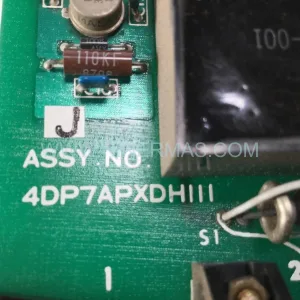
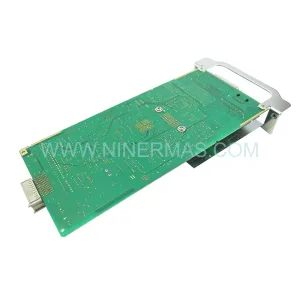
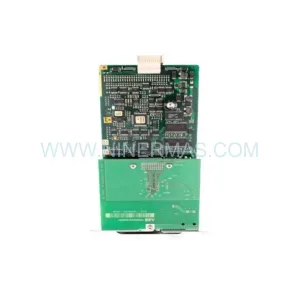
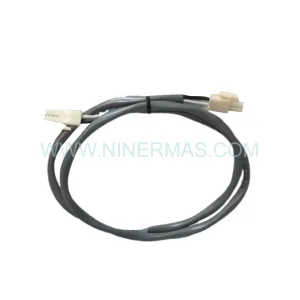
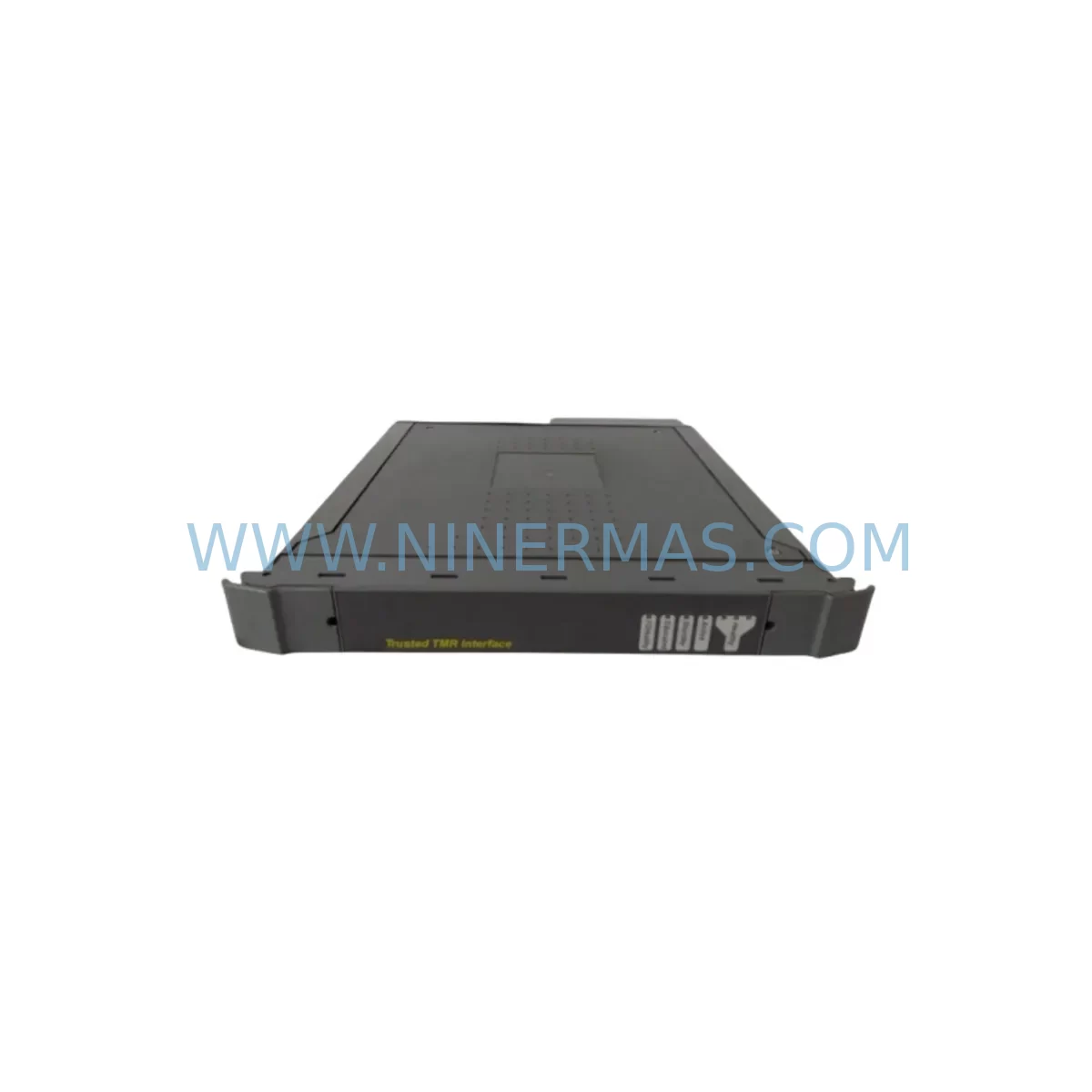
ICS Triplex T8240C Retrofit-Compatible Controller for Legacy Systems
Verify the part, confirm the platform family, and move straight into quotation with the right commercial details.
RFQ Ready
- SKUT8240C
- CategorySIS Safety & Redundancy Systems
- BrandICS TRIPLEX
- SupportAvailability, lead time, condition, and shipping coordination
How Buyers Usually Use This Page
- Confirm the exact part number and platform family before sending the quote request.
- Use direct email when quantity, condition, and destination are already defined internally.
- Switch to the broader brand or category archive when you need alternates nearby.
Series Navigation
Move through the most common platform families behind this part.
Product RFQ
Send this part directly for quotation.
Include quantity, required condition, destination country, and target delivery timing. Current reference: ICS Triplex T8240C Retrofit-Compatible Controller for Legacy Systems with SKU T8240C.
ICS Triplex T8240C Retrofit-Compatible Controller for Legacy Systems
The ICS Triplex T8240C is a safety-rated processor module designed for the Trusted TMR (Triple Modular Redundancy) platform — one of the most widely deployed high-integrity safety systems in oil and gas, petrochemical, power generation, and offshore installations. As the Trusted platform approaches end-of-life support milestones, maintenance engineers and procurement teams are increasingly challenged to source verified replacement units that preserve system integrity without triggering a full control system overhaul. The T8240C addresses this challenge directly: it is a retrofit-compatible controller that slots into existing Trusted chassis configurations, maintains TMR voting logic, and supports a smooth transition from aging hardware to service-ready stock — all without requiring reprogramming of the existing safety application.
For facilities running legacy Trusted TMR architectures, the T8240C represents a critical line of defense against unplanned downtime. When a processor module fails or degrades, the entire safety instrumented function (SIF) may be compromised. Having a pre-tested, shelf-ready T8240C in your spare parts inventory is not just a maintenance best practice — it is a risk management imperative aligned with IEC 61511 lifecycle requirements.
Upgrade Compatibility Table
| Parameter | Details |
|---|---|
| SKU / Part Number | T8240C |
| Brand / Manufacturer | ICS Triplex |
| Platform | Trusted TMR Safety System |
| Module Function | Safety Controller / Processor Module |
| Redundancy Architecture | Triple Modular Redundancy (TMR) — 2oo3 voting |
| Chassis Compatibility | Trusted TMR standard backplane / chassis |
| Communication Interface | Trusted internal bus; compatible with T8100 series chassis |
| Replacement Scope | Direct retrofit for T8240 / T8240B legacy variants |
| Installation Requirement | Hot-swap capable (verify with site SIL procedures); no base rewiring required |
| Commissioning Note | Confirm firmware revision compatibility before insertion; validate TMR sync post-installation |
| Operating Environment | Industrial control room; DIN rail or chassis-mounted enclosure |
| Warranty | 12-Month Warranty — pre-shipment tested and documented |
Retrofit Planning for Existing Automation Systems
A successful T8240C retrofit begins well before the module arrives on site. Maintenance engineers should conduct a full audit of the Trusted TMR chassis, starting with the T8100 series backplane to confirm slot assignments and verify that the existing power supply modules — typically the T8110 or T8120 series — are delivering stable, within-spec DC voltage to all processor slots. Voltage sag or ripple on the backplane bus is a common root cause of intermittent processor faults and must be ruled out before a controller swap is attempted.
Next, review the I/O module population across the chassis. The T8240C interfaces with Trusted digital input modules such as the T8431 and T8451 series, as well as analog input modules in the T8461 family. Confirm that all I/O module firmware versions are compatible with the replacement controller revision. Mismatched firmware between the processor and I/O layer is a known source of post-retrofit communication faults that can delay restart and extend planned outage windows.
Communication links must also be validated as part of the retrofit scope. If the Trusted system is integrated with a DCS or SCADA platform via a T8830 or T8840 communication gateway module, verify that the gateway configuration files reference the correct controller node address. A controller swap that changes the node identity — even temporarily — can cause the supervisory system to log spurious alarms or lose visibility of the safety layer, complicating the return-to-service sign-off.
For sites where the Trusted TMR system interfaces with a Triconex or Honeywell Safety Manager platform via hardwired I/O or serial links, the T8240C retrofit should be coordinated with the DCS team to ensure that cause-and-effect matrices remain intact throughout the changeover. Terminal block wiring on the field I/O marshalling panels should be photographed and verified against the as-built drawings before any module is removed. Signal isolators installed between field instruments and the Trusted I/O cards — particularly on 4–20 mA loops — should be checked for loop continuity after the controller is reseated.
HMI screens connected to the Trusted system via OPC or proprietary driver links should be tested in simulation mode before the live cutover. If the site uses a Wonderware or FactoryTalk HMI, confirm that the tag database still resolves correctly after the controller replacement. Any HMI tags mapped to controller-internal diagnostics — such as TMR leg health, watchdog status, or module temperature — should be spot-checked during the post-retrofit commissioning walk-through.
Finally, ensure that the site’s functional safety management system (FSMS) documentation is updated to reflect the module serial number change. IEC 61511 requires that any modification to a safety instrumented system be assessed for impact on the SIL rating and that the change be recorded in the safety case. NINERMAS provides a pre-shipment test certificate with each T8240C unit to support this documentation requirement.
Downtime Control During System Migration
The primary objective of any Trusted TMR controller replacement is to restore full TMR redundancy with the shortest possible interruption to the safety function. Because the Trusted architecture uses 2oo3 voting, the system can continue to operate in a degraded 1oo2 mode while one processor leg is offline — but this window must be managed carefully and kept as short as operationally possible.
Before removing the T8240C legacy unit, confirm that the remaining two processor legs are healthy and that no other maintenance activities are scheduled that could further reduce redundancy. Use the Trusted system’s built-in diagnostic display or the connected engineering workstation running Trusted Developer Studio to verify leg status, memory checksums, and I/O scan rates. If any leg is already showing a fault or warning, the controller swap should be deferred until that condition is resolved.
During the physical swap, follow the site’s lock-out/tag-out (LOTO) procedure for the specific chassis slot. The T8240C is designed for hot-swap operation in most Trusted configurations, but site-specific SIL procedures may require a controlled shutdown of the affected leg before extraction. Consult the site’s safety management of change (MOC) documentation for the approved procedure.
After insertion of the replacement T8240C, allow the module to complete its self-test and synchronization sequence before declaring the leg healthy. The Trusted system will automatically re-synchronize the new processor with the running application image held by the other two legs — this process typically completes within seconds but should be confirmed on the diagnostic display before the maintenance window is closed. Log the completion time, module serial number, and leg health status in the site maintenance record to satisfy the IEC 61511 modification audit trail.
Retrofit Support FAQ
Q1: Is the T8240C a direct drop-in replacement for the T8240 and T8240B?
A: In most Trusted TMR chassis configurations, yes. The T8240C is backward-compatible with the T8240 and T8240B form factor and backplane connector. However, firmware revision compatibility must be confirmed before installation. NINERMAS recommends providing your current system firmware version when ordering so that the correct T8240C revision is shipped.
Q2: How is the T8240C tested before shipment?
A: Every T8240C unit supplied by NINERMAS undergoes a pre-shipment functional test that verifies processor boot sequence, TMR synchronization logic, internal bus communication, and self-diagnostic outputs. A test certificate is included with each shipment to support your site’s safety management of change documentation.
Q3: Can you guarantee long-term supply of the T8240C?
A: NINERMAS maintains dedicated inventory of Trusted TMR spare parts, including the T8240C, to support long-lifecycle industrial safety systems. We offer stock-commitment programs for customers requiring guaranteed availability over multi-year maintenance contracts. Contact our team to discuss your site’s spare parts strategy.
Q4: What does the 12-month warranty cover?
A: The 12-month warranty covers manufacturing defects and functional failures under normal operating conditions. It applies from the date of shipment and is supported by our pre-shipment test documentation. Warranty claims are processed with priority turnaround to minimize impact on your site’s spare parts availability.
| Product Series | Legacy |
|---|---|
| Country of Origin | GB |
Catalog Continuation
More ICS TRIPLEX modules in the catalog.
Use the brand lane to compare nearby part numbers, platform-adjacent modules, and other inquiry-ready listings before sending your final RFQ.



Catalog Continuation
Alternative parts within SIS Safety & Redundancy Systems.
Stay inside the same system family when you need substitutes, adjacent modules, or a broader shortlist for procurement review.