


Description
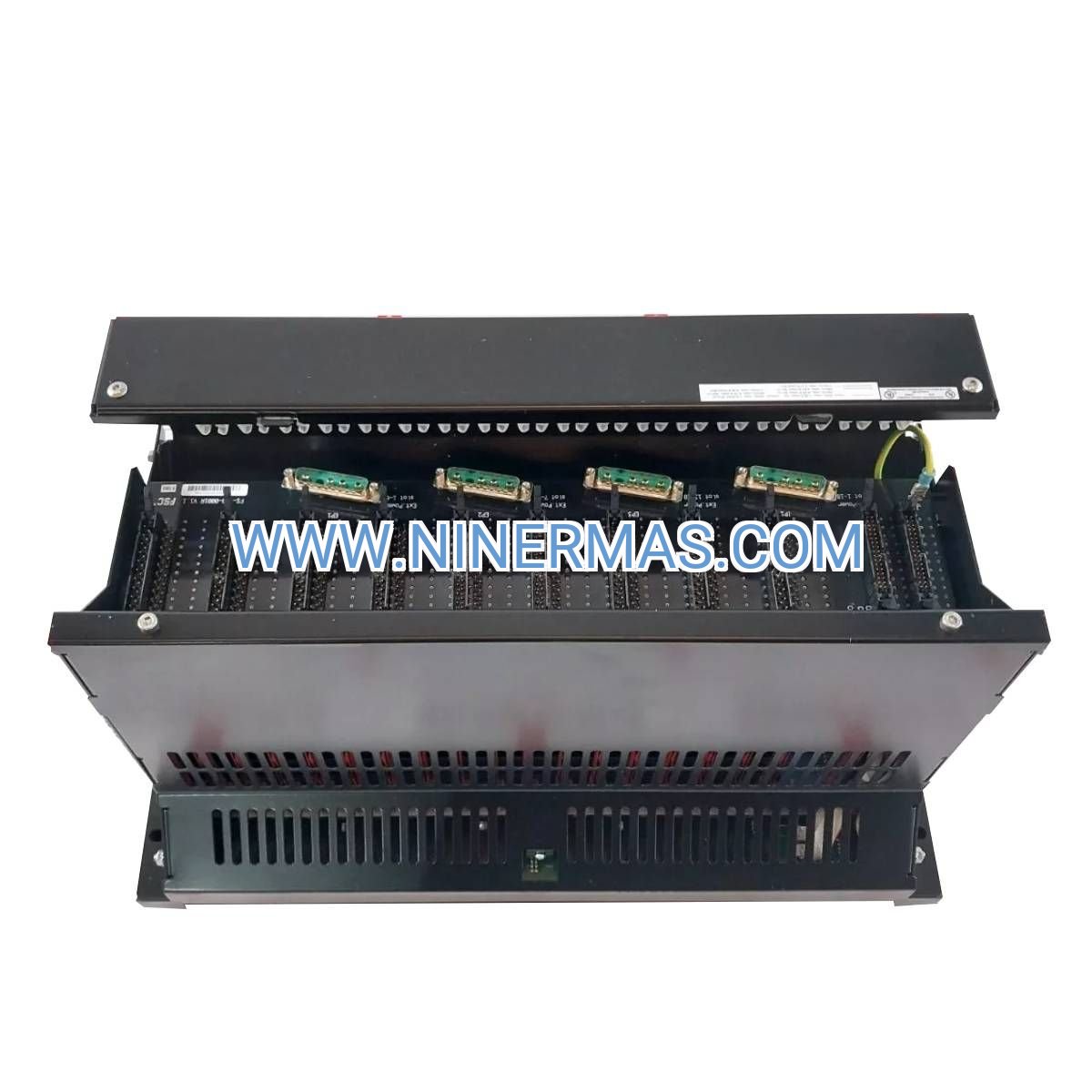
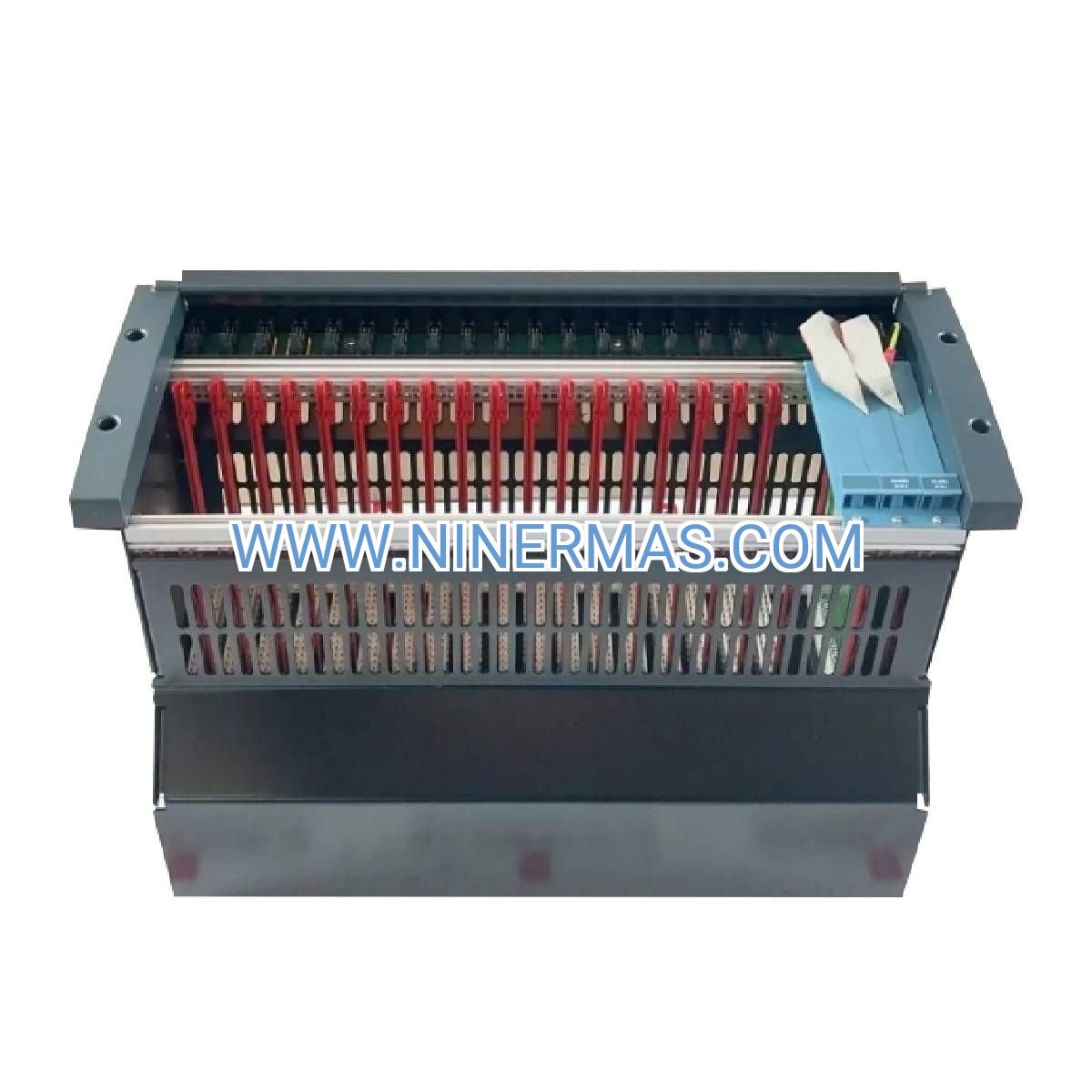
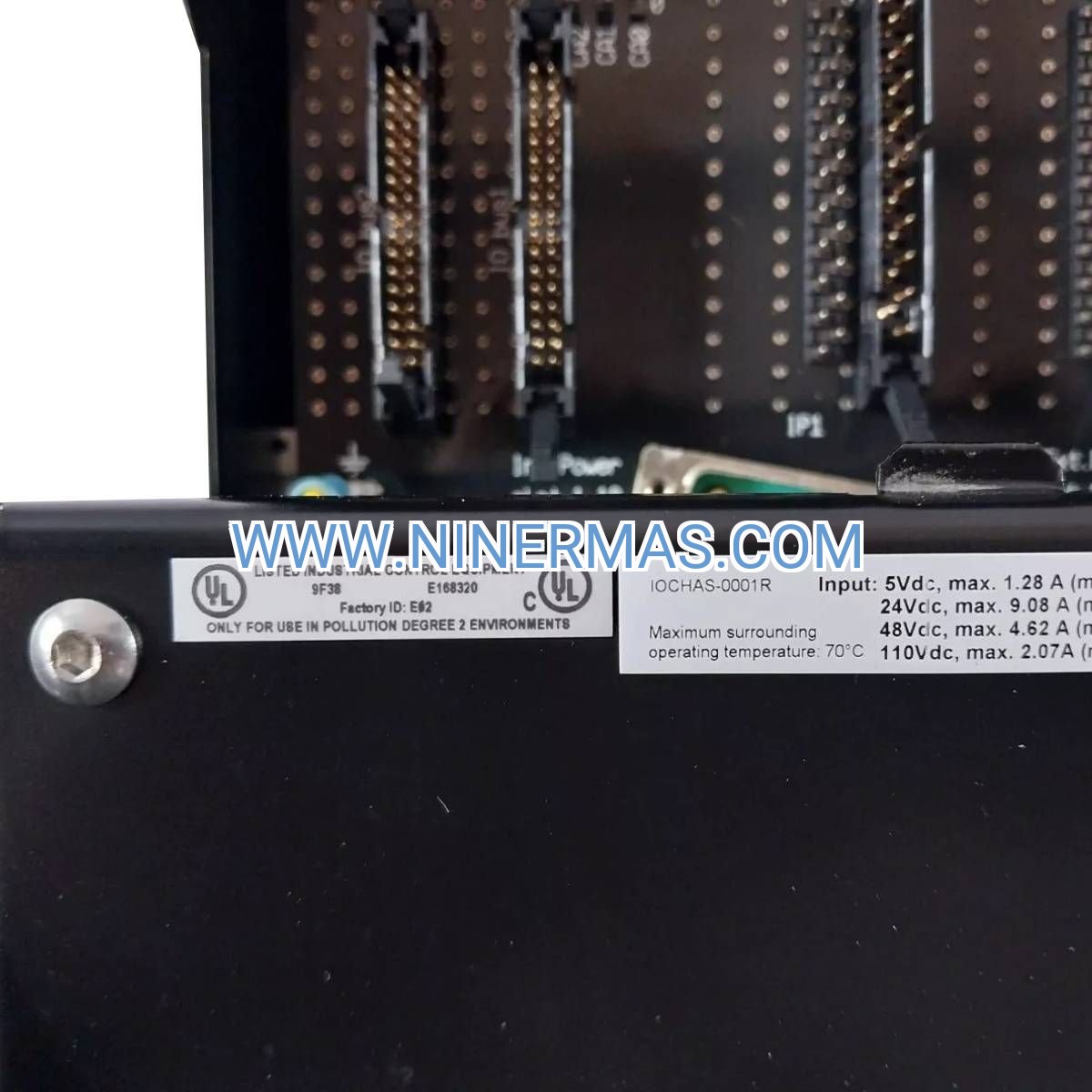
FS-IOCHAS-0001R Redundant IO Chassis (Industrial-Grade Safety Platform)
The FS-IOCHAS-0001R represents Honeywell's advanced approach to safety-critical infrastructure—a fault-tolerant IO chassis specifically architected for Safety Manager and Experion Field Safety Controller (FSC) deployments. Built around dual-channel redundancy principles, this 8-slot platform ensures uninterrupted operation in process environments where downtime translates directly to production loss or safety incidents.
Process industries operating under IEC 61508 SIL 2/3 mandates—including petrochemical refineries, offshore platforms, pharmaceutical manufacturing, and power generation facilities—rely on this chassis to maintain continuous safety instrumented function (SIF) availability. Its hot-swappable architecture allows maintenance teams to service individual IO modules without initiating emergency shutdowns, preserving both operational continuity and regulatory compliance.
When integrated with Honeywell's distributed control ecosystem, the FS-IOCHAS-0001R delivers measurable risk reduction through proven fault detection mechanisms, automatic channel voting, and sub-100ms failover performance—critical capabilities for applications where process deviations must be detected and corrected within tight safety time windows.
Core Capabilities & Business Value
→ Dual-Channel Fault Tolerance: Eliminates single-point failures through synchronized redundant IO processing. Each module pair operates independently while cross-validating input data, automatically isolating faulty channels without operator intervention—reducing unplanned shutdowns by up to 40% compared to simplex architectures.
→ Zero-Downtime Module Replacement: Hot-swap capability enables technicians to extract, replace, or upgrade IO cards during live operation. The partner module seamlessly assumes full control during maintenance windows, preserving safety loop integrity and avoiding costly production interruptions that typically exceed $50,000/hour in continuous process industries.
→ Universal FSC Ecosystem Integration: Native compatibility with Honeywell's complete IO portfolio—from digital input/output modules to specialized analog and pulse counter cards. Supports heterogeneous configurations within a single chassis, allowing engineers to optimize slot allocation based on actual field device requirements rather than hardware constraints.
✓ Harsh-Environment Durability: Conformal-coated PCBs and industrial-grade steel construction withstand temperature extremes (0-60°C operational), humidity fluctuations (5-95% non-condensing), and electromagnetic interference common in heavy industrial settings. IP20 protection rating suitable for climate-controlled control rooms with optional IP54 enclosures for field-mounted applications.
✓ Comprehensive Diagnostic Framework: Multi-color LED arrays provide instant visual feedback on power status, communication health, and individual module conditions. Integrated self-diagnostics continuously monitor backplane integrity, power supply performance, and inter-module communication—alerting operators to degraded conditions before they escalate to failures.
✓ Flexible Power Redundancy: Dual 24V DC inputs with automatic switchover logic ensure continuous operation even during utility power disturbances. Compatible with standard industrial UPS systems and Honeywell's own redundant power supply modules, achieving >99.99% power availability when properly configured.
Industrial Application Scenarios
Emergency Shutdown (ESD) Systems: In offshore oil platforms and onshore gas processing facilities, the FS-IOCHAS-0001R serves as the physical backbone for SIL 3-rated emergency shutdown logic. Redundant digital input modules monitor critical parameters—wellhead pressure, separator levels, gas detector alarms—while redundant output modules control pneumatic shutdown valves. The chassis's fault-tolerant design ensures that sensor failures or wiring faults trigger safe-state actions rather than spurious trips, balancing safety with operational availability.
Fire & Gas Detection Networks: Chemical plants and LNG terminals deploy this chassis to host distributed fire and gas monitoring systems. By pairing redundant analog input modules with flame detector and toxic gas sensor arrays, safety engineers create voting architectures that distinguish genuine hazards from nuisance alarms. The platform's deterministic response time (<50ms from sensor input to controller notification) meets NFPA 72 and ISA 84 timing requirements for rapid hazard mitigation.
Burner Management & Combustion Control: Power generation boilers and industrial furnaces utilize the FS-IOCHAS-0001R to implement fail-safe burner sequencing. Redundant IO channels monitor flame scanners, air/fuel ratio sensors, and furnace draft transmitters, while output modules control ignition transformers and fuel valve actuators. The chassis's ability to maintain control during module failures prevents dangerous fuel accumulation scenarios that could lead to furnace explosions.
Critical Process Interlocks: Pharmaceutical batch reactors and specialty chemical synthesis units depend on this platform for temperature, pressure, and agitation interlocks. When exothermic reactions approach runaway conditions, redundant analog inputs detect temperature excursions while redundant outputs activate cooling systems and emergency venting—all coordinated through the chassis's synchronized backplane to ensure coherent safety responses.
Turbomachinery Protection: Compressor and turbine protection systems leverage the chassis's high-speed IO capabilities to monitor vibration, bearing temperature, and axial displacement. Redundant pulse counter modules track shaft speed with microsecond precision, enabling protective shutdowns before catastrophic mechanical failures occur—preventing equipment damage that routinely exceeds $2M in repair costs and lost production.
Technical Parameters & Selection Criteria
| Specification Category | Value / Range |
|---|---|
| Catalog Number | FS-IOCHAS-0001R |
| Architecture Type | Redundant IO Chassis (Dual-Channel) |
| Compatible Controllers | Safety Manager, Experion FSC, C300 Safety |
| Module Capacity | 8 slots (4 redundant pairs) |
| Backplane Communication | Fault Tolerant Ethernet (FTE) + Proprietary High-Speed Bus |
| Form Factor | 19-inch rack-mount, 4U height (177mm) |
| Power Input | Dual redundant 24V DC ±20% (18-30V range) |
| Power Consumption | 45W (chassis only, excluding modules) |
| Operating Temperature | 0°C to +60°C (32°F to 140°F) |
| Storage Temperature | -40°C to +85°C (-40°F to 185°F) |
| Relative Humidity | 5% to 95% RH, non-condensing |
| Physical Dimensions | 177mm H × 483mm W × 305mm D (7" × 19" × 12") |
| Net Weight | 8.5 kg (18.7 lbs) unpopulated |
| Enclosure Rating | IP20 (control room installation) |
| Safety Certifications | IEC 61508 SIL 3, IEC 61511, TÜV certified |
| Hazardous Area Approvals | FM Class I Div 2, ATEX Zone 2, IECEx, CSA |
| EMC Compliance | IEC 61000-6-2 (Immunity), IEC 61000-6-4 (Emissions) |
| MTBF (Mean Time Between Failures) | >200,000 hours (22.8 years) per MIL-HDBK-217F |
| Failover Time | <100ms (channel-to-channel switchover) |
Selection Guidelines: Choose the FS-IOCHAS-0001R when your application requires SIL 2 or SIL 3 safety integrity levels with high availability (>99.9% uptime). For simplex safety applications or SIL 1 requirements, consider standard IO chassis alternatives. Ensure your control room environment maintains temperatures below 60°C; for harsher conditions, specify climate-controlled enclosures. Calculate total module power consumption to verify compatibility with your DC power infrastructure—each chassis can support up to 120W total load including all populated modules.
Advanced Integration Features
Modbus TCP Gateway Capability: Beyond native FTE protocol support, the chassis can host communication modules that expose IO data via Modbus TCP, enabling integration with third-party SCADA systems, historians, and asset management platforms without compromising safety loop performance.
Cybersecurity Hardening: Firmware implements role-based access control (RBAC), encrypted configuration downloads, and audit logging to meet IEC 62443 industrial cybersecurity standards. Network segmentation recommendations ensure safety networks remain isolated from enterprise IT infrastructure.
Predictive Maintenance Analytics: When connected to Honeywell Forge asset performance management software, the chassis streams diagnostic data for trend analysis—identifying degrading power supplies, marginal communication links, or aging modules before they trigger faults, enabling condition-based maintenance strategies.
Delivery Timeline & Service Commitments
Standard Lead Time: 4-6 weeks for factory-new units with full certification documentation. Expedited 2-week delivery available for critical project milestones (subject to inventory availability and premium freight charges).
Warranty Coverage: Comprehensive 12-month manufacturer warranty covering material defects and workmanship failures. Warranty includes advance replacement service—defective units are replaced before return shipment is required, minimizing system downtime.
Technical Support: Lifetime access to application engineering assistance via phone and email. Support includes configuration file review, troubleshooting guidance, firmware update planning, and compatibility verification for system expansions.
Documentation Package: Each chassis ships with installation manual, safety certification documents, dimensional drawings, and wiring diagrams. Downloadable resources include 3D CAD models (STEP format), configuration templates, and integration guides for common FSC architectures.
Frequently Asked Questions
Q: What happens if both redundant modules in a pair fail simultaneously?
A: The chassis implements a fail-safe design—simultaneous dual-channel failures trigger a safe-state output condition (typically de-energized for shutdown applications). The probability of common-cause failures is minimized through diverse power supplies, independent processing paths, and staggered maintenance schedules. For ultra-critical applications, consider triple modular redundancy (TMR) architectures using multiple chassis.
Q: Can I retrofit this chassis into existing TDC 3000 legacy systems?
A: Yes, with appropriate gateway modules. The FS-IOCHAS-0001R can interface with TDC 3000 controllers via Honeywell's Universal IO (UIO) communication cards, enabling phased migration strategies where new safety IO is added alongside legacy equipment. Consult factory application engineers for specific TDC integration requirements.
Q: How do I perform online firmware updates without process disruption?
A: Firmware updates leverage the redundant architecture—update one module in each pair while its partner maintains control, then switch active channels and update the second module. The Safety Manager engineering station automates this sequence, typically completing full-chassis updates in under 30 minutes with zero process impact.
Q: What cable types are recommended for field wiring connections?
A: Use shielded twisted-pair (STP) cable with drain wire for all analog signals—Belden 9841 or equivalent (18 AWG, foil + braid shield). Digital signals can use unshielded twisted-pair in low-EMI environments, but STP is recommended for installations near VFDs or welding equipment. Maintain 300mm minimum separation between power and signal cables.
Q: Is the chassis compatible with intrinsically safe (IS) field devices?
A: The chassis itself is not IS-rated, but it accepts IO modules designed for IS barrier integration. Install approved zener barriers or galvanic isolators (such as MTL, Pepperl+Fuchs, or Honeywell's own barrier products) between the chassis IO terminals and field devices located in hazardous zones. Ensure barrier selection matches your area classification (Zone 0/1/2 or Division 1/2).
Q: What is the maximum distance between chassis and FSC controller?
A: Using standard Cat5e/Cat6 Ethernet cabling, the maximum distance is 100 meters per IEEE 802.3 specifications. For longer distances, deploy industrial Ethernet switches with fiber optic uplinks—fiber connections can extend to 2km (multimode) or 40km (single-mode) depending on transceiver selection. Always use managed switches with IGMP snooping and QoS capabilities for deterministic performance.
Q: Can I mix different IO module generations in the same chassis?
A: Generally yes, provided all modules are FSC-compatible and running compatible firmware versions. However, redundant pairs must be identical (same part number and firmware revision) to ensure synchronized operation. Mixing analog and digital module types across different slots is fully supported and commonly practiced.
© 2026 NINERMAS COMPANY LIMITED. All rights reserved.
Original Source: https://ninermas.com
Contact: sale@ninermas.com | +0086 187 5021 5667
PDF Specification
Download PDF file here:
Click to Download PDFRelated products

Contact Info
-
Address:22 / F, South Wo Hang building, 148 Wing Lok Street, Sheung Wan, Western District, Hong Kong
-
Phone:+8618750215667
-
Email:
