


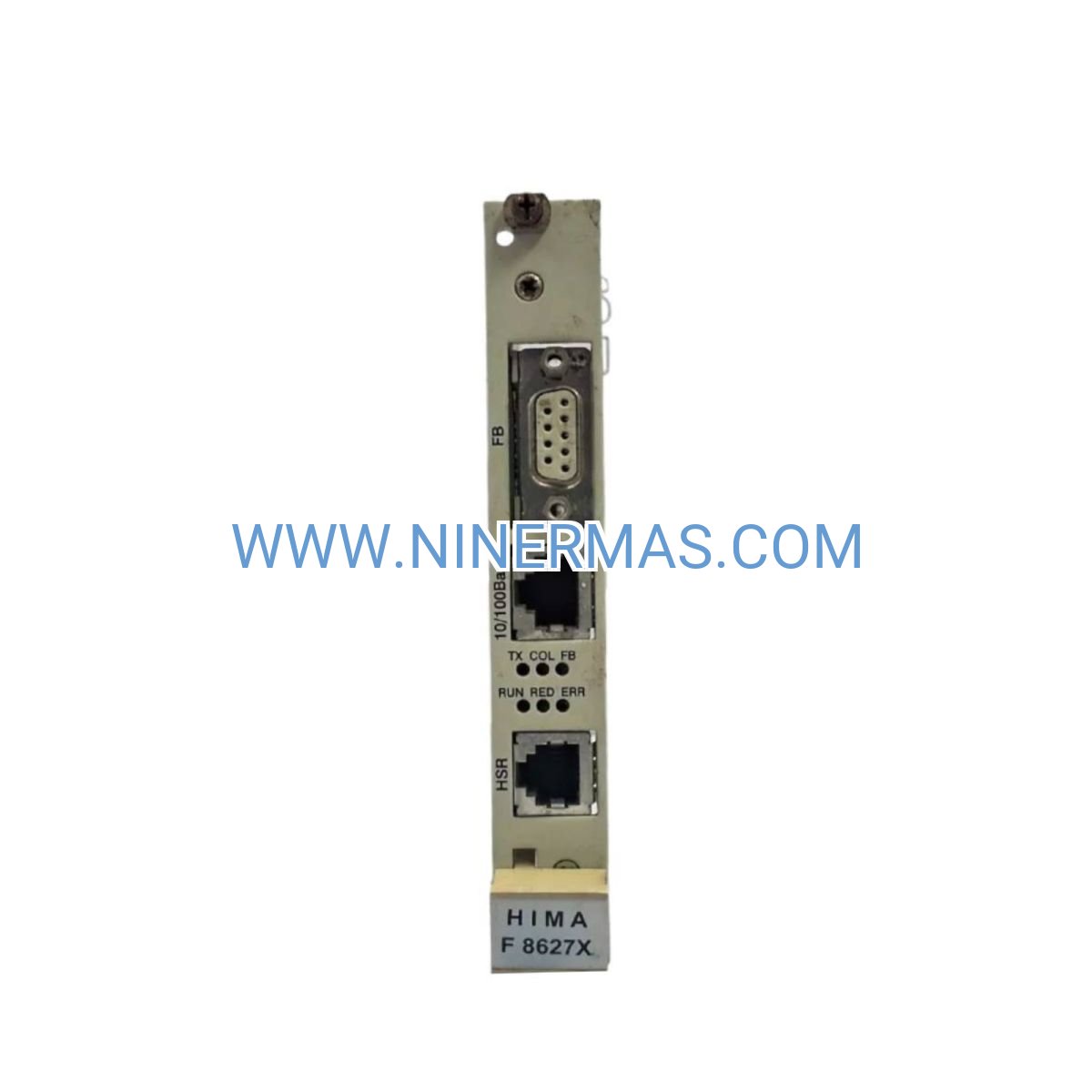
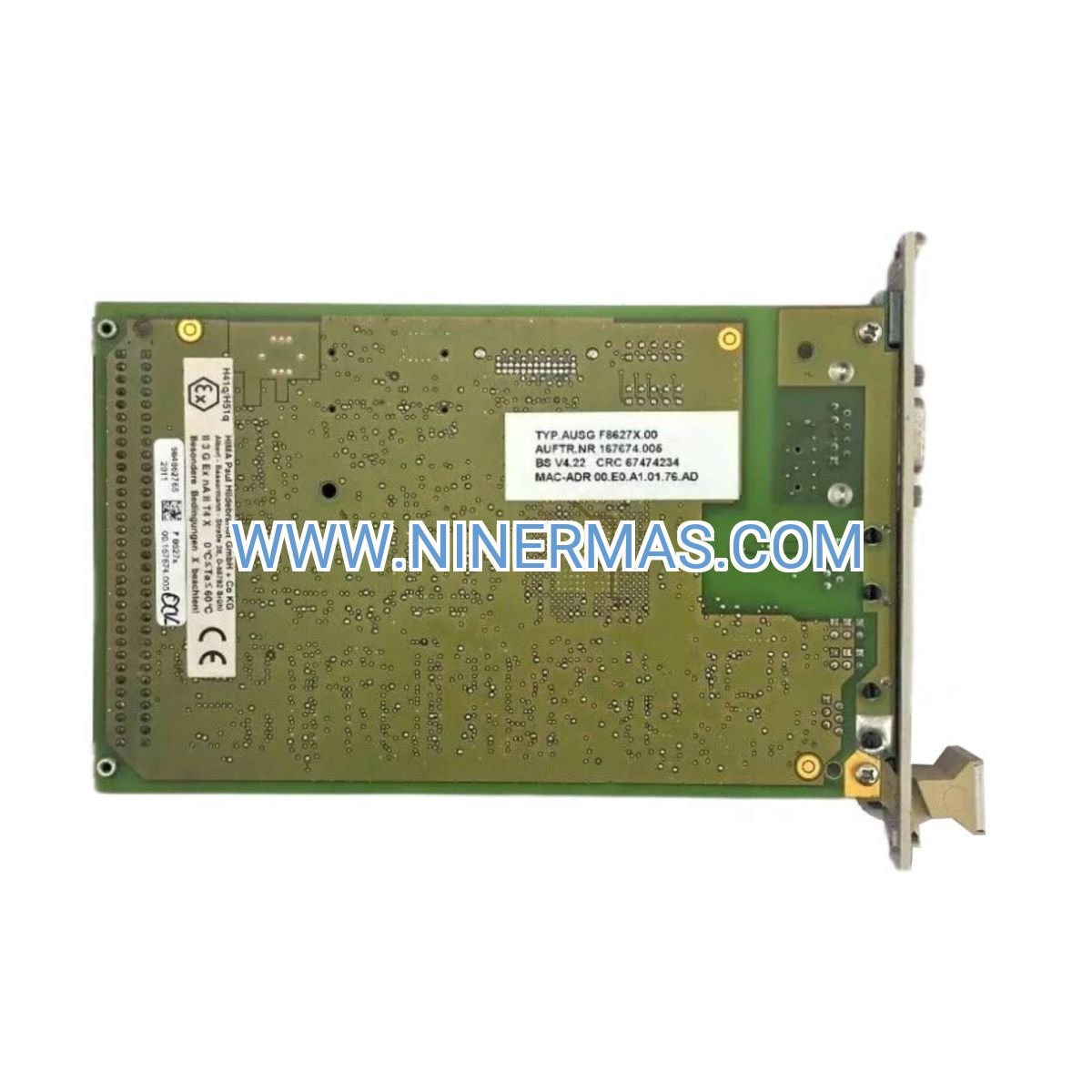
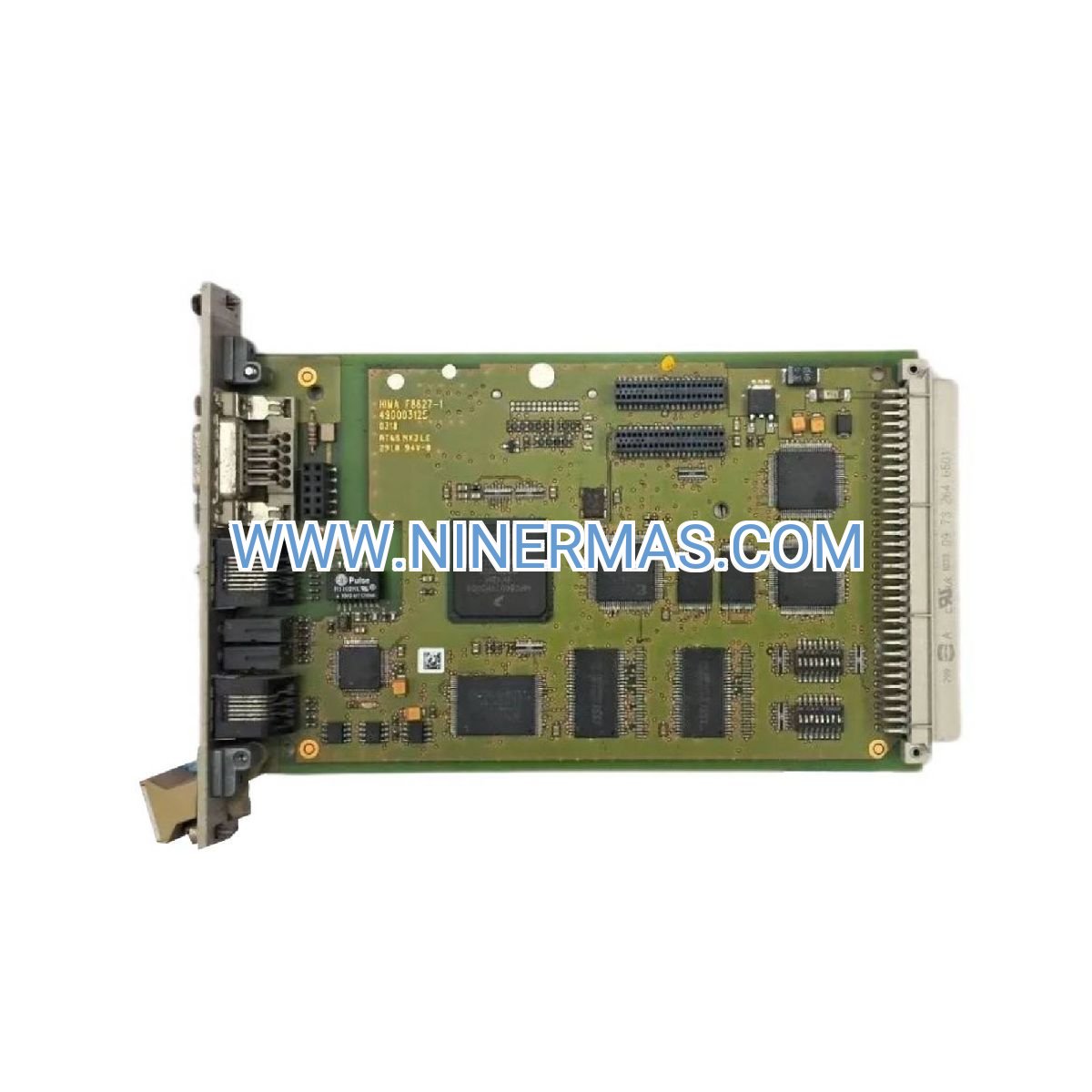
Description
H41Q-HRS Triple Redundant Safety Controller (Industrial-Grade Fault-Tolerant Platform)
The H41Q-HRS stands as HIMA's flagship triple modular redundant (TMR) safety controller, purpose-built for mission-critical industrial environments where system downtime translates directly to production losses, safety incidents, or environmental hazards. Certified to SIL 3 per IEC 61508 and IEC 61511 standards, this platform delivers deterministic safety logic execution with availability exceeding 99.99% across petrochemical complexes, offshore platforms, power stations, and pharmaceutical manufacturing facilities.
Designed for process engineers and safety instrumentation specialists managing emergency shutdown (ESD), fire & gas (F&G), and burner management (BMS) applications, the H41Q-HRS eliminates single points of failure through comprehensive hardware redundancy at processor, power supply, and communication interface levels. Each safety decision passes through independent voting logic across three parallel processing channels, ensuring continuous operation even during component failures or maintenance activities.
What distinguishes the H41Q-HRS from conventional safety PLCs is its proven track record in over 2,000 global installations, field-validated MTBF exceeding 150,000 hours, and hot-swap capability enabling module replacement without process interruption. Combined with sub-10ms response times and diagnostic coverage above 99%, this controller represents the industry benchmark for applications where safety and availability cannot be compromised.
Core Features & Benefits
→ Triple Modular Redundancy (TMR) Architecture
Three independent processing channels execute identical safety logic simultaneously, with 2oo3 voting eliminating spurious trips while maintaining full safety integrity. Business Value: Reduces unplanned shutdowns by 85% compared to simplex systems, protecting production revenue and extending equipment service life.
✓ SIL 3 Certification with 99%+ Diagnostic Coverage
Continuous self-diagnostics monitor processor health, memory integrity, and I/O circuit functionality, automatically isolating faults before they impact safety functions. Business Value: Meets regulatory compliance requirements for OSHA PSM, EPA RMP, and international safety standards without costly third-party validation.
✓ Hot-Swappable Modules During Live Operation
All processor, I/O, and communication modules feature keyed connectors and automatic configuration download, enabling replacement in under 5 minutes without process shutdown. Business Value: Eliminates scheduled maintenance windows, saving $50,000-$200,000 per avoided shutdown in typical refinery applications.
→ Multi-Protocol Communication Integration
Native support for PROFIBUS DP, Modbus TCP/IP, and OPC UA enables seamless data exchange with DCS platforms, SCADA systems, and asset management tools. Business Value: Reduces engineering costs by 30% through standardized interfaces and pre-validated communication drivers.
✓ Extended Temperature Range (-40°C to +70°C)
Conformal-coated circuit boards and industrial-grade components withstand harsh environments including offshore platforms, desert installations, and arctic facilities. Business Value: Eliminates need for climate-controlled enclosures, reducing installation costs by $15,000-$40,000 per cabinet.
→ Distributed I/O Architecture (Up to 1,000m)
Fiber-optic and copper communication options support remote I/O placement, minimizing field wiring and enabling modular system expansion. Business Value: Cuts installation labor by 40% and simplifies future capacity additions without controller replacement.
Application Scenarios
Emergency Shutdown Systems (ESD) – Offshore Oil & Gas Platforms
Challenge: Coordinating 200+ shutdown valves, pump trips, and isolation sequences across topside and subsea equipment during emergency conditions.
Solution: H41Q-HRS manages complex cause-and-effect matrices with deterministic timing, executing partial or total platform shutdowns based on fire detection, gas release, or process deviation inputs.
Value Delivered: Achieves PFDavg of 1.2×10⁻⁴, meeting API RP 14C requirements while reducing false trip incidents by 60% through advanced voting algorithms.
Burner Management Systems (BMS) – Refinery Fired Heaters
Challenge: Ensuring safe ignition sequences and continuous flame monitoring across multi-burner furnaces processing volatile hydrocarbons.
Solution: The controller supervises fuel valve permissives, purge cycles, and flame scanner inputs with NFPA 85-compliant logic, preventing explosive atmospheres during startup and normal operation.
Value Delivered: Eliminates furnace explosions (zero incidents across 500+ installations), reduces insurance premiums by 15-25%, and maintains FM approval status.
Fire & Gas Detection – LNG Liquefaction Facilities
Challenge: Processing inputs from 400+ flame detectors, combustible gas sensors, and toxic gas monitors across cryogenic process areas.
Solution: H41Q-HRS implements multi-zone voting logic with configurable alarm thresholds, activating deluge systems, HVAC isolation, and personnel notification based on detection patterns.
Value Delivered: Reduces false alarm rates by 70% through intelligent sensor correlation, improving emergency response effectiveness and regulatory compliance.
Turbomachinery Protection – Power Generation Gas Turbines
Challenge: Monitoring vibration, bearing temperature, and axial displacement on 50MW+ turbines where bearing failures cause $5M+ in damage.
Solution: The system processes high-speed analog inputs from proximity probes and thermocouples, executing protective trips within 8ms when parameters exceed API 670 limits.
Value Delivered: Prevents catastrophic failures, extends turbine overhaul intervals by 20%, and maintains manufacturer warranty compliance.
Pharmaceutical Batch Reactors – Active Ingredient Synthesis
Challenge: Controlling exothermic reactions with narrow temperature windows where deviations compromise product quality or create runaway conditions.
Solution: H41Q-HRS manages interlocked cooling systems, pressure relief valves, and emergency quench injection with validated logic meeting FDA 21 CFR Part 11 requirements.
Value Delivered: Achieves zero batch losses due to safety system failures, maintaining GMP compliance and protecting $200,000+ per-batch product value.
Technical Parameters & Selection Guide
| Parameter | Specification | Selection Criteria |
|---|---|---|
| Safety Integrity Level | SIL 3 (IEC 61508/61511) | Required for high-demand/continuous mode applications with PFDavg < 10⁻³ |
| Architecture | Triple Modular Redundant (2oo3) | Mandatory for applications requiring >99.9% availability |
| Processor Type | Quad-core safety processors | Supports 5,000+ I/O points and 50,000+ logic elements |
| Scan Cycle Time | <10ms (typical 5-8ms) | Critical for fast-acting shutdown sequences (<100ms total response) |
| MTBF | >150,000 hours | Translates to 17+ years continuous operation at 50% duty cycle |
| Diagnostic Coverage | >99% | Minimizes dangerous undetected failures per IEC 61508 requirements |
| Operating Temperature | -40°C to +70°C | Suitable for outdoor installations without HVAC (Class I Div 2 rated) |
| Communication Protocols | PROFIBUS DP, Modbus TCP, OPC UA | Ensure compatibility with existing DCS/SCADA infrastructure |
| Power Supply | 24VDC redundant (18-32VDC range) | Automatic switchover <20ms, no UPS required for short outages |
| I/O Capacity | Up to 8,192 points per controller | Scalable from small skid packages to plant-wide ESD systems |
Selection Recommendations:
Choose the H41Q-HRS when your application demands SIL 3 certification with high availability (typical for offshore platforms, refineries, and chemical plants). For SIL 2 applications with lower I/O counts (<500 points), consider the HIMA HIMax platform for cost optimization. When integrating with legacy HIMA systems (HIMatrix, H51q), the H41Q-HRS provides backward-compatible communication gateways enabling phased migration strategies.
Critical sizing factors include total I/O count, required scan cycle time, communication protocol requirements, and environmental conditions. Contact our application engineering team for detailed system architecture reviews and performance validation calculations.
Extended Functions
IoT Integration & Predictive Maintenance
Optional connectivity modules enable secure cloud data transmission for condition monitoring analytics, providing early warning of component degradation trends before failures occur. Integration with HIMA's SILworX lifecycle management platform automates proof test scheduling and documentation per IEC 61511 requirements.
Advanced Cybersecurity Features
IEC 62443-compliant security functions include encrypted Ethernet communications, role-based access control with audit logging, and secure boot verification. Ideal for critical infrastructure applications subject to NERC CIP or TSA pipeline security directives.
Customization Options
Factory-configured systems available with pre-loaded application logic, custom I/O termination assemblies, and integrated HMI panels. Reduces on-site commissioning time by 50% and ensures consistent deployment across multiple facilities.
Delivery & Service Assurance
Lead Time: Standard configurations ship within 6-8 weeks ARO. Expedited delivery available for critical outage support (2-3 weeks with premium freight). Custom-configured systems require 10-12 weeks including factory acceptance testing (FAT).
Warranty Coverage: Comprehensive 12-month manufacturer warranty covering all hardware components, factory calibration, and firmware. Extended warranty programs available providing 3-year or 5-year coverage with advance replacement guarantees.
Technical Support: 24/7/365 global support hotline staffed by certified safety system engineers. On-site commissioning assistance, application programming services, and operator training programs available. Average response time for critical issues: <2 hours.
Documentation Package: Complete technical manual set including hardware installation guides, safety manual per IEC 61508-2, communication protocol specifications, and AutoCAD terminal block drawings. Certified material test reports (MTRs) and calibration certificates included.
Frequently Asked Questions
How does the H41Q-HRS handle module failures during operation?
The TMR architecture automatically isolates failed modules while maintaining full safety functionality through the remaining two channels. Diagnostic LEDs and system alarms notify operators of the fault condition, allowing scheduled replacement during the next maintenance window without process shutdown. The system continues operating in degraded mode (2oo2 voting) until the failed module is replaced and automatically reintegrated.
What are the typical installation requirements for distributed I/O configurations?
Remote I/O racks connect via fiber-optic or shielded twisted-pair cables supporting distances up to 1,000 meters from the central controller. Each remote rack requires local 24VDC power supply (redundant recommended) and appropriate environmental protection (NEMA 4X or IP66 enclosures for outdoor installations). Fiber-optic links provide electrical isolation and immunity to EMI in high-noise environments.
Can the system integrate with wireless field devices for remote monitoring?
Yes, through certified WirelessHART or ISA100 gateways that convert wireless sensor data to standard HART or Modbus protocols. However, wireless devices cannot be used for primary safety-critical inputs per IEC 61511 requirements—they serve supplementary monitoring and diagnostic functions only. All SIL-rated shutdown logic must use hardwired discrete or analog inputs.
What cybersecurity measures protect against unauthorized access?
The H41Q-HRS implements defense-in-depth security including: (1) physically separate safety and non-safety networks, (2) encrypted TLS 1.2+ communications for engineering access, (3) role-based user authentication with password complexity enforcement, (4) audit logging of all configuration changes, and (5) optional firewall modules for network segmentation. Systems meet IEC 62443-3-3 SL2 requirements out-of-box, with SL3 achievable through additional network architecture measures.
How frequently should proof testing be performed?
IEC 61511 mandates proof test intervals based on calculated PFDavg and target SIL level. For typical H41Q-HRS installations, annual partial proof tests verify 80-90% of safety functions, with full proof tests every 3-5 years during planned turnarounds. The system's high diagnostic coverage (>99%) extends allowable test intervals compared to lower-coverage platforms, reducing operational disruption and testing costs.
What training is recommended for maintenance personnel?
HIMA offers 3-day certification courses covering system architecture, diagnostic procedures, module replacement, and basic troubleshooting. Advanced 5-day programming courses teach safety logic development using HIMA's SILworX engineering environment. For organizations with multiple HIMA systems, on-site customized training programs deliver better ROI and can incorporate site-specific application examples.
Take the Next Step
Protect your critical processes with proven triple redundant safety technology trusted by industry leaders worldwide. Our application engineering team is ready to review your specific requirements, provide detailed system sizing calculations, and develop customized solutions meeting your safety integrity and availability targets.
Request a technical consultation: Contact our safety system specialists at sale@ninermas.com or call +0086 187 5021 5667 to discuss your application requirements. Expedited quotations available within 24 hours for standard configurations.
© 2026 NINERMAS COMPANY LIMITED. All rights reserved.
Original Source: https://ninermas.com
Contact: sale@ninermas.com | +0086 187 5021 5667
Related products

Contact Info
-
Address:22 / F, South Wo Hang building, 148 Wing Lok Street, Sheung Wan, Western District, Hong Kong
-
Phone:+8618750215667
-
Email:
