Description
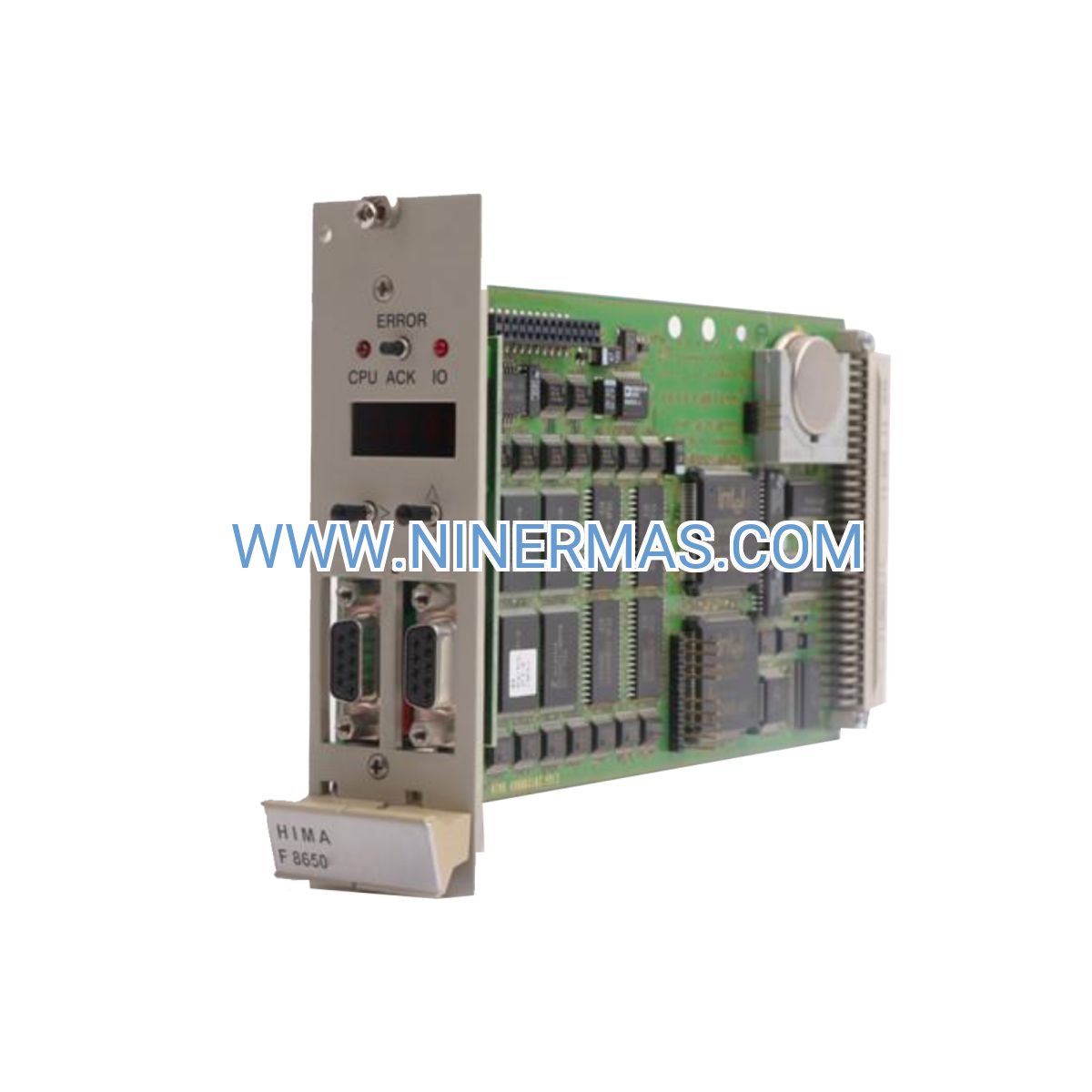
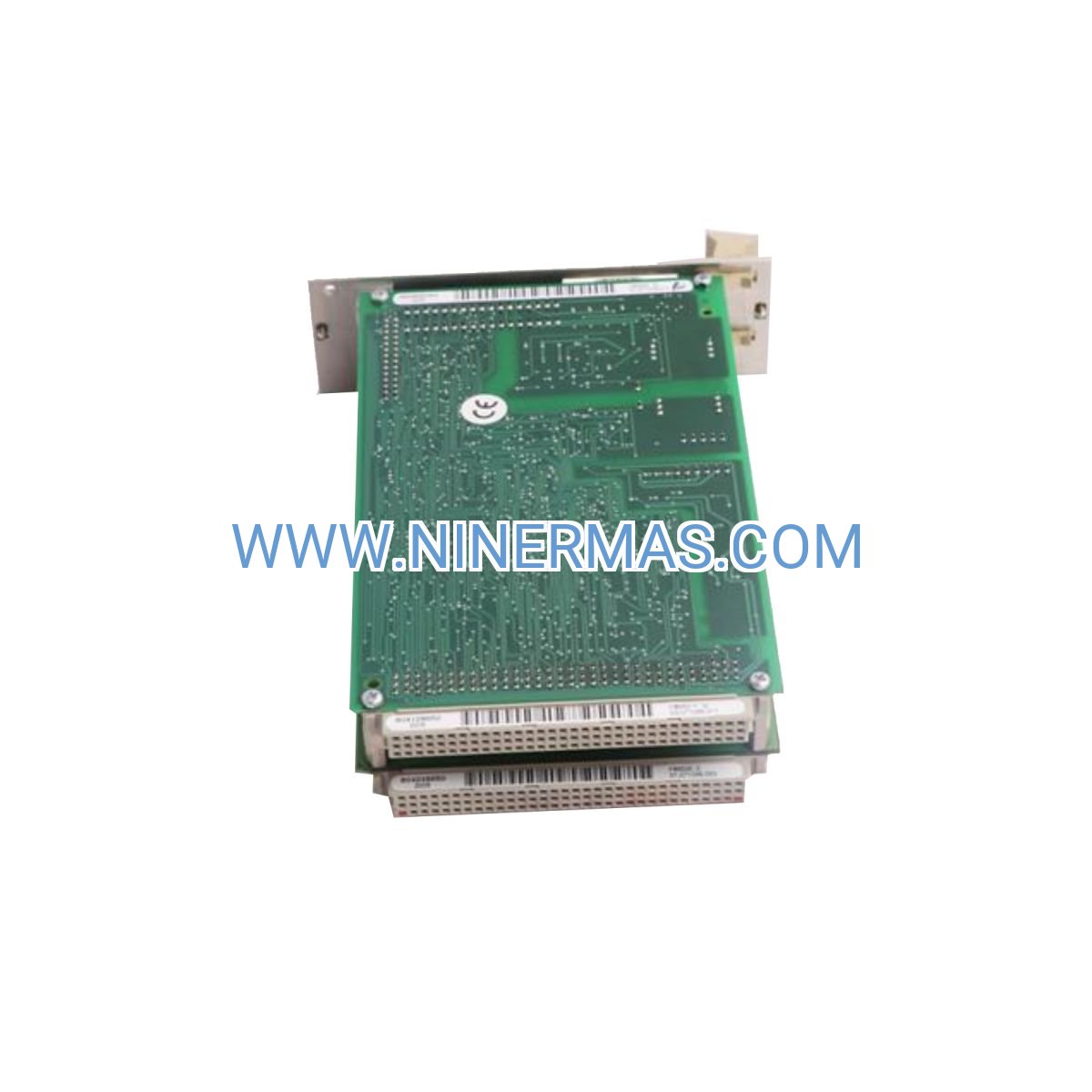
HIMA F8650 Safety CPU (Industrial-Grade Central Processing Unit)
The HIMA F8650 represents a proven safety-rated central processing unit engineered for fail-safe control in hazardous industrial environments. Built around Intel's 386EX microprocessor architecture, this module combines 1MB Flash-EPROM program storage with 256KB SRAM data memory and dual RS485 serial communication ports to deliver deterministic, SIL 3-certified performance for emergency shutdown systems, burner management, and critical process interlocks.
Designed for integration within HIMA HIMax and HIMatrix distributed safety platforms, the F8650 executes safety logic with predictable scan cycles while maintaining full diagnostic transparency through onboard LED indicators and comprehensive self-test routines. Its modular DIN-rail form factor enables rapid deployment in control cabinets ranging from offshore platforms to chemical processing facilities.
Whether you're upgrading legacy safety systems or designing new protection schemes, the F8650 delivers the processing power, memory capacity, and communication flexibility required for complex multi-zone safety applications. Backed by HIMA's proven track record in functional safety and supported by global engineering resources, this central module ensures your critical processes remain protected against hazardous failures.
Core Capabilities & Technical Advantages
→ SIL 3 Functional Safety Certification
Certified to IEC 61508 Safety Integrity Level 3 standards, the F8650 achieves probability of failure on demand (PFD) values suitable for the most demanding safety functions. Independent third-party validation ensures compliance with international functional safety requirements for emergency shutdown, fire and gas detection, and high-integrity pressure protection systems.
→ Intel 386EX Processing Architecture
The 32-bit Intel 386EX processor delivers deterministic execution of safety logic with configurable scan times typically ranging from 10 to 100 milliseconds. This proven architecture provides sufficient computational headroom for complex Boolean logic, timer functions, and analog processing while maintaining real-time responsiveness critical for safety applications.
→ Dual RS485 Serial Communication
Two independent RS485 interfaces enable redundant connectivity to distributed I/O racks, operator interfaces, and supervisory systems. Serial communication supports HIMA's proprietary safety protocol with automatic error detection, ensuring data integrity across extended cable runs up to 1200 meters in industrial environments subject to electromagnetic interference.
→ Non-Volatile Program Storage
1MB Flash-EPROM retains safety application programs and configuration data during power interruptions without battery backup requirements. Flash technology eliminates concerns about EEPROM write-cycle limitations while enabling field updates through standard programming tools when application modifications are required.
→ Comprehensive Diagnostic Monitoring
Built-in self-test routines continuously verify processor operation, memory integrity, and communication channel health. Front-panel LEDs provide immediate visual indication of power status, run mode, fault conditions, and communication activity, accelerating troubleshooting and reducing mean time to repair during maintenance activities.
✓ Modular System Integration
Standard DIN-rail mounting and compact footprint facilitate installation in space-constrained control panels. The F8650 interfaces seamlessly with HIMA's extensive portfolio of safety I/O modules, communication gateways, and power supply units through standardized backplane connections and cable assemblies.
Industrial Application Scenarios
Petrochemical Emergency Shutdown Systems
In refineries and petrochemical complexes, the F8650 serves as the central logic solver for emergency shutdown (ESD) systems protecting against overpressure, high temperature, and toxic releases. The module processes inputs from pressure transmitters, temperature sensors, and gas detectors to execute trip logic that isolates process sections and activates emergency venting systems. Dual RS485 ports enable connection to remote I/O racks distributed across process units while maintaining SIL 3 integrity for critical shutdown functions.
Power Generation Turbine Protection
Gas and steam turbine installations rely on the F8650 for overspeed protection, vibration monitoring, and emergency trip functions. The CPU processes high-speed digital inputs from magnetic pickups and accelerometers, executing protective logic that activates fuel shutoff valves and turbine brakes within milliseconds of detecting abnormal conditions. Integration with existing DCS systems through serial gateways enables coordinated shutdown sequences while preserving safety system independence.
Chemical Reactor Safety Interlocks
Batch and continuous chemical processes utilize the F8650 for reactor temperature control, pressure relief coordination, and runaway reaction prevention. The module monitors analog inputs from thermocouples and pressure transmitters, comparing process variables against safe operating limits and initiating cooling water injection, emergency venting, or feed isolation when thresholds are exceeded. Non-volatile memory ensures interlock configurations remain intact during planned maintenance shutdowns.
Offshore Platform Fire & Gas Detection
Offshore oil and gas platforms deploy the F8650 as the central processor for integrated fire and gas detection systems. The CPU evaluates inputs from flame detectors, combustible gas sensors, and manual call points to activate deluge systems, close fire dampers, and initiate platform evacuation alarms. Ruggedized construction withstands the corrosive marine environment and temperature extremes encountered in offshore installations.
Technical Parameters & Selection Criteria
| Specification | Value | Engineering Notes |
|---|---|---|
| Processor Type | Intel 386EX (32-bit) | Deterministic execution for safety logic |
| Program Memory | 1MB Flash-EPROM | Non-volatile, no battery required |
| Data Memory | 256KB SRAM | Sufficient for complex applications |
| Communication Ports | 2 × RS485 serial | Redundant I/O connectivity |
| Safety Rating | SIL 3 per IEC 61508 | Suitable for critical safety functions |
| Supply Voltage | 24V DC ±20% | Standard industrial power |
| Power Consumption | Typically 8-12W | Low heat dissipation |
| Operating Temperature | -20°C to +60°C | Extended industrial range |
| Storage Temperature | -40°C to +85°C | Suitable for harsh climates |
| Humidity Tolerance | 5% to 95% RH (non-condensing) | Tropical and marine environments |
| Mounting Method | 35mm DIN rail (EN 50022) | Standard panel installation |
| Dimensions (H×W×D) | Approx. 120 × 80 × 100mm | Compact footprint |
| Typical Scan Time | 10-100ms (configurable) | Application-dependent |
| Diagnostic Indicators | Power, Run, Error, Comm LEDs | Visual status monitoring |
Selection Guidelines: Choose the F8650 when your application requires SIL 3-rated central processing with moderate I/O counts (up to 512 points via distributed modules) and serial communication is acceptable. For applications demanding Ethernet connectivity or higher I/O density, consider newer HIMA CPU platforms with integrated network interfaces. Verify that your programming environment supports the F8650 hardware revision and that spare parts availability aligns with your long-term maintenance strategy.
Advanced Integration & Customization
Distributed I/O Architecture: The F8650 communicates with remote I/O racks via RS485 serial links, supporting mixed configurations of digital input, digital output, analog input, and analog output modules. Typical system architectures distribute I/O modules across multiple racks positioned near field devices, minimizing wiring costs while maintaining centralized safety logic execution in the F8650 CPU.
Redundancy Configurations: For applications requiring fault-tolerant operation, deploy dual F8650 modules in hot-standby or active-active redundancy configurations. Redundant CPUs synchronize program execution and I/O data through dedicated communication links, automatically transferring control to the backup processor upon primary module failure without interrupting safety functions.
SCADA Integration: Connect the F8650 to supervisory control and data acquisition (SCADA) systems through serial-to-Ethernet gateways or dedicated communication modules. This enables remote monitoring of safety system status, alarm annunciation, and historical data logging while preserving the independence of the safety logic solver from the control network.
Custom Application Programming: Develop safety applications using HIMA's SILworX engineering suite, which supports IEC 61131-3 programming languages including Ladder Diagram (LD), Function Block Diagram (FBD), and Structured Text (ST). The programming environment includes pre-certified function blocks for common safety functions, accelerating application development while ensuring compliance with functional safety standards.
Delivery, Warranty & Technical Support
Standard Lead Time: In-stock F8650 modules typically ship within 3-5 business days via express courier services. Custom configurations or large-quantity orders may require 2-4 weeks for factory preparation and quality verification. Expedited shipping options are available for emergency replacement requirements.
Warranty Coverage: All HIMA F8650 central modules include a comprehensive 12-month manufacturer's warranty covering defects in materials and workmanship. Warranty service includes advance replacement for critical applications, minimizing downtime during failure events. Extended warranty programs are available for long-term projects.
Technical Assistance: Our application engineering team provides pre-sales consultation for system architecture design, I/O sizing, and communication network planning. Post-sales support includes configuration assistance, troubleshooting guidance, and firmware update coordination. Access to HIMA's global technical support network ensures rapid response regardless of installation location.
Documentation Package: Each F8650 module ships with installation manual, technical datasheet, safety certification documents, and conformity declarations. Digital documentation including CAD drawings, programming examples, and integration guides is available through our technical resource portal.
Frequently Asked Questions
What programming software is compatible with the F8650 central module?
The F8650 requires HIMA's SILworX engineering suite for application development, configuration, and diagnostics. SILworX supports IEC 61131-3 programming languages and includes simulation tools for offline testing. Ensure your SILworX version matches the F8650 firmware revision to avoid compatibility issues during program downloads.
Can the F8650 communicate with non-HIMA I/O modules or third-party devices?
The F8650's RS485 ports utilize HIMA's proprietary safety communication protocol optimized for SIL 3 applications. Direct connection to third-party devices requires protocol gateways or communication modules that translate between HIMA's protocol and standard industrial protocols such as Modbus RTU or Profibus DP.
How many I/O points can a single F8650 module support in a distributed system?
A single F8650 typically supports up to 512 I/O points when configured with distributed I/O racks connected via RS485 serial links. Actual I/O capacity depends on scan time requirements, communication distance, and the mix of digital and analog modules. Consult HIMA's system planning guidelines for specific application sizing.
Is the F8650 suitable for outdoor installations or extreme environmental conditions?
The F8650 is designed for installation within climate-controlled enclosures meeting IP54 or higher ingress protection ratings. For outdoor or extreme-temperature applications, house the module in NEMA 4X or equivalent enclosures with environmental controls. Operating temperature range is -20°C to +60°C; storage temperature extends to -40°C to +85°C.
What is the expected service life and obsolescence timeline for the F8650?
HIMA industrial safety modules typically remain in production for 15+ years with extended spare parts availability for an additional 10 years beyond discontinuation. The F8650 is a mature platform with established lifecycle support. For new projects with 20+ year horizons, consult HIMA regarding migration paths to current-generation CPU platforms.
Does the F8650 require battery backup for program retention during power loss?
No. The F8650 utilizes Flash-EPROM technology for non-volatile program storage, eliminating battery backup requirements for application programs and configuration data. However, real-time clock functions and certain diagnostic counters may require battery support depending on system configuration.
Request Your Quote Today
Ready to integrate the HIMA F8650 safety CPU into your critical control application? Our technical sales team is standing by to discuss your specific requirements, provide system architecture recommendations, and prepare a detailed quotation including all necessary modules, cables, and documentation. Contact us today to ensure your safety systems meet the highest standards of reliability and compliance.
© 2026 NINERMAS COMPANY LIMITED. All rights reserved.
Original Source: https://ninermas.com
Contact: sale@ninermas.com | +0086 187 5021 5667
PDF Specification
Download PDF file here:
Click to Download PDFRelated products

Contact Info
-
Address:22 / F, South Wo Hang building, 148 Wing Lok Street, Sheung Wan, Western District, Hong Kong
-
Phone:+8618750215667
-
Email: