Original Industrial Spare Part
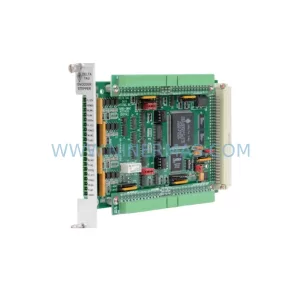
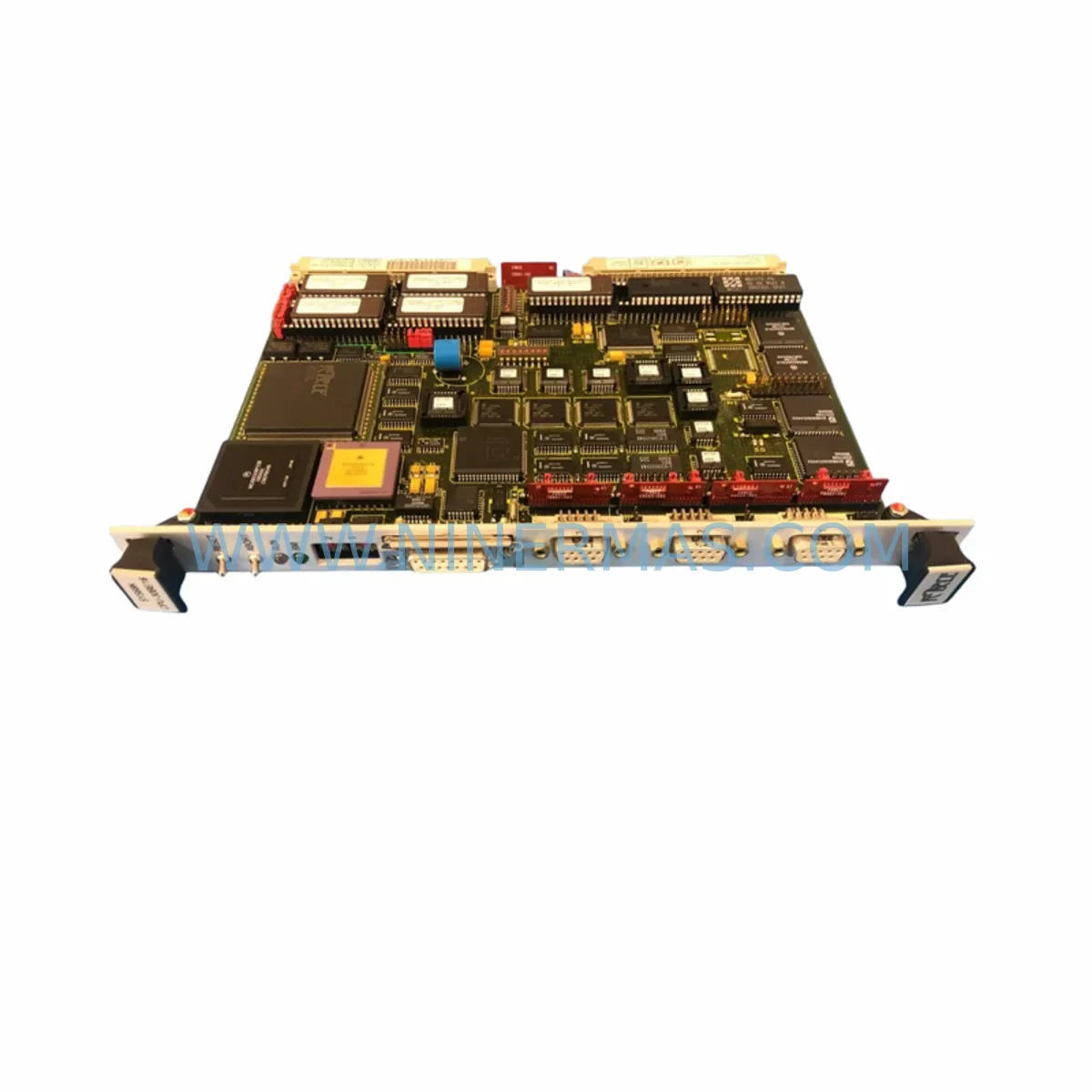
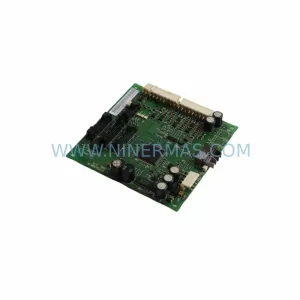
FORCE SYS68K/CPU-30BE16 REV 3 Service-Ready Spare Part
Verify the part, confirm the platform family, and move straight into quotation with the right commercial details.
RFQ Ready
- SKUSYS68K CPU-30BE16 REV 3
- CategoryPLC & Industrial Automation Modules
- BrandFORCE
- SupportAvailability, lead time, condition, and shipping coordination
How Buyers Usually Use This Page
- Confirm the exact part number and platform family before sending the quote request.
- Use direct email when quantity, condition, and destination are already defined internally.
- Switch to the broader brand or category archive when you need alternates nearby.
Series Navigation
Move through the most common platform families behind this part.
Product RFQ
Send this part directly for quotation.
Include quantity, required condition, destination country, and target delivery timing. Current reference: FORCE SYS68K/CPU-30BE16 REV 3 Service-Ready Spare Part with SKU SYS68K CPU-30BE16 REV 3.
FORCE SYS68K/CPU-30BE16 REV 3 Service-Ready Spare Part for Industrial Maintenance
The FORCE SYS68K/CPU-30BE16 REV 3 is a high-performance VMEbus CPU board engineered for demanding industrial automation environments. As a service-ready original spare part, this unit is sourced, inspected, and dispatched to support maintenance engineers and procurement teams managing legacy VME-based control systems. Whether you are executing a planned annual overhaul, responding to an unscheduled line stoppage, or building a strategic spare parts inventory, the SYS68K/CPU-30BE16 REV 3 delivers the compatibility and reliability your operation depends on.
FORCE Computers’ SYS68K series established itself as a cornerstone of VMEbus computing in industrial automation, process control, and defence-grade applications. The CPU-30BE16 variant integrates a Motorola 68030 processor running at 16 MHz with onboard DRAM, EPROM sockets, serial communication ports, and a full VME P1/P2 connector interface. REV 3 represents a mature, field-proven revision with documented compatibility across a wide range of VME backplanes and chassis configurations. Sourcing a verified REV 3 unit is critical — revision mismatches can introduce subtle firmware incompatibilities that extend commissioning time and increase downtime risk.
For maintenance engineers, the CPU-30BE16 REV 3 is typically the single most critical component in a SYS68K-based control node. When this board fails, the entire control loop — including I/O scanning, PLC ladder execution, and HMI communication — halts. Having a pre-tested replacement on the shelf is the most effective strategy to reduce mean time to repair (MTTR) and protect production continuity.
Spare Maintenance Table
| Parameter | Specification / Detail |
|---|---|
| SKU / Part Number | SYS68K/CPU-30BE16 REV 3 |
| Brand | FORCE Computers |
| Series | SYS68K VMEbus CPU Series |
| Product Type | VME CPU Board (Single-Board Computer) |
| Processor | Motorola MC68030 @ 16 MHz |
| Bus Standard | VMEbus (IEEE 1014), P1/P2 Connector |
| Memory | Onboard DRAM; EPROM socket support |
| Communication Ports | Serial (RS-232/RS-422 compatible) |
| Revision | REV 3 (field-proven, mature revision) |
| Compatibility | VME 6U backplanes; SYS68K chassis; compatible with FORCE SYS68K/SIO, SYS68K/ISIO, and SYS68K/ISCSI peripheral boards |
| Application Environment | Industrial automation, process control, defence, legacy DCS/SCADA nodes |
| Origin | Germany (FORCE Computers GmbH) |
| Condition | Original spare; inspected and function-tested prior to dispatch |
| Installation | Direct VME slot insertion; confirm slot addressing and IRQ configuration before power-on |
| Maintenance Recommendation | Replace as a matched pair with SYS68K/ISIO or SYS68K/SIO I/O boards where applicable; verify EPROM firmware revision before commissioning |
| Warranty | 12 Months — covers manufacturing defects and functional failure under normal operating conditions |
| Lead Time | Typically in stock; contact for availability confirmation |
Maintenance Planning for Continuous Operation
Replacing the SYS68K/CPU-30BE16 REV 3 in a live control cabinet is rarely an isolated task. Experienced maintenance engineers understand that a CPU board failure is often a symptom of broader system stress — and that a thorough replacement procedure must account for the entire control node ecosystem.
Before powering down the VME chassis, inspect the SYS68K/ISIO-1 or SYS68K/ISIO-2 intelligent serial I/O boards seated in adjacent slots. These boards handle asynchronous serial communication to field devices and PLCs; if the CPU board has been running in a degraded state, the ISIO firmware may have logged communication faults that require a reset or re-initialisation after the CPU swap. Similarly, the SYS68K/SIO serial I/O module should be inspected for connector wear and cable integrity at the P2 backplane interface.
The VME backplane itself — whether a 6-slot or 21-slot passive chassis — should be visually inspected for oxidised bus contacts, cracked PCB traces near the P1/P2 connectors, and any signs of thermal stress. A faulty backplane can cause intermittent CPU resets that mimic CPU board failure, leading to unnecessary part replacement. If the chassis is a FORCE SYS68K/VME or compatible third-party VME enclosure, confirm that the system controller slot (typically slot 1) is correctly assigned to the CPU-30BE16.
Power supply integrity is equally critical. The SYS68K/PSU or equivalent VME power supply module must deliver stable +5 VDC and ±12 VDC rails within VMEbus specification tolerances. A power supply operating near end-of-life — characterised by output ripple exceeding 50 mV or slow rise times — can corrupt DRAM contents during boot and produce hard-to-diagnose system faults. Procurement teams should consider stocking a spare VME PSU alongside the CPU board to eliminate power-related variables during emergency maintenance.
For systems where the CPU-30BE16 interfaces with a FORCE SYS68K/ISCSI SCSI controller board, verify that the SCSI termination is correctly configured and that the connected storage media (hard disk or solid-state SCSI emulator) is functioning correctly. Data corruption on the boot device is a common secondary failure mode when a CPU board has been operating with marginal power or thermal conditions.
Communication continuity must also be validated. If the control node connects to a DCS or SCADA system via SYS68K/ARCNET or Ethernet mezzanine modules, confirm that network addresses and interrupt vectors are correctly restored after the CPU swap. Signal isolators on 4–20 mA analogue loops connected to the I/O subsystem should be checked for drift, particularly if the system has experienced power interruptions. Terminal blocks and field wiring connectors at the cabinet base should be inspected for loose terminations that may have been disturbed during the board removal process.
Finally, if the system includes a local HMI panel communicating via RS-232 or RS-422 to the SYS68K CPU, perform a full communication handshake test after commissioning the replacement board. HMI display anomalies are a common post-replacement symptom caused by baud rate or parity mismatches introduced during firmware re-initialisation.
Site Replacement Workflow
Step 1 — Pre-Replacement Documentation: Before removing the SYS68K/CPU-30BE16 REV 3, photograph the board’s DIP switch and jumper configuration. Record the EPROM part numbers and firmware revision labels. If the system runs a real-time operating system (RTOS) image from EPROM, confirm that a verified backup copy exists before proceeding.
Step 2 — Safe Shutdown: Execute a controlled system shutdown via the RTOS or operating software. Do not perform a hard power cut unless the system is already in a fault state. Allow capacitors in the VME PSU to discharge fully before opening the chassis.
Step 3 — Board Extraction: Use the VME board ejector levers to disengage the CPU-30BE16 from the backplane. Avoid flexing the board during extraction. Place the removed board in an ESD-protective bag immediately.
Step 4 — Replacement Board Preparation: Configure the replacement SYS68K/CPU-30BE16 REV 3 to match the documented DIP switch and jumper settings. Install the correct EPROM firmware revision. Verify that the board revision (REV 3) matches the original to ensure full compatibility with the existing backplane and peripheral boards.
Step 5 — Installation and Power-On: Seat the replacement board firmly into the VME slot. Apply power and monitor the boot sequence. Confirm that the RTOS initialises correctly, all peripheral boards are detected, and field communication is restored. Log the replacement date, board serial number, and firmware revision in the site maintenance record.
Step 6 — Functional Verification: Run a full I/O scan, verify analogue signal integrity, and confirm HMI communication before returning the system to production. Document the completed replacement in the site CMMS or maintenance log.
This structured workflow minimises downtime, reduces the risk of secondary failures, and ensures full system compatibility — protecting both the production line and the long-term integrity of the control architecture.
Spare Parts Support FAQ
Q1: Is the SYS68K/CPU-30BE16 REV 3 still available as a new or original spare part?
FORCE Computers discontinued active production of the SYS68K series, but original spare units — including REV 3 boards — remain available through specialist industrial spare parts suppliers. All units supplied by NINERMAS are original FORCE Computers hardware, inspected and function-tested prior to dispatch. We do not supply counterfeit, cloned, or third-party replica boards.
Q2: How do I verify compatibility between the CPU-30BE16 REV 3 and my existing VME backplane?
The CPU-30BE16 REV 3 is compatible with standard 6U VMEbus backplanes conforming to IEEE 1014. Confirm that your chassis assigns the system controller role to slot 1 and that the P1/P2 connector pinout matches the FORCE SYS68K specification. If you are replacing an earlier REV 1 or REV 2 board, review the FORCE technical bulletin for REV 3 to identify any jumper configuration changes. Contact our technical team with your chassis model and existing board revision for a compatibility confirmation before ordering.
Q3: What does the 12-month warranty cover, and what is the dispatch testing procedure?
Every SYS68K/CPU-30BE16 REV 3 unit is bench-tested for power-on functionality, VMEbus signal integrity, and serial port operation before dispatch. The 12-month warranty covers manufacturing defects and functional failure under normal operating conditions. It does not cover damage caused by incorrect installation, ESD mishandling, overvoltage, or physical impact. Warranty claims are processed with a return-and-replace procedure; contact sale@ninermas.com to initiate a claim.
Q4: Can NINERMAS support long-term supply commitments for the SYS68K/CPU-30BE16 REV 3?
Yes. We support long-term spare parts programs for critical legacy components, including the SYS68K series. For customers managing multi-site installations or extended lifecycle commitments, we offer stock reservation agreements and priority allocation on available inventory. Contact our procurement team to discuss volume requirements, lead times, and long-term supply terms. Early engagement is strongly recommended for high-priority SKUs where global availability is limited.
| Product Series | Other series |
|---|
Catalog Continuation
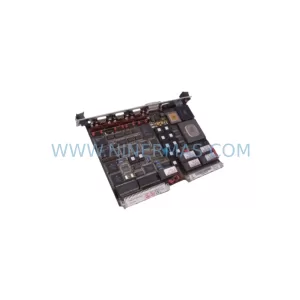
Nearby part numbers around SYS68KCP.
Use this lane when the buyer is comparing adjacent model numbers, revision-near items, or closely related spare variants within the same brand family.
Catalog Continuation
More FORCE modules in the catalog.
Use the brand lane to compare nearby part numbers, platform-adjacent modules, and other inquiry-ready listings before sending your final RFQ.
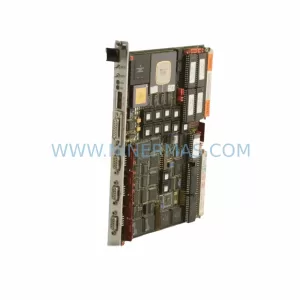
SKU: SYS68K/CPU-30ZBE
FORCE SYS68K/CPU-30ZBE Safety-Reliable SBC for Critical Control
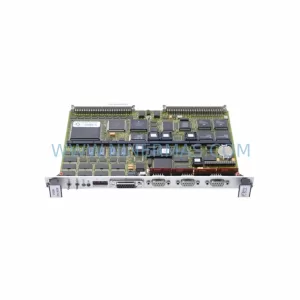
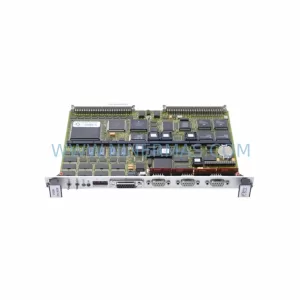
SKU: SYS68K CPU-30BE/16
FORCE SYS68K CPU-30BE/16 Safety-Reliable CPU for Critical Control Sites
SKU: SPARC ESP5S-85/0-S
FORCE SPARC ESP5S-85/0-S Retrofit-Compatible Safety Module
Catalog Continuation
Alternative parts within PLC & Industrial Automation Modules.
Stay inside the same system family when you need substitutes, adjacent modules, or a broader shortlist for procurement review.