Original Industrial Spare Part
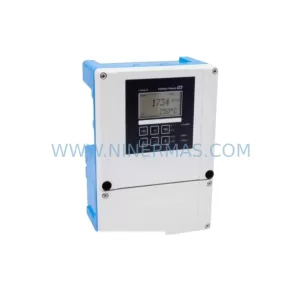
Endress+Hauser COY31-Z Retrofit-Compatible Flow Transmitter
Verify the part, confirm the platform family, and move straight into quotation with the right commercial details.
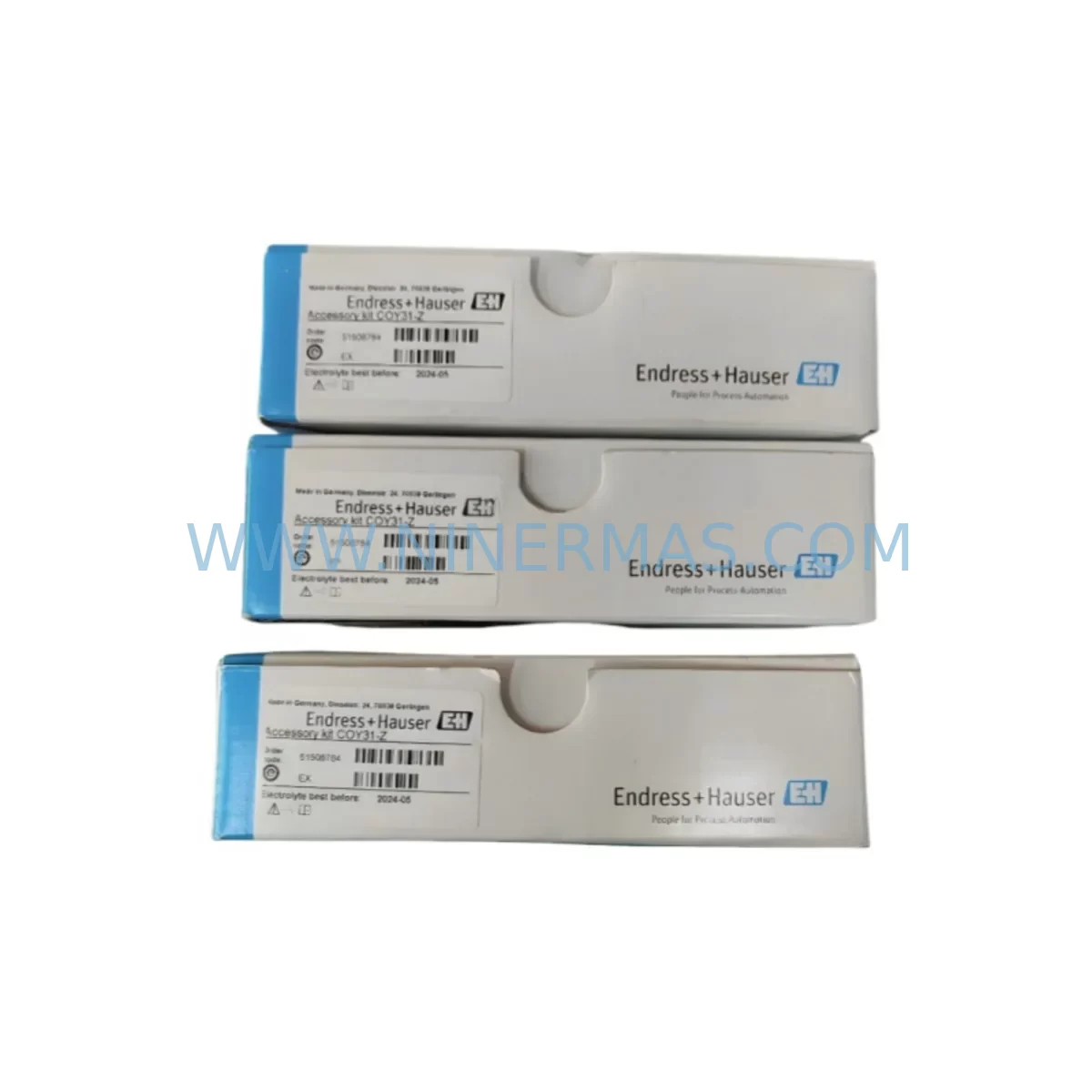
RFQ Ready
- SKUCOY31-Z
- CategoryPLC & Industrial Automation Modules
- BrandEndress+Hauser
- SupportAvailability, lead time, condition, and shipping coordination
How Buyers Usually Use This Page
- Confirm the exact part number and platform family before sending the quote request.
- Use direct email when quantity, condition, and destination are already defined internally.
- Switch to the broader brand or category archive when you need alternates nearby.
Series Navigation
Move through the most common platform families behind this part.
Product RFQ
Send this part directly for quotation.
Include quantity, required condition, destination country, and target delivery timing. Current reference: Endress+Hauser COY31-Z Retrofit-Compatible Flow Transmitter with SKU COY31-Z.
Endress+Hauser COY31-Z Retrofit-Compatible Flow Transmitter: Seamless Legacy System Upgrade
The Endress+Hauser COY31-Z is a ruggedized flow transmitter engineered for demanding industrial environments and purpose-built to serve as a reliable retrofit solution for aging automation infrastructure. Whether you are replacing a discontinued transmitter on an existing process line, upgrading a legacy control cabinet, or migrating from an obsolete fieldbus architecture, the COY31-Z delivers the measurement accuracy, environmental resilience, and signal compatibility required to keep your plant running without costly redesigns.
At NINERMAS, we maintain ready stock of the COY31-Z to support urgent replacement projects, planned shutdowns, and long-term spare parts programs. Every unit ships with a 12-month warranty and undergoes pre-shipment functional testing to verify output signal integrity, housing seal rating, and communication link stability before leaving our facility.
Upgrade Compatibility Table
| Parameter | COY31-Z Specification | Retrofit Consideration |
|---|---|---|
| Supply Voltage | 19–35 V DC / 85–260 V AC | Verify existing cabinet power rail; add DC/DC converter if legacy supply is 24 V DC only |
| Output Signal | 4–20 mA HART / PROFIBUS PA / FOUNDATION Fieldbus | Confirm PLC or DCS input card protocol; replace I/O card if migrating from 0–10 V analog |
| Process Connection | DN 15–DN 300 flanged / threaded | Match existing pipe flange rating (PN 16 / PN 40 / ANSI 150); use adapter spool if needed |
| Enclosure Rating | IP 67 / IP 68 (optional) | Confirm conduit entry size and cable gland thread (M20 × 1.5 standard) |
| Mounting / Footprint | Remote or compact transmitter head | Measure DIN rail or panel cutout; remote version requires separate sensor cable run |
| Communication Protocol | HART 7, PROFIBUS PA, FF-H1 | Update host DTM/FDT or EDD file; re-commission device tag and address in segment coupler |
| Replacement Recommendation | Direct replacement for COY21, COY11 series | Re-use existing sensor body where possible; replace transmitter head only to minimize downtime |
| Commissioning Tool | FieldCare / DeviceCare / handheld HART communicator | Backup original device parameters before swap; restore tag, range, and damping settings |
| Warranty | 12 Months | Covered from date of shipment; includes repair or replacement for manufacturing defects |
Retrofit Planning for Existing Automation Systems
Successful integration of the COY31-Z into a brownfield plant begins well before the physical swap. The first step is a thorough audit of the existing wiring diagram to confirm terminal block assignments, shielding continuity, and cable cross-section. In HART-based installations, the existing two-wire loop typically carries both power and signal, so the replacement transmitter must be wired to the same terminal pair on the remote I/O module or marshalling cabinet without breaking the loop resistance budget — usually kept below 600 Ω including the HART modem impedance.
For sites running PROFIBUS PA, the COY31-Z must be assigned a unique station address before connection to the segment. The segment coupler — often a Pepperl+Fuchs KFD2-BR-1.PA or equivalent — limits the number of devices per segment, so verify available address slots and bus load before commissioning. If the existing segment coupler is an older model without diagnostic capability, this retrofit is an ideal opportunity to upgrade to a coupler with integrated bus monitoring to reduce future troubleshooting time.
Power supply capacity is a critical checkpoint. Legacy control cabinets may house an aging 24 V DC power supply unit sized for the original device count. Adding or replacing transmitters without recalculating the total current draw can cause voltage sag that triggers nuisance alarms on adjacent instruments such as pressure transmitters, temperature heads, or valve positioners sharing the same rail. Where the existing PSU is marginal, install a dedicated 24 V DC supply for the new transmitter loop.
Backplane and rack considerations apply when the COY31-Z is used alongside a modular PLC platform. In Siemens S7-300 or S7-400 installations, the analog input module — such as an SM 331 or SM 334 — must be configured for 4–20 mA HART input in STEP 7 or TIA Portal before the new transmitter is recognized. Similarly, in Rockwell ControlLogix or CompactLogix systems, the 1756-IF8H or 1769-IF4FXOF2F HART-enabled I/O cards require a channel configuration update and a new AOP (Add-On Profile) import if the device type has changed. Failure to update the I/O configuration is one of the most common causes of delayed commissioning during transmitter replacements.
HMI screen updates are often overlooked during retrofit planning. If the original COY21 or COY11 transmitter had a dedicated faceplate on a Siemens WinCC, Wonderware InTouch, or Ignition SCADA system, the tag name, engineering unit, and alarm limits must be verified against the new device’s output range. A mismatch between the transmitter’s configured upper range value and the HMI display scale will produce incorrect readings without triggering any hardware fault, making it a silent error that can persist for weeks.
Signal isolators and barriers in the field junction box also deserve attention. If the existing installation uses a Zener barrier or galvanic isolator — for example, a MTL5541 or P+F KFD2-STC4-Ex1 — confirm that the barrier’s entity parameters are compatible with the COY31-Z’s input capacitance and inductance values. Mismatched entity parameters in hazardous area installations can invalidate the intrinsic safety certification and create a compliance risk.
For sites with a large number of transmitters to replace, a phased migration approach is recommended. Replace instruments loop by loop, completing commissioning and sign-off on each loop before moving to the next. This approach keeps the majority of the process running during the upgrade window and limits the blast radius of any commissioning issue to a single measurement point. A programming cable and laptop loaded with FieldCare or DeviceCare should be on-site throughout the migration to allow rapid parameter cloning from the old device backup to the new COY31-Z.
Downtime Control During System Migration
Minimizing unplanned downtime during a transmitter replacement requires a structured pre-shutdown checklist. Before isolating the process connection, export the full device parameter set from the existing transmitter using a HART handheld communicator or FieldCare. Save the parameter file with the loop tag name and date so it can be used as a reference during re-commissioning. If the original device is still functional, note the live process value and compare it against the control system historian to establish a baseline — this makes post-replacement verification straightforward.
During the physical swap, keep the control loop in manual mode at the DCS or PLC to prevent the controller from responding to the open-circuit signal that occurs when the transmitter is disconnected. In critical flow measurement applications where the process cannot be interrupted, a bypass manifold or portable clamp-on ultrasonic flow meter can maintain a reference signal to the control system while the in-line transmitter is replaced.
After installing the COY31-Z and restoring the wiring, perform a loop check by applying a known process input or using the transmitter’s simulation mode to inject a 4 mA and 20 mA signal. Confirm that the control system receives the correct engineering unit value at both ends of the range before returning the loop to automatic. Document the as-found and as-left readings in the loop calibration record to satisfy maintenance management system requirements and support future audit trails.
Communication link verification is the final step before handover. For HART devices, confirm that the primary variable, secondary variable, and device status are visible in the asset management system. For PROFIBUS PA devices, check that the GSD file version matches the installed firmware and that the cyclic data exchange is active with no bus errors reported at the segment coupler. A clean commissioning record with zero bus errors and a verified calibration certificate is the standard NINERMAS recommends before signing off any retrofit project.
Retrofit Support FAQ
Q1: Is the COY31-Z a direct drop-in replacement for the COY21 and COY11 series?
In most installations, yes. The COY31-Z shares the same process connection dimensions and two-wire loop wiring convention as the COY21 and COY11. The transmitter head can typically be replaced without disturbing the sensor body or process piping. However, you should verify the output protocol — if the legacy device used 0–10 V analog output rather than 4–20 mA, an I/O card change at the PLC or DCS will be required.
Q2: What commissioning tools are needed on-site?
A HART handheld communicator (such as the Emerson 475 or 375) or a laptop running Endress+Hauser FieldCare with the appropriate DTM is sufficient for most installations. For PROFIBUS PA segments, a bus analyzer such as the ProfiTrace 2 is recommended to verify signal quality and confirm that the new device address does not conflict with existing nodes on the segment.
Q3: Does NINERMAS provide pre-shipment testing?
Yes. Every COY31-Z shipped by NINERMAS undergoes a functional output test, housing integrity check, and communication link verification before dispatch. A test report is available on request. All units are covered by a 12-month warranty from the date of shipment, covering manufacturing defects and component failures under normal operating conditions.
Q4: What is the typical lead time and do you hold stock?
NINERMAS maintains inventory of the COY31-Z to support urgent replacement and planned maintenance projects. Standard in-stock orders are dispatched within 1–3 business days. For large-quantity orders or projects requiring batch testing and documentation packages, please contact our sales team to confirm availability and lead time.
| Product Series | Other series |
|---|---|
| Country of Origin | CH |
Catalog Continuation
More Endress+Hauser modules in the catalog.
Use the brand lane to compare nearby part numbers, platform-adjacent modules, and other inquiry-ready listings before sending your final RFQ.
Catalog Continuation
Alternative parts within PLC & Industrial Automation Modules.
Stay inside the same system family when you need substitutes, adjacent modules, or a broader shortlist for procurement review.