


Description
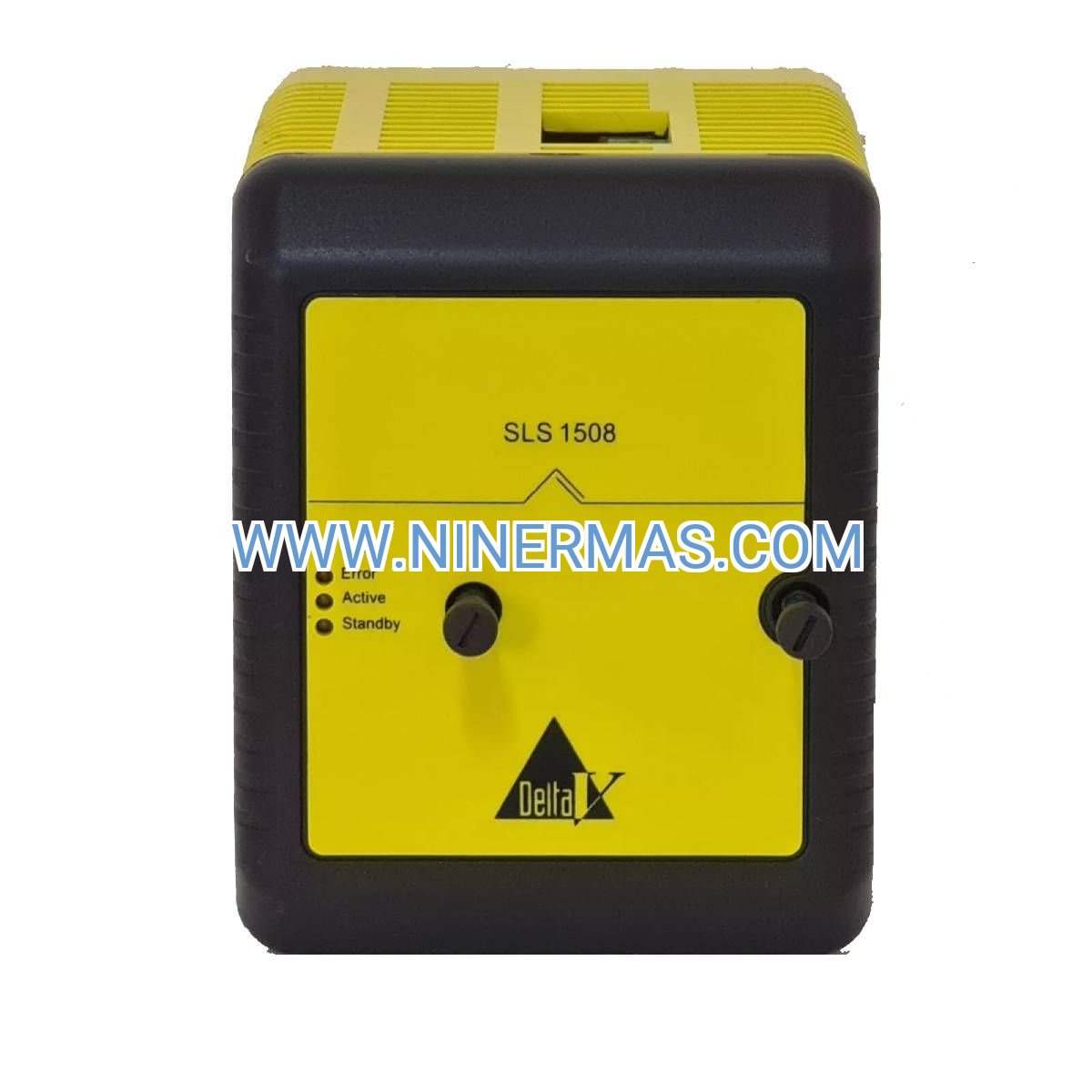
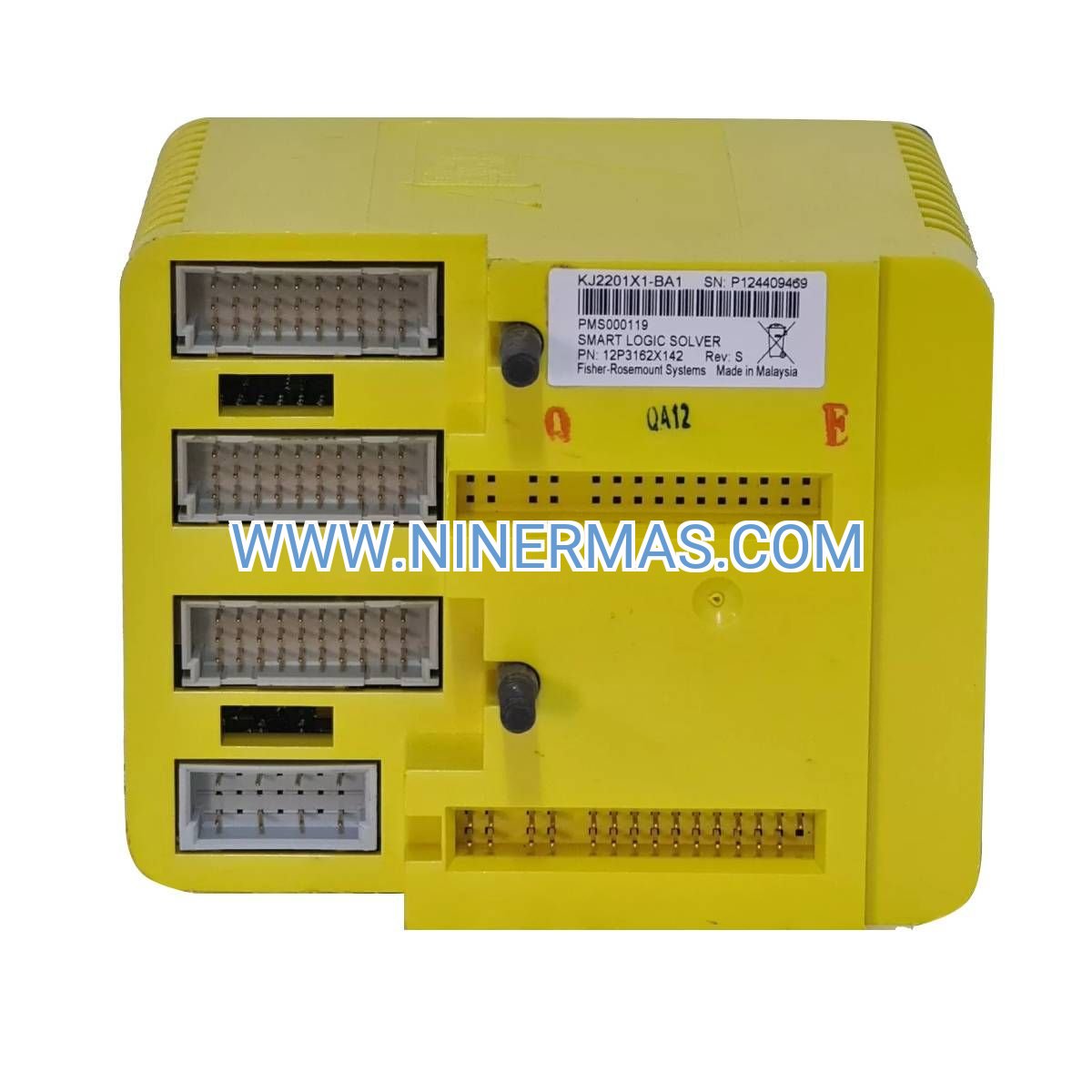
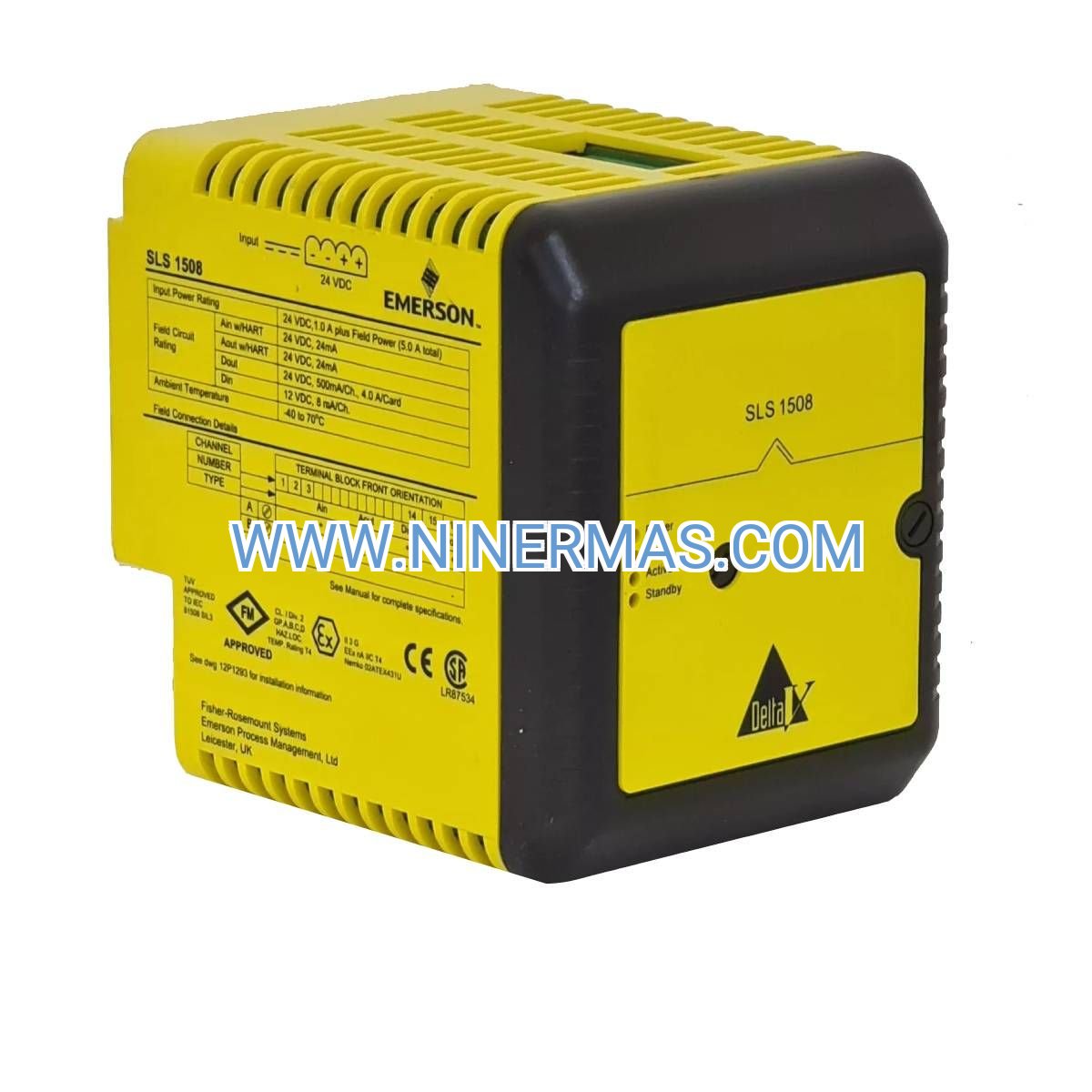
KJ2201X1-BA1 Safety Logic Solver (Industrial-Grade TMR Architecture)
The KJ2201X1-BA1 represents the pinnacle of safety-critical process control technology—a Triple Modular Redundant (TMR) programmable logic controller engineered specifically for Safety Instrumented Systems (SIS) demanding SIL 3 integrity levels. Deployed across oil & gas, petrochemical, power generation, and pharmaceutical facilities worldwide, this fault-tolerant safety controller ensures continuous protection of personnel, assets, and environmental resources through proven redundant architecture and comprehensive diagnostic capabilities.
Built on the SLS 1508 platform, this safety PLC addresses the most stringent functional safety requirements defined by IEC 61508 and IEC 61511 standards. Whether protecting against catastrophic overpressure events, managing emergency shutdown sequences, or coordinating fire and gas detection responses, the KJ2201X1-BA1 delivers deterministic, verifiable safety performance with documented mean time between failures exceeding 100 years in field installations.
Designed for seamless integration with distributed control systems and existing automation infrastructure, this logic solver combines hot-swappable modularity with native protocol support for Modbus, Ethernet/IP, and OPC connectivity. The result: a safety platform that scales from standalone emergency shutdown applications to enterprise-wide integrated control and safety architectures spanning thousands of I/O points.
Core Capabilities & Technical Advantages
→ Triple Modular Redundancy with Voting Logic
Three independent processors execute identical safety logic simultaneously, with 2-out-of-3 voting on every output decision. This architecture eliminates single points of failure while enabling online maintenance without safety system interruption—critical for continuous process operations where unplanned shutdowns cost millions per hour.
→ SIL 3 Certification Across Full Lifecycle
Achieved and maintained SIL 3 rating per IEC 61508/61511 through systematic safety lifecycle management, including hardware fault tolerance, software verification, and proven-in-use documentation. Probability of Failure on Demand (PFD) consistently maintained between 10⁻⁴ to 10⁻³ across certified operating envelope.
→ Comprehensive Self-Diagnostics (>99% Coverage)
Continuous background testing monitors processor health, memory integrity, I/O channel functionality, and communication paths. Automatic fault detection with annunciation enables predictive maintenance strategies while maintaining safety availability above 99.99%.
→ Scalable I/O Architecture (Up to 1508 Points)
Modular expansion supports digital inputs, analog inputs, digital outputs, analog outputs, and specialty modules including HART-enabled smart transmitter interfaces. Mix-and-match I/O configuration adapts to application-specific requirements without controller replacement.
✓ Hot-Swappable Components for Zero-Downtime Maintenance
Replace processors, power supplies, communication modules, and I/O cards during operation without interrupting safety functions. Automatic synchronization and bumpless transfer maintain protection integrity throughout maintenance activities.
✓ Sub-100ms Response Time Performance
Deterministic scan cycles and optimized voting algorithms deliver typical input-to-output response under 100 milliseconds—meeting the most demanding safety response time requirements for fast-acting shutdown valves and emergency isolation systems.
Industrial Application Scenarios
Emergency Shutdown Systems (ESD) – Oil & Gas Production
Challenge: Offshore platforms and onshore processing facilities require fail-safe shutdown of wells, separators, and export systems during abnormal pressure, temperature, or level conditions.
Solution: KJ2201X1-BA1 monitors critical process parameters through redundant transmitters, executing pre-programmed shutdown sequences that isolate hydrocarbon sources, depressurize vessels, and activate flare systems within seconds of detecting unsafe conditions.
Value: Prevents catastrophic releases, protects personnel, ensures regulatory compliance with API RP 14C and API RP 754 process safety standards.
Fire & Gas Detection Systems – Petrochemical Complexes
Challenge: Large-scale chemical plants require coordinated response to combustible gas leaks, toxic gas releases, and fire detection across multiple process units spanning hundreds of acres.
Solution: Integrates with flame detectors, gas sensors, and manual call points to execute zone-based isolation, activate deluge systems, and initiate evacuation protocols based on voting logic from multiple detector inputs.
Value: Reduces false trip rates by 85% compared to simplex systems while maintaining 99.9% detection reliability for actual hazardous conditions.
Burner Management Systems (BMS) – Power Generation
Challenge: Industrial boilers and gas turbine combustors demand precise startup sequencing, flame monitoring, and emergency fuel cutoff to prevent explosive atmospheres and equipment damage.
Solution: Manages purge cycles, pilot ignition, main fuel valve sequencing, and continuous flame supervision per NFPA 85 and FM Global standards, with automatic trip on loss of flame or unsafe operating conditions.
Value: Eliminates furnace explosions, extends equipment life by 40%, reduces insurance premiums through certified safety compliance.
High Integrity Pressure Protection (HIPPS) – Pipeline Operations
Challenge: Long-distance pipelines require instantaneous isolation to prevent overpressure scenarios that could rupture pipe walls and cause environmental disasters.
Solution: Monitors upstream pressure through triple-redundant transmitters, closing fast-acting isolation valves within 2 seconds when pressure exceeds safe operating limits—faster than traditional pressure relief systems.
Value: Protects pipeline integrity, eliminates need for expensive pressure relief flare systems, reduces operational costs by $2M+ annually on major transmission lines.
Turbomachinery Protection – Rotating Equipment
Challenge: Critical compressors, pumps, and turbines require immediate shutdown on vibration, temperature, or lubrication anomalies to prevent catastrophic mechanical failure.
Solution: Processes high-speed vibration data, bearing temperature, and lube oil pressure through dedicated safety logic, triggering emergency stops and activating turning gear systems to prevent rotor bowing.
Value: Prevents equipment damage exceeding $10M per incident, maintains machinery availability above 98% through predictive trip avoidance.
Technical Specifications & Selection Guide
| Specification Category | KJ2201X1-BA1 Parameters |
|---|---|
| Model Designation | KJ2201X1-BA1 (TMR Configuration) |
| Product Family | SLS 1508 Safety Logic Solver Series |
| Redundancy Architecture | Triple Modular Redundant (TMR) with 2oo3 voting |
| Safety Integrity Level | SIL 3 per IEC 61508 / IEC 61511 |
| Maximum I/O Capacity | 1508 points (mixed digital/analog) |
| Processor Type | Triple redundant 32-bit RISC processors |
| Scan Cycle Time | 10-100ms (application dependent) |
| Response Time | <100ms typical (input to output) |
| Diagnostic Coverage | >99% (automatic self-testing) |
| MTBF (Mean Time Between Failures) | >100 years (proven in field) |
| Operating Temperature Range | -40°C to +70°C (-40°F to +158°F) |
| Humidity Tolerance | 5% to 95% RH (non-condensing) |
| Power Supply Requirements | 24V DC redundant (18-32V DC operating range) |
| Power Consumption | 45W typical per processor module |
| Communication Protocols | Modbus RTU/TCP, Ethernet/IP, OPC DA/UA |
| Network Redundancy | Dual Ethernet (ring topology support) |
| Programming Languages | IEC 61131-3 (FBD, LD, SFC, ST) |
| Certifications | IEC 61508, IEC 61511, ATEX, FM, CSA, TÜV |
| Hazardous Area Rating | Class I Div 2 / Zone 2 (with approved barriers) |
| Vibration Resistance | IEC 60068-2-6 (2g, 10-150 Hz) |
| EMC Compliance | IEC 61000-6-2 (immunity), IEC 61000-6-4 (emissions) |
Selection Criteria: Choose KJ2201X1-BA1 when your application requires SIL 3 integrity, TMR fault tolerance, and I/O capacity between 500-1500 points. For smaller systems (under 300 I/O), consider simplex or dual-redundant alternatives. For systems exceeding 1500 points, implement multiple controllers with inter-controller communication.
Advanced Integration & Expansion Options
IoT & Remote Monitoring Capabilities
Native OPC UA server enables secure connectivity to cloud-based condition monitoring platforms, SCADA historians, and mobile operator interfaces. Real-time safety system health data streams to enterprise asset management systems for predictive maintenance scheduling and regulatory compliance reporting.
Cybersecurity Features
Role-based access control, encrypted communication channels, and audit logging meet IEC 62443 industrial cybersecurity standards. Separate safety network from control network prevents cyber threats from compromising safety functions while maintaining operational visibility.
Custom Logic Development
Factory Acceptance Testing (FAT) support includes custom safety logic programming, cause-and-effect matrix validation, and SIL verification calculations. Our engineering team provides turnkey programming services compliant with IEC 61511 safety lifecycle requirements.
Delivery Timeline & Service Commitments
Standard Delivery: 3-5 business days for in-stock units via express courier (DHL, FedEx, UPS) to major industrial centers worldwide. Expedited same-day shipping available for critical outage situations.
Custom Configuration: 10-15 business days for factory-configured systems including pre-loaded application logic, I/O module assembly, and FAT documentation.
Warranty Coverage: Comprehensive 12-month warranty covering manufacturing defects, component failures, and workmanship issues. Extended warranty programs available for up to 5 years with annual health checks.
Technical Support: 24/7/365 global support hotline staffed by certified safety system engineers. Remote diagnostics, on-site commissioning assistance, and lifecycle management consulting included with every purchase.
Documentation Package: Complete technical manuals, wiring diagrams, IEC 61511 safety manual, SIL certification documents, and spare parts recommendations provided in digital format upon shipment.
Frequently Asked Questions
How does TMR architecture improve safety availability compared to simplex controllers?
Triple Modular Redundancy allows the system to continue safe operation even when one processor module fails completely. The remaining two modules maintain 2-out-of-3 voting, preserving SIL 3 integrity while the failed module is replaced online. Simplex systems require complete shutdown for any component failure, resulting in 10-100x higher spurious trip rates.
What programming environment is required for application development?
The KJ2201X1-BA1 utilizes industry-standard IEC 61131-3 programming tools supporting Function Block Diagram (FBD), Ladder Diagram (LD), Sequential Function Chart (SFC), and Structured Text (ST). Engineers familiar with Siemens, Rockwell, or Schneider programming environments adapt quickly to the intuitive development interface.
Can this safety controller integrate with existing DCS systems?
Absolutely. Native Modbus, Ethernet/IP, and OPC connectivity enables seamless integration with virtually all distributed control systems including Emerson DeltaV, Honeywell Experion, Yokogawa Centum, and ABB 800xA. Safety-critical I/O remains hardwired while non-safety data exchanges via standard industrial protocols.
What is the typical energy consumption for a fully-loaded system?
Base controller with three processor modules consumes approximately 135W. A fully-populated system with 1500 I/O points typically draws 400-600W depending on output loading and field device power requirements. Redundant 24V DC power supplies distribute load for maximum efficiency.
Is online modification of safety logic permitted during operation?
Safety logic modifications require rigorous change management per IEC 61511 including hazard analysis, verification testing, and management of change approval. While the controller supports online downloads, best practice mandates offline validation in a test environment before deploying changes to operational safety systems.
How often should proof testing be performed to maintain SIL 3 rating?
Proof test intervals depend on application-specific PFD calculations but typically range from 12-24 months for SIL 3 systems. The controller's comprehensive diagnostics reduce required manual testing compared to older safety PLCs, with many functions verified automatically during operation.
Partner with Industrial Control Hub
As a specialized supplier of mission-critical automation components, we understand that safety system reliability directly impacts your operational continuity, regulatory compliance, and most importantly—the safety of your personnel. Every KJ2201X1-BA1 controller undergoes rigorous incoming inspection, functional testing, and documentation verification before shipment to your facility.
Our technical team brings decades of combined experience in safety instrumented systems across oil & gas, chemical processing, power generation, and pharmaceutical manufacturing. We don't just sell components—we provide application guidance, system architecture consulting, and lifecycle support to ensure your safety systems perform flawlessly for years to come.
Ready to specify the KJ2201X1-BA1 for your next safety project? Contact our safety system specialists for application-specific recommendations, budget quotations, and delivery scheduling. We're here to help you protect what matters most.
© 2026 NINERMAS COMPANY LIMITED. All rights reserved.
Original Source: https://ninermas.com
Contact: sale@ninermas.com | +0086 187 5021 5667
PDF Specification
Download PDF file here:
Click to Download PDFRelated products

Contact Info
-
Address:22 / F, South Wo Hang building, 148 Wing Lok Street, Sheung Wan, Western District, Hong Kong
-
Phone:+8618750215667
-
Email:
