Original Industrial Spare Part
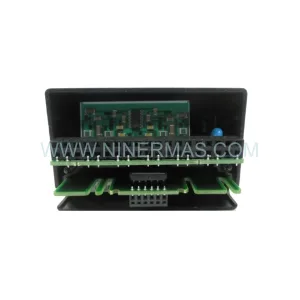
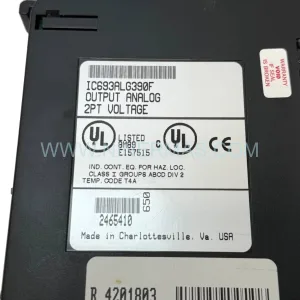
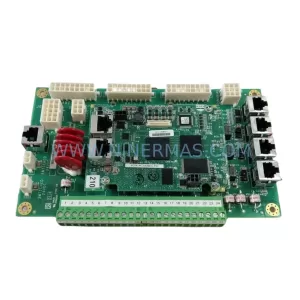
AMETEK MPC-T2010-021 Retrofit-Compatible Output Sequencer
Verify the part, confirm the platform family, and move straight into quotation with the right commercial details.
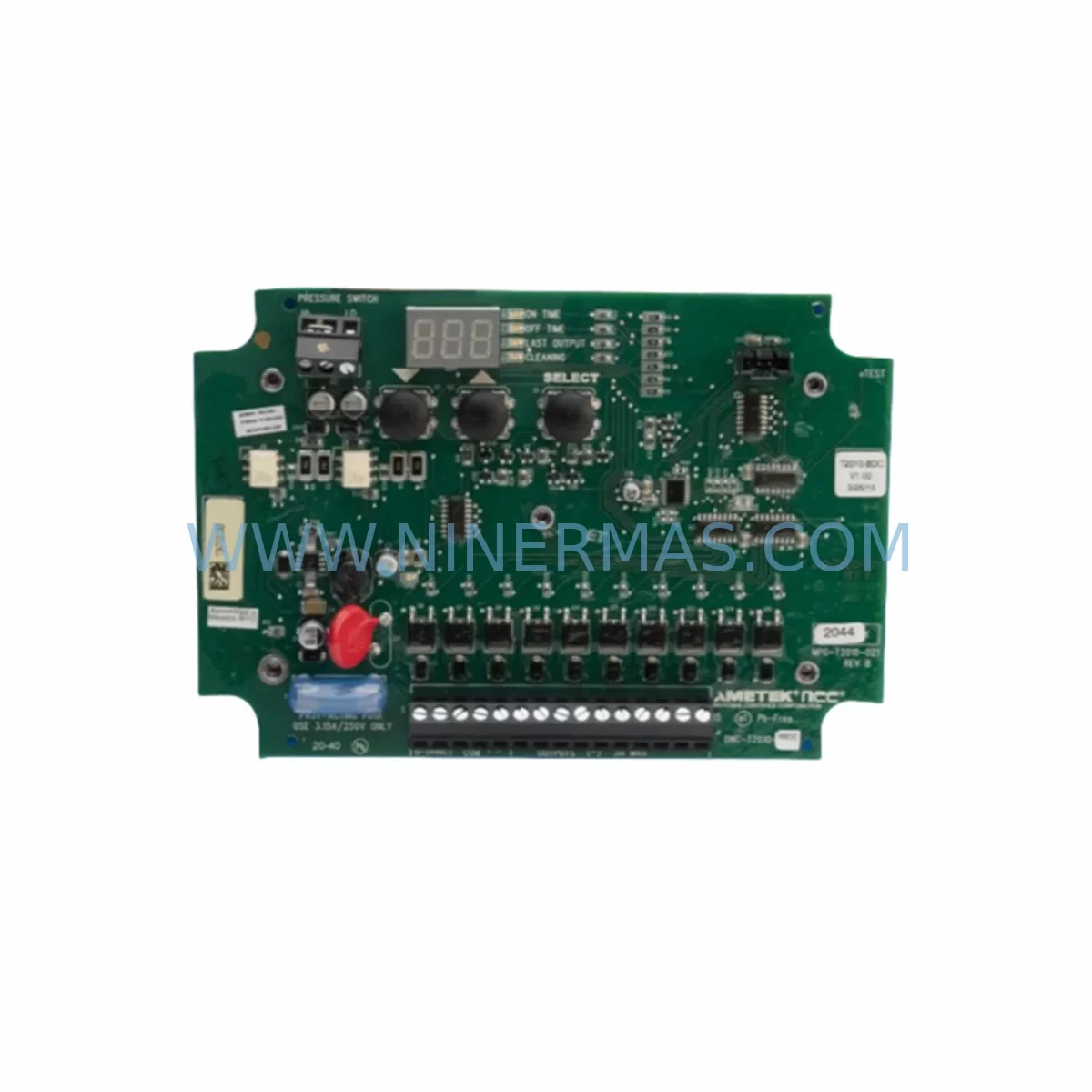
RFQ Ready
- SKUDNC-T2010-BDC MPC-T2010-021
- CategoryPLC & Industrial Automation Modules
- BrandAMETEK
- SupportAvailability, lead time, condition, and shipping coordination
How Buyers Usually Use This Page
- Confirm the exact part number and platform family before sending the quote request.
- Use direct email when quantity, condition, and destination are already defined internally.
- Switch to the broader brand or category archive when you need alternates nearby.
Series Navigation
Move through the most common platform families behind this part.
Product RFQ
Send this part directly for quotation.
Include quantity, required condition, destination country, and target delivery timing. Current reference: AMETEK MPC-T2010-021 Retrofit-Compatible Output Sequencer with SKU DNC-T2010-BDC MPC-T2010-021.
AMETEK MPC-T2010-021 Retrofit-Compatible Output Sequencer for Legacy System Modernization
The AMETEK MPC-T2010-021 (also referenced as DNC-T2010-BDC) is a ruggedized output sequencer module engineered for demanding industrial environments. Designed to deliver reliable, timed output sequencing in process control and discrete manufacturing applications, this module is a proven retrofit solution for facilities managing aging automation infrastructure. Whether you are replacing a failed unit in a legacy control cabinet, upgrading a discontinued sequencer platform, or extending the operational life of an existing system, the MPC-T2010-021 provides a field-compatible path forward with minimal disruption to production continuity.
Upgrade Compatibility Table
| Parameter | Details |
|---|---|
| SKU / Part Number | MPC-T2010-021 / DNC-T2010-BDC |
| Manufacturer | AMETEK Programmable Power / AMETEK Power Instruments |
| Module Function | Ruggedized Output Sequencer |
| Form Factor | Modular card / rack-mount compatible |
| Operating Environment | Harsh industrial environments (vibration, temperature, EMI rated) |
| Replacement Compatibility | Direct retrofit for legacy AMETEK DNC-series sequencer platforms |
| Communication Interface | Parallel I/O; verify backplane bus compatibility with host rack |
| Installation Requirement | Confirm slot pitch, card guide clearance, and connector pinout before installation |
| Retrofit Recommendation | Backup existing program logic and I/O mapping prior to module swap |
| Commissioning Note | Verify output timing parameters and sequence table after replacement |
| Warranty | 12 Months — covers manufacturing defects under normal operating conditions |
| Pre-Shipment Testing | Yes — functional output sequencing verified before dispatch |
Retrofit Planning for Existing Automation Systems
Integrating the AMETEK MPC-T2010-021 into an existing control architecture requires a structured approach to avoid unplanned downtime and configuration errors. Before initiating the swap, engineers should document the current output sequence table, timing intervals, and any custom logic programmed into the original module. In many legacy installations, the sequencer module operates alongside a dedicated power supply module — such as an AMETEK DNC-series rack power supply — and shares a common backplane with I/O interface cards. Confirming that the replacement module’s power draw is within the rack’s available capacity is a critical first step.
Terminal wiring is another key consideration. The MPC-T2010-021 uses a defined connector pinout that must be cross-referenced against the original field wiring diagram. In older installations where wiring labels have degraded or documentation is incomplete, a point-to-point continuity check is strongly recommended before energizing the new module. Where the original system used discrete relay outputs, verify that the replacement module’s output type — whether transistor, relay, or triac — matches the load requirements of the connected field devices.
Backplane slot addressing must also be confirmed. In rack-based AMETEK DNC platforms, each module occupies a defined slot address that is referenced by the host controller or sequencer program. If the MPC-T2010-021 is installed in a different slot than the original unit, the program logic — including any ladder rungs or function block references tied to that slot — must be updated accordingly. This is particularly relevant in systems where a programmable controller, such as a legacy AMETEK or third-party PLC, reads sequencer status bits directly from the rack bus.
For facilities running HMI displays tied to the sequencer output states, screen tag bindings should be reviewed after module replacement. In older SCADA or panel-mounted HMI systems, output status indicators are often mapped to specific I/O addresses that may shift if the module slot or address changes. Updating these bindings before resuming production prevents false alarm conditions and operator confusion during the first post-retrofit run.
Communication link integrity should be verified if the sequencer module interfaces with a supervisory system via serial or fieldbus protocol. In mixed-architecture panels where the AMETEK sequencer coexists with Modbus RTU devices, PROFIBUS DP nodes, or DeviceNet adapters, confirming that the replacement module does not introduce bus timing conflicts is essential. A signal isolation module or communication gateway may be required if the new module’s electrical characteristics differ from the original.
Installation space confirmation is often overlooked in dense control cabinets. The MPC-T2010-021’s physical dimensions, including card depth and any rear-connector protrusion, should be measured against available cabinet depth before ordering. In retrofit projects where the original module was a custom or semi-custom form factor, a mechanical adapter plate or modified card guide may be necessary to achieve a secure fit.
Finally, a pre-commissioning functional test — conducted with the system in a safe, de-energized state — should validate all output channels against the expected sequence table. This step, combined with a controlled first-run at reduced load, ensures that the retrofit is complete and that the system is ready to return to full production operation.
Downtime Control During System Migration
Minimizing downtime during an output sequencer replacement is achievable with disciplined pre-planning. The most effective strategy is to prepare a complete module swap kit before the maintenance window opens — including the MPC-T2010-021 replacement unit, the correct wiring documentation, a laptop with the appropriate programming software, and any required hand tools and connector extraction tools. Having all materials staged at the cabinet before the line stops eliminates search time during the outage.
Preserving the original program logic is non-negotiable. Before removing the existing sequencer module, a full backup of the sequence table, timing parameters, and any associated controller program should be saved to a secure location. In systems where the sequencer program resides on the host PLC rather than on the module itself, this backup should include the complete PLC project file, not just the I/O configuration. This ensures that if the replacement module requires re-initialization, the original logic can be restored without relying on memory or incomplete field notes.
Field control continuity during the swap can be maintained by placing the affected control loop in manual mode or by using a bypass relay to hold critical outputs in a safe state while the module is exchanged. In process applications where a momentary loss of sequencer output could trigger a safety interlock or process upset, coordinating the swap with the process safety team and notifying downstream operators in advance is essential.
Post-installation, a structured commissioning checklist — covering output channel verification, timing confirmation, communication link status, and HMI display validation — should be completed before returning the system to automatic mode. Documenting the as-found and as-left conditions for each parameter provides a clear audit trail and supports future maintenance planning. With proper preparation, a sequencer module swap of this type can typically be completed within a single planned maintenance window, keeping unplanned production loss to a minimum.
Retrofit Support FAQ
Q1: Is the AMETEK MPC-T2010-021 a direct drop-in replacement for the DNC-T2010-BDC?
A: The MPC-T2010-021 and DNC-T2010-BDC reference the same module family. Before installation, confirm connector pinout, slot dimensions, and backplane bus compatibility with your specific rack revision. Minor hardware revisions within the DNC series may require wiring adapter verification.
Q2: What commissioning steps are required after installing the replacement module?
A: After physical installation, reload or verify the output sequence table and timing parameters, confirm all output channels are active and correctly mapped, check communication link status if applicable, and perform a controlled test run at reduced load before returning to full production. Update HMI tag bindings if output addresses have changed.
Q3: How is the module tested before shipment?
A: Each MPC-T2010-021 unit undergoes functional pre-shipment testing to verify output sequencing operation across all channels. Test records are available upon request. Units are shipped in anti-static packaging with protective end caps to prevent connector damage in transit.
Q4: What warranty and supply terms apply?
A: The MPC-T2010-021 is covered by a 12-month warranty against manufacturing defects under normal operating conditions. NINERMAS maintains inventory stock to support long-term spare parts programs, with defined lead times available for volume commitments. Contact our team for stock availability and supply agreement options.
| Product Series | Other series |
|---|
Catalog Continuation
More AMETEK modules in the catalog.
Use the brand lane to compare nearby part numbers, platform-adjacent modules, and other inquiry-ready listings before sending your final RFQ.
Catalog Continuation
Alternative parts within PLC & Industrial Automation Modules.
Stay inside the same system family when you need substitutes, adjacent modules, or a broader shortlist for procurement review.
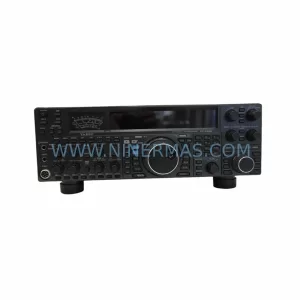
SKU: A05B-2518-C200
FANUC A05B-2518-C200 Retrofit Teach Pendant for Legacy Systems
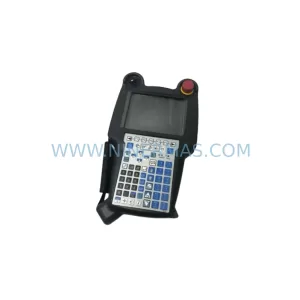
SKU: 2711PC-T10C4D8
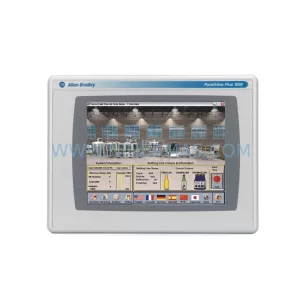
Allen-Bradley 2711PC-T10C4D8 Retrofit-Compatible HMI Terminal